On 5 June 1914, the German light cruiser
SMS Königsberg, under
Fregattenkapitän Max Looff, arrived in German East Africa as part of a regularly scheduled two-year deployment to the German Navy's East Africa Station. In that assignment, her mission was to protect German interests in East Africa.
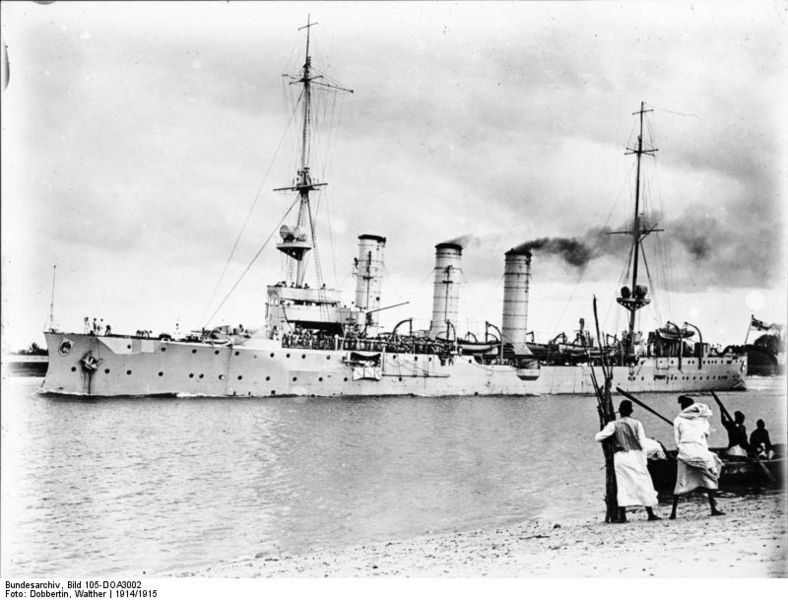 SMS Königsberg
At the outbreak of World War I, the
Königsberg initially conducted commerce raiding off the coast of East Africa. With the British blockading Dar-es-Salaam, however, she quickly ran short of supplies, fuel, and parts. So in September 1914, she withdrew to the delta of the Rufiji River, where she could hide from roving British ships while awaiting resupply. The Germans launched several attempts to resupply the ship, but most were unsuccessful. As supplies ran out, the British Navy closed in, using shallow-draft vessels to get within artillery range.
Finally, on 11 July 1915, after 9 months of British attempts to destroy
Königsberg (collectively known as the
Battle of Rifiji Delta), Looff ordered her scuttled in the Rufiji River. Her main guns were salvaged, and went on to see service as coastal guns and artillery pieces of General Paul Emil von Lettow-Vorbeck's German army during the
East African campaign.
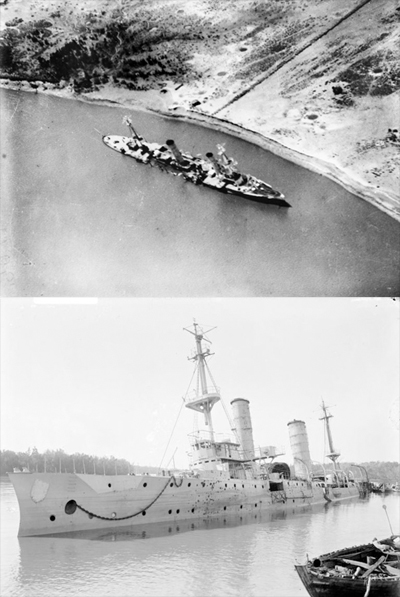
Scuttled
SMS KönigsbergAlso in German East Africa at the outbreak of war was the German survey ship
SMS Möwe. Trapped in Dar-es-Salaam by the British blockade, she was scuttled on 20 September 1914.
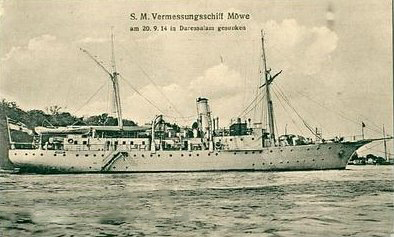 SMS Möwe
So what do these two ships of the German Navy have to do with philately, you ask? Well...
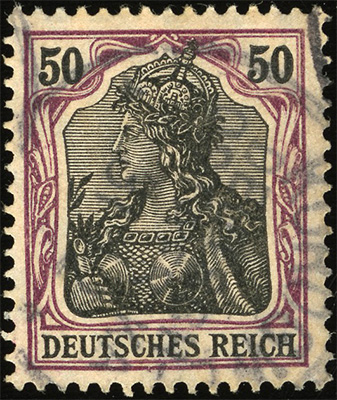
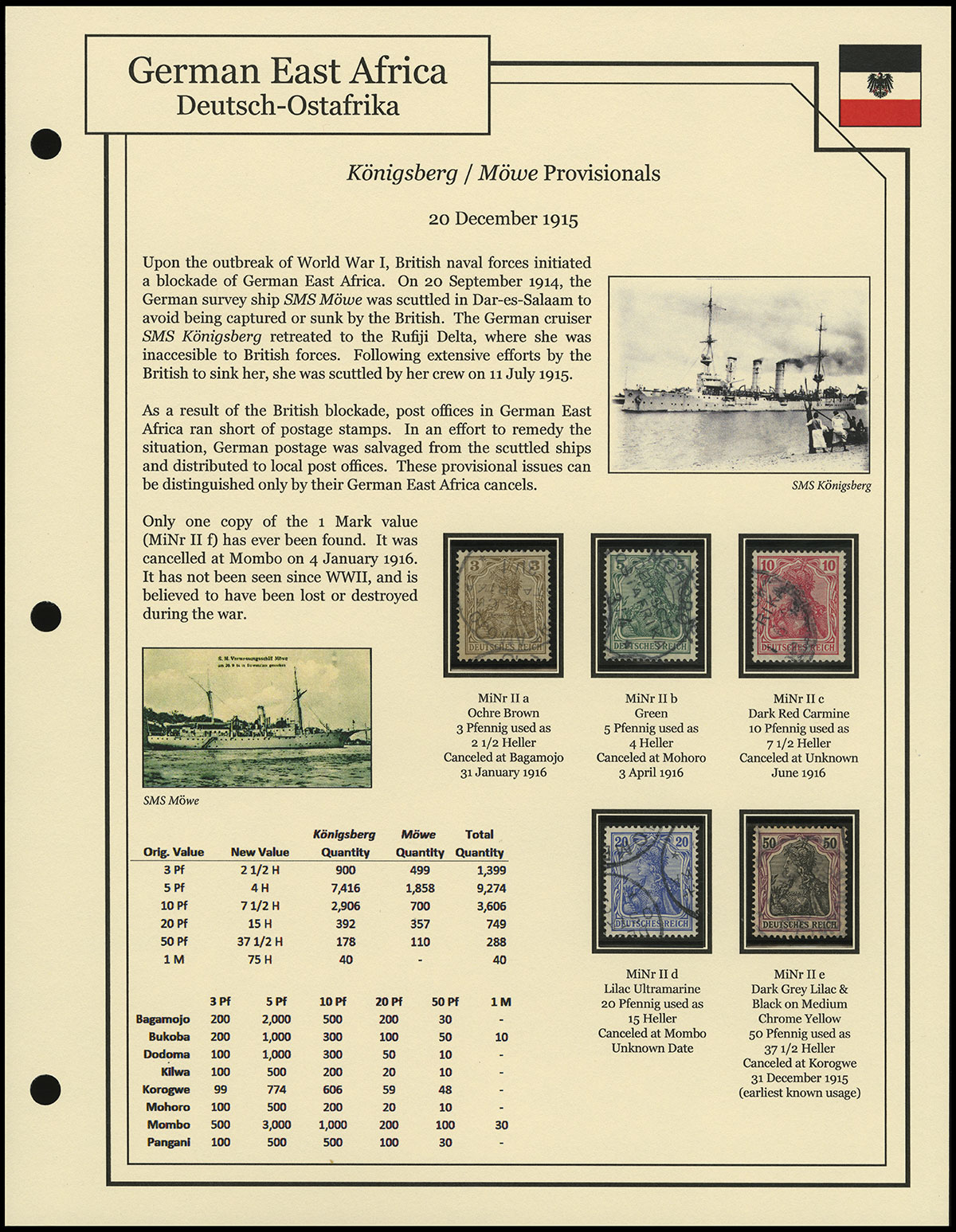
In addition to salvaging the guns off these vessels, the Germans salvaged their supply of German postage -- specifically, 6 values of the Germania issues of 1905/06 (Michel 84I, 85I, 86I, 87I, 91I, 94AI). This was done primarily due to shortages of German East Africa postage caused by the British blockade.
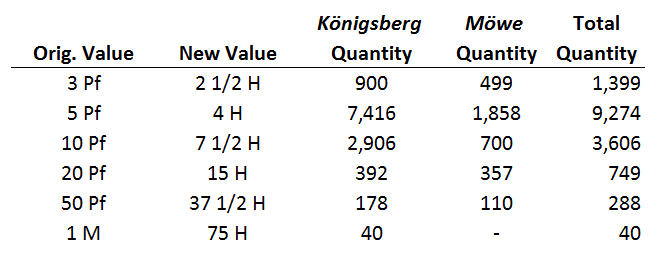
On 20 December 1915, the stamps were distributed to 8 post offices in German East Africa.
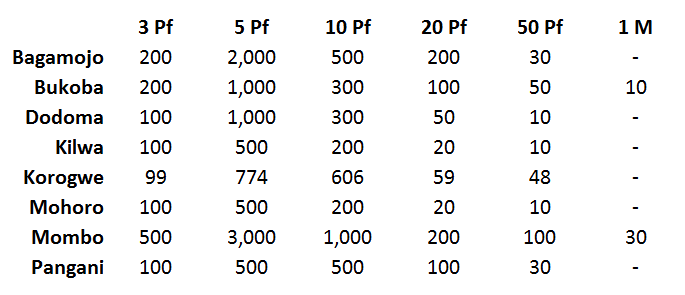
Because they had been submerged in the scuttled ships, they had no gum, and had to be affixed with glue.
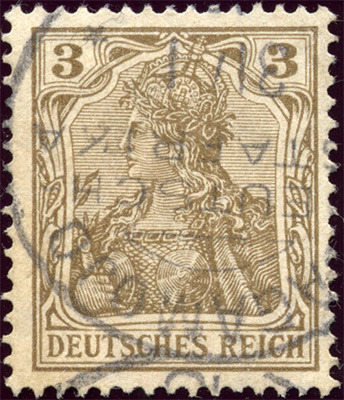
Mi IIa (Bagamojo)
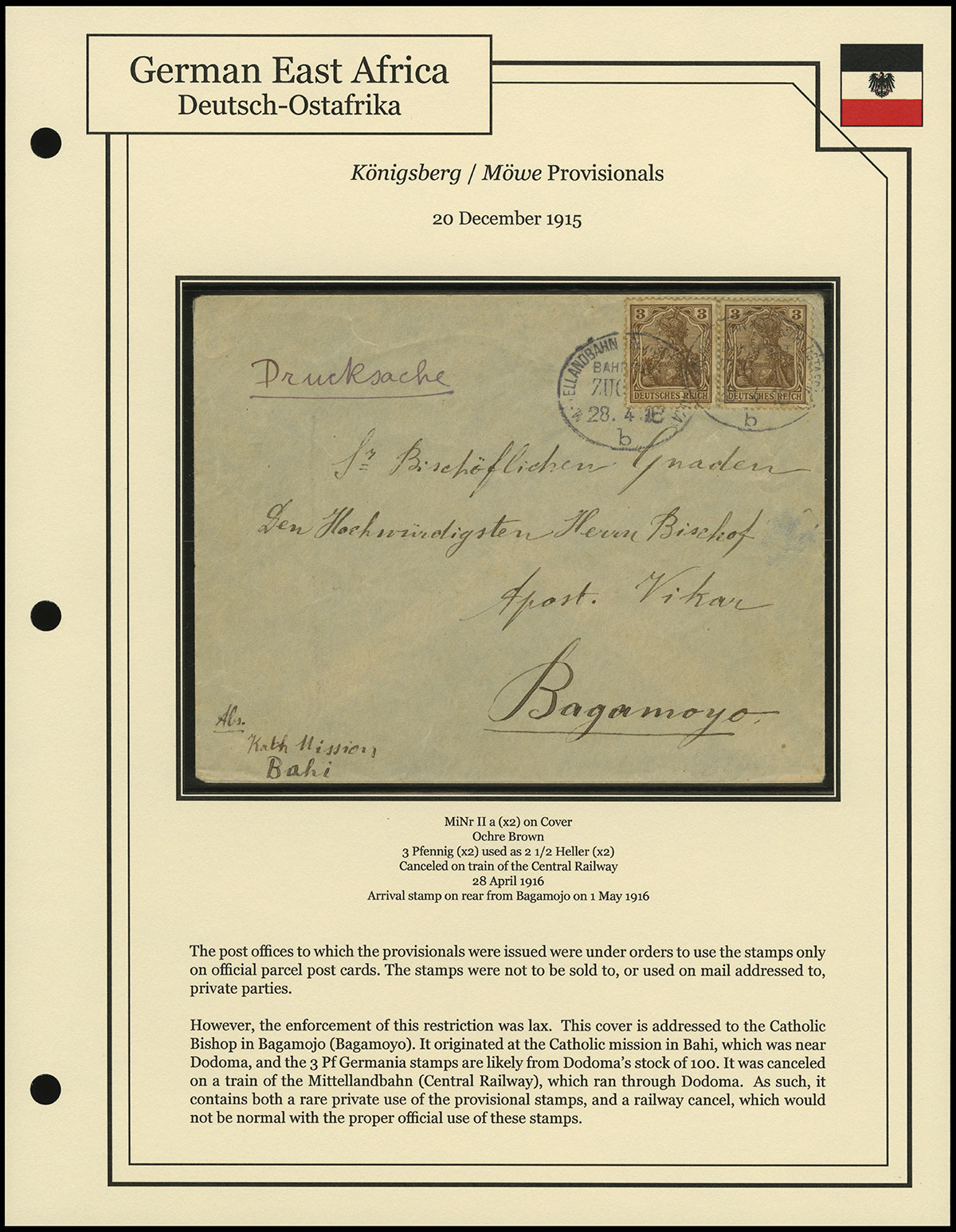
The post offices were under orders to use the stamps only on official parcel post cards. The stamps were not to be sold to, or used on mail addressed to, private parties. And yet...
The cover shown below is addressed to the Catholic Bishop in Bagamojo. It originated at the Catholic mission in Bahi, which was near Dodoma, and the 3 Pf Germania stamps are likely from Dodoma's stock of 100. It was cancelled on a train of the Mittellandbahn (Central Railway), which ran through Dodoma. This is likely a unique (as in one-of-a-kind) item, as it contains both a rare private use of the provisional stamps, and a railway cancel, which would not be normal with the proper official use of these stamps.
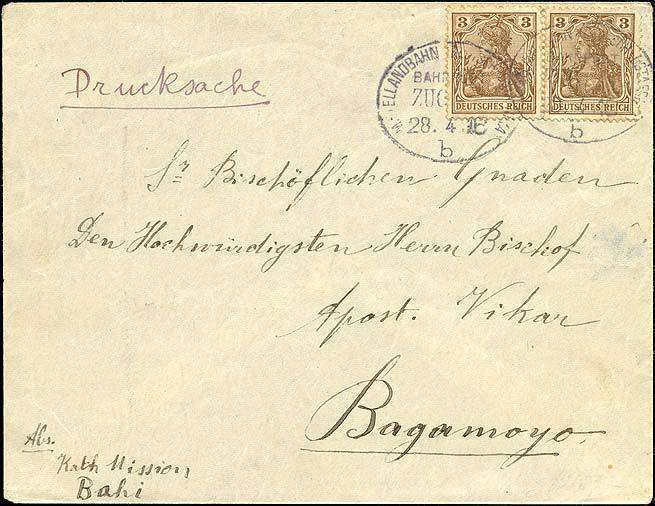
Mi IIa (x2) on cover with Mittellandbahn cancel
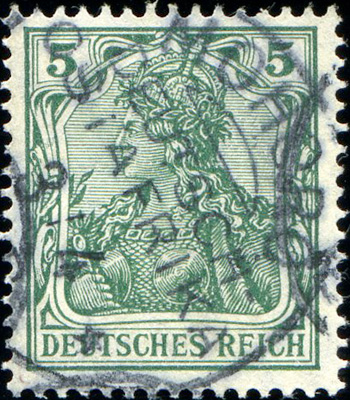
Michel IIb (Mohorro)
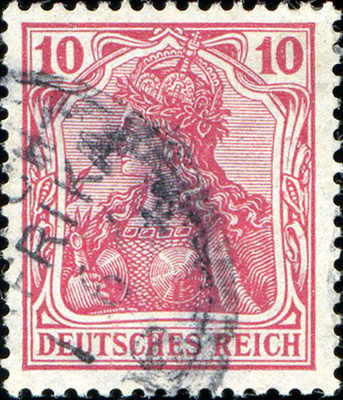
Michel IIc (unknown cancel)
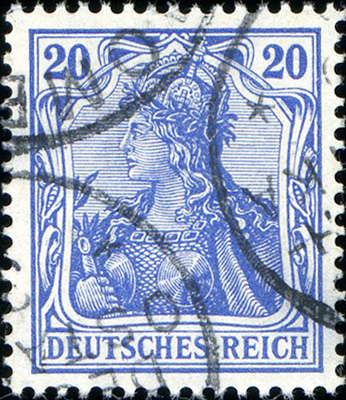
Michel IId (Mombo)
The 50 Pf value (Michel IIe) comes up for auction infrequently (one a year or so). I'll post one of those when I get one!
Only one copy of the 1 M value (Mi IIf) has ever been found. It was cancelled at Mombo on 4 January 1916. Unfortunately, it has not been seen since WWII, and is believed to have been lost or destroyed during the war.





 Posted 06/04/2014 07:27 am