Evgeny Bagrationovich Vakhtangov (1883-1922) was a Russian actor and theatre director who founded the Vakhtangov Theatre. Here is an image of a stamp commemorating Vakhtangov's birth centenary, designed by A. Tolkachev, pinted by photogravure, and issued by Russia (USSR) on Jyly 20, 1983, Scott No. 5162, Zagorski No. 5344, plus an image of a photograph of E. B. Vakhtangov taken in 1910.
Here is an image of a stamp honoring Catalan-Spanish stage and film actress Margarita Xirgu (1888-1969), printed by lithography, and issued by Spain on January 20, 1992, Scott No. 2667, plus an image of a photograph of Xirgu in costume as Salome, and a YouTube link to a video clip featuring Margarita Xirgu acting in the 1938 film adaptation of Bodas de sangre ("Blood Wedding"), a tragedy written in 1932 by Spanish dramatist Federico García Lorca (1898-1936), and a fan tribute to the actress.
Here ia an image of a stamp featuring a portrait of French playwright and actor Jean-Baptiste Poquelin, best known by his stage name Molière (1622-1673), and depicting a scene from his comedy-ballet The Imaginary Invalid (1673), designed and engraved by French artist Claude Durrens (1921-2003), and issued by Monaco on April 30, 1973 to commemorate the 300th anniversary of the playwright's death, Scott No. 868, plus an image of a painted portrait (1658) of Molière in costume by French artist Nicolas Mignard (1606-1668).
Here is an image of a stamp featuring a portrait of Italian dramatist, novelist, poet and short story writer Luigi Pirandello (1867-1936), who was awarded the 1934 Nobel Prize in Literature for "his almost magical power to turn psychological analysis into good theatre," and a stage, designed by E. Consolazione, R. Cuzzani, and A. de Stefani, printed by photogravure, and issued by Italy on June 28, 1967 to commemorate the playwright's birth centenary, Scott No. 961, plus an image of a photograph of Luigi Pirandello in 1932.
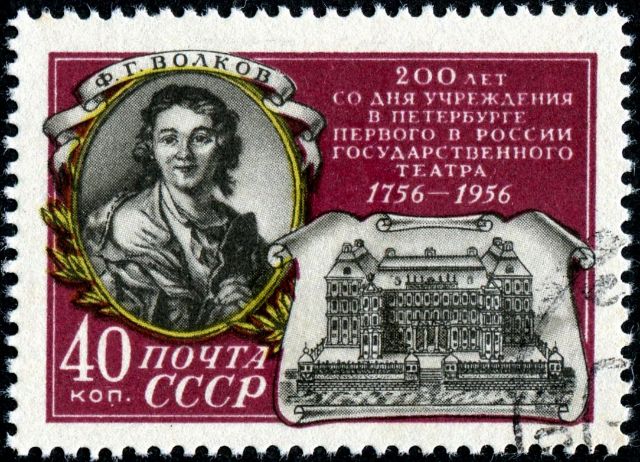
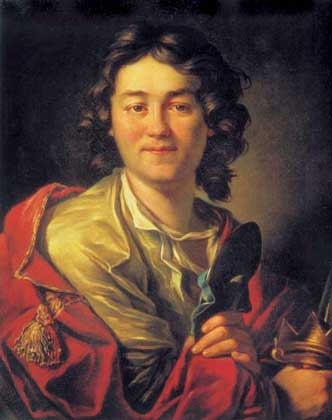
Here is an image of a stamp featuring a portrait of Russian actor Fyodor Grigorievich Volkov (1729-1763), founder of Russia's first permanent theater, and depicting the original Volkov Theater, designed by E.S. Bulanova, printed by lithography, and issued by Russia (USSR) on December 31, 1956 to commemorate the 200th anniversary of the theater's founding, Scott No. 1904, Zagorski No. 1872, plus an image of the portrait of F.G. Volkov by Ukrainian neo-classical painter Anton Pavlovich Losenko (1737-1773) which was used as a model for this stamp's design. Note: I have read that this is the first stamp issued by Russia which was designed by a woman artist!
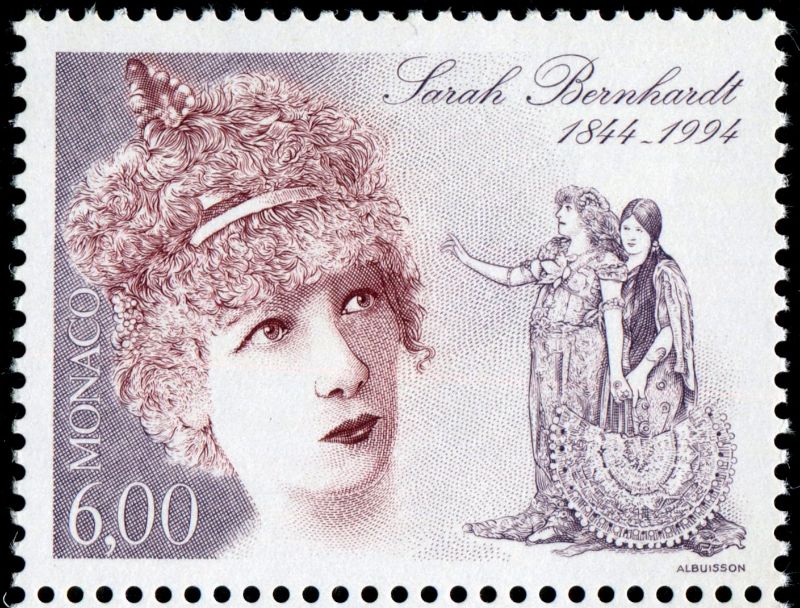
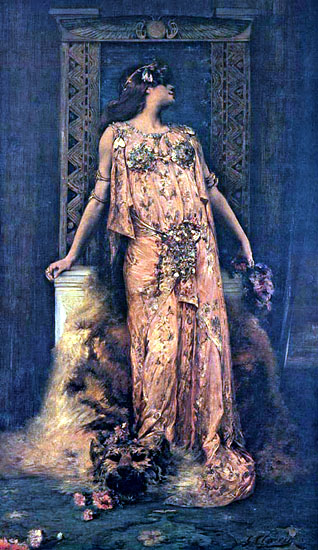
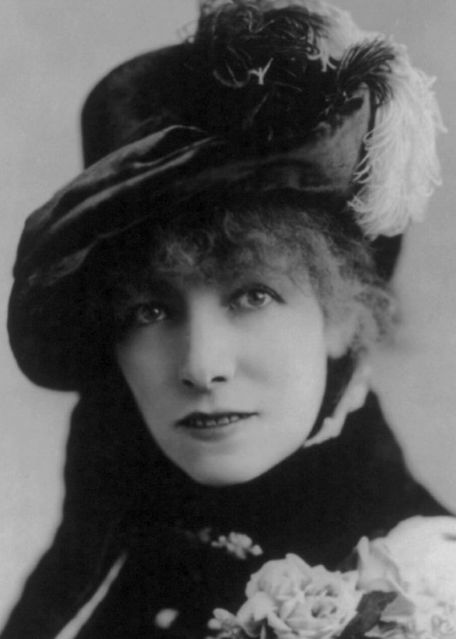
Here is an image of a stamp featuring a portrait of French stage actress Sarah Bernhardt (1844-1923), and a scene of her in the role of (I believe) Cleopatra, designed and engraved by French artist Pierre Albuisson (1952- ), and issued by Monaco on October 17, 1994 to commemorate the 150th anniversary of Bernhardt's birth, Scott No. 1931, plus an image of a portrait of Sarah Bernhardt as Cleopatra by French Orientalist painter and illustrator Georges Clairin (1843-1919), and an image of a portrait of Sarah Bernhardt by American lithographer and photographer Napoleon Sarony (1821-1896).
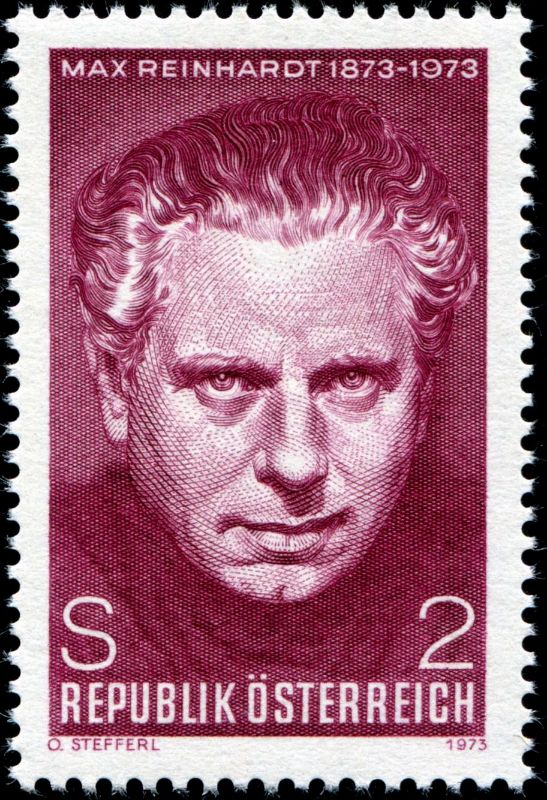
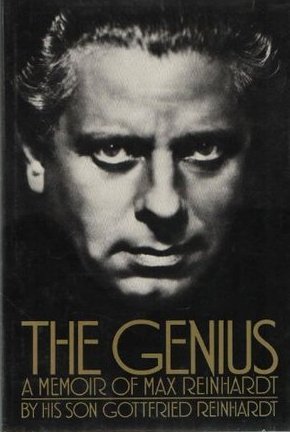
Here is an image of a stamp featuring a portrait of Max Reinhardt (1873-1943), an Austrian-born theater and film director and theatrical producer, designed and engraved by Otto Stefferl (1931- ), and issued by Austria on September 7, 1973 to commemorate the director's birth centenary, Scott No. 952, plus an image of the cover of a memoir of Max Reinhardt, written by his son, which displays the same photograph of the director that was used as a model for this stamp's design.
Here is an image of a stamp featuring a profile portrait of Brazilian actor and director João Caetano dos Santos (1808-1863) in costume, a theatrical stage, and Greek theater masks, printed by lithography, and issued by Brazil on July 9, 1951 to publicize the 1st Brazilian Theater Congress, held in Rio de Janeiro July 9-13, 1951, Scott No. 708, plus an image of a drawn portrait of João Caetano.
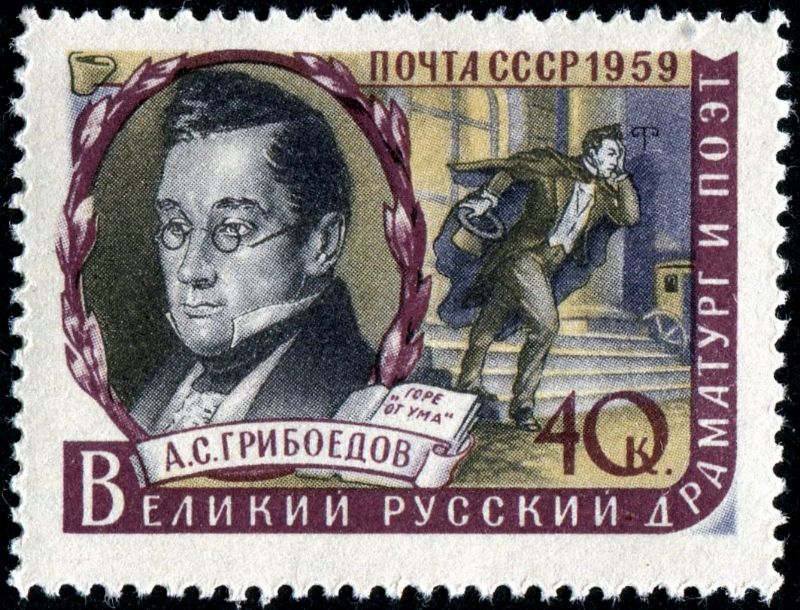
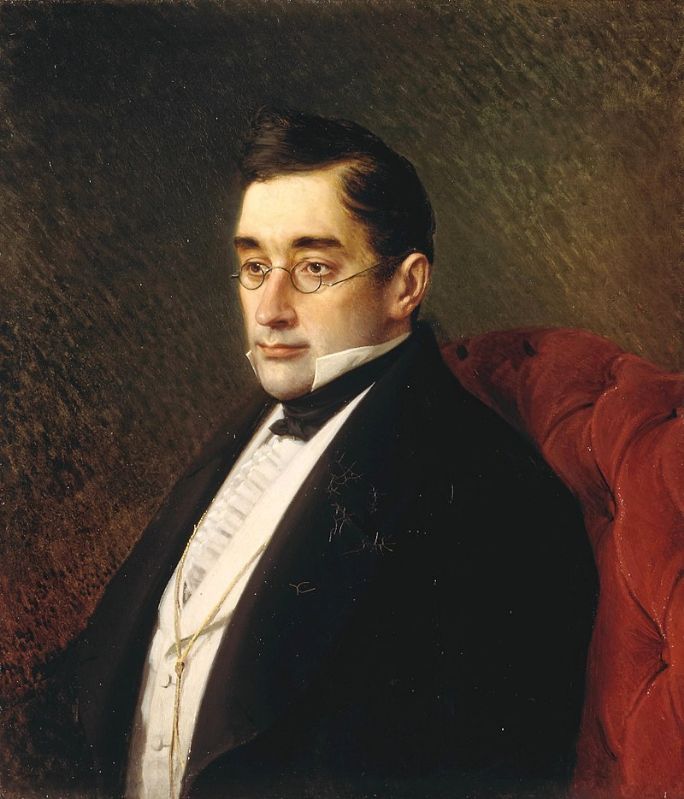
Here is an image of a stamp featuring a portrait of Russian playwright, poet, composer and diplomat Alexander Sergeyevich Griboyedov (1795-1829), and depicting a scene from his one play, "Woe from Wit," a satire written in 1823 about post-Napoleonic Russian aristocratic society in Moscow, designed by Vasili Vasilievich Zavialov (1906-1972), printed by lithography, and issued by Russia (USSR) in March 1959, Scott No. 2175, Zagorsky No. 2201, plus an image of the portrait of Alexander Griboyedov by Russian painter Ivan Nikolaevich Kramskoi (1837-1887) which was a model for this stamp's design.
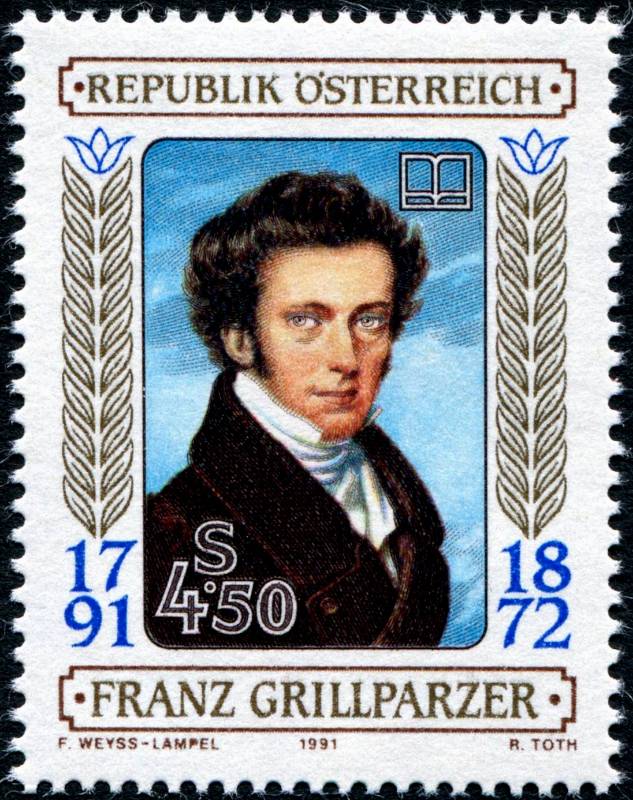
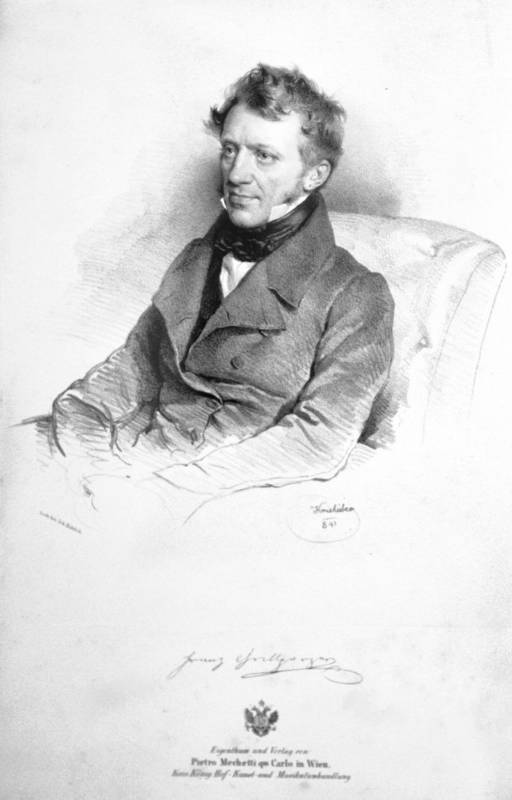
Here is an image of a stamp featuring a portrait of Austrian dramatist Franz Grillparzer (1791-1872), designed by Friedl Weyss-Lampel, combined engraved by Rudolf Toth and photogravure, and issued by Austria on January 15, 1991 to commemorate the bicentenary of the playwright's birth, Scott No. 1525, plus an image of a lithograph portrait of Franz Grillparzer in 1841 by Josef Kriehuber. Note: Grillparzer also wrote the oration for Ludwig van Beethoven's funeral.
Here are images of the five stamps in a set commemorating the Kenya National Theater, designed by British artist Beryl Moore, printed by lithography (Enschedé), and issued by Kenya on April 6, 1979, Scott Nos. 141-45.
- nethryk
Scene from Kenya National Theatre Company production of "The Lion and the Jewel."
Scene from Kenya National Theatre Company production of "Utisi."
Various Kenya National Theatre performance programs.
Kenya National Theatre.
Scene from Nairobi City Players production of "Genesis" at the Kenya National Theatre.
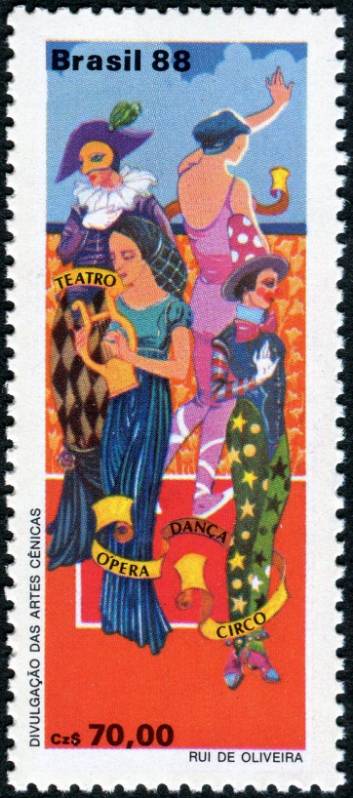
Here is an image of a stamp depicting various costumed performers from: theater; opera; dance; and the circus, designed by Rui de Oliveira (1942- ), printed by lithography, and issued by Brazil on December 21, 1988 to promote the performing arts, Scott No. 2160. Bonus: Mask.
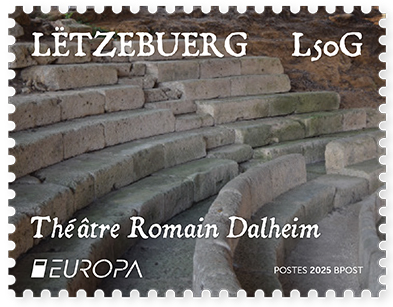
Roman theatre Dalheim - EUROPA 2025 Dalheim Ricciacum is the site of a Gallo-Roman vicus in Dalheim, Luxembourg. It was founded during the reign of Emperor Augustus. The well-preserved theatre, dating back to the 2nd century AD, could accommodate 3,500 people.
Disclaimer: While a tremendous amount of effort goes into ensuring the accuracy of the information contained in this site, Stamp Community assumes no liability for errors. Copyright 2005 - 2026 Stamp Community Family - All rights reserved worldwide. Use of any images or content on this website without prior written permission of Stamp Community or the original lender is strictly prohibited. Privacy Policy / Terms of UseAdvertise Here





 Posted 09/02/2016 10:58 am