| Author |
 Replies: 23 / Views: 14,343 Replies: 23 / Views: 14,343 |
|
Valued Member
410 Posts |
|
|
|
|
Pillar Of The Community
United States
1756 Posts |
|
|
Rest in Peace
United States
7097 Posts |
|
|
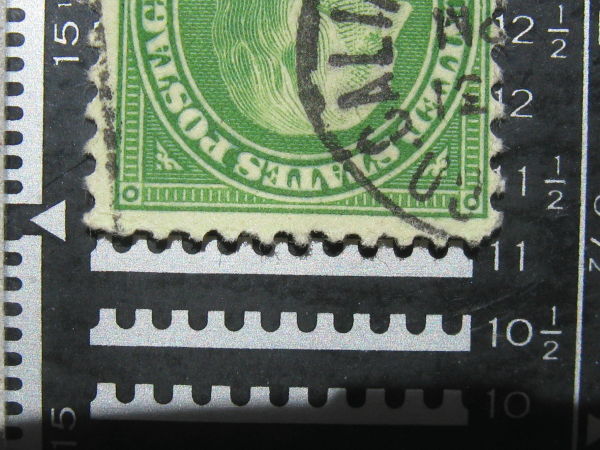
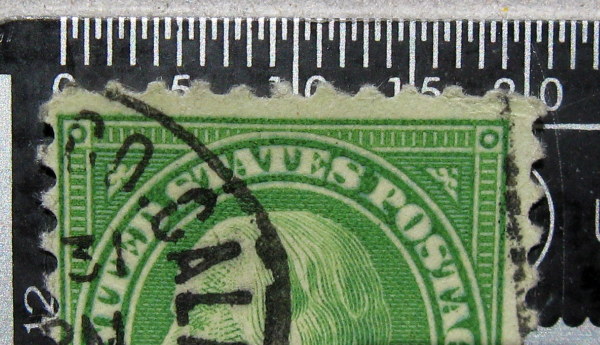
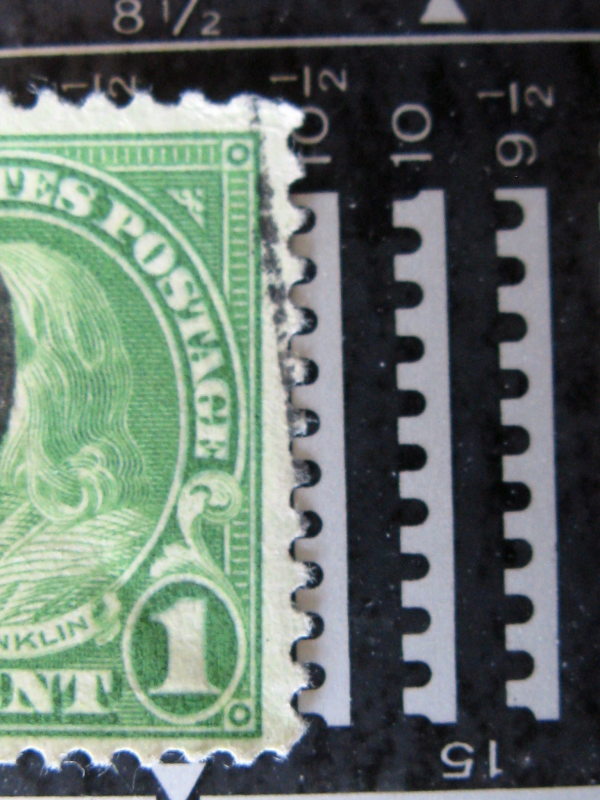
First off I believe you may be using your perf gague incorrectly also, you must measure the design not the length of the actual stamp itself. I
I hope this helps. They can range is size sometimes drasticly due to shrinkage and of course press type. Eg: flat plate vs. rotary vs. offset |
Send note to Staff 
|
|
|
Valued Member
410 Posts |
|
|
Pillar Of The Community
United States
1756 Posts |
|
|
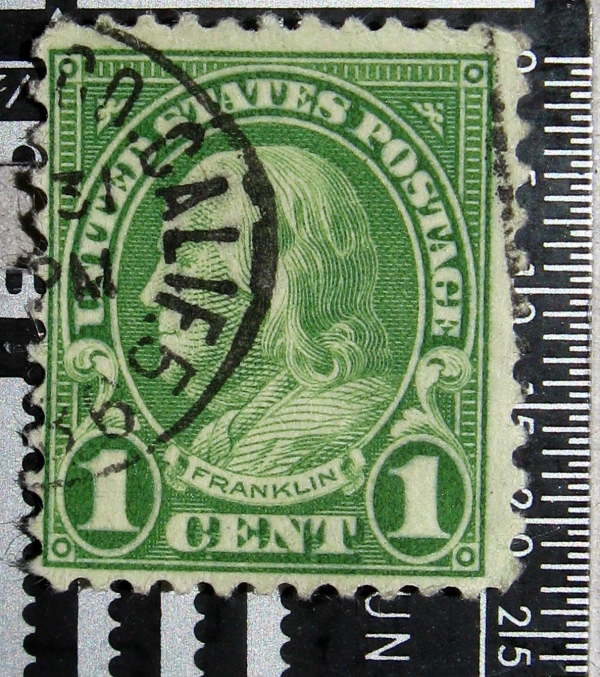
ILS... if you look at his photos (and his numbers)
and where he's positioned the ZERO (0) for measuring,
he's measuring the design, not the stamp...
The stamp is a 632 in all respects... |
|
Send note to Staff
|
| Edited by disi123 - 07/04/2014 6:12 pm |
|
|
Rest in Peace
United States
7097 Posts |
|
|
I know I was just adding more info on the subject was all. No harm meant. |
|
Send note to Staff
|
|
|
Valued Member
410 Posts |
|
|
DOOOH!! I better google how to use a perf gauge. Stupid me, jumping right in as usual. |
|
Send note to Staff
|
|
|
Pillar Of The Community
United States
1414 Posts |
|
|
The measurements given in the Scott catalog are not accurate enough to separate flat plate, flat plate booklet pane singles, tall rotary coil or sheet stamps (the coil is very slightly taller) or wide rotary coil or coil waste stamps. If you must use a perf gauge a Kiusalas Specialty gauge is required. It should be noted that a perforation gauge is a counting device, not a measuring device. Rotary sheet stamps are 11-70 by 10 1/2-75. The second number is the spacing between perforations in thousands of an inch. Perf 11 flat plate perforations are 11-72, not the same as the rotary perforations. The easiest way to compare perforations or stamp sizes is to use another stamp of a known type. Flat plate stamps of the era typically have setoff ink on the back under the gum from stacking the sheets after printing. Most of the common Scott 632 perf 11 x 10 1/2 sheet stamps are a lighter color than the initially produced perf 10-80 rotary sheet stamps. A 596 would have been produced from 583 sheet waste. Initially, the 599 1 cent coil was printed in a deeper, darker color than most later production. A typical 578 or 594 would match one of the darker early shades. The subject stamp in this discussion was from a later printing, probably after 1930.
Clark |
|
Send note to Staff
|
|
|
Pillar Of The Community
United States
1756 Posts |
|
|
stated by cfrphoto...
"The subject stamp in this discussion was
from a later printing, probably after 1930"
-------------------------------------------
cfr... just for clarity's sake for everyone,
your statement is implying a printing of 632
beyond the year 1930, which does not appear
to be plausable... based upon stated data by
both Scott and Brookman, as well as the U.S.
Post Office...
Scott's data states June 10, 1927 as the 632's
start date...
Brookman states 1927-1928 as the production years
for the 632, (and, as recorded by the US Post Office)
"all remaining stock converted to Kansas-Nebraska
overprints (released May 1, 1929) until all 11x10½
stock was fully consumed"... (the overprints being
instituted by the post office as an anti-theft measure)
Therefore, I submit the subject stamp can only
be a 632 produced sometime between June of 1927
and sometime in late 1928, and could not have
been from a later printing as you have suggested...
"probably after 1930"...
|
|
Send note to Staff
|
| Edited by disi123 - 07/04/2014 10:07 pm |
|
|
Pillar Of The Community

United States
1273 Posts |
|
|
disi123, 2014 Scott Specialized states the 4th. bureau issues 632-642 as printing between 1926-1934 in the header for that series. Also, FYI, Clark is a Washington-Franklin expert and does Expertising for at least one of the major certification services, and I expect knows a good deal about more than just the W/F series. He's probably right in his assessment. I believe there was only a one yr. supply of Kans.-Neb. overprints issued to those post masters.  |
|
Send note to Staff
|
| Edited by Al E. Gator - 07/04/2014 10:22 pm |
|
|
Pillar Of The Community
United States
1756 Posts |
|
|
Dave... with all due respect to Clark as an expertizer,
I'm going by what I'm reading both in Scott and Brookman,
both of which provide data which makes the 1930 date
totally implausable...
In addition, I checked four (4) different years of Scott
U.S. Specialized, inclusive of 2013 (I do not own a 2014)
and none of them state...
"the 4th. bureau issues 632-642 as printing between 1926-1934 in the header for that series"
Perhaps they have changed it in the 2014 edition, which,
of course, begs the question as to why the data which I
stated previously quoting them (and) Brookman contradicts
the 2014 edition...
In any event, if the stated facts by the post office were
true, particularly with regards to converting ALL remaining
11x10½ stock to Kansas-Nebraska's (prior to) 1930, then it
would still be illogical and implausable (irrespective of
the 2014 Scott), that *any* 632 could have been produced
subsequent to the years quoted UNLESS it was overprinted... |
|
Send note to Staff
|
| Edited by disi123 - 07/04/2014 10:22 pm |
|
|
Pillar Of The Community
United States
1273 Posts |
|
|
Randall, I don't have Brookman, just Scott Specialized. Even in my 2013, directly above the listing for 632, is "1926-34". If 632 was not printed after late 1928, then there would have to be enough one-cent stamps from any/all printings up to ceasing the printing of 632 to last all post offices,(except those w/Kans. Neb. Overprints?) from then (late 1928) until the one-cent Washington of the Washington Bicentennial issue of Jan. 1932 was available at post offices. Unless I'm missing something, I don't see any other one-cent issues until then. That would be about 3-years between them. I've no idea how many one-cent stamps were being used through that period or how much inventory the P.O. had on hand. Maybe they had enough? |
|
Send note to Staff
|
|
|
Pillar Of The Community
United States
2547 Posts |
|
|
We are getting into a very weird area here... SC 632's were printed well into the late 1930's until they were replaced by the presidentials in 1938, 1920's only is nonsense. |
|
Send note to Staff
|
|
|
Pillar Of The Community
United States
1414 Posts |
|
|
Scott 632 remained in use from 1927 until it was replaced in 1938 by the 1 cent Presidential issue. I don't know where some of the information quoted above came from, but the highest plate number reported for 632 was 21621 and the first plate number for the 1 cent Scott 804 was 21823. I don't have the USSS Plate Number check list handy with press dates, but the last plate would have been laid down sometime in 1936. Perhaps someone with the checklist handy can look up the last press dates for Scott 632.
Clark |
|
Send note to Staff
|
|
|
Pillar Of The Community
United States
2547 Posts |
|
|
also, it is quite simple... SC632= 11x10.5 =SC632 no need to measure the dimensions of the design
also, it is obvious that using the perf gauge to check the holes, or the perf tips gives identical readings, so neither method can be called 'incorrect' |
|
Send note to Staff
|
|
|
Pillar Of The Community
United States
1273 Posts |
|
|
Replies: 23 / Views: 14,343 |
|




 Posted 07/04/2014 6:02 pm