Stamp Community Family of Web Sites
Thousands of stamps, consistently graded, competitively priced and hundreds of in-depth blog posts to read


Stamp Community Forum
 
Username:
Password:
Save Password
Forgot your Password?

This page may contain links that result in small commissions to keep this free site up and running.

Welcome Guest! Registering and/or logging in will remove the anchor (bottom) ads. It's Free!

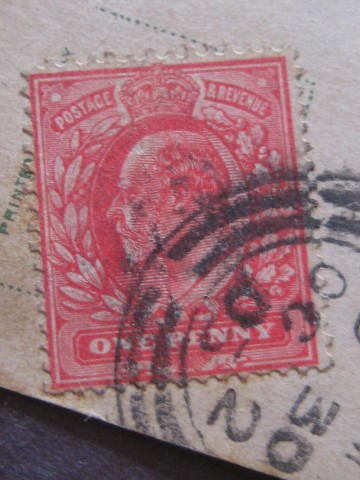
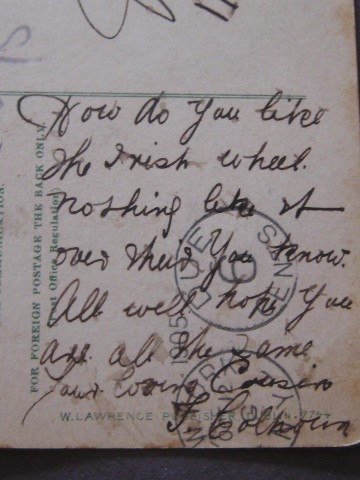
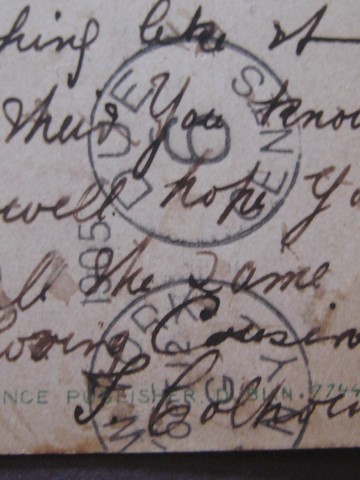
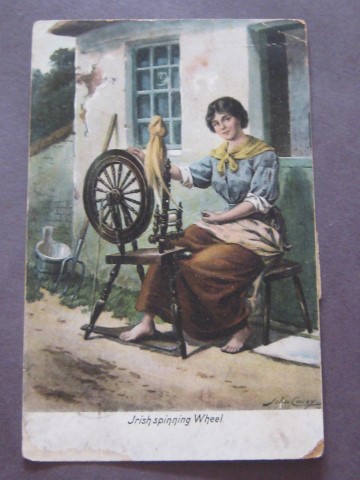
1905 Postmark, King Edward Stamp & USA Postage Due, Postcard

 
To participate in the forum you must log in or register.
Author Previous TopicReplies: 5 / Views: 4,216Next Topic  
Pillar Of The Community
United States
558 Posts
Posted 07/18/2014   12:51 pm  Show Profile Bookmark this topic Add SueStamps to your friends list Get a Link to this Message
Hi Everyone,
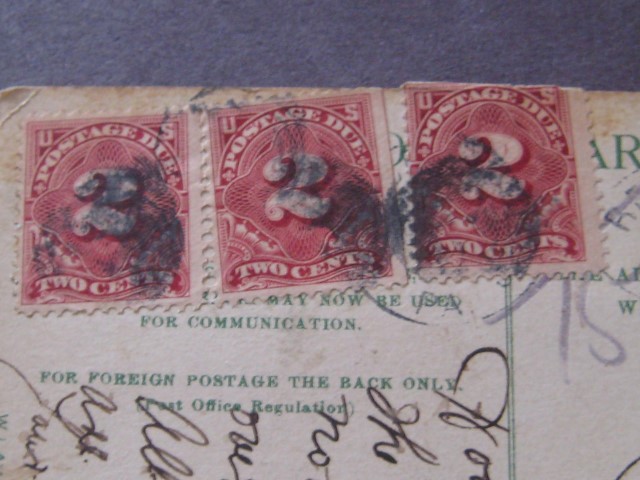
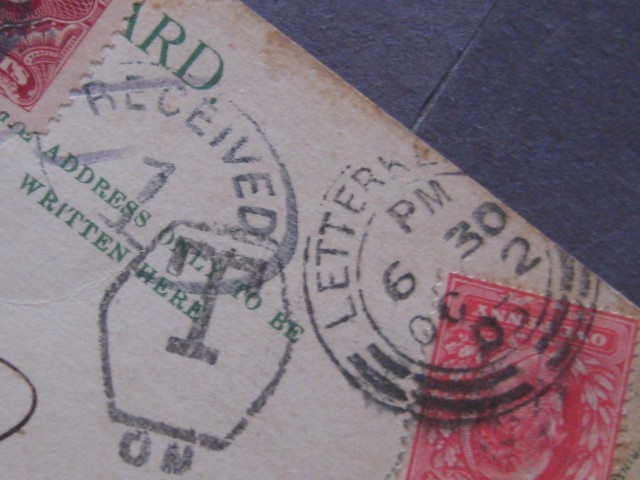
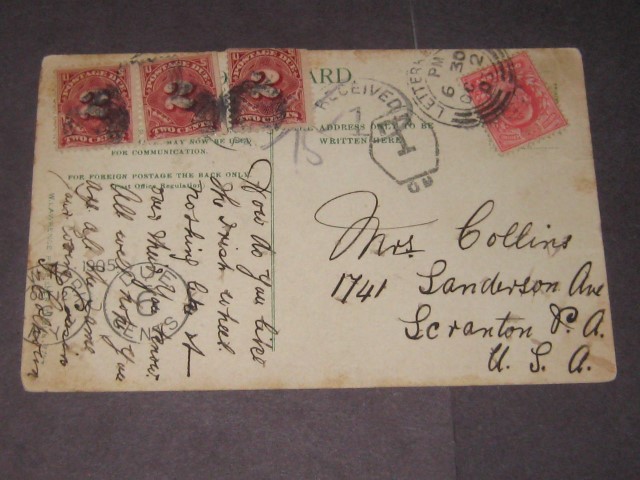
I find this postcard interesting because of all the stamped marks, the RECEIVED 1, the letter "T" inside another shape, LETTER on the foreign King Edward stamp, the three USA postage due stamps, and the DUE 6 CENTS.

My question is, does anyone know the process from start to finish? Was it mailed from England, postmarked in that country, then sent to someone in the USA? And, if so, did the Post Office hold on to this postcard and not give it to the person because there was not enough postage on it, and did the person have to go to the Post Office, pay six cents, and then they get the card? But that doesn't make sense, if they pay the six cents why would the PO place six "postage due" stamps on it, instead of just taking her money? When did the three, USA postage dues stamps get placed ON the postcard? And what is the letter T, what does that mean? I will guess that the 'RECEIVED 1' was stamped at the USA PO?

Sorry for so many questions but I am so curious!
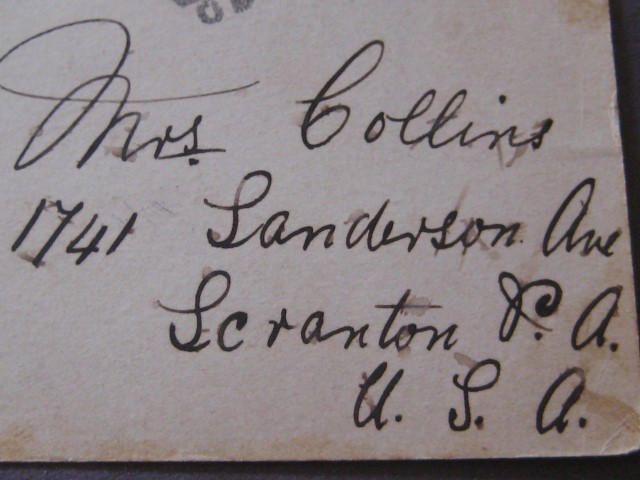
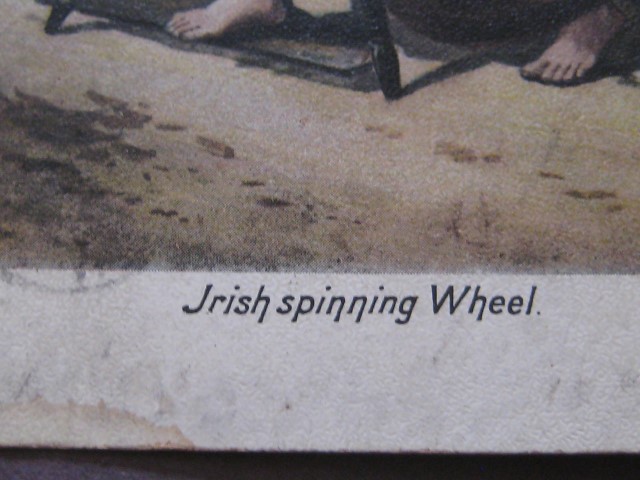
Here are the photos of the postcard in question.
Thank you!
Sue (SueStamps)






Send note to Staff

Bedrock Of The Community
United States
12128 Posts
Posted 07/18/2014   1:43 pm  Show Profile Bookmark this reply Add wt1 to your friends list  Get a Link to this Reply
To answer part of your question, the postcard was mailed from England to the US. The postal authorities in England applied the "T" stamp -- "T" = "taxe". Then it arrived in the US (at New York) and the US postal authorities noted the postage due was 6 cents (which the recipient paid as evidenced by the three (3) 2-cent US postage due stamps applied to the postcard before it was delivered to the addressee.)

The reason for the seemingly high charge is that the amount of postage due was likely double the actual postage ... essentially it served as a penalty for not having prepaid the proper postage amount to begin with.

To quote from an old Linn's Stamp News article:


Quote:
The Universal Postal Union Convention of Paris of 1878 required that short-paid international mail between member nations be marked by the originating country with the letter "T," which stands for the French word "taxe," to warn the receiving country that postage due was to be collected from the recipient. Sometimes the "T" was plain, but more often it was enclosed in a circle, triangle, hexagon or octagon.


http://www.linns.com/howto/refreshe...rcourse.aspx

More here:

http://en.wikipedia.org/wiki/Postage_due
Send note to Staff  Go to Top of Page
Edited by wt1 - 07/18/2014 1:44 pm
Pillar Of The Community
United States
2779 Posts
Posted 07/18/2014   1:55 pm  Show Profile Bookmark this reply Add Battlestamps to your friends list  Get a Link to this Reply
Hey Sue,
The T is from the French for Taxe, or "postage due". It has international use and you'll see it on covers and postcards from all over. The receiver did have to pay 6 cents and the stamps on the postcards act as a "receipt" to show that the postage was indeed paid for. The "received" postmark is indeed from the U.S. The CDS of that postmark is under the postage due stamps so it's either from Scranton or even New York City or Philadelphia as most international mail would have been received into the U.S. at those locations.

Here's another question. Why did the postcard need additional postage? 1p. should have been plenty, but I believe it's how the postcard was written. in 1905, U.S. postal regulations for postcards and postal cards required that the address side was strictly only for addresses - no messages allowed. Great Britain and other countries had switched over to divided postcards, but the U.S. wouldn't allow it until 1907 if I recall correctly. The additional surcharge was probably due to the message written on the address side thus the penalty and raise the item to a higher rate.
Send note to Staff  Go to Top of Page
Pillar Of The Community
United States
558 Posts
Posted 07/18/2014   3:36 pm  Show Profile Bookmark this reply Add SueStamps to your friends list  Get a Link to this Reply
Wow, I know I say this often, but you all are so wonderful! I am ever so grateful!! Knowing so much more, gives the postcard more meaning!
Thank you thank you!
Sue (SueStamps)
Send note to Staff  Go to Top of Page
Pillar Of The Community
Germany
1714 Posts
Posted 07/19/2014   3:44 pm  Show Profile Bookmark this reply Add scotzm to your friends list  Get a Link to this Reply
As already stated the postcard was contrary to the then Post Office Regulation (it IS printed on the postcard) so it was sent at letter post rate and therefore was UK 1.5 pence short.
The "T" mark should have included a "15" which would have indicated 1.5 pence converted to International Centimes. At this time it was only necessary to indicate the amount short and not the total amount to be collected. On arrival the 15 centimes was doubled making 30 centimes and then converted to US cents which was 1 US cent equal to 5 International Centimes and so arriving at a postage due total of 6 US cents.
Send note to Staff  Go to Top of Page
Valued Member
United Kingdom
7 Posts
Posted 07/21/2014   05:26 am  Show Profile Bookmark this reply Add norvic to your friends list  Get a Link to this Reply
' 15 ' is written to the left of the 'T' mark, in indelible pencil, centre top of the card.
Send note to Staff  Go to Top of Page
  Previous TopicReplies: 5 / Views: 4,216Next Topic  
 
To participate in the forum you must log in or register.

Go to Top of Page

Disclaimer: While a tremendous amount of effort goes into ensuring the accuracy of the information contained in this site, Stamp Community assumes no liability for errors. Copyright 2005 - 2026 Stamp Community Family - All rights reserved worldwide. Use of any images or content on this website without prior written permission of Stamp Community or the original lender is strictly prohibited.
Privacy Policy / Terms of Use    Advertise Here
Stamp Community Forum © 2007 - 2026 Stamp Community Forums
It took 0.14 seconds to lick this stamp. Powered By: Snitz Forums 2000 Version 3.4.05