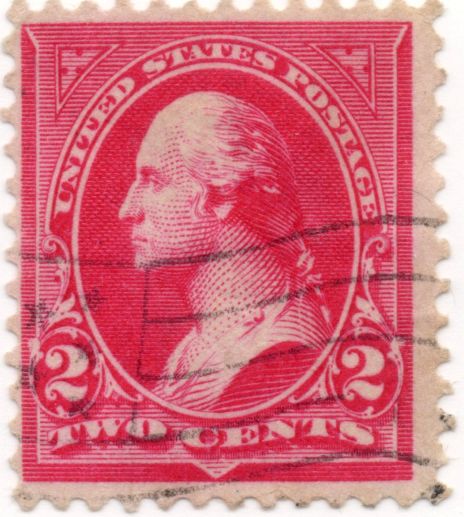
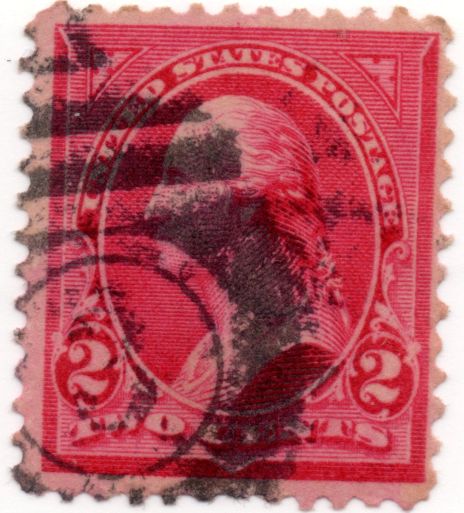
Poleas, indentifying color is difficult to discuss on the internet. In general, identifying color causes many headaches.
There are many variations of monitor and scanner calibrations. Unless we all spend $200+ and several hours, we are all going to see different colors.
Colors can vary with time, chemical or sunlight exposure, etc.
Inks when made can vary in color due to many things. Modern ink manufacturing using calibrated electronics and very reproducible processes to result in very stable and consistent colors.
Even the paper that an ink is put on will vary the color. Graphic designers go to great lengths to match inks, papers, and more to produce the correct resulting color shade.
Things like wars can create a scarcity of a certain pigment to make the ink. Price fluctuation of pigments can create a desire to change color shade by using less or more of a type of pigment.
Unless your example's color comes very close to one of the Scott varieties, or at least it differs from the standard color greatly, then call it unknown for now and consider it the common variety.
You basically need to have a physical reference in front of you. A set of stamps or an expensive color guide is useful.
Here are links to a few recent color shade discussions:
https://goscf.com/t/39945https://www.stampcommunity.org/topi...IC_ID=39434&From what I deduce, color variations occur inside of Scott variations and between series issues. Ink formulation certainly wasn't an exact science near the turn of the 20th century.
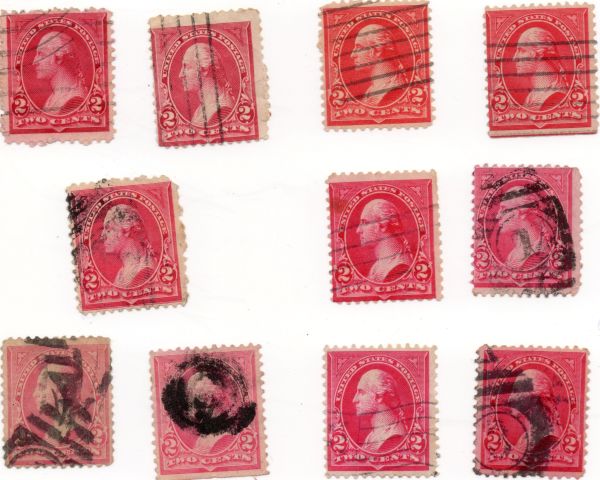
First off, does C have a re-entry in the left "2"? That seems to be the most collectible thing among all of your stamps.
Please go through my above posted links and look at each of your stamps one by one. I've confused myself many times by trying to find characteristics across more than one stamp at a time.
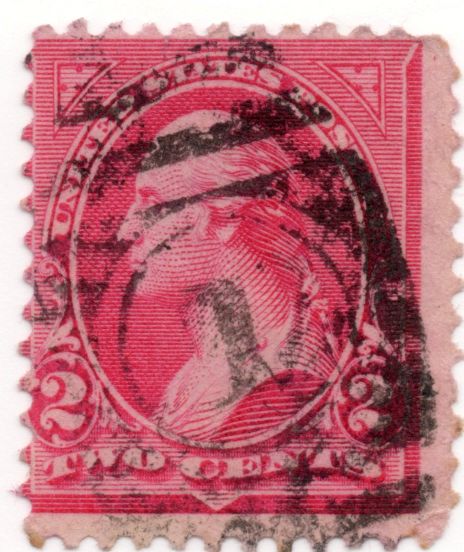
Your posted images are just barely large enough to pick out the details. In the future, try to post each stamp with as large as an image size as possible. It's a pain, but the image optimizer on this forum does work pretty well.
From my very inexperienced mind looking at small images, here are my opinions. I went through your images very quickly so there may be many errors. These type identifications take a while to get used to.
A, B, C: definitely not lake in any variation. So not 249. They are kind of close to carmine, so 250 is a possibility
D and E do look pinkish and type III because of many characteristics. In the future, post only a few stamps and give your reasons why you believe that they are one type or another. Expressing pure frustration is perfectly valid as well. These things are not easy to learn.
E type III because I think that I can see the absence of the strengthened hair that is present in type IV. Pink.
F has line in hair, dots in ear, straight T, so IV
G has line in hair, straight T, so IV
H has line in hair, dots in ear, straight T, so IV
I has round T, soft dots in ear, so III, not rose carmine, looks pinkish.
J no strengthened hair, soft ear dots, round T, so III.
K no strengthened hair, round T?, portrait oval is smooth, so probably III
http://www.theswedishtiger.com/248-scotts.html has some nice large images of the different types and color varieties.
As said before, identifying color varieties on non-color calibrated monitors and scanners is very difficult. After you accumulate many examples, you'll start to see patterns in the color variances between issues.
Larger posted images helps a lot. Also, consider posting one stamp or one type of a stamp at a time. Going through 11 stamps at once and providing information for each inside of one post is quite difficult and confusing.
Good luck!





 Posted 10/12/2014 07:41 am




 B
B
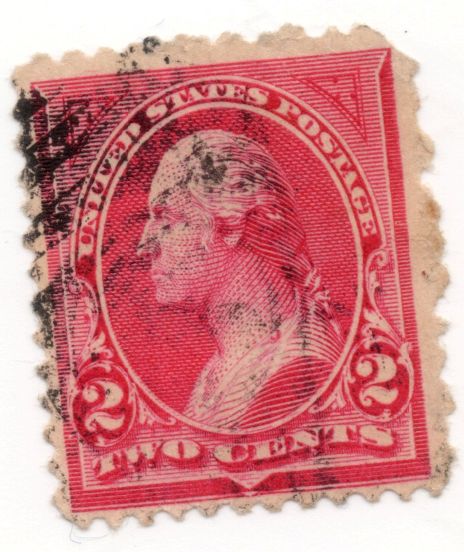 D
D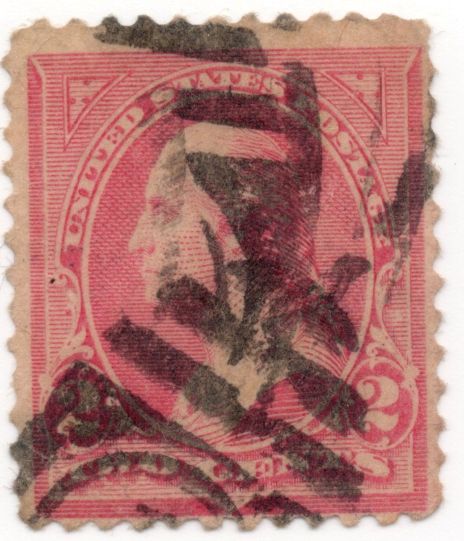
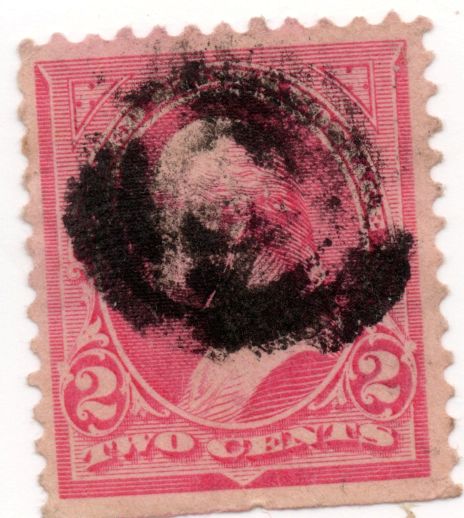 F
F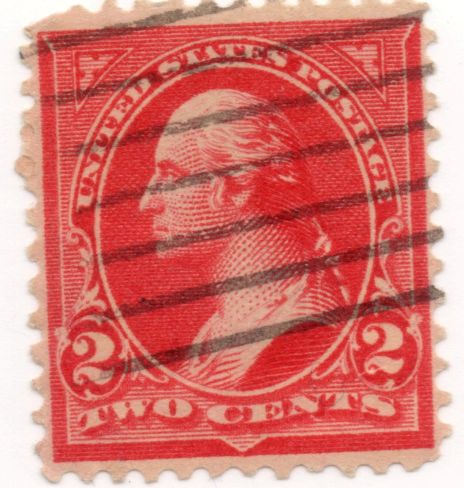
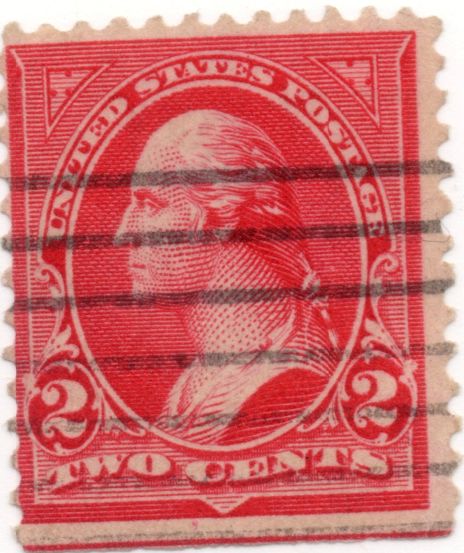 H
H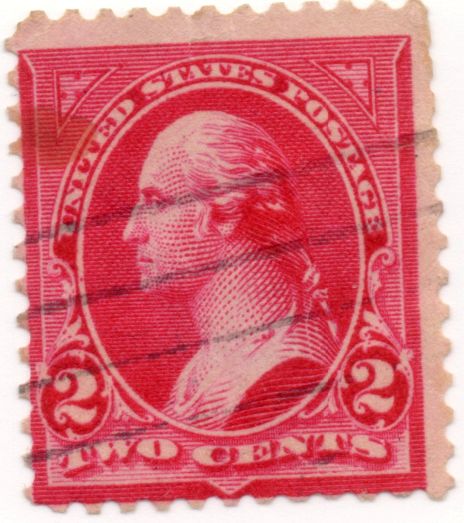
 J
J