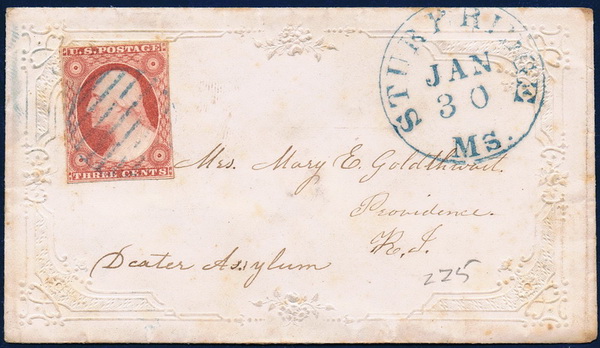
KRelyea: That first "ladies cover" you scanned, addressed to a Mrs. Mary E. Goldthwait of Dexter Asylum, Providence, RI, brought up a rather disturbing history of how the Dexter Asylum functioned back in the day:
Quote:
The Dexter Asylum served as an institution for the care of the poor, aged and mentally ill of Providence from 1828 to 1957. The Asylum began through a bequest in the will of Ebenezer Knight Dexter (1773-1824), a wealthy citizen who had served on a town committee for poor relief. Dexter's gift to the town, though much needed at the time, later was seen as an anachronism--a walled and isolated "poor farm" in the midst of Providence's residential east side. Beginning in the 1920's, city officials, developers and assorted heirs made several attempts to change the conditions of the will, and in 1957, they finally succeeded. The Dexter Asylum property was sold to Brown University.
...
Living conditions, as depicted in early lists of rules and punishments, work records and daily menus, were hardly desirable by present standards. Visitors were permitted only once every three weeks; male and female inmates were strictly separated; the evening meal consisted of white bread and tea; and those found guilty of drinking, "immoral conduct," "loud talking or disrespectful behavior" or faking illness to avoid work were subject to "confinement in bridewell (a jail cell) for a time not exceeding three days, and of being kept on short allowance of food." An 1843 observer reported one-quarter of the inmates insane, yet medical records reveal no attempt at treating mental illness beyond confinement in the "maniac cells."
...
A 1941 article in the Providence Sunday Journal characterized the asylum as a "well-meaning legacy of a bygone day which has made time stand still."





 Posted 11/17/2014 10:25 am