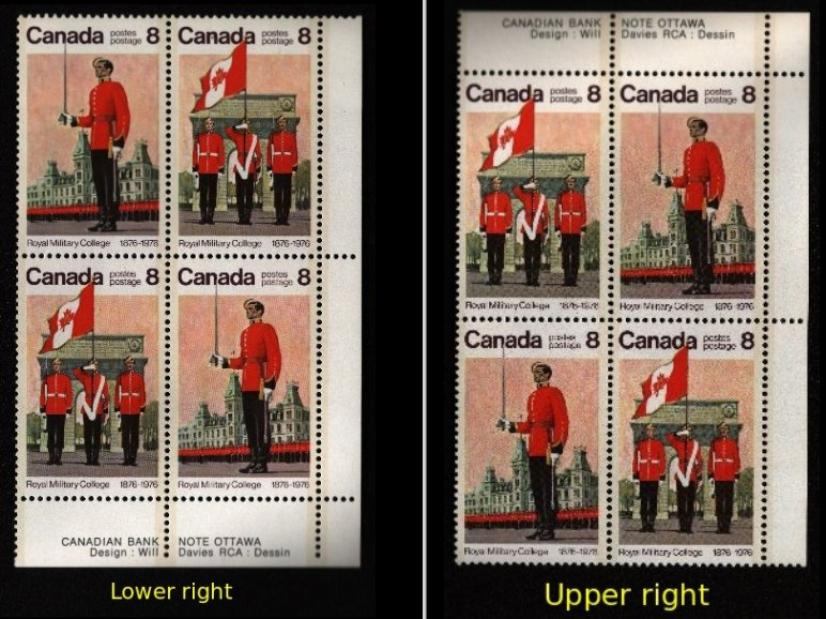
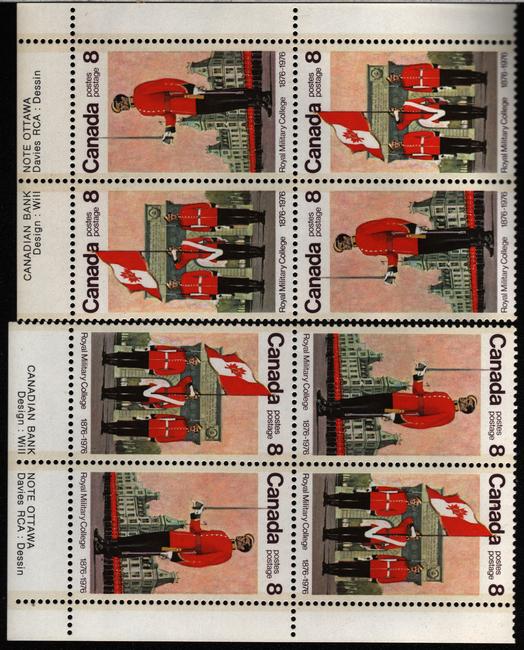
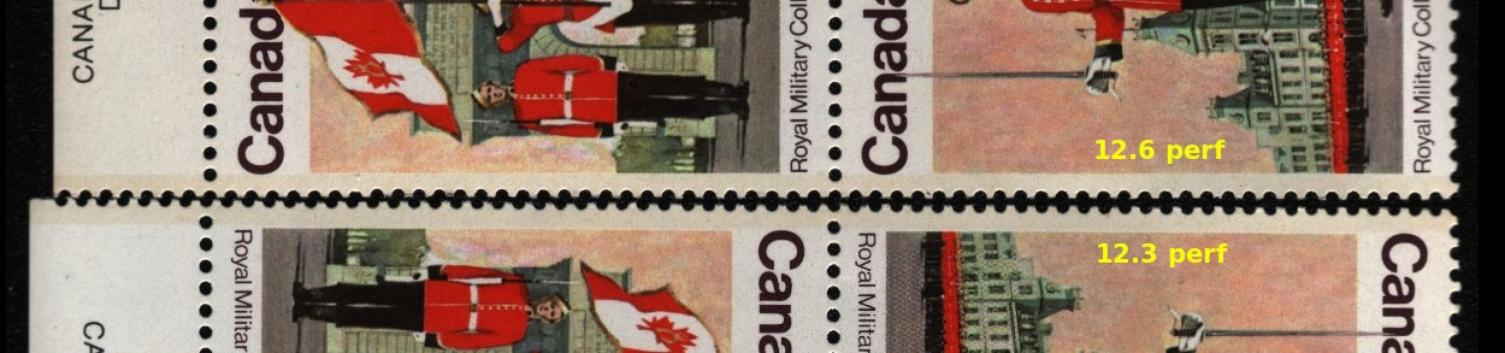
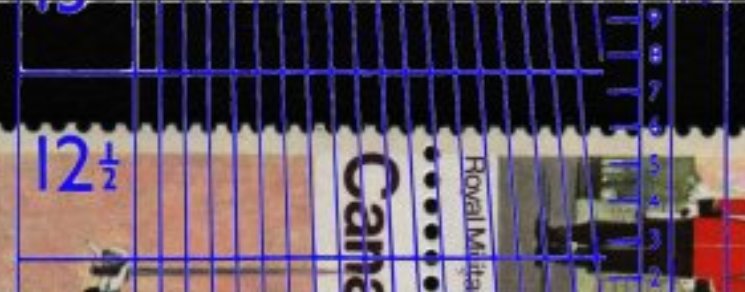
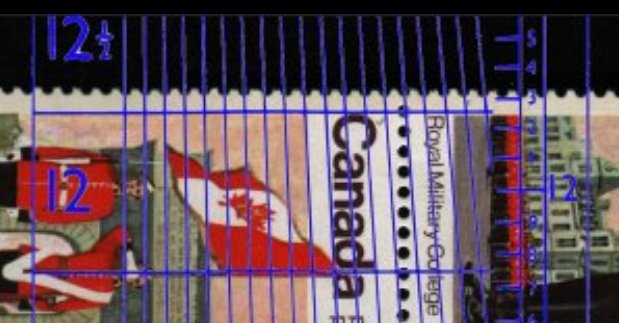
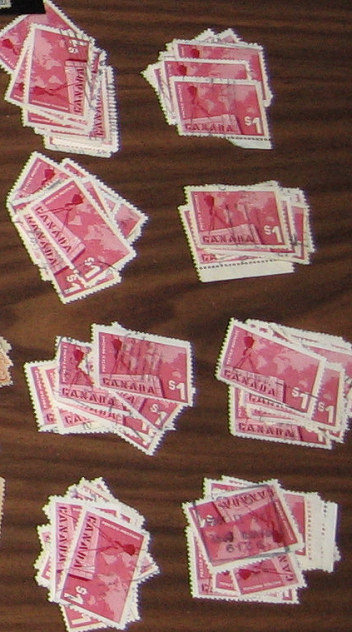
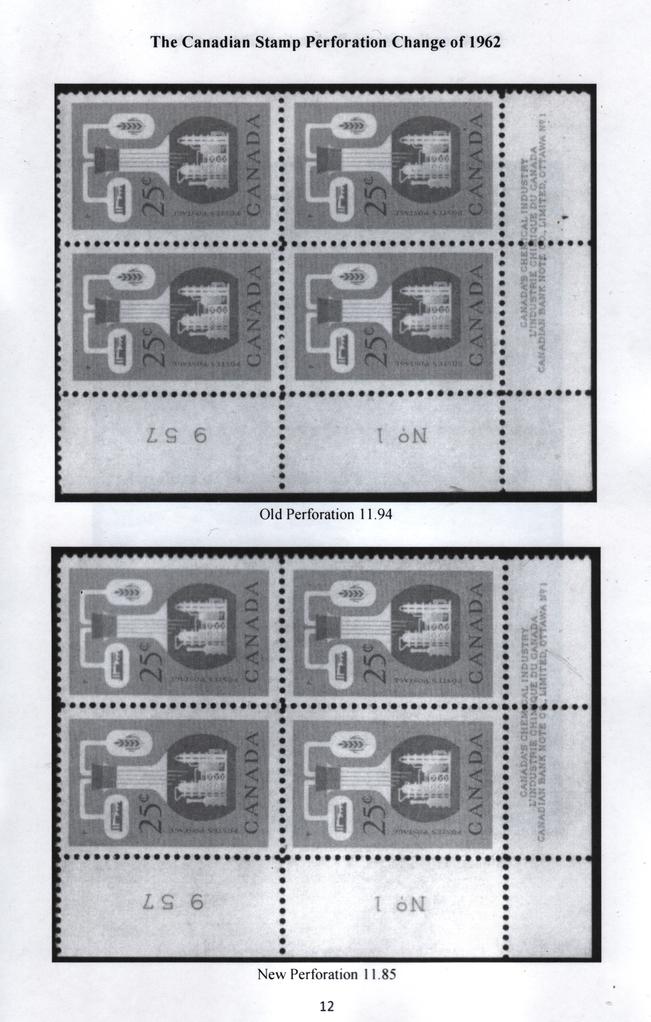
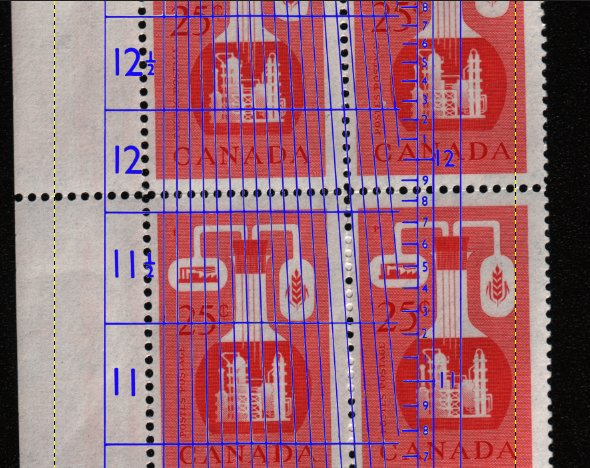
I have so far examined thirty of my used batch of #411. Twenty have the Kiusalas 66 perforation and five have the Kiusalas 67 perforation. I did not measure them with a gauge, I lined them up with each other, as shown in Jogils image.
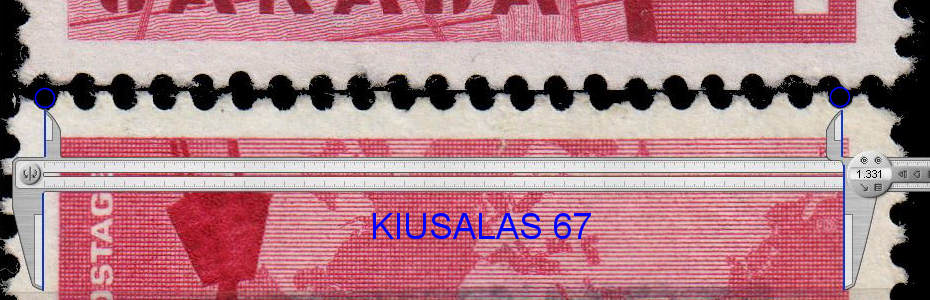
In order to measure the perforations I decided to use and interesting tool called
Screen Calipers. I first heard of it from member 51studebaker in another thread. The basic version is free and you can access it here.
http://www.iconico.com/caliper/I am quite impressed with this digital tool. One great advantage is it allows you to calibrate the tool based on a known size of the stamp. This is important, as most scanners on the market do not actually scan 100%, and the actual size can vary in different locations on your flatbed!
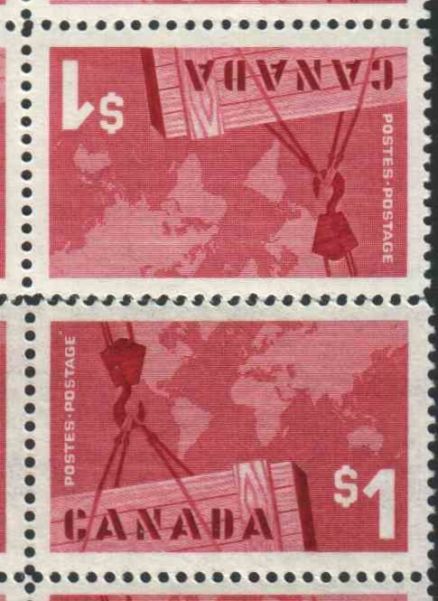
For the #411 Export stamp, I first measured the width of the red horizontal design area using a 1/64th steel engineering scale. The measurement is exactly 1-5/16 inches (1.313"). I then scanned the stamp at 600dpi. I then took the digital calipers and set them to be that measurement using the "calibrate units" feature.
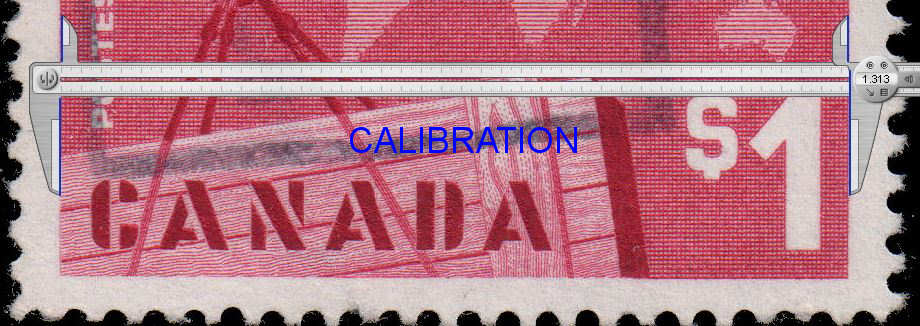
Next I used the calipers to take a measurement over the centers of 20 holes on the known Kiusalas 66 stamp. That dimension came out to 1.311 inches.
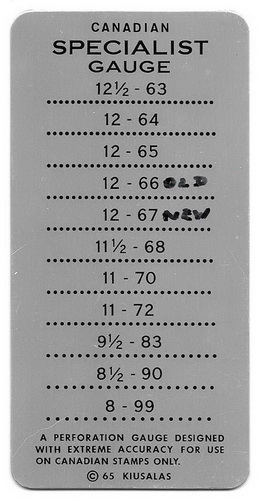
Doing the math, 1.311" divided by 20 holes gives a measurement of 0.0655", which is the average distance between each individual hole. Kiusala multiplies this by 1000 to give it a gauge number of 65.5. Well, make that 66, since Kiusala seems to omit fractions and round up or down.
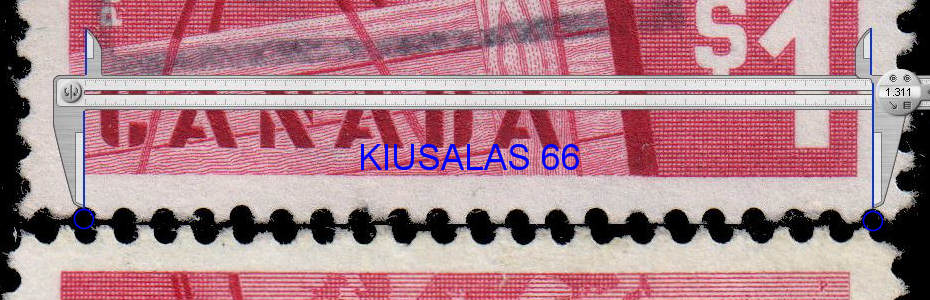
I did the same for the Kiusalas 67 stamp and came up with 1.331 over 20 holes, getting a measurement of 0.0666. Multiplied by 1000, this becomes 66.6, rounded to 67.
Now to convert to the standard metric gauge, the number of perforations per 2 centimetres, using the actual numbers and the rounded numbers:
Kiusalas 65.5: 20mm / (0.0655in x 25.4) =
12.02Kiusalas 66: 20mm / (0.0660in x 25.4) =
11.93Kiusalas 66.6: 20mm / (0.0666in x 25.4) =
11.82Kiusalas 67: 20mm / (0.0670in x 25.4) =
11.75These numbers are slightly different to what Jogil has but they are close enough. In my mind it proves that he has made a major find in Canadian philately, something that went unnoticed for over 50 years.





 Posted 12/29/2014 3:11 pm