| Author |
 Replies: 11 / Views: 4,886 Replies: 11 / Views: 4,886 |
|
|
Pillar Of The Community
Australia
1251 Posts |
|
|
 Hi to all Has anyone else seen or have a copy of this variety. Any information greatly appreciated. Horamakhet |
|
Send note to Staff
|
|
|
|
|
Pillar Of The Community
United States
733 Posts |
|
|
I'm sure some one with much greater experience in this area than mine will give you more information, but to get you started.
I believe this is SG #229. No varieties mentioned. What are you referring to as a "variety"? White blobs at the bottom of the stamp look more like faults, than any plate flow imho. |
Send note to Staff 
|
|
|
Pillar Of The Community
Australia
1251 Posts |
|
|
Hi danko
I am referring to the number one on the right hand side. Also there is a white blob on the ear of the queen.
Horamakhet |
|
Send note to Staff
|
|
|
Pillar Of The Community
United States
733 Posts |
|
|
Are you sure those are not the thins, or rubbed off ink? To me it looks like the stamp was stuck to something, and the ink with the fibers of the paper was "pulled off the stamp", when it was separated. |
|
Send note to Staff
|
|
|
Rest in Peace
Canada
6750 Posts |
|
|
If that is printed typographed (not sure) then the white spots may be extra paper gloating around in the orinting area and then falling off later on, carrying with them the ink on them.
If engraved, then scraping perhaps, as mentioned.
The stamp itself looks to have bene wiped by some sort of chemical or solvent that disolved some of the imprinted ink around the bottom edges.
I do this a lot also; I expect a find and see one, instead of expecting nothing and then proving the find. |
|
Send note to Staff
|
|
|
Pillar Of The Community
Australia
1251 Posts |
|
|
Hi to all
Definitely not thins or solvent, or scrapes, I have examined it under UV light, and a microscope.
The black on the queens face, is a piece of fluff I did not notice when scanning
Also you can see extra lines (best description I can come up with) on the top and bottom right hand corners.
Regards
Horamakhet |
|
Send note to Staff
|
|
|
Pillar Of The Community
Canada
644 Posts |
|
|
I have a similar question on the following stamp. Again, it is not caused by damage. The white line looks like a crack. These stamps were not engraved, but possibly lithographed (or something similar). I posted this on another forum and no one could confirm exactly what it was. If a crack, there should be others out there somewhere. Being as obvious as it is though, it's surprising nothing has been mentioned in the literature. 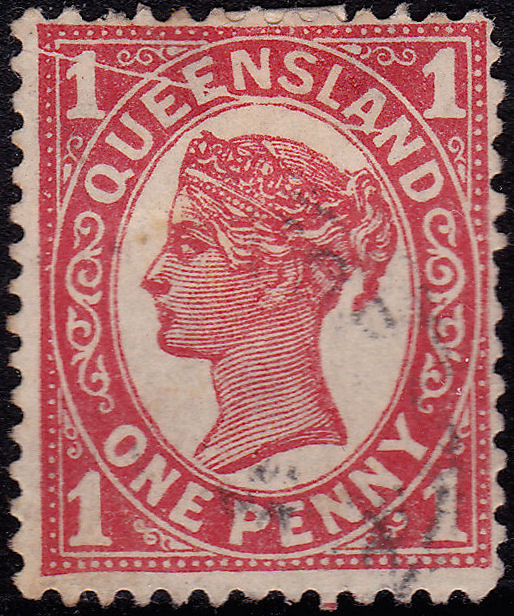 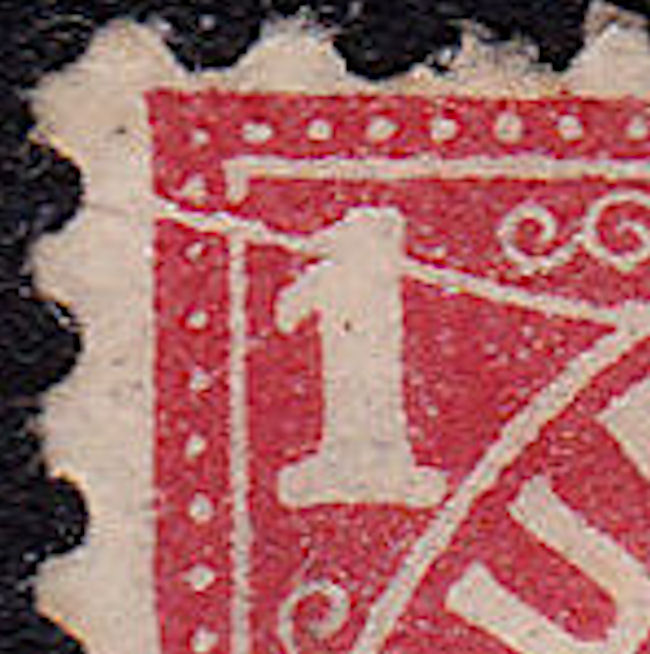 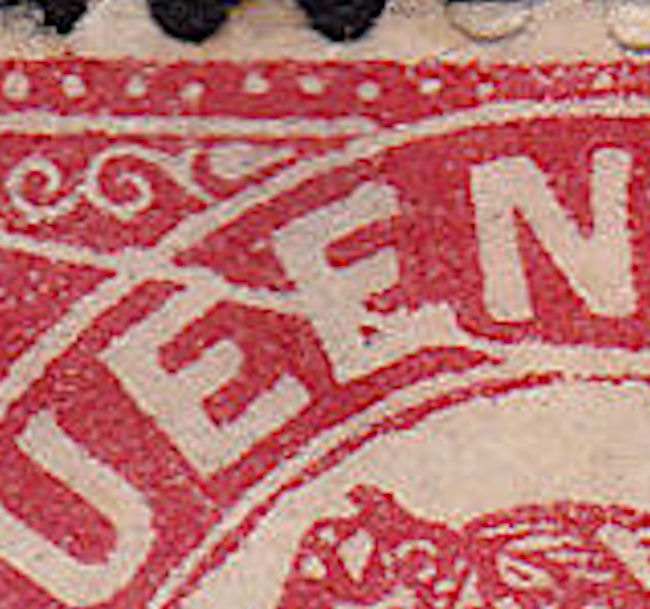 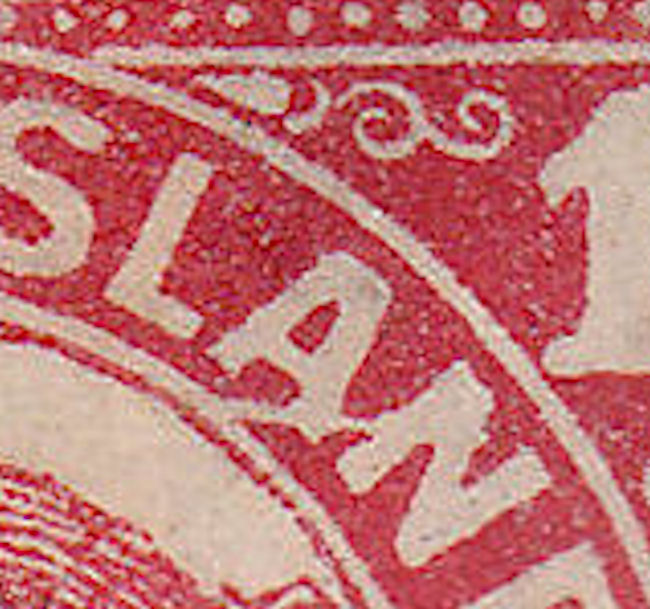 |
|
Send note to Staff
|
| Edited by 3Dadeo - 04/17/2015 08:22 am |
|
|
Pillar Of The Community
Australia
980 Posts |
|
|
Pillar Of The Community
Canada
644 Posts |
|
|
If you could check for me, I would really appreciate it.
I just blew my budget on reference books so can't get anything new for a while. |
|
Send note to Staff
|
|
|
Pillar Of The Community
Australia
980 Posts |
|
|
I saw Ken today, he hasn't seen this flaw, which is good news for its rarity, I guess. |
|
Send note to Staff
|
|
|
Pillar Of The Community
Canada
644 Posts |
|
|
Thanks for checking. Did he happen to mention his opinion on the cause of this flaw? Ie. is it a random event, or something that should be listed and therefore of some value?
Thanks again |
|
Send note to Staff
|
|
|
Pillar Of The Community
Australia
980 Posts |
|
|
Ken would know more about these than any one else I could suggest. While it looks like a crack, which would be repeeated each time the sheet was printed, given that he hasn't seen it, I would think foreign matter on the printing plate (a piece of string or similar) is a more likely explanation, in which case it is a one-off.
To be a plate flaw, you would need to prove more than one exists.
A spectacular stamp, though. |
|
Send note to Staff
|
|
| |
Replies: 11 / Views: 4,886 |
|




 Posted 04/16/2015 8:10 pm


