| Author |
 Replies: 23 / Views: 6,025 Replies: 23 / Views: 6,025 |
|
Pillar Of The Community
Canada
730 Posts |
|
|
Here is a stamp I found in an old collection. It was mounted on this piece of thin cardbaord in the album with the letters LAID written below the stamp. You can see right away that there are some faint vertical lines on the design of the stamp. And if you look through the stamp against a bright light, you can see vertical lines in the paper. But this is not Laid Paper. There are obvious diagonal weave lines on the paper surface when you look at the back of the stamp. So it is machine made paper. I asked around and apparently there is a reference to Rib-Effect paper in Boggs and this is a good example of that paper. This is caused by a roller used in the printing process that impresses the ink against the paper. In time, this roller becomes worn and impresses the wear marks into the paper during printing. Of course the paper is always damp when printing the stamp so there is a "watermark" effect in the paper. This makes it look like laid paper. Now do you think this is a correct explanation for this stamp? 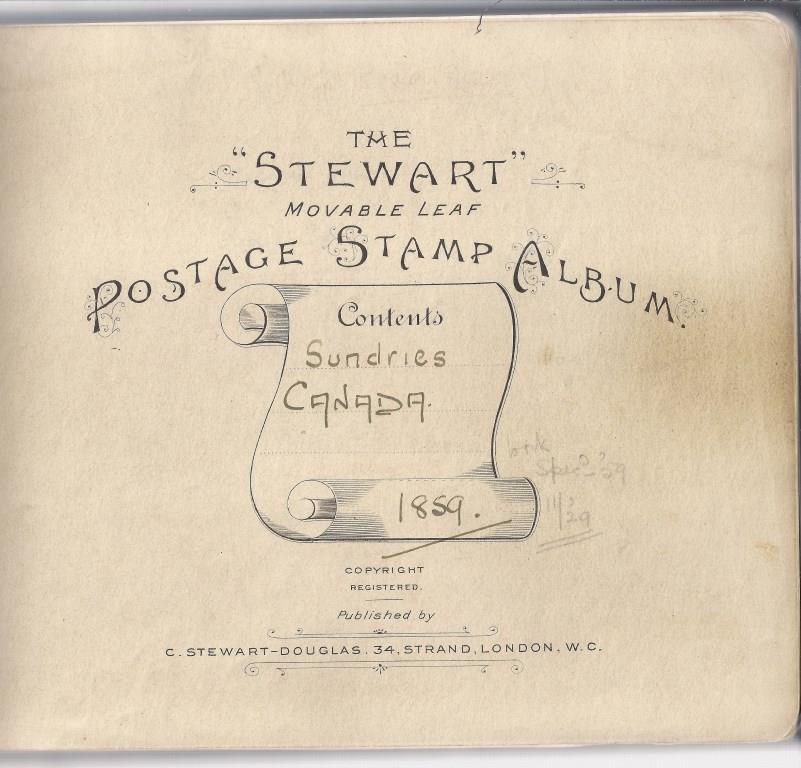   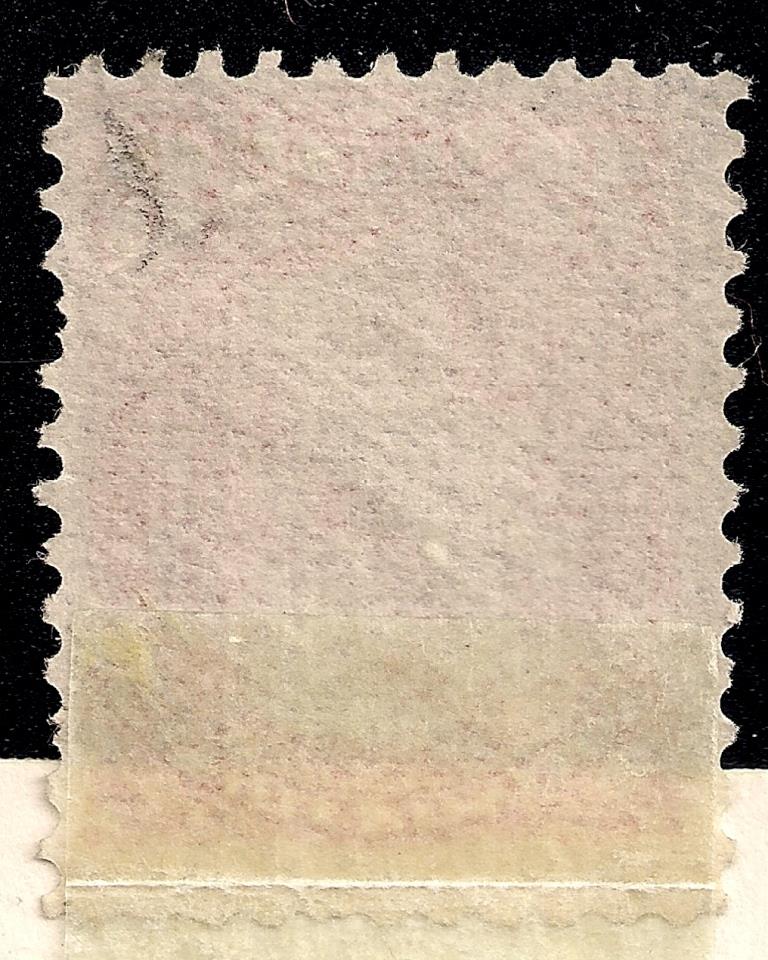 |
|
Send note to Staff
|
| Edited by jimjung - 06/07/2015 11:43 am |
|
|
|
|
Pillar Of The Community
United States
578 Posts |
|
|
Well, according to R.Lowe's Encyclopedia of Stamps of the British Empire, , for the large Queens, "it is possible to find many variations in both thickness and texture although all papers are believed to have been machine made"...Then follows considerable detail about papers, including warning to "beware of forged laid paper". |
Send note to Staff 
|
|
|
Pillar Of The Community
United States
728 Posts |
|
|
Holmes Handbook and Catalogue of Canada and B.N.A., L. Seale Homes, M.D., 1945,pgs.101-102. Says the following under the heading Papers: "5. 1875 - As in No.1 but surface pebbly and often called a variety of ribbed which is more noticeable on the thicker grades. This has been reported with the 2c, 5c, and 10c values."
Yours is a 3c so I guess we can add it to this list. It sure seems to match the description. |
|
Send note to Staff
|
|
|
Pillar Of The Community
Canada
730 Posts |
|
|
Usually, fake laid paper is made by removing a bit of the paper and forming the lines by thinning. This is noticebale looking at the surface of the paper. And by using watermark fluid to check the edges of the thinned lines. After checking, I believe that this stamp has not been modified. With Fake Laid paper, you can always see the lines without watermark fluid. But here, you can only see the lines if you look thru the paper.
Notice how there are vertical lines up and down the stamp that are not sharp. Now with a Kiss Print, I would think that the extra ink would not be so consistent in shape unless it was consistent with part of the design.
watermark, that is interesting. What is No. 1 ? Is there anything in Holmes that talks about a Blanket Roller or Blanket Cylinder? |
|
Send note to Staff
|
| Edited by jimjung - 06/07/2015 1:23 pm |
|
|
Pillar Of The Community
United States
728 Posts |
|
|
Holmes paper 1, "1. Jan. 1870 - Thin fine quality white wove, smooth surface, opaque, with points of light showing through and when flipped by fingers gives somewhat of a metallic sound. The thickness varied some later, about 1875."
No mention of rollers or cylinders. |
|
Send note to Staff
|
|
|
Pillar Of The Community
Canada
730 Posts |
|
|
Dr. Jim Watt said that somewhere in Boggs, Robson-Lowe or Jarrett, he read that this was caused by a worn Blanket Cylinder. I think that a Blanket Cylinder is a cylinder used to press the stamp paper against the plate when making a sheet of stamps. It would be the top cylinder in this picture of a simple printing press. 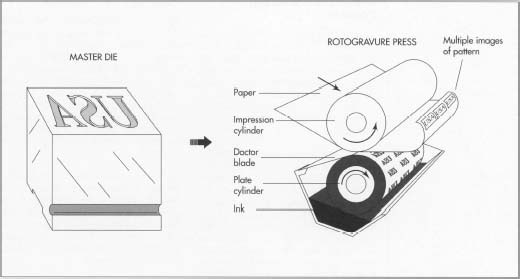 |
|
Send note to Staff
|
| Edited by jimjung - 06/07/2015 2:43 pm |
|
|
Pillar Of The Community
United States
728 Posts |
|
|
Small Queens were printed on flat plates. Rotary Presses were not available in this printing period. The cylinder or roller if at fault would have been used during paper production and not during the printing process. |
|
Send note to Staff
|
|
|
Pillar Of The Community
Canada
730 Posts |
|
|
This may be the case and this could be why the lines are in the paper. I'm going to bring this one to the BNAPEX.
Dr Jim Watt said that it is like a stitch watermark type of variety but more unknown and not listed. He said he has this variety on the 1c, 2c, 3c and 6c but it can occur on any stamp. |
|
Send note to Staff
|
|
|
Rest in Peace
7742 Posts |
|
|
jimjung..I will probably see him at our local stamp club tomorrow night..I will see if I can get any more information for you on the 3 cent.
Robert |
|
Send note to Staff
|
|
|
Pillar Of The Community
3865 Posts |
|
|
In some old flat presses, the flat plate was placed on the bottom. Then, the plate was inked with an inking roller. Then a sheet of damp paper was placed on top of the inked printing plate.
Then, the paper was pressed down on the inked printing plate by a roller that was rolled across on top of the paper. |
|
Send note to Staff
|
| Edited by jogil - 06/08/2015 07:51 am |
|
|
Rest in Peace
7742 Posts |
|
|
Quote:
In some old flat presses, the flat plate was placed on the bottom. Then, the plate was inked with an inking roller. Then a sheet of paper was placed on top of the inked printing plate.
Then, the paper was pressed down on the inked printing plate by a roller that was rolled across on top of the paper. Correct jogil..And other platen presses the paper was placed on top of the the picas and another plate plate made an impression/inking of the paper...I have used rotary, platen and many others when I was training to be a printer in high school...My friend had his hand smashed by the plate...extreme pressure..Wasn't a nice site. one of the old presses I was trained on is shown below. 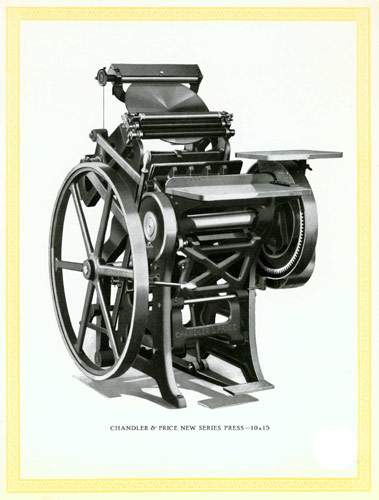 Robert |
|
Send note to Staff
|
|
|
Rest in Peace
Netherlands
963 Posts |
|
|
Quote:
And if you look through the stamp against a bright light, you can see vertical lines in the paper. But this is not Laid Paper.
There are obvious diagonal weave lines on the paper surface when you look at the back of the stamp. So it is machine made paper. There are NO diagonal lines, this is all virtual, optical illusion! There are just horizontal and vertical lines and they cross according to a linen binding. There was NOTHING else before 1938 so LAID paper does not exist! Linen-bindng: 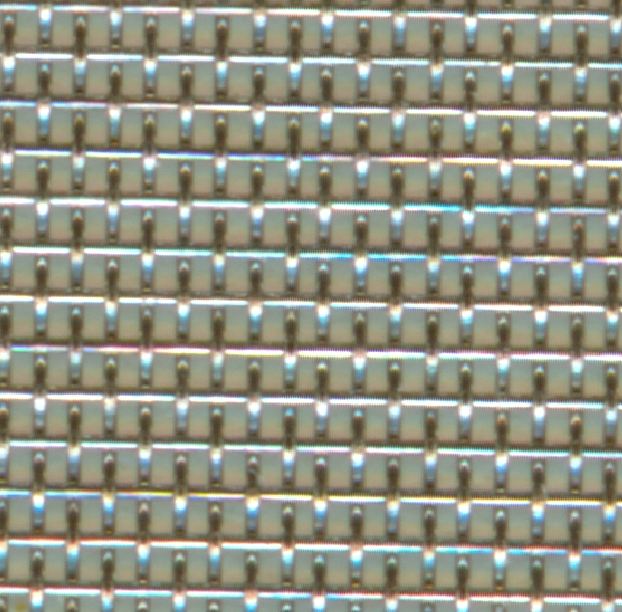 after connecting the cross-overs by a blue line: 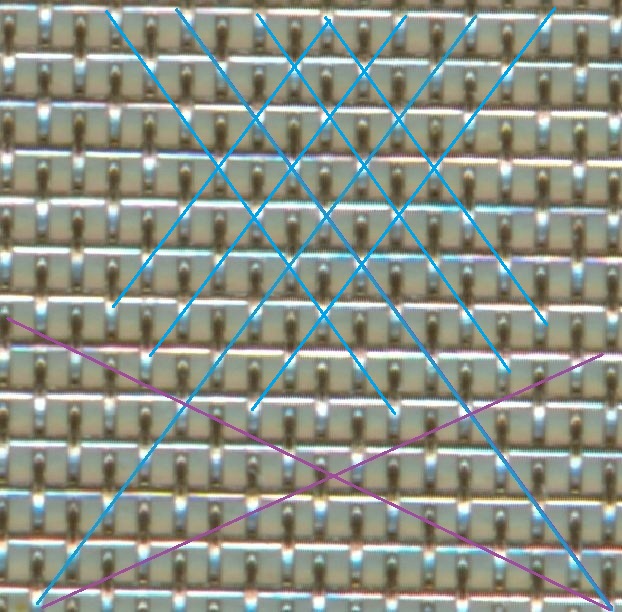 |
|
Send note to Staff
|
| Edited by Galeoptix - 06/08/2015 03:53 am |
|
|
Pillar Of The Community
Canada
730 Posts |
|
|
I am thinking that the roller used to press the stamp paper against the plate is the roller that Dr Jim Watt is talking about. Since it presses against the plate over and over again to print the sheets, it makes sense that this would become worn over time. The wear pattern would be vertical lines because it is moving up and down the plate. The paper is dampened before printing so the wear marks would impress the vertical lines into the paper. |
|
Send note to Staff
|
|
|
Pillar Of The Community
3865 Posts |
|
|
Is Dr. Jim Watt on this philatelic forum (SCF) or on any other online philatelic forum? |
|
Send note to Staff
|
|
|
Rest in Peace
Netherlands
963 Posts |
|
|
Quote:
I am thinking that the roller used to press the stamp paper against the plate is the roller that Dr Jim Watt is talking about. Since it presses against the plate over and over again to print the sheets, it makes sense that this would become worn over time. The wear pattern would be vertical lines because it is moving up and down the plate. The paper is dampened before printing so the wear marks would impress the vertical lines into the paper.
How many "vertical lines" per cm???? Compare his with the vertical lines of the weave [the horizontal lines in my images] and IF they are different, the above "explanation" may be right.. Otherwise it is pure fantasy and imagination! Whatever it is, it has NOTHING to do with the paper and its manufacturing..... |
|
Send note to Staff
|
|
|
Pillar Of The Community
3865 Posts |
|
|
We know that the wove paper on the Large Queens can have a horizontal or vertical direction in its mesh and this is different from laid lines. |
|
Send note to Staff
|
| Edited by jogil - 06/08/2015 07:43 am |
|
|
Replies: 23 / Views: 6,025 |
|



 Posted 06/07/2015 11:41 am


