Dear rod222,
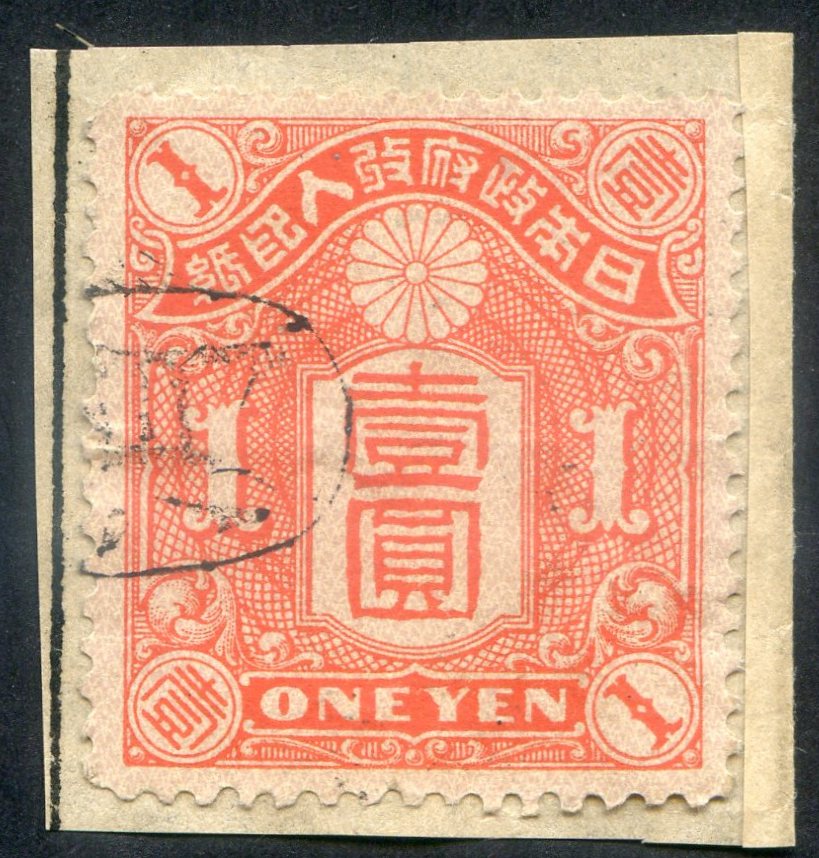
Let me start from the second one which is rather straightforward; it is a general revenue stamp of either;
- 1909 issue, white (normal) paper, without watermark (Forbin "Effets de Commerce et Quittances" 47 (on page 548), Shimomura RA250), or
- 1915 issue, granite paper, with "Meiji" watermark (horizontal zigzag) (Shimomura RA 266. Note that the Forbin catalogue was issued on 1915 so this revenue is not listed)
so please have a look at the paper and watermark for identification.
---------
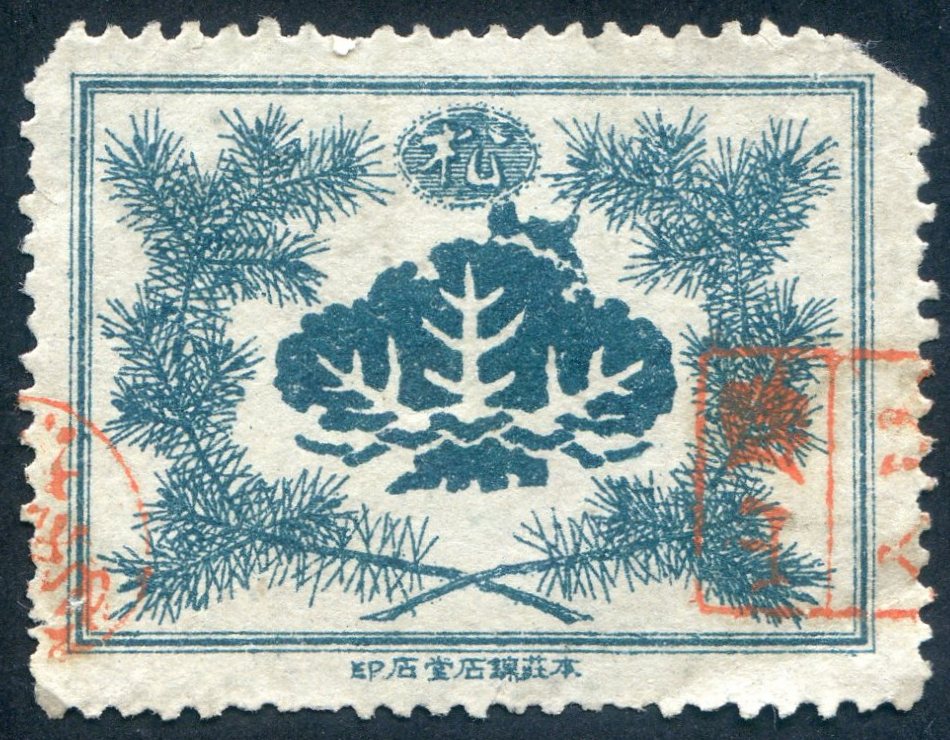
The first label is not a revenue stamp but should be a label/seal issued by a gem stone store, Honjyo-Nishiki-Ishi-Do(h)-Ten located at Honjyo city (now a part of Akita prefecture) to certificate the quality of the "Nishiki-Ishi" gem stone, showing that its quality is the best.
And here comes the mystery tour ;-)
1) The small inscription in the bottom could be read as (from right to left);
"Hon-Jyo Nishiki-Ishi-Do(h) Ten In"
which means "the seal of Honjyo Nishiki-ishi Store".
2) Honjyo is a name of a town located at Akita, Japan. More information here;
https://en.wikipedia.org/wiki/Honj#333;,_Akita3) "Nishiki-Ishi" means " (Japanese) brocade stone", and is a name used to call the special gemstones produced from Aomori prefecture. Beautiful stone, which seems to be a composite gemstone including jasper, agate and other minerals. A beautiful example taken from this Website;
http://www5b.biglobe.ne.jp/~gutenta...iki_kind.htm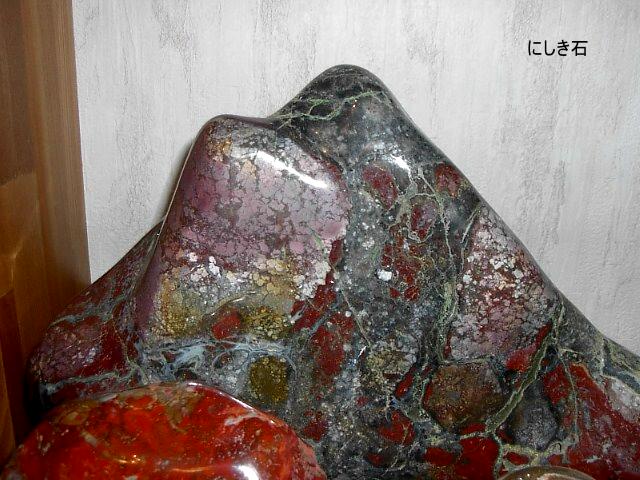
4) Both Aomori prefecture and Akita prefecture is in the Tohoku area, the northern part of mainland Japan. The two prefectures are next to each other.
5) The chinese character on the top is "Matsu", meaning pine (not fir). The images (both surrounding and at the centre) are pine branches.
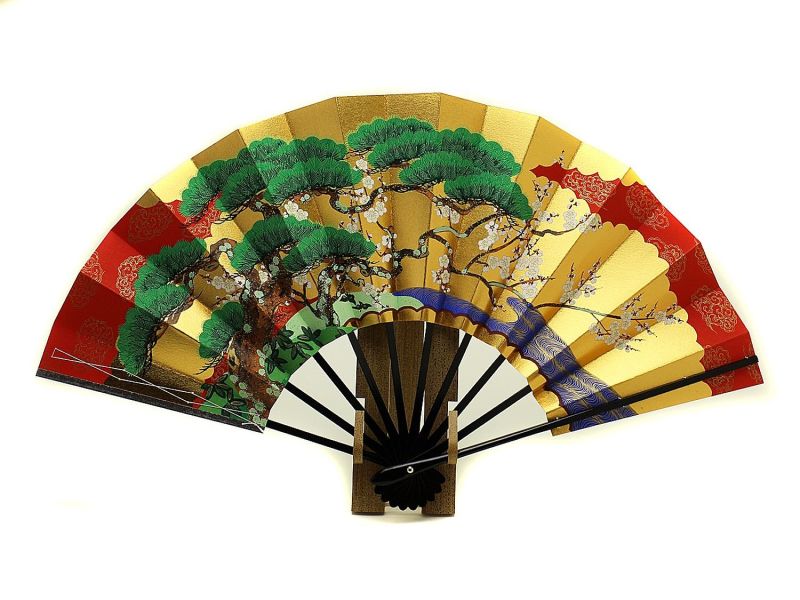
6) In Japan, we often use the combination of pine, bamboo and plum (pronounced as "Sho-Chiku-Bai") as a symbol of good luck and hope. You can see the three characters on the label of Japanese sake Sho-Chiku-Bai, and also the design of the three plants;
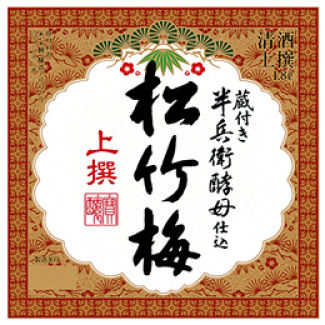
A fine example of the decorated fan depicting the three plants (taken from Web);
7) "Sho-Chiku-Bai" is also used for ordering the quality of a product; "pine" the best, "bamboo" the second and "plum" the third. (In this case the three characters should be pronounced as "Ma-tsu", "Ta-Ke" and "U-Me"). It is a kind of a polite way of saying "Top quality", "middle level" and "normal". An example of a menu in a "Unagi" (grilled eel) restaurant (also taken from Web, with notifications by unechan);
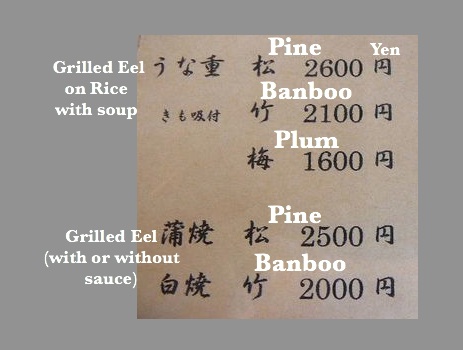
(extreme caution if you are traveling in Japan: in some restaurants the order could be in the opposite manner; plum the best, bamboo the next and pine the third. Better confirm the order by checking the price; It is very very confusing, indeed.)
8) ... So to summarize, this label is issued by the gem stone store "Honjyo Nishiki-Ishi Doh Ten", located at Honjyo, Akita, specialized in Nishiki-Ishi (speciality from neighboring Aomori prefecture), and should have been attached to the gem stone itself (or maybe the written certificate) to guarantee that the quality of the stone is of top rank.
Sorry for the rather long post, but I really enjoyed the puzzle again :-)
Regards, unechan@Osaka, Japan





 Posted 07/01/2015 11:15 am