I wish I knew what exactly happened. I am satisfied the item is genuine. The auction house is one of the better ones in Spain that has its experts.
The scratches on Franco's face suggest something went wrong in the printing press. But whether the paper split in the press, or the thickness of the paper after having been joined played its part, I do not know.
Partly. This is a block from a sheet from, most likely, a reel. The complete joint may be much larger and have affected the row in which the bottom stamps appeared in other columns.
There's no doubt that these photogravure stamps were printed continuously "on the web" before being divided into sheets. It must be very uncommon to stop the press to repair the paper. Fascinating!
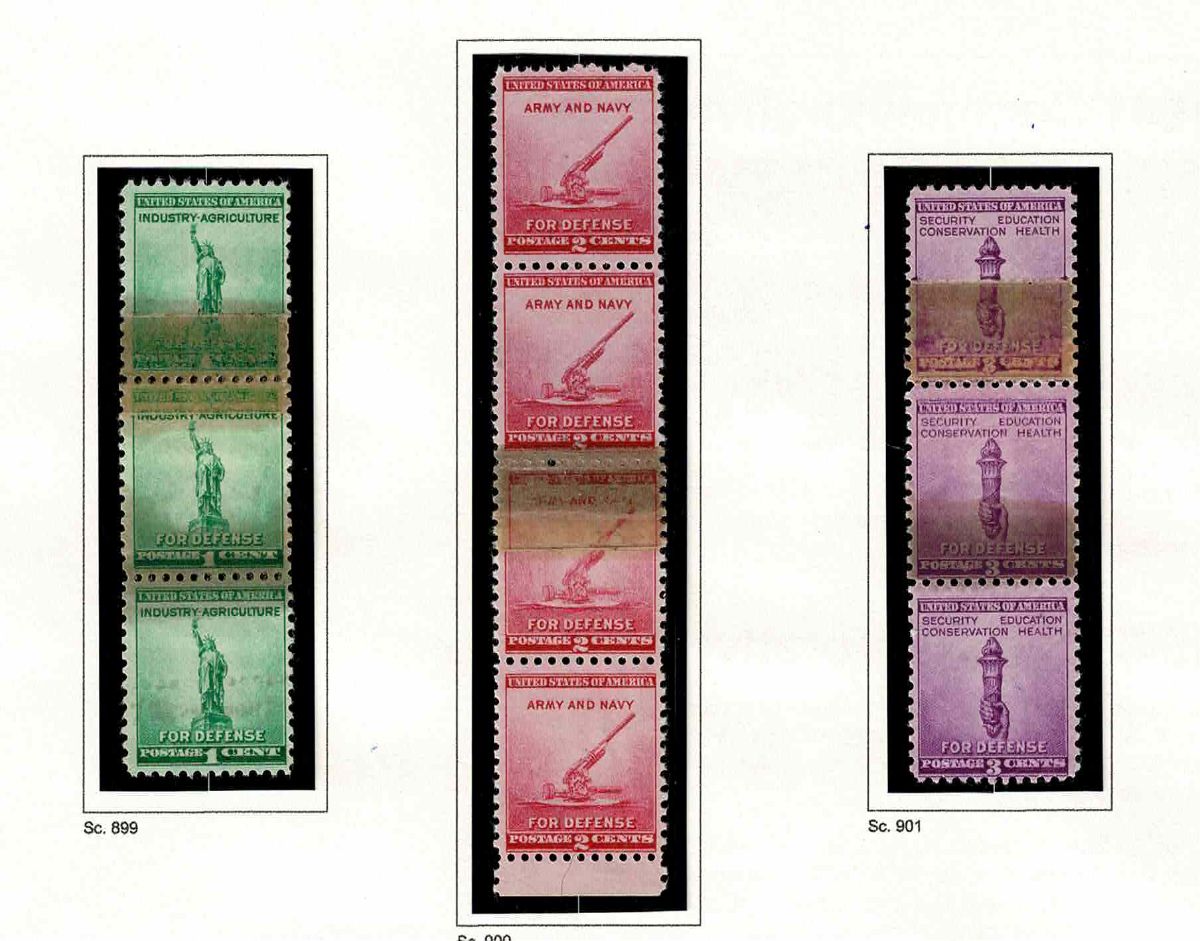
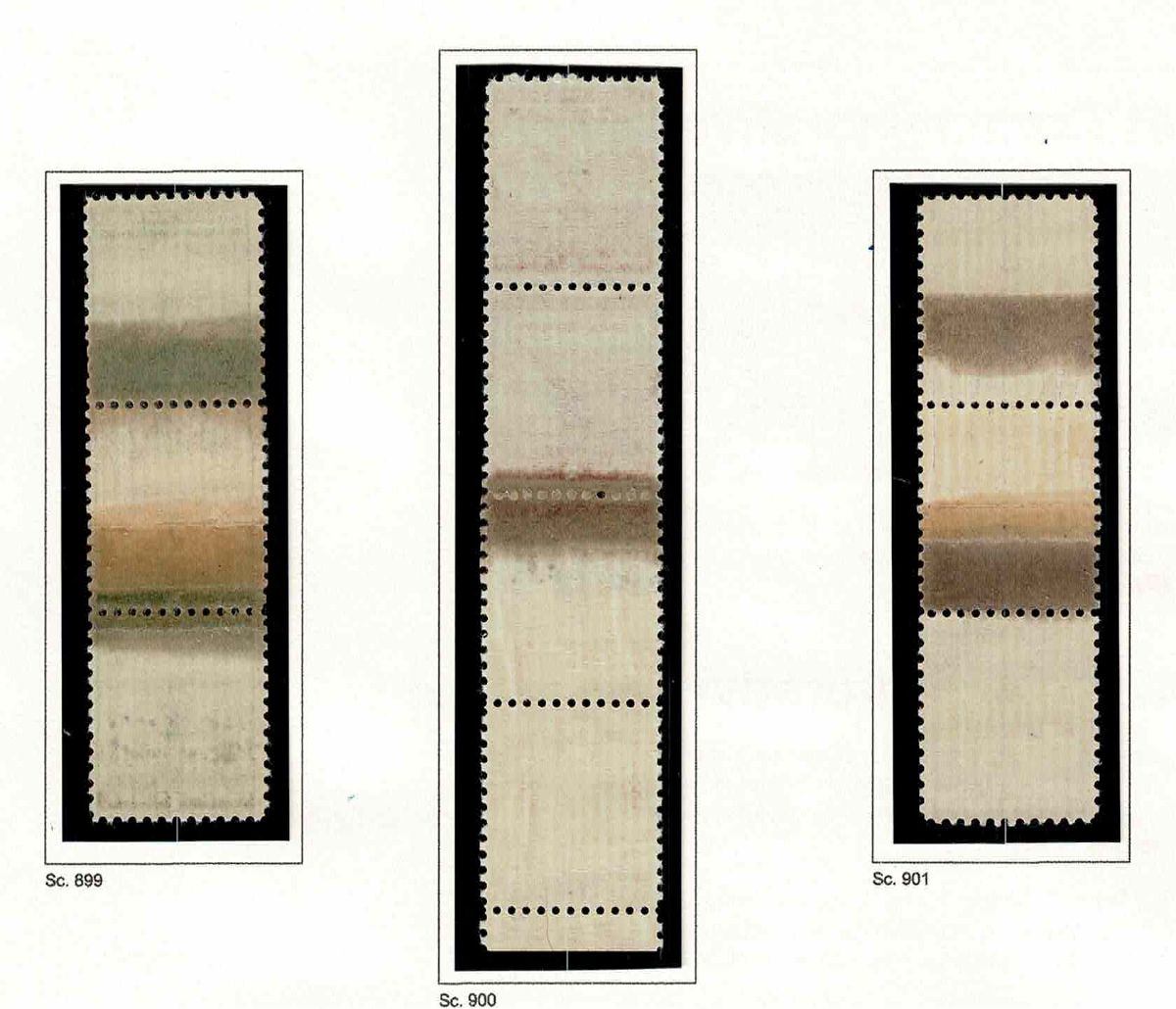
Here are so-call "double paper" varieties of US Sc. 899, 900 and 901, comprising the 1940 National Defense Issue.
The BEP was churning out over 19 billion of these puppies using their rotary presses which were fed continuous paper web as separate rolls were joined together as the paper went through the press. I do not know if in this case the press would have been paused while the rolls were pasted together but I have to wonder because the edges where new and old paper rolls joined were sealed with a transparent pressure sensitive adhesive tape invented about 1930 by 3M. We call it "Scotch tape now.
According to the article "National Defense Issue" by Jesse Bogard in the March 1948 issue of The Bureau Specialist (vol 19, no 3) , the tape was applied to make sure the pasted joints didn't gape open and get caught in the press. They were then to be marked with crayon by QC inspectors to be cut out from the run and not sold. Given the pressure of speed and volume, some escaped the cull and went into the market.
Front view and then back view.
In the newspaper business the device which accomplishes paper joining of a new roll of newsprint to an old exhausted roll is called a "flying paster." "Flying because the press does not slow down, much less stop. The gluing and trimming operations are done as the paper speeds through into the press. The "flying paster" was first developed at the Baltimore Sun.
Video of a flying paster at work
WRoDlK1m_mU
You occasionally run into this in your newspaper which was printed on both sides but still showed the two pieces of paper overlapping. No Scotch tape, however.
Disclaimer: While a tremendous amount of effort goes into ensuring the accuracy of the information contained in this site, Stamp Community assumes no liability for errors. Copyright 2005 - 2026 Stamp Community Family - All rights reserved worldwide. Use of any images or content on this website without prior written permission of Stamp Community or the original lender is strictly prohibited. Privacy Policy / Terms of UseAdvertise Here





 Posted 07/13/2025 01:40 am