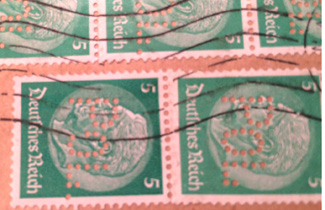
| Author |
 Replies: 23 / Views: 3,734 Replies: 23 / Views: 3,734 |
|
Valued Member
Australia
283 Posts |
|
|
Hello all, This is probably a dumb question but.... Is there any way of checking if a paper join is done by the printer or not? I have a join on a Machin coil and though I have no reason to suspect it is done by anyone other than the printer, I cannot guarantee it. This came from a long strip from a coil. I have also illustrated an Australian example, also from a coil. This one I know is genuine as I had the complete roll myself. Again I cannot prove this, though a close inspection shows the join has been perforated which maybe lends credence to it. I have tried our friend Mr. Google but cannot find anything to help. Any pointers or information would be appreciated. Ron. 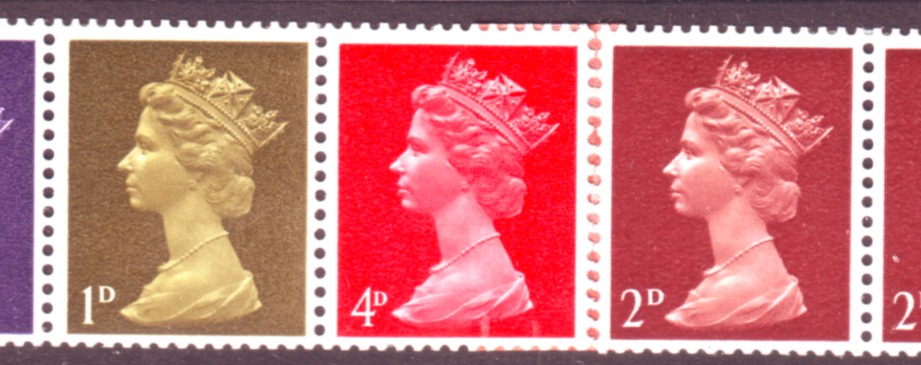  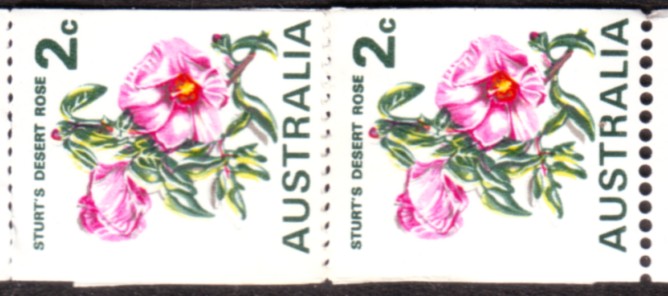 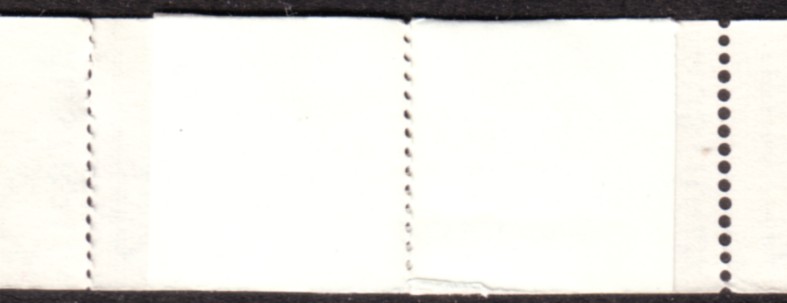 |
|
Send note to Staff
|
|
|
|
|
Pillar Of The Community
United States
8956 Posts |
|
|
I have a couple of these myself, and you're right, no way of telling whether they are legitimate or not. I guess you have a good point with the perforations. Also, I really do not believe they are valuable enough to go through all the trouble of faking!
Peter |
Send note to Staff 
|
|
|
Pillar Of The Community
United States
7239 Posts |
|
|
Petert4522, I would respectfully disagree that they are not valuable enough to fake. Paste up pairs and paper join strips are actively collected by specialists - the people who are most serious about stamps (and who will shell out the most money for what they collect). The problem is, different printers have different methods for making the paper joint. So, unless you have enough experience and knowledge, you don't have any way to know (in most cases) whether or not an item is genuine. I've never seen a catalog, specialized listing, or website anywhere that SHOWS paper joins from any stamp-issuing country. I suppose expertizers in specialized areas could verify these items. The Michel Deutschland Spezial catalog does list some of them. Here is a paper joint on the Ostland coil stamps (6pf + 4pf + 6pf). This came from a complete roll. The paper appears to be a perforated glassine material. 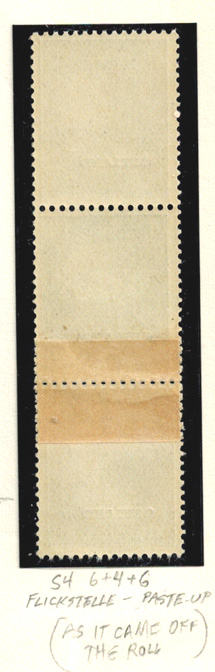 |
|
Send note to Staff
|
| Edited by bookbndrbob - 08/02/2015 8:53 pm |
|
|
Valued Member
Australia
283 Posts |
|
|
Peter and Bob
Thanks for the input.
There are reasons, apart from the price aspect for 'making your own' join.
1. To preserve the coil strip (in this instance)
2. To illustrate the 'paper join' variety.
3. To add interest to a 'straight collection'.
Collectors have so many different ways of looking at things and there is always someone who goes right down to the nth degree in specialisation.
As a matter of interest, the most responses I have had on a forum query was regarding a blotting paper advert in KEVIII booklets.
Nothing to do with the stamps in the booklet but the study of all the settings of an advert.
Regards.
Ron. |
|
Send note to Staff
|
|
|
Pillar Of The Community
United States
1624 Posts |
|
|
Pillar Of The Community
Germany
1714 Posts |
|
|
Regarding your Machin coil stamps... the join looks right. The join is in the "correct" place being at the end of a 2,2,3,1,4 strip so that the join would be after the 4d even though different combinations of the five stamps is possible for the 1/- (5p) (your strip is 3,1,4 coil join,2,2 as you know). The paper looks "correct" too being of a similar colour (more or less) to the vermilion value. The elongated perforations on your coil join is typical. Earlier times they would have leaders and coil joins with "Harrison and Sons London" watermarked paper. |
|
Send note to Staff
|
|
|
Valued Member
Australia
283 Posts |
|
|
Hi Scotzm Many thanks for that input. I think I confused the issue by using 'join' when I should have used 'repair' Those Machin strips were printed in continuous rolls so would not have had coil joins as such. Checking further through our coil collection I find the repair I illustrated was similar to the paper used to attach the roll to the leader as illustrated here. I assume therefore that this is a genuine repair. As you say the elongated perforations are similar to those on the leader. 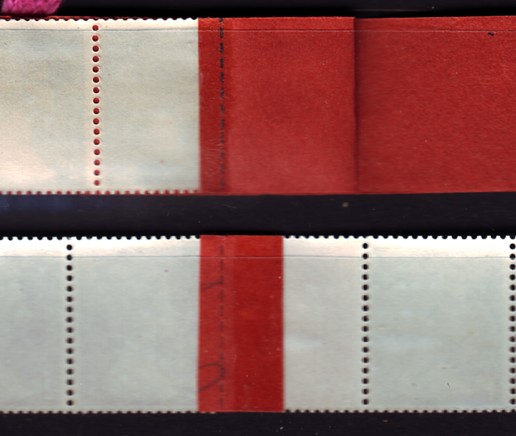  I am also very interested in KEVIII stamps and that is really when there would more likely be 'fakes' as the 2½d value was made up by joining horizontal rows from Post Office sheets, and a 'join' could be faked using the selvedge and stamp from normal sheet printings. With any of the 2½d coils being so scarce a join would be very nice. Thanks for your interest. Ron |
|
Send note to Staff
|
|
|
Pillar Of The Community
United States
7239 Posts |
|
|
Valued Member
Australia
283 Posts |
|
|
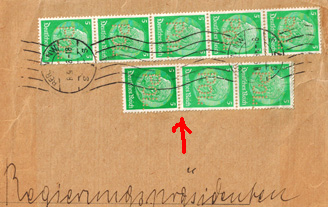
Hi Bob Very interesting, even though I know little or nothing about German stamps. When you say "homemade" do you mean by the police? Why would they make a join? I am quite in the dark about these issues <grin> The missing perforation hole is quite clear isn't it. The scan attached illustrates a G.B. coil join of George 6th showing how the join uses the stamp selvedge. Regards Ron 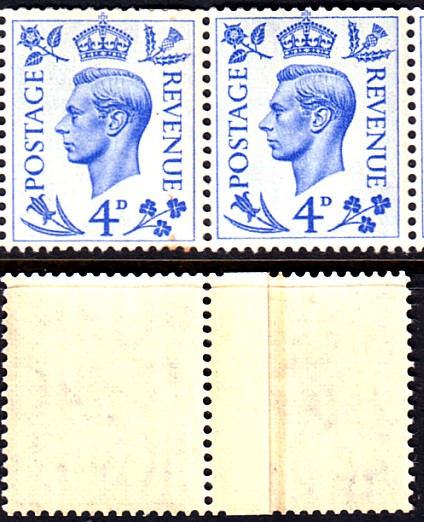 |
|
Send note to Staff
|
|
|
Pillar Of The Community
United States
7239 Posts |
|
|
Hi Ron. Nice 4 pence pair. I'm wondering...does this pasteup indicate an official (governmental) or private use coil strip?
With the German stamps, I'm making an educated guess that some clerical person with the Berlin police was given the task of making official stamps; thus, homemade. All of the various German police "POL" officials are locals (different spacing with the designs), and the Michel catalog illustrates and prices them according to both town and stamp issue. It seems logical that coils would be easier to store, and perhaps they were easier to make with their perfin machine/device.
Another educated guess is that the perforating device made 2 vertical punches at once, since the two perfin varieties are alternating on all of the stamps on this cover. Also, I have seen mint blocks of 4 with mirror image perfin patterns indicating they were at least folded over, and perhaps punched as vertical pairs. |
|
Send note to Staff
|
|
|
Valued Member
Australia
283 Posts |
|
|
Hi Bob, Some of the coils were made up using strips from sheet stamps, so there would be coil joins throughout the roll. With continuous reel coils there would be no coil joins. That is why I queried the coil repair as that was from a continuous roll. The questions raised, as in your police use, is what makes the hobby so interesting. So many sidelines to follow from a collection. Coil leaders make an interesting collection in their own right and we find them fascinating. The scans show some early G.B. leaders and then some of the later style. 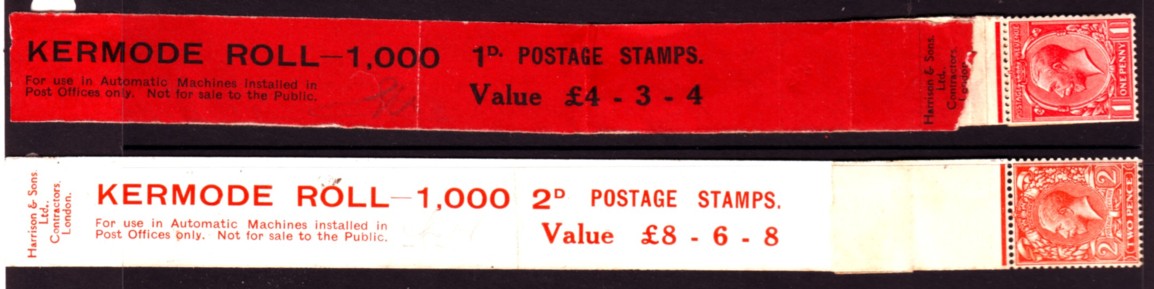 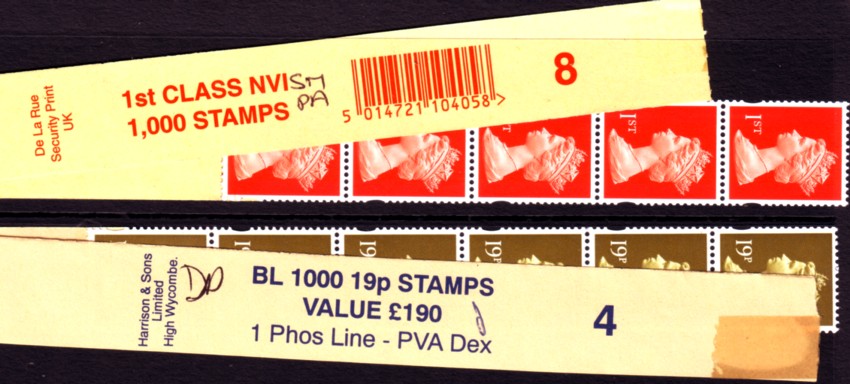 |
|
Send note to Staff
|
|
|
Pillar Of The Community
Netherlands
6641 Posts |
|
|
Thread bumped after 9 years.Sometimes, when you win the lot you were interested in at auction and you are charged a lot of money for P&P, you might as well spend a few extra euros to add to a small side collection of errors. 14 February 1955, General Franco, 3 pta. A paper join of Edifil 1059. Here, the paper join served to repair the paper for the printing of stamps. In Spanish, a paper join is called "empalme de papel." That it was done during the printing process is evident from the perforations. 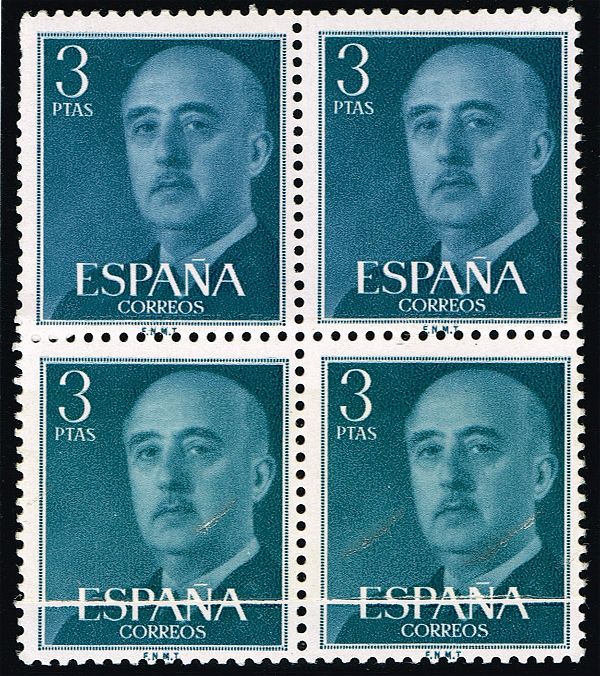 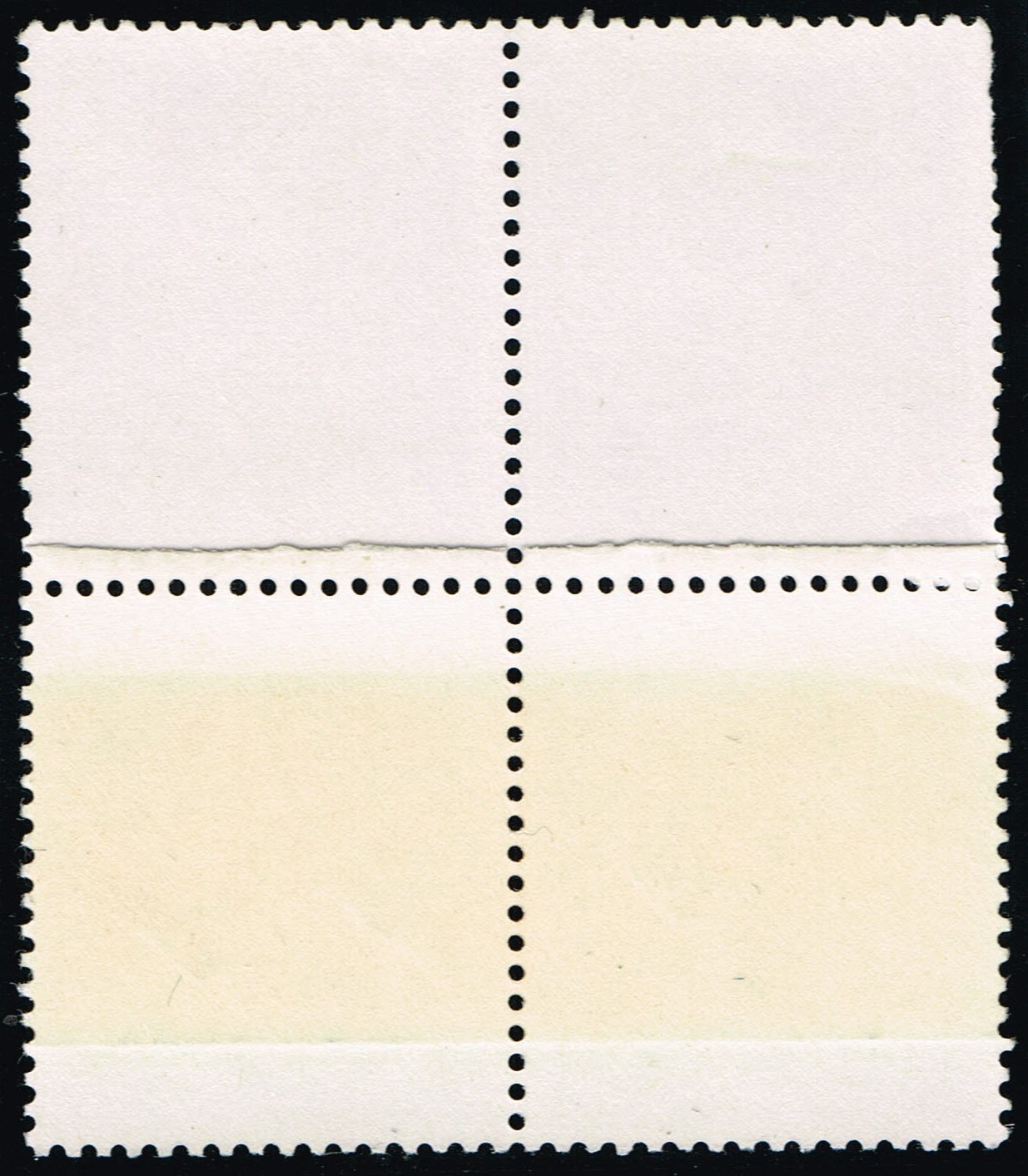 |
|
Send note to Staff
|
| Edited by NSK - 07/12/2025 09:48 am |
|
|
Pillar Of The Community
United States
4182 Posts |
|
|
One of the times I was at the BEP I got to see them splice together the start of a new web roll to the end of an almost finished roll while the printing press was still running! Saved a lot of waste not having to shut down and restart the press as it can take many yards of paper to get all the colors to synch back up into proper registration. |
|
Send note to Staff
|
|
|
Pillar Of The Community
United States
775 Posts |
|
|
NSK, you can also clearly see that the top two stamps are a different shade than the bottom two. Do the bottom stamps have a scratch due to joining? |
|
Send note to Staff
|
|
|
Pillar Of The Community
Netherlands
6641 Posts |
|
|
Yes, the shade at top is deeper.
No, the white line occurred during printing. It looks like the cylinder 'jumped' at the bottom of the tape, where the paper becomes thinner again, causing the white line that shows from the back as well.
On this block, the break appears below "correos" on the top pair, where the join is. |
|
Send note to Staff
|
| Edited by NSK - 07/12/2025 3:16 pm |
|
|
Pillar Of The Community
Canada
5821 Posts |
|
|
@eyeonwall Quote:
splice together the start of a new web roll to the end of an almost finished roll while the printing press was still running! Saved a lot of waste not having to shut down and restart the press as it can take many yards of paper to get all the colors to synch back up into proper registration. They must have worked fast to get that done. @NSK Quote:
Yes, the shade at top is deeper. Why is that? Did the printers stop the press for slicing and when they restarted the ink mix was not as before? But only one ink was used. Spot colour. |
|
Send note to Staff
|
| Edited by lithograving - 07/12/2025 9:38 pm |
|
|
Replies: 23 / Views: 3,734 |
|




 Posted 08/02/2015 6:12 pm