I picked up a lot of material at CHICAGOPEX, enough that I'm splitting things up into two parts. First the documents, and then when I get time to image them, the stamps, cancels, and plate varieties.
It wasn't my intent going in, but most of the documents I purchased ended up being for my specialization on illegal/improper usages, either revenue stamps used on covers as postage, or postage stamps used on documents as revenues.
Unlike British Commonwealth and other collecting regions and countries, the cross-purpose usage of revenue and postage stamps was illegal in the U.S. and are thus much more scarce. Whereas fiscal usages of postage stamps are shunned in other countries as being subpar and to be avoided, with U.S. material it is exactly the opposite. Illegal cross-purpose usages carry premiums, sometimes quite hefty.
Because illegal usages are fairly uncommon, and there is such a wide variety of taxe rates and documents, each one can be somewhat unique. There is no such thing as "completing the set" as many stamps are unreported as illegal usages. While there are types that are certainly more common than others (e.g., battleship revenues on covers, 2-cent Blackjacks and 3-cent Washingtons on checks) those are still $20-50 items at minimum, and the more unusual usages (higher-denomination postage stamps, grills, commems) can soar into the many hundreds or even thousands of dollars, regardless of the catalog values of the stamps in question.
Also the type of document, its form and aesthetics, as well as the tax and usage create more opportunities for unique individual pieces. Like with postal history, you have solo usages, multiples, and combination usages, but you also have combination usages of revenue stamps WITH postage stamps, which adds an additional dimension.
Overall, it's an area that I have become more and more enamored with over the past several years.
Ok, on to the new acquisitions.
First a nice early matching usage from October 20, 1862.
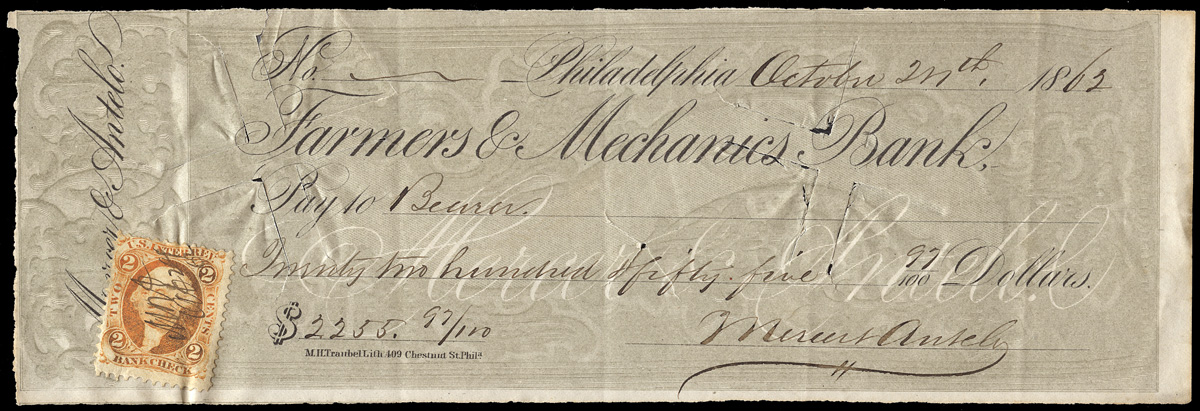
This one has great aesthetics, both the cancel and the document itself.
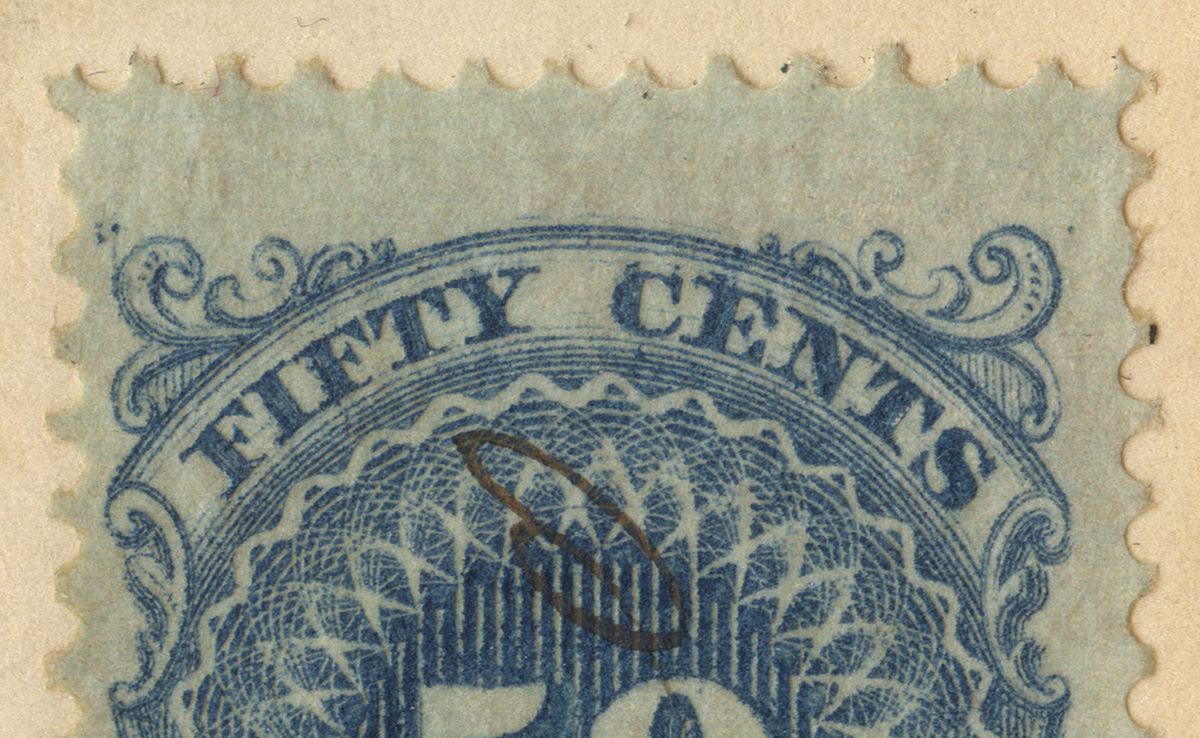
A double transfer on R58c on document. Note the top of the letters C and E in CENTS.
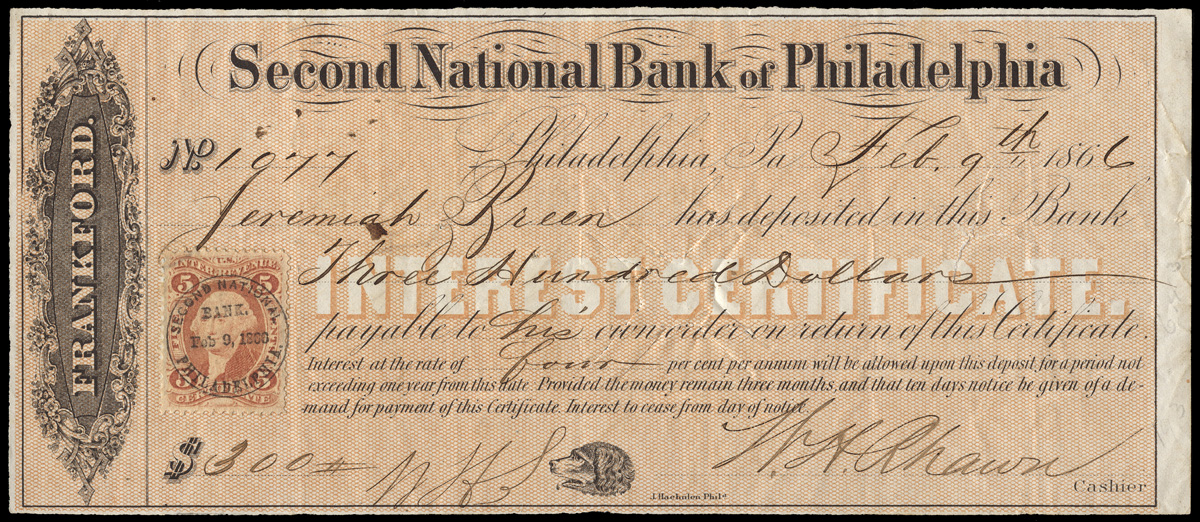
A pair of checks. I just liked the straight-line ARBUCKLE BROS cancels. Coffee manufacturer.
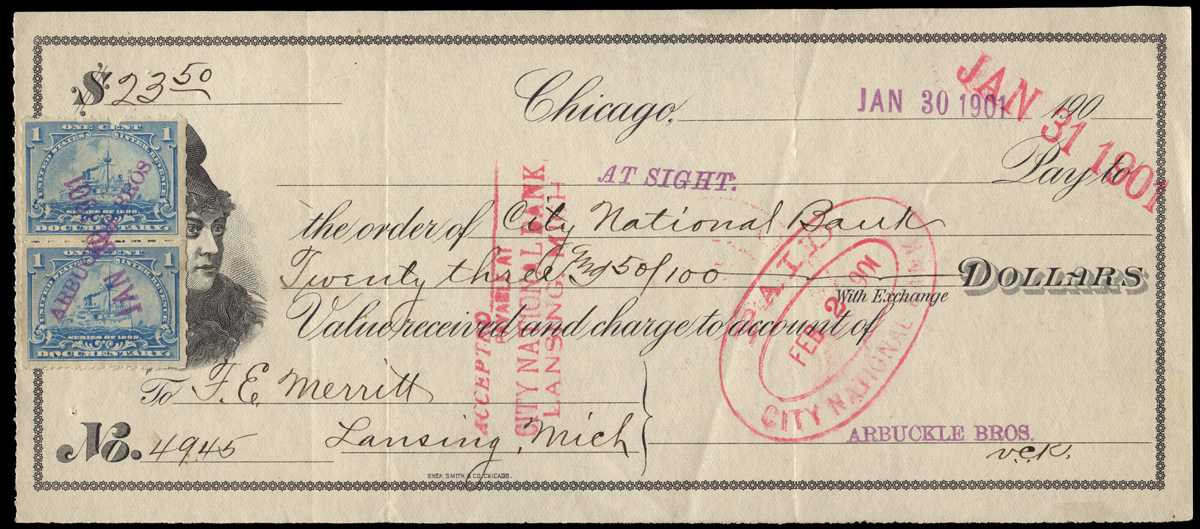
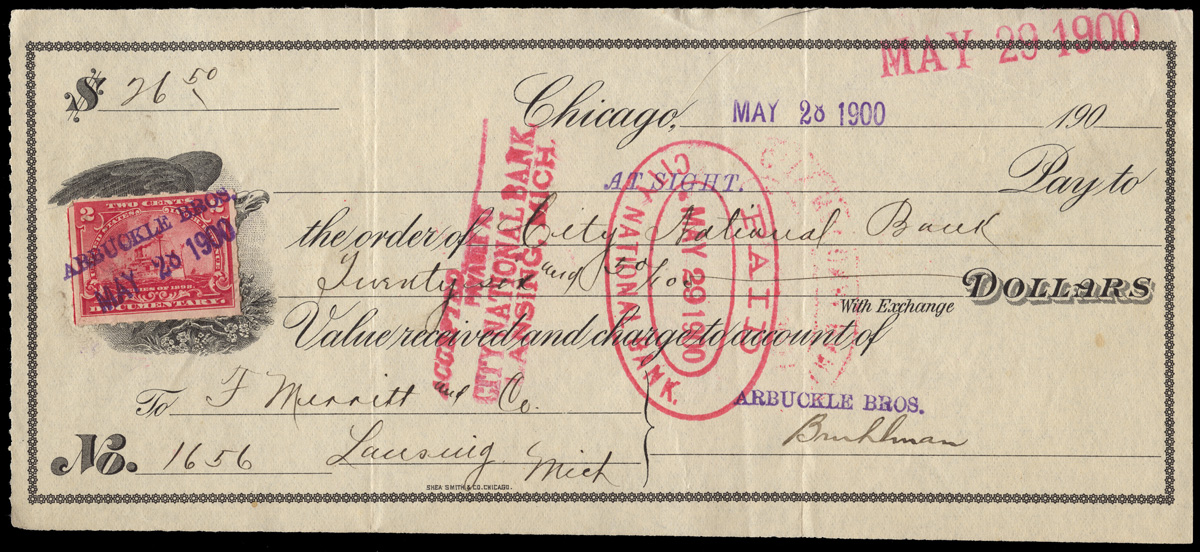
Some documents to attribute cancels that we frequently see, but without context.
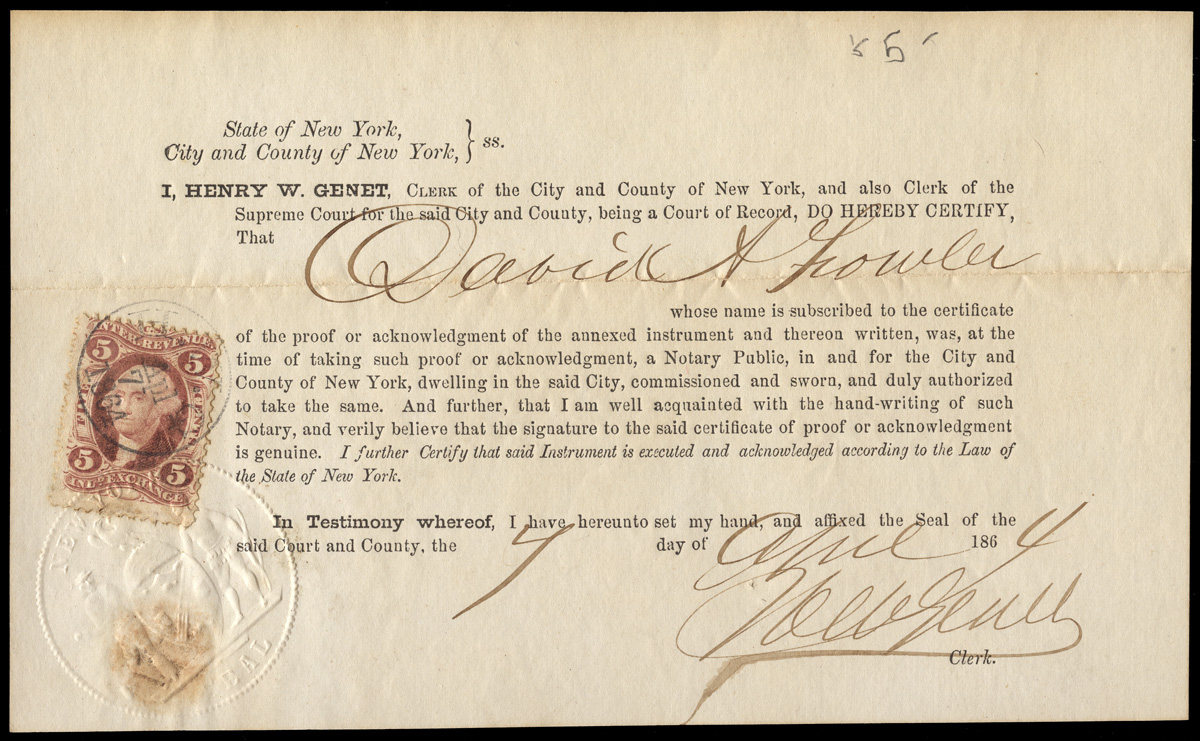
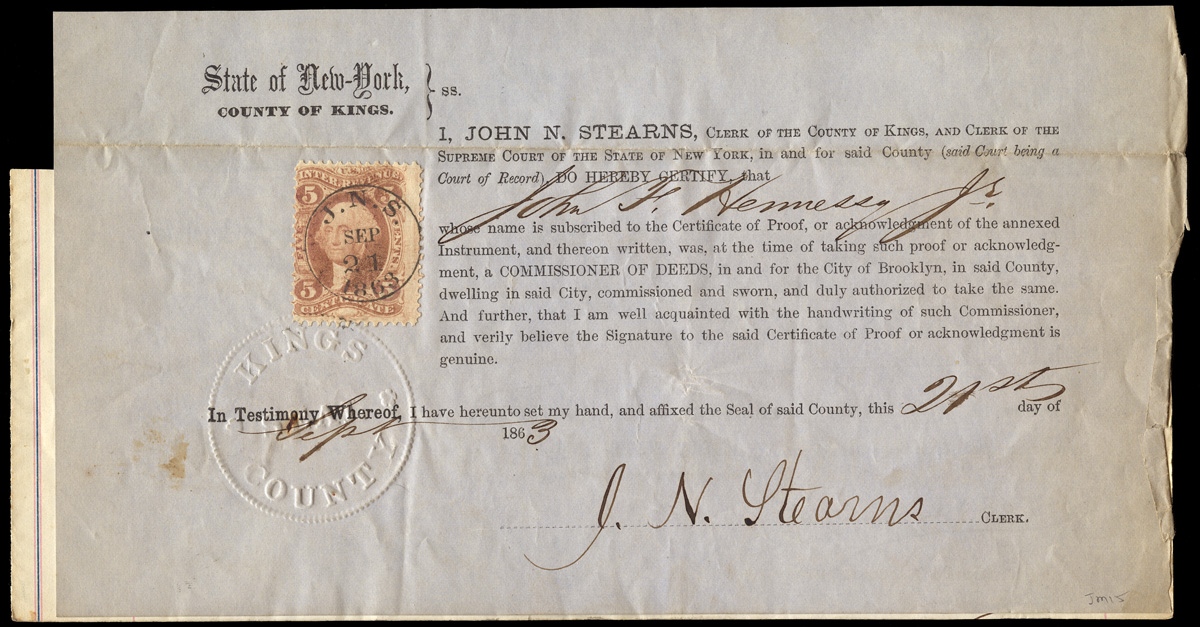
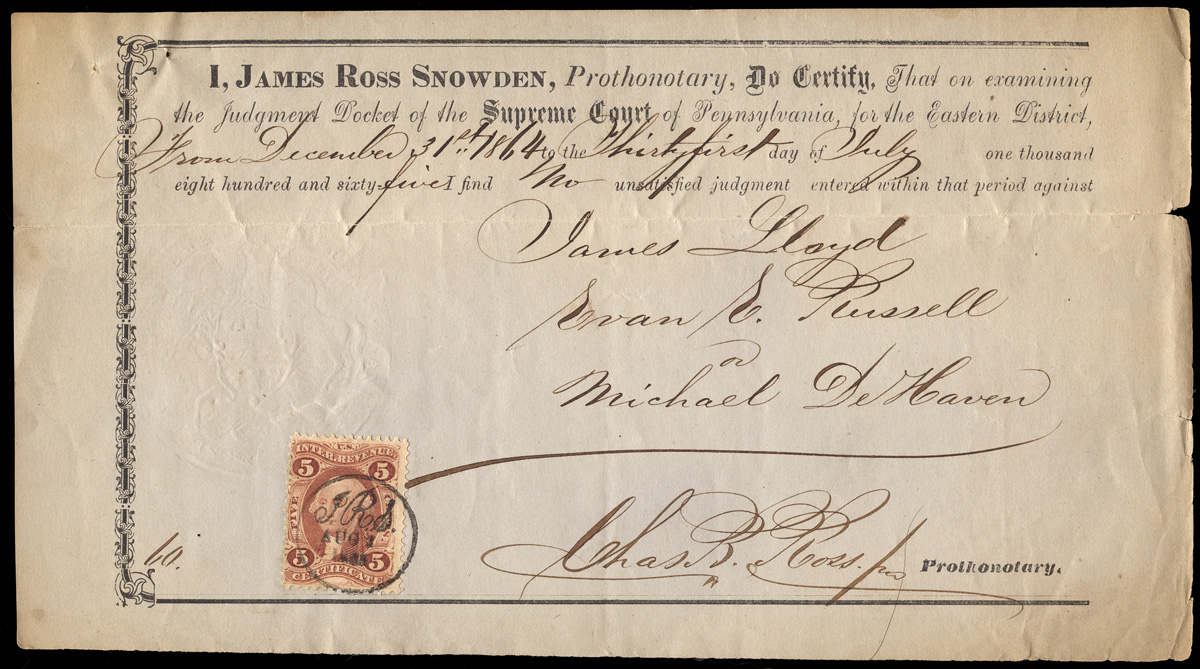
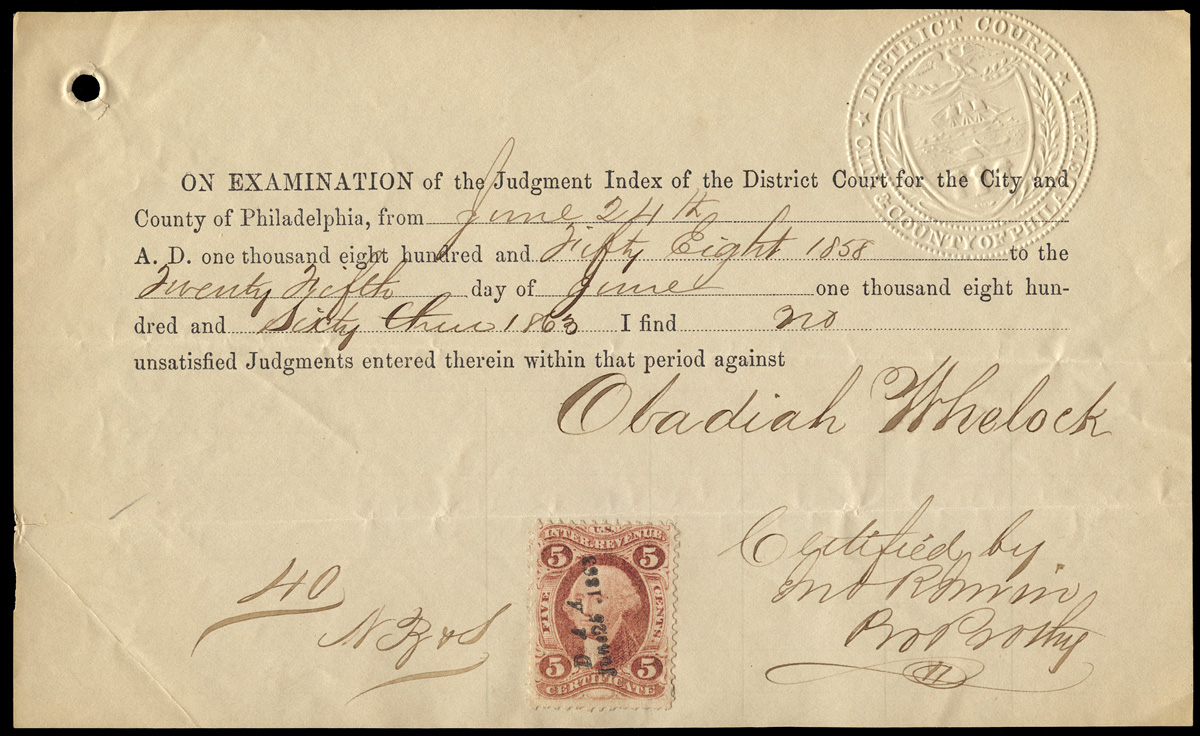
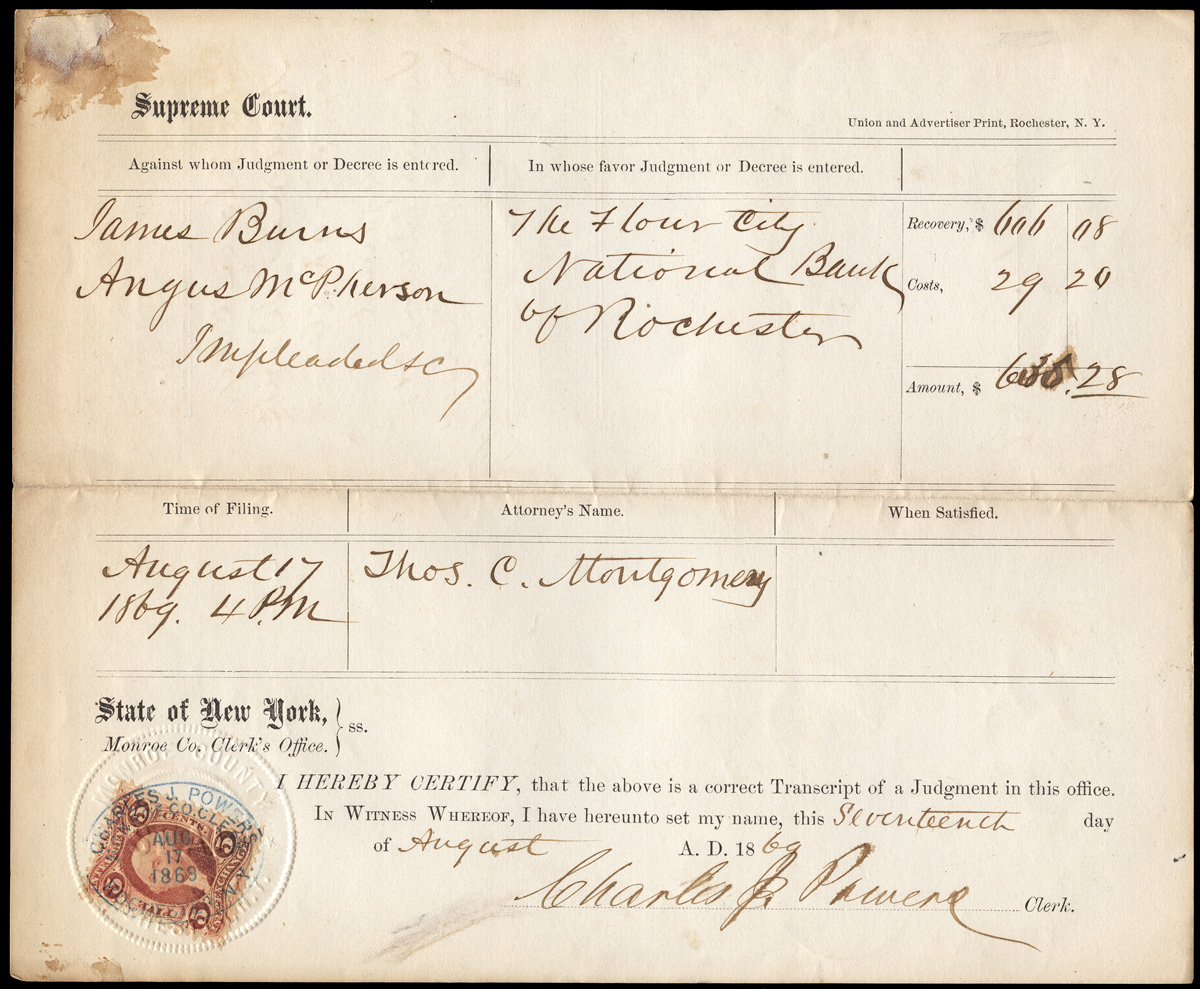
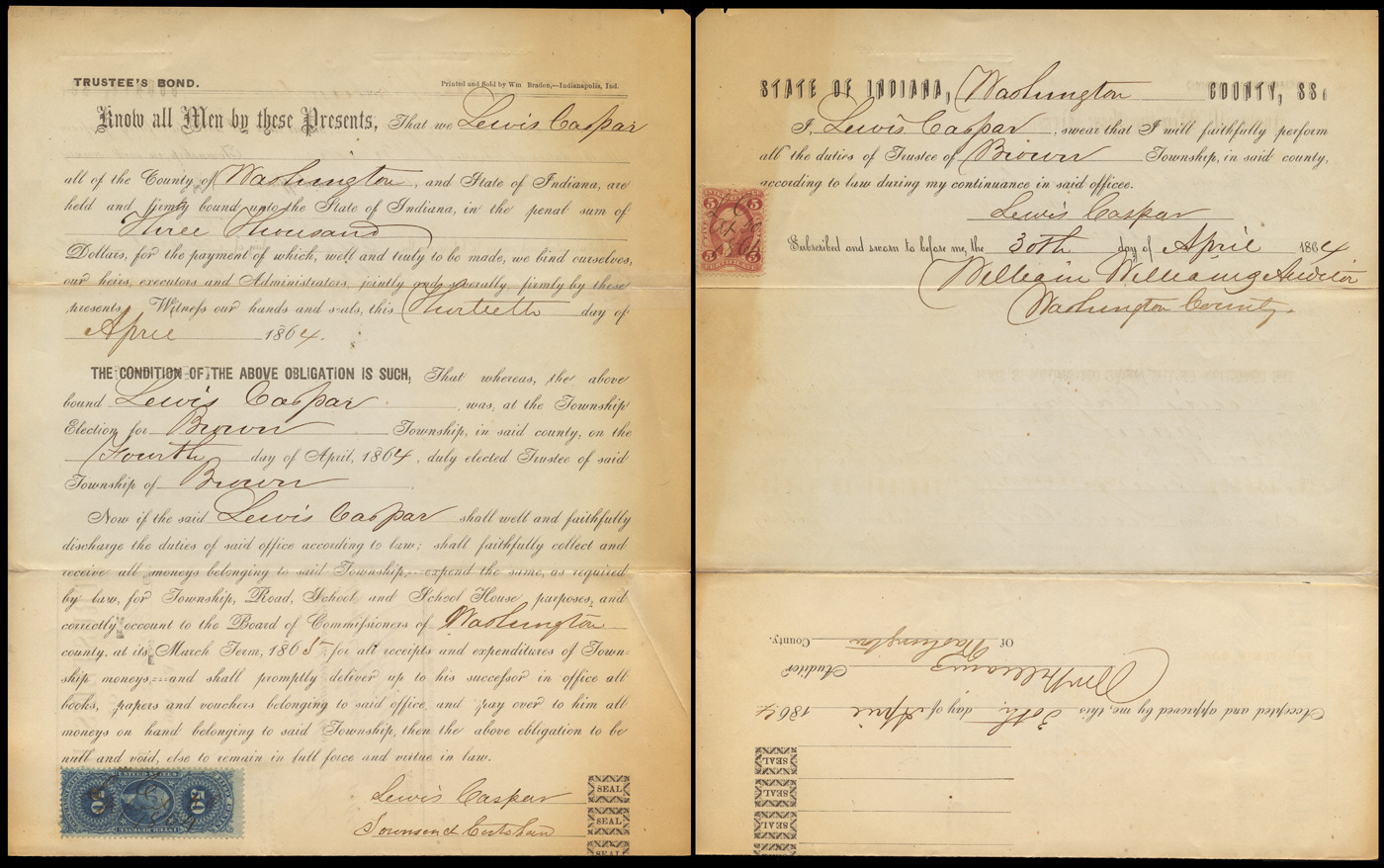
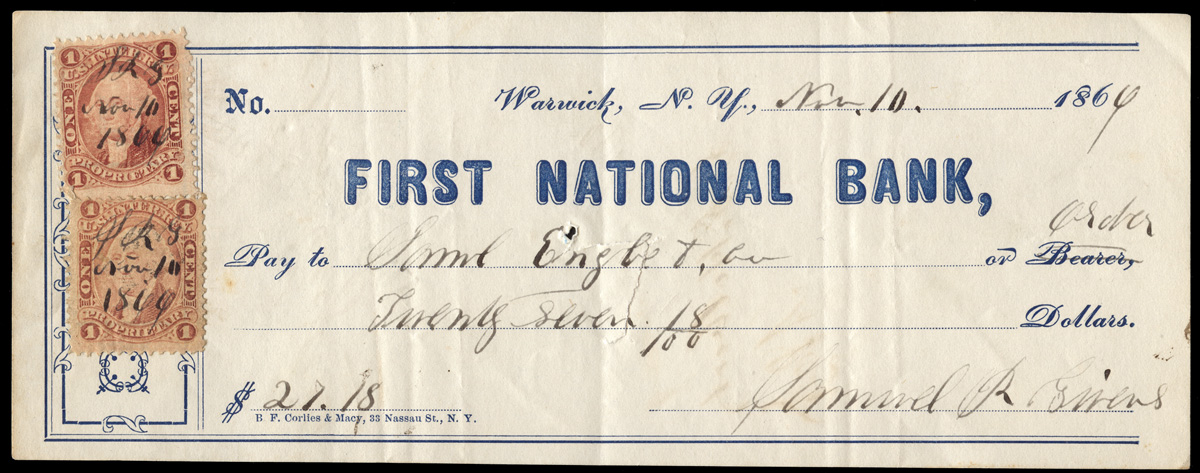
Two documents where the usages are nominally illegal; not illegal enough for me to include them in my larger illegal/improper use collection. While 1st issue revenue types were able to be used interchangeably after December 1862, that was not the case for the PLAYING CARDS or PROPRIETARY types, so finding them used as documentaries is a bit more unusual.
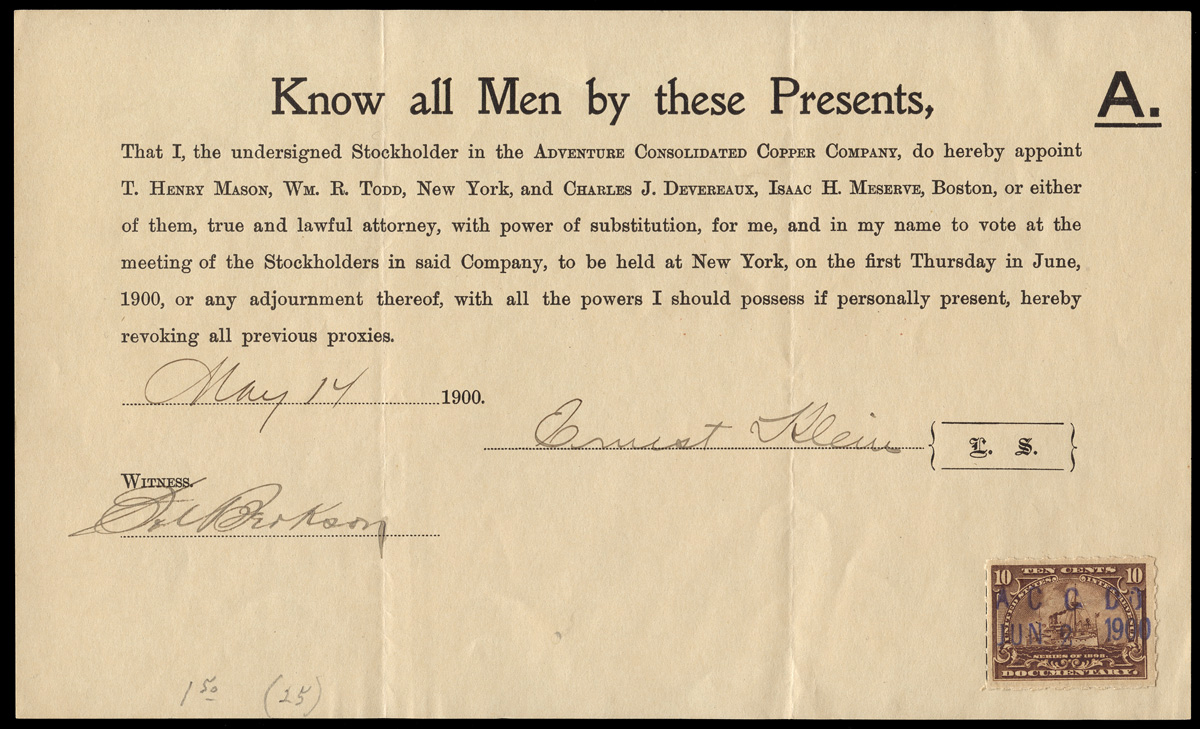
A neat company name, the "Adventure Consolidated Copper Company."
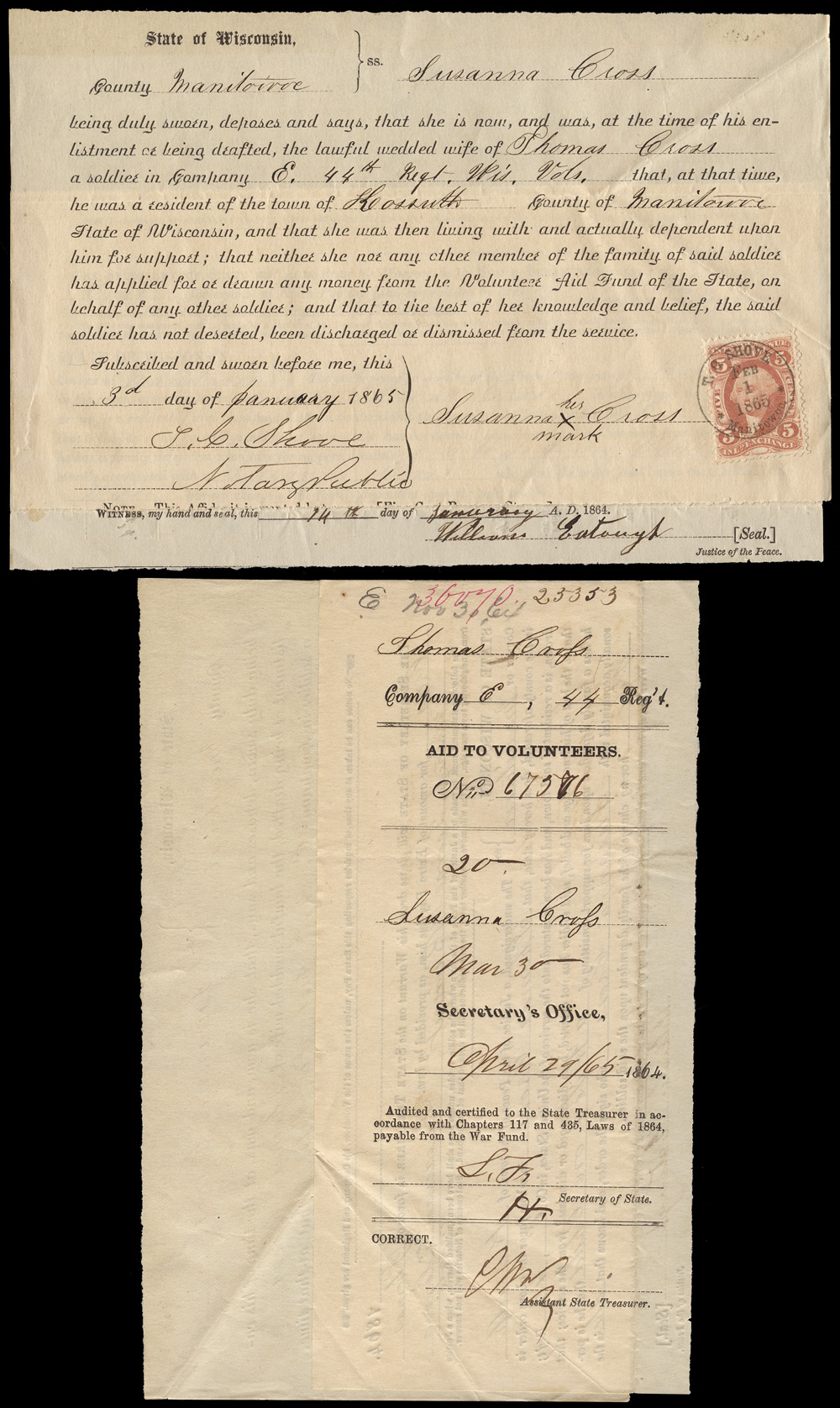
A nice Aid to Volunteers application.
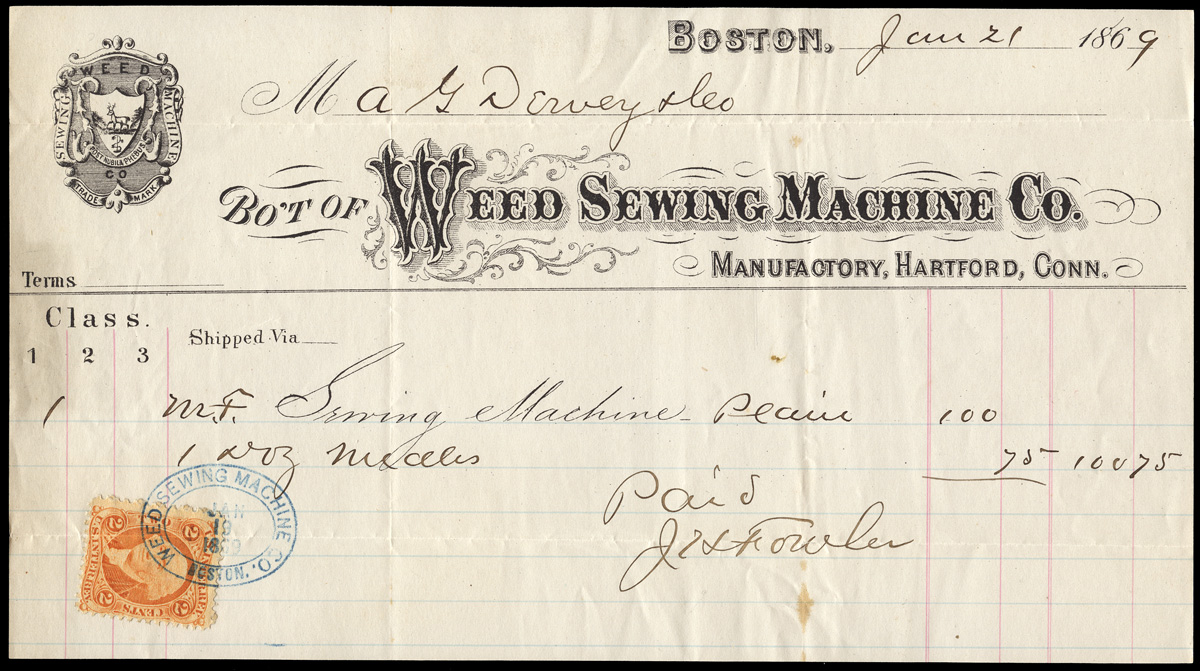
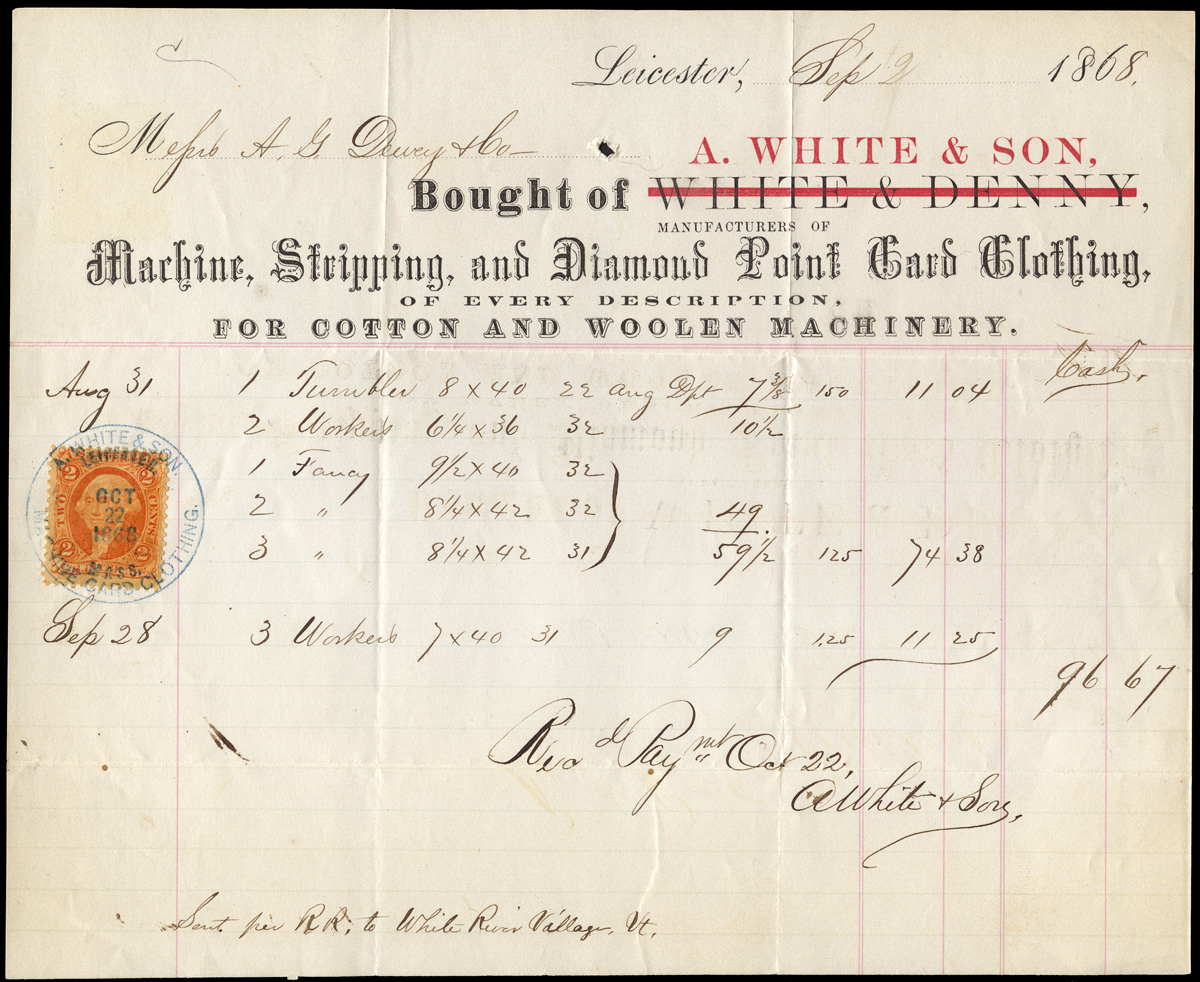
A couple of nice billheads with handstamp cancels.
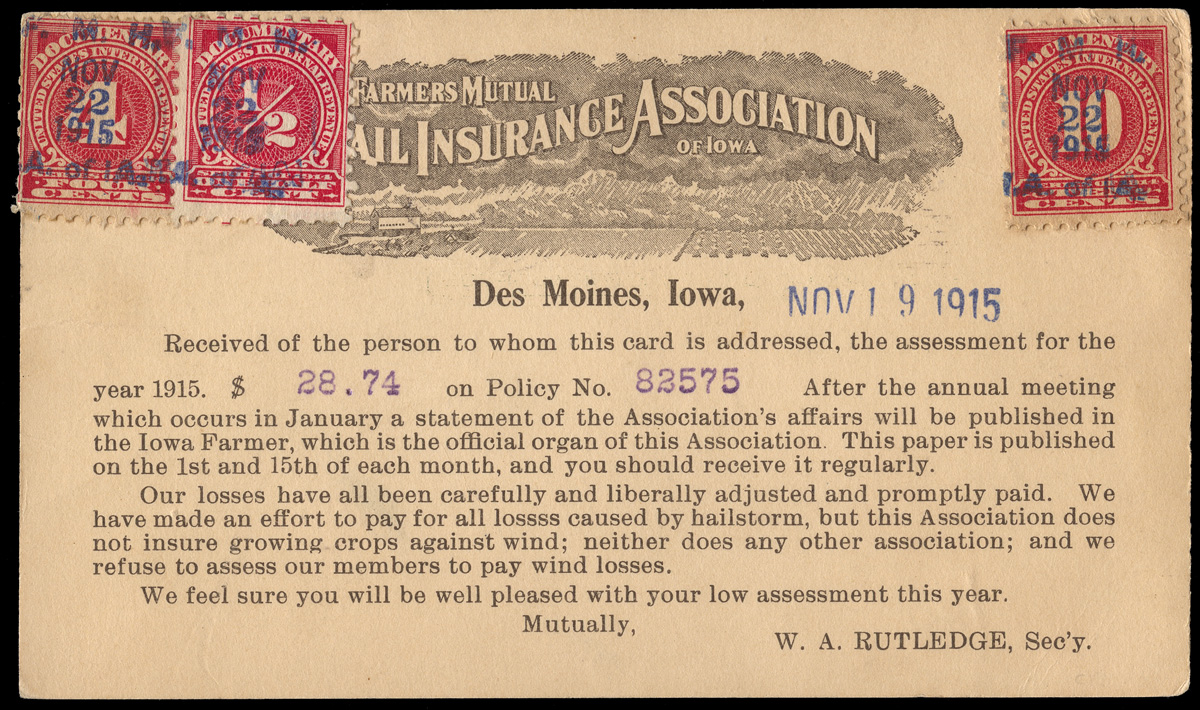
A fairly scarce 20th-century fractional tax rate. When I started collecting the half-cent postage dues on cover as solo or fractional usages, it was because I saw a bit of a disconnect between their catalog values as stamps, and their actual scarcity on cover. I posit the same situation with the half-cent revenues of the 20th century.
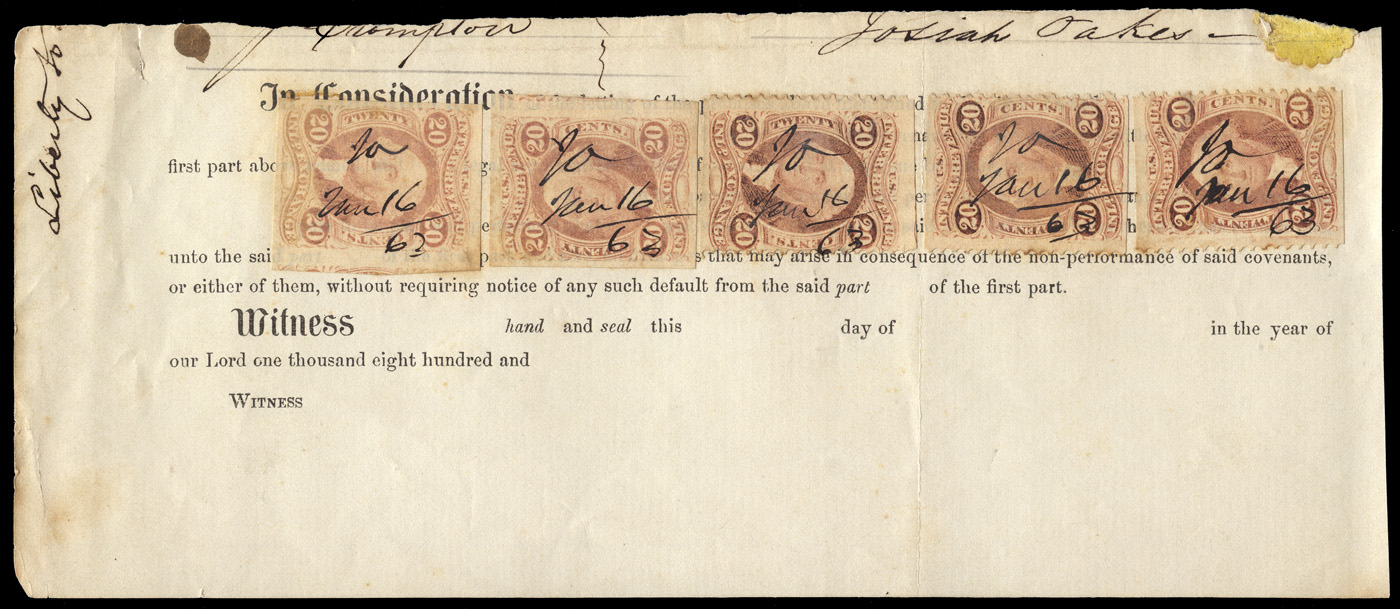
A nice combination of part perfs and imperfs on the same document. Sadly, only a portion of the document is present.
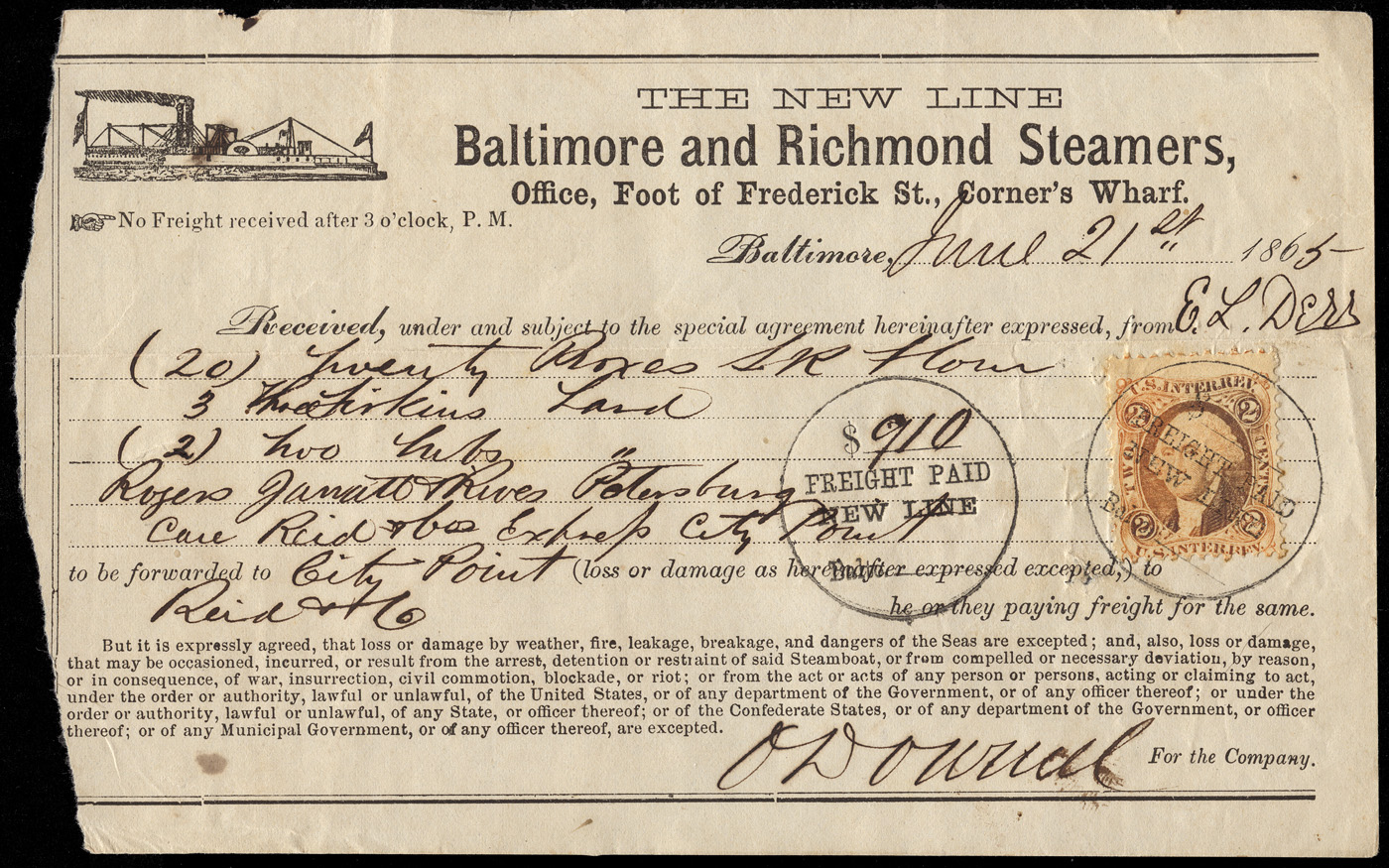
A nice document with a steamship vignette and a fairly scarce freight paid handstamp also used as a cancel.
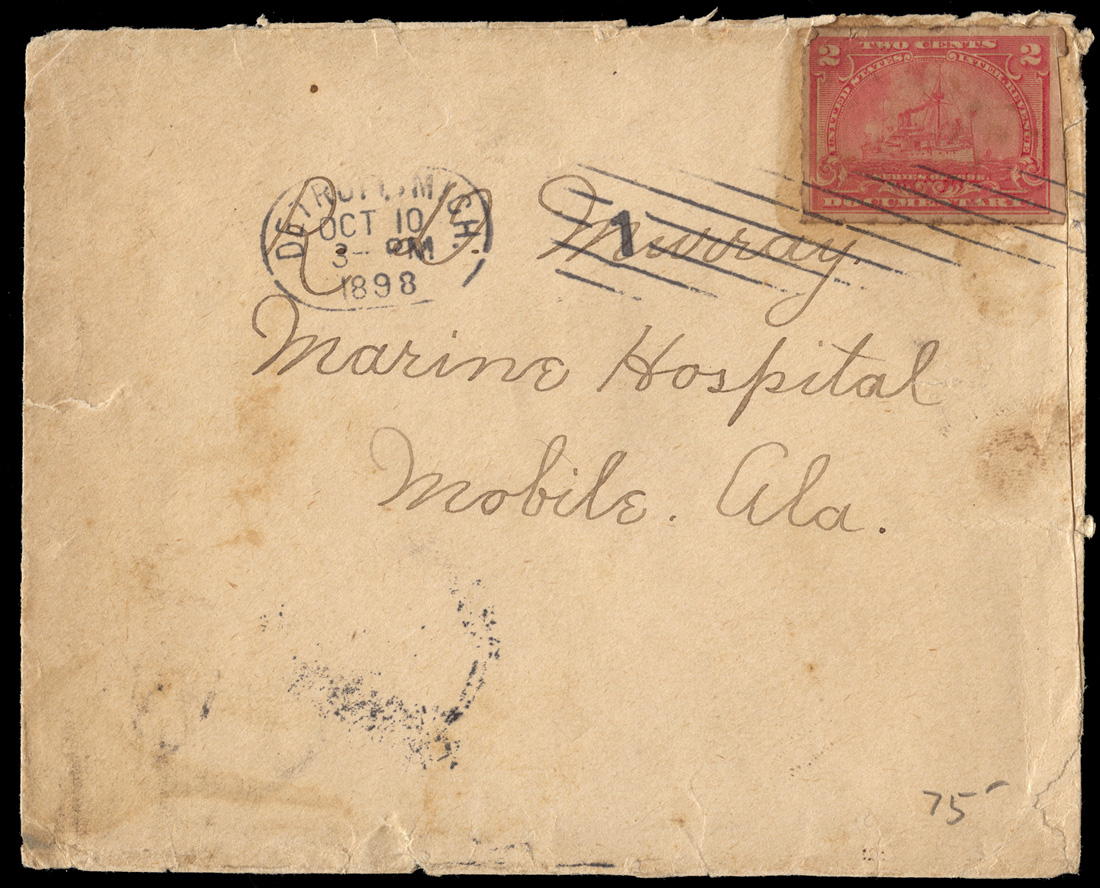
Now we get into the illegal usages. First, a few that are not overly exceptional, but they were cheap.
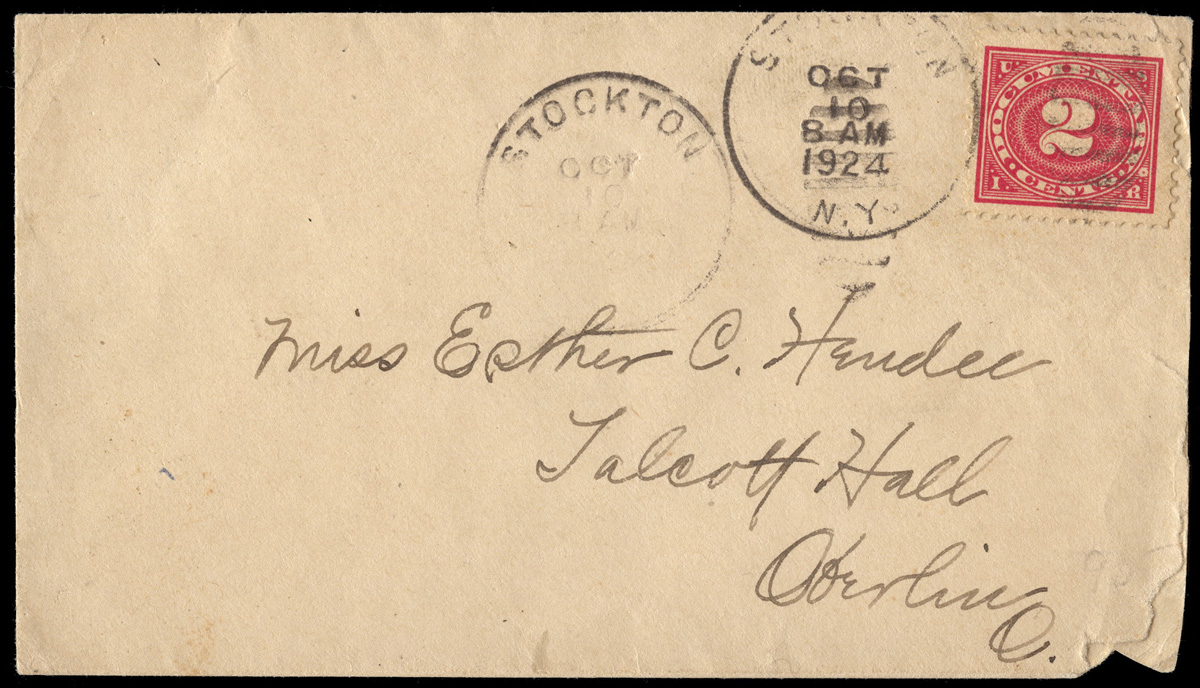
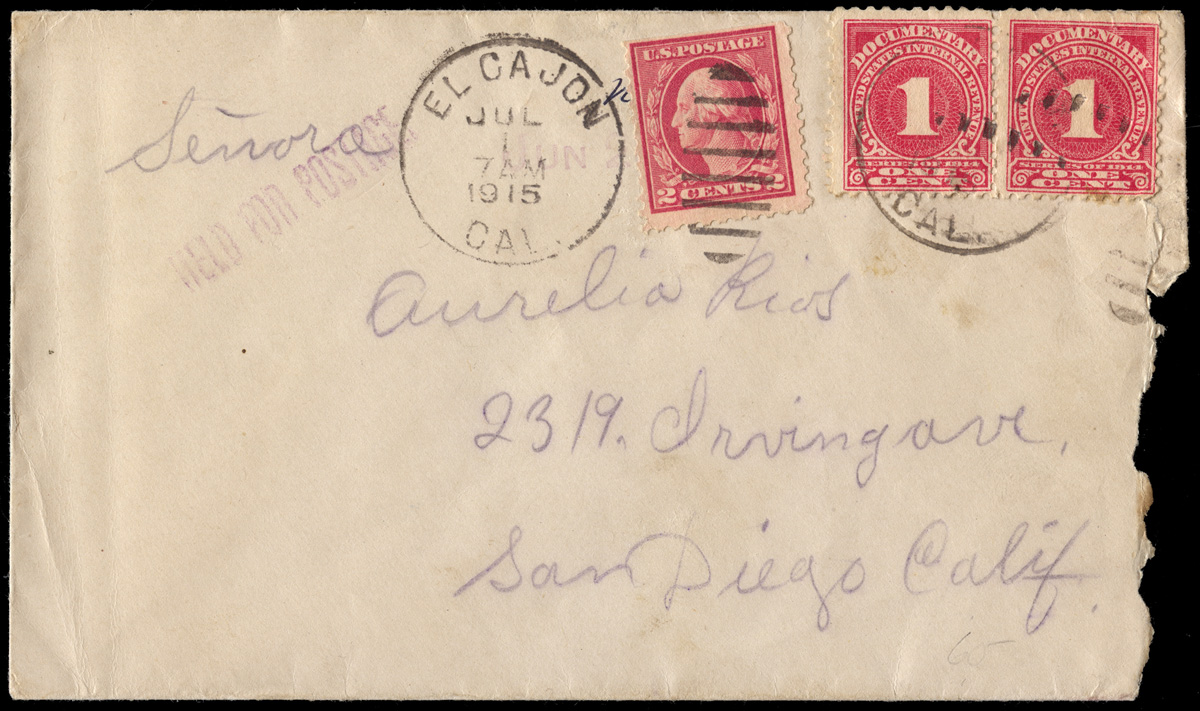
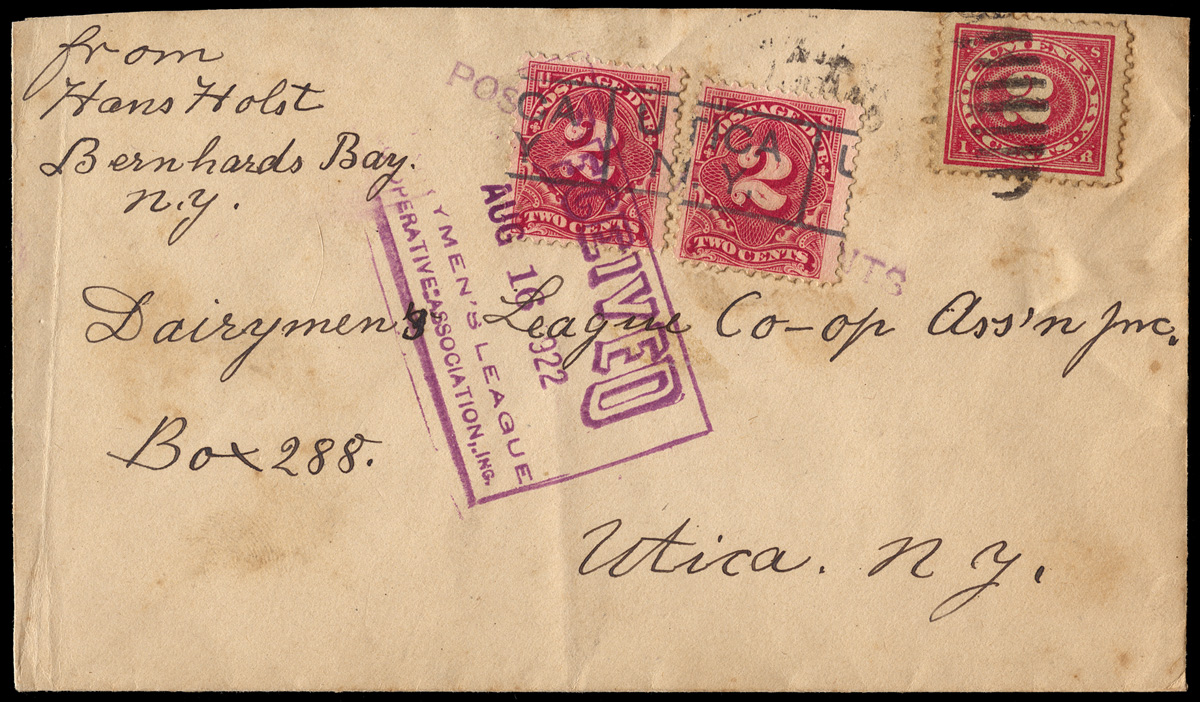
A nice flag cancel.
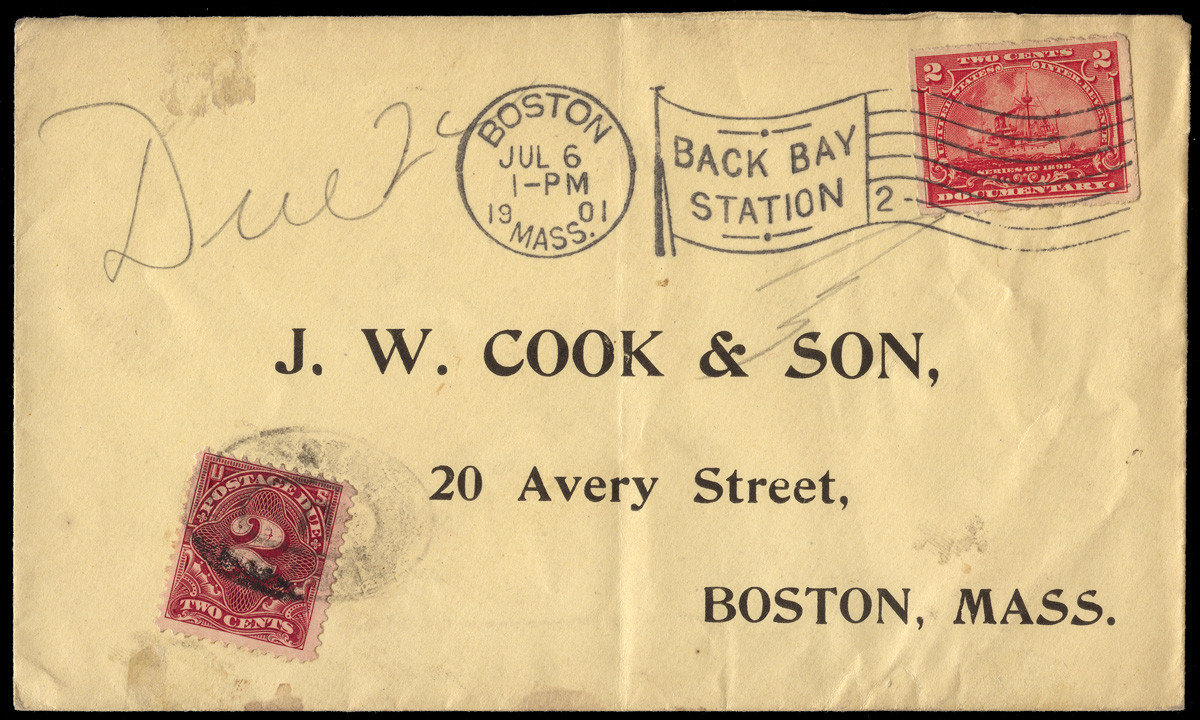
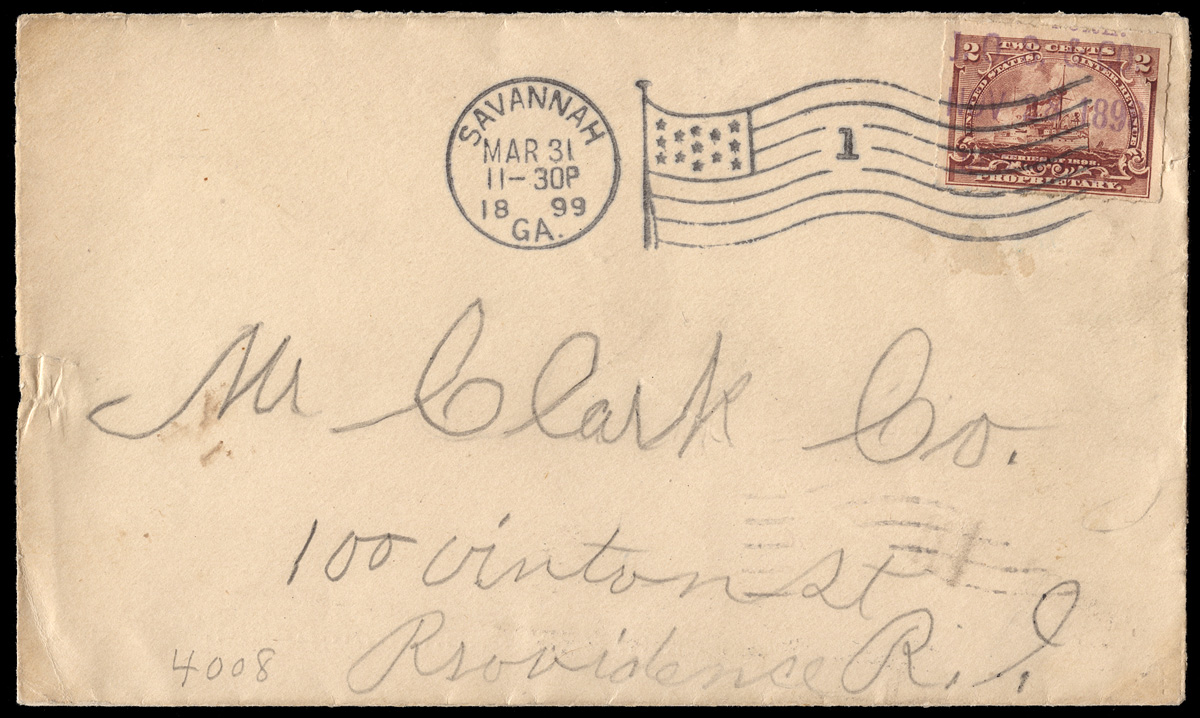
These next two I was happy to pick up, not just because they are reasonably attractive, but you don't see the proprietary battleships used as postage nearly as often as you see the documentaries. Note that the stamp on the first one had previously been canceled as a revenue.
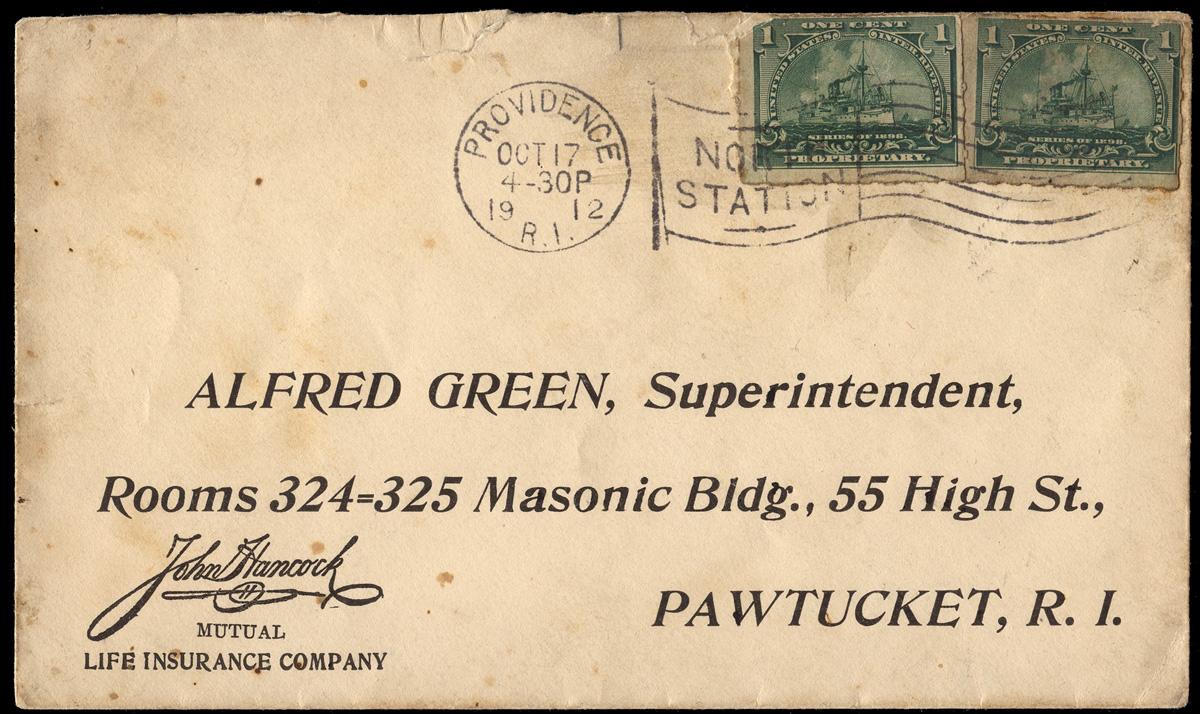
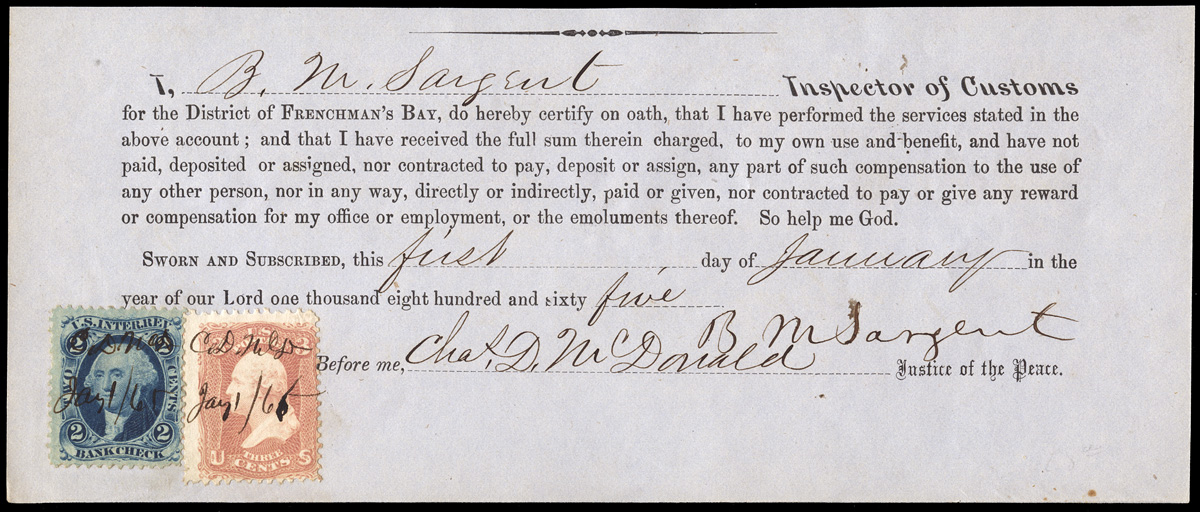
Some nice combination usages of postage stamps and revenues, the second being an F grill. The grills are fairly scarce used illegally as revenues.
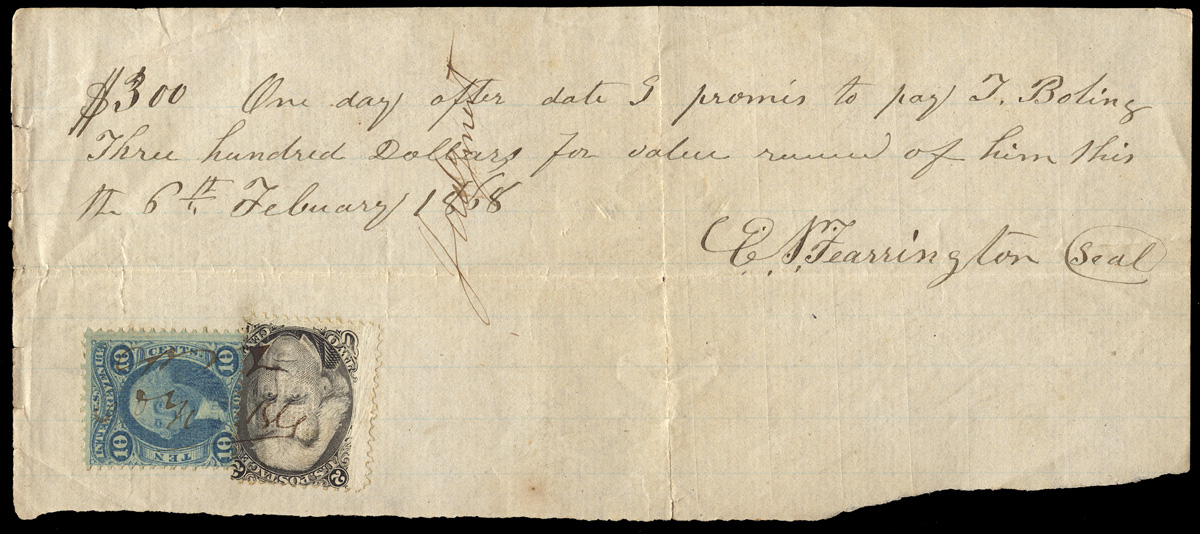
And lastly, the documents of all types that I was really thrilled to obtain...
This one is just a wonderfully creative and whimsical cancel. A manuscript monogram by the photographer "Good & Stokes". It incorporates both the S and G in the same symbol.
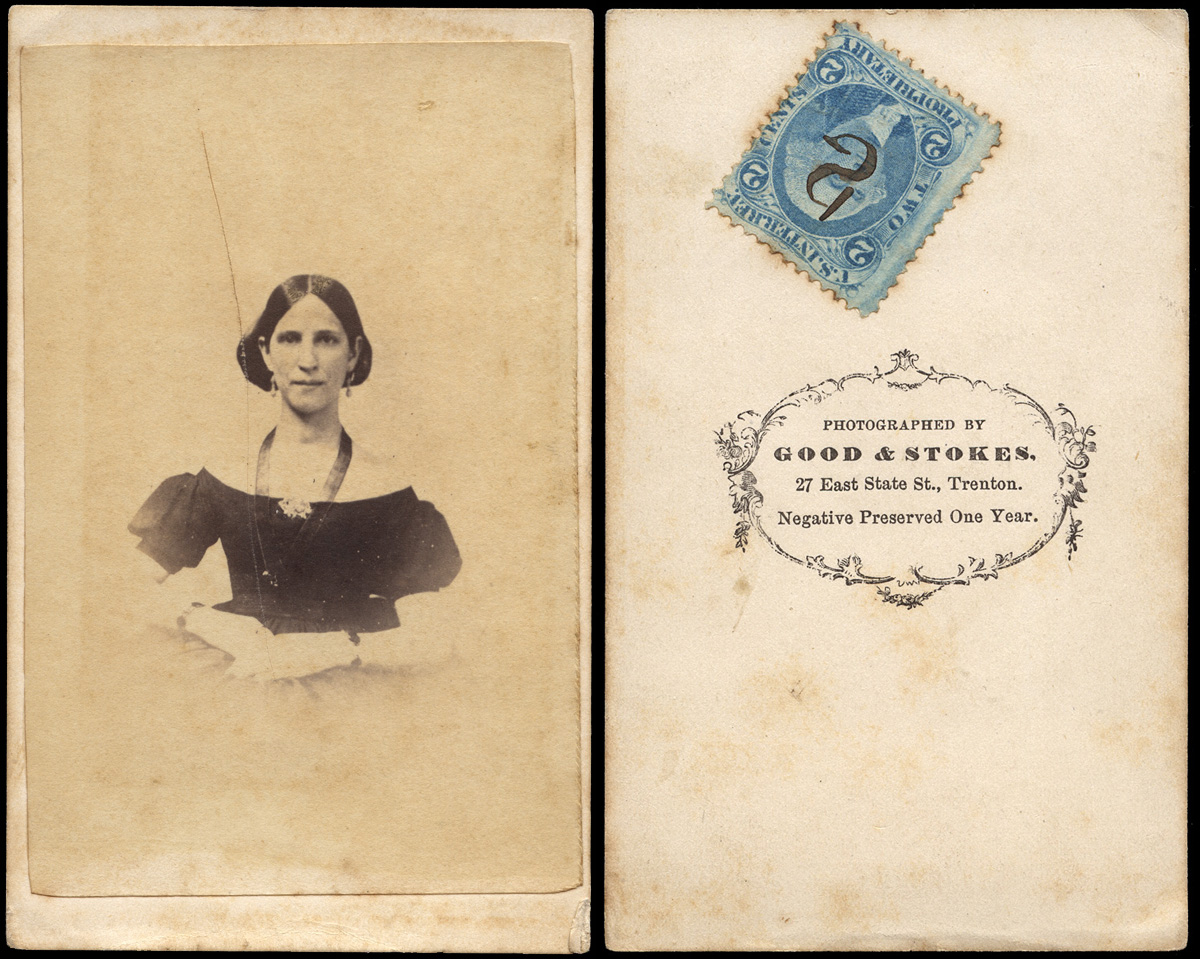
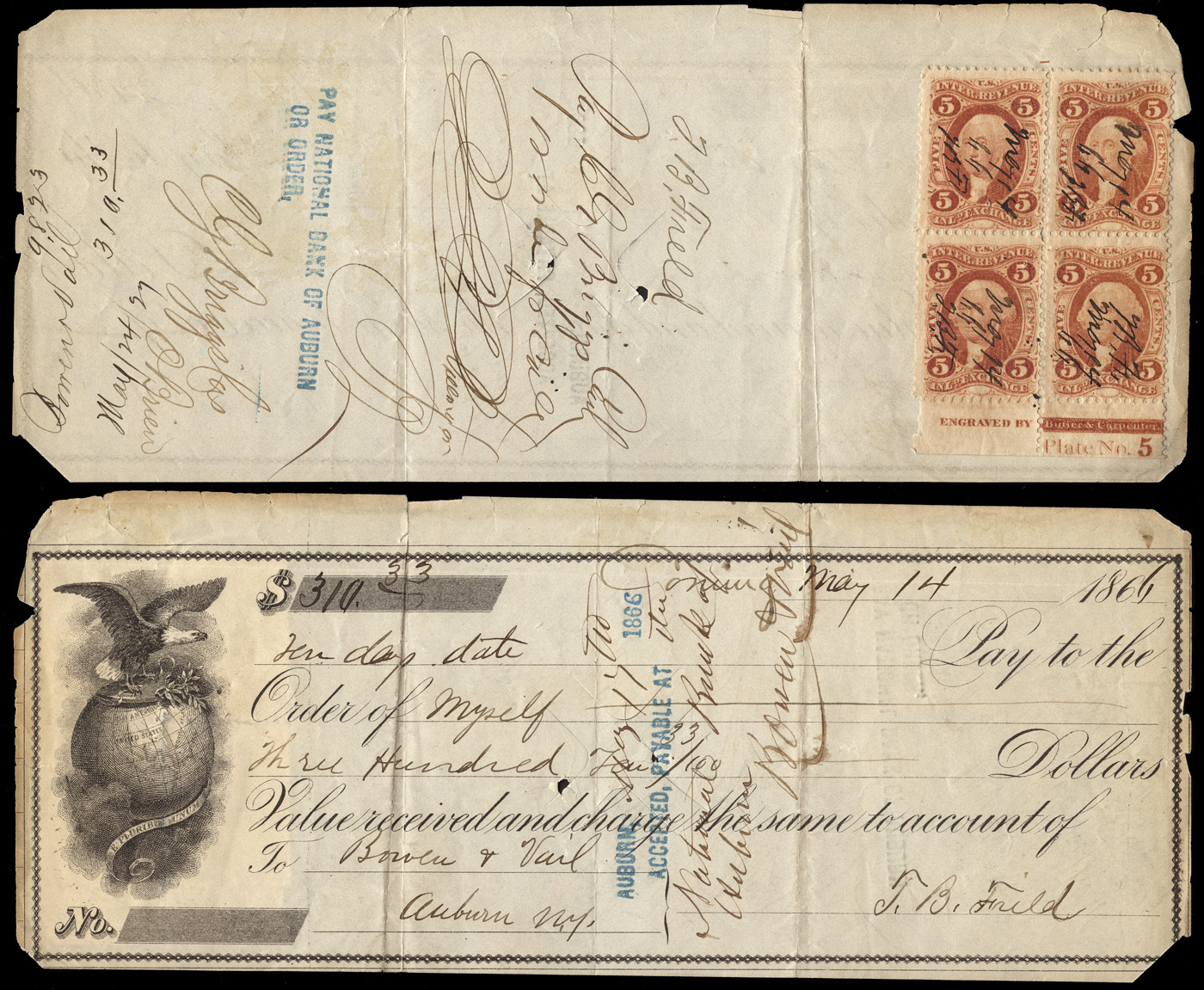
Plate blocks of 1st issue revenues are quite scarce. Ones used on document infinitely more so. The document is quite ratty, and several people have suggested soaking the plate block off, but I won't do that. I believe that the documents need to be preserved to retain context.
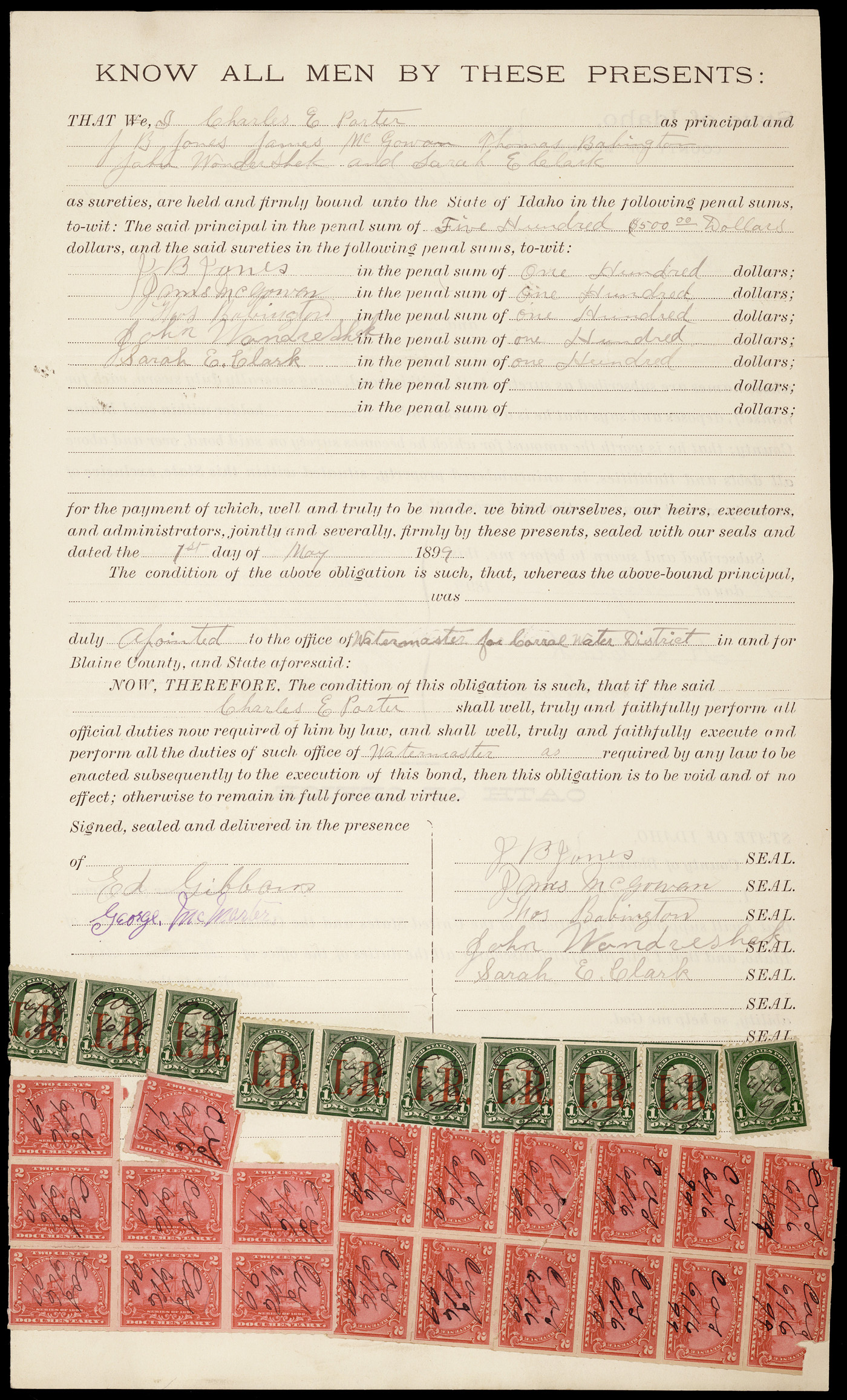
Another one for my illegal usage collection. An Idaho bond with nine R154 and twenty R164, and they must have run out of the former, using a #279 to finish the document.
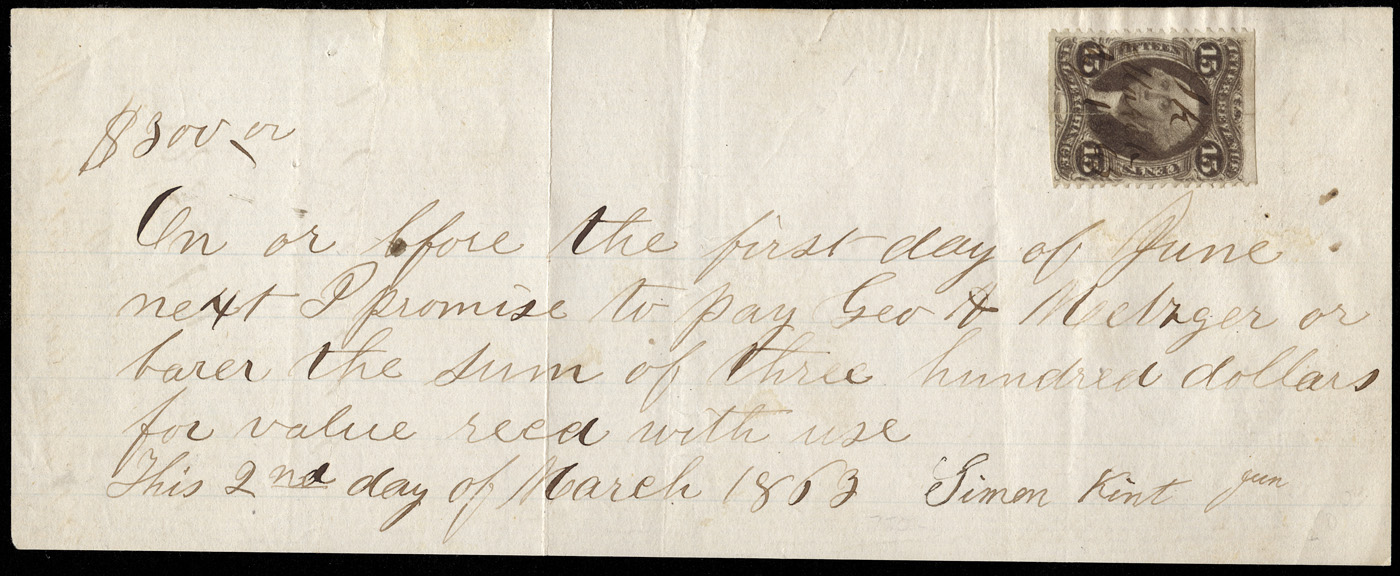
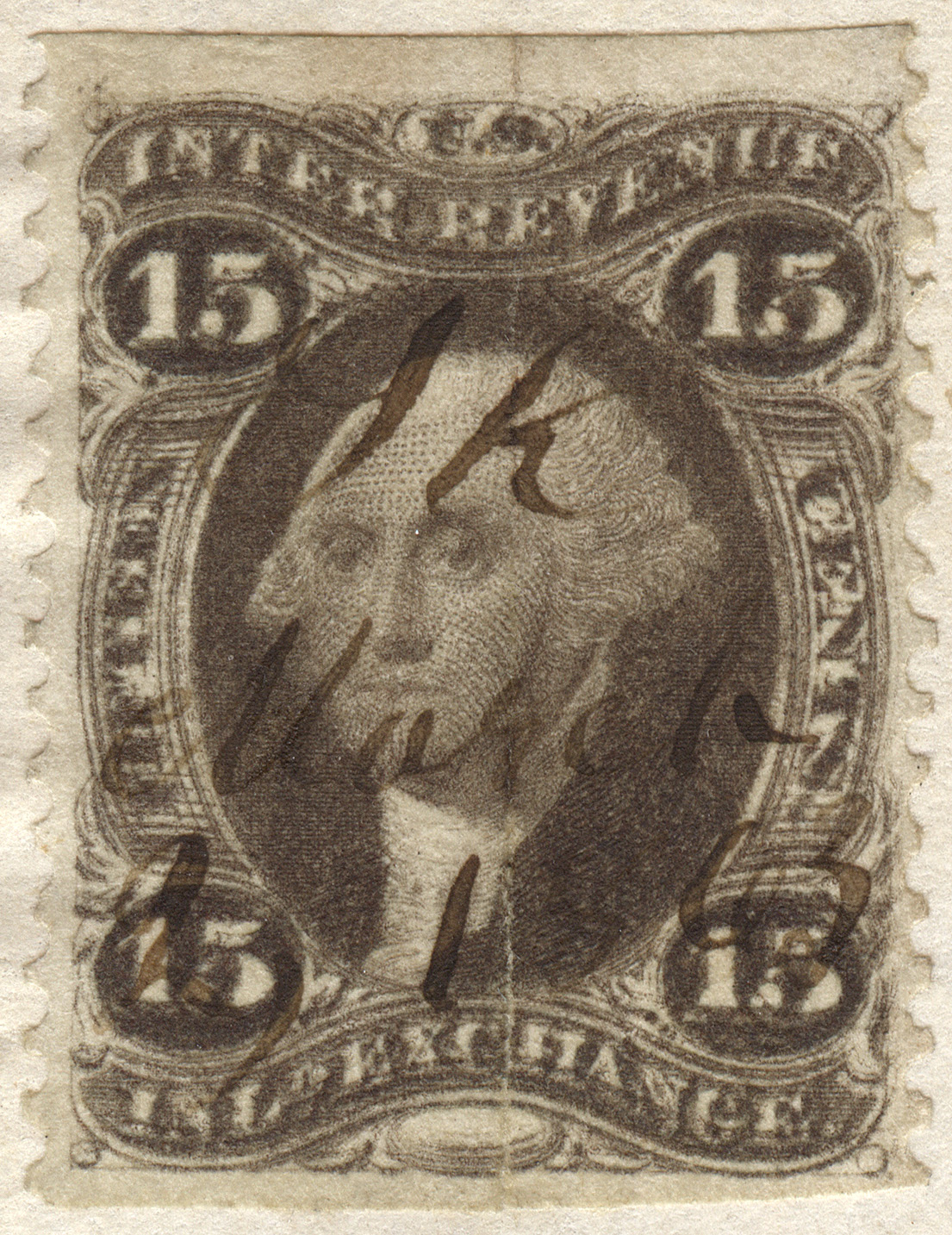
This one adds to my collection of double impressions. I already have the R40c double impression; the R40b part perf is considerably more scarce. I'm aware of a block of 4 that was in the Cunliffe collection, but am not aware of any others. This is the only reported example still on document. It has a heavy vertical crease ending in a partial tear, but I like it aesthetically anyway. When you are dealing with extant populations this tiny, one cannot be overly choosy. 1991 PFC.
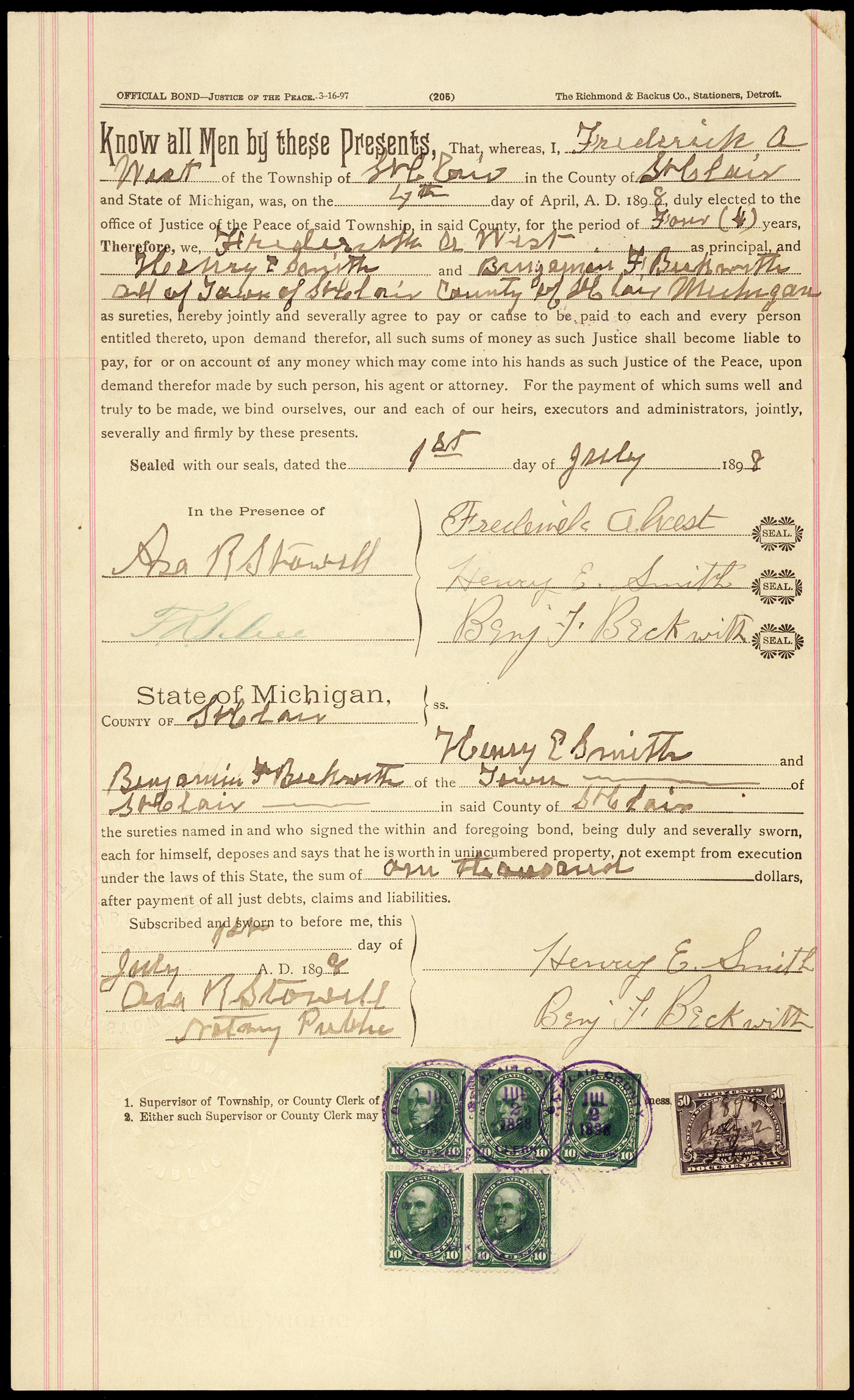
A spectacular illegal usage: a block of 4 and a single of Scott #273, the 10-cent Daniel Webster, along with a 50cent battleship on a Michigan surety bond, canceled July 2, 1898, the second day of the tax. Visually superb!
And lastly... this one is exceptional, although not for the reason you might think. It is a block of 3 of Scott #76 (catalog $395) used illegally as revenues on a promissory note. What I missed, the dealer missed, and other collectors missed even looking at it after I bought it (my thanks to Tim Wait for recognizing it and pointing it out) is the second transaction on the back of the stamp: a "confession of judgment". This is when the debtor knows they are going to default on the note and files a confession of judgement stating that they will not oppose the creditor's attempts to collect on the debt.
At the time Mike Mahler published his book on Civil War taxed documents in 1999, he had this type of document listed as a rarity 9 on a 10-point scale with only 4 known examples at that time. Since then, several other judgments have been discovered, but the reported population is still in single digits. In all likelihood, this is the only example in existence on a document in conjunction with an illegal usage.
This particular document was lot #526 in the 1980 Turner Collection sale, where it sold for $575 against an estimate of $250. The judgment on reverse was not noted in the auction description.





 Posted 12/06/2015 2:50 pm





