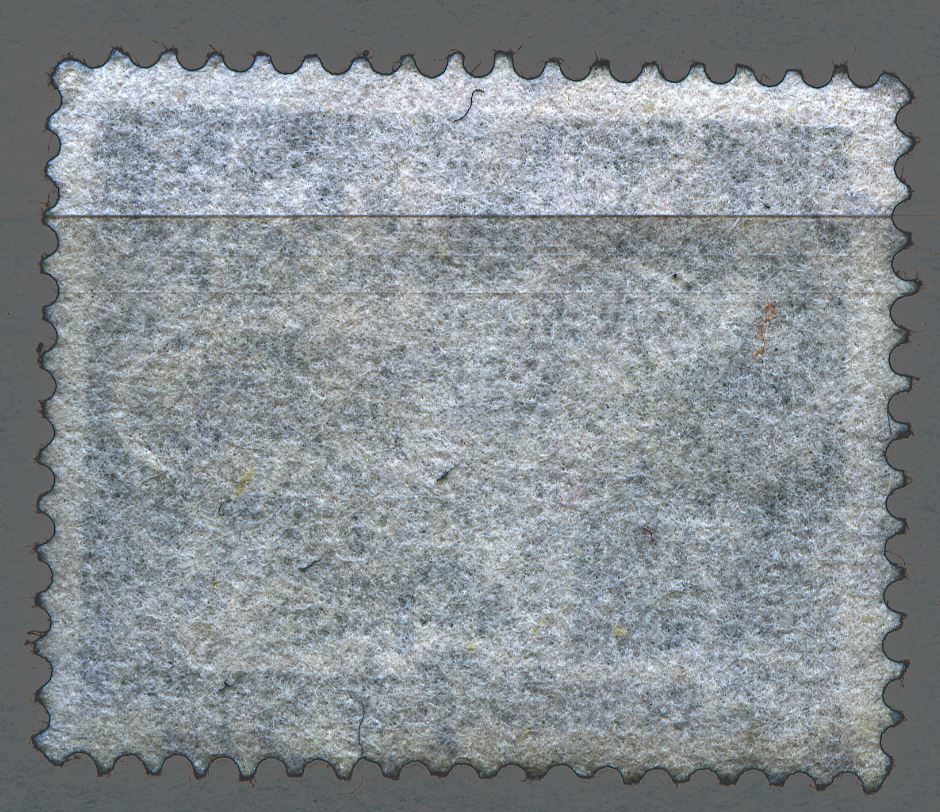
The ribbing of the post-1937 Canadian stamps has to do with the twill-binding of the long sieve in the paper machine.
The weft threads [across the sieve] are relatively thicker than the warp threads [lengthwise along the sieve].
Apart from that since 1971 a multi-layered sieve was introduced that has a completely different looking binding!
The subject of paper structures [wires, watermarks] is one of the most difficult subjects of philately. I know of well-wrought philatelic Manuals that avoid the subject simply because it was considered too difficult!
The main problem had been the problems of visualizing what the trained eye can see - in either preparing drawing or give verbal descriptions. Fortunately we have strong computer scanners now, which - by using 1200dpi or more - can help us visualizing! That is what I have been doing for ages, and I think we should instruct the beginning philatelists how to do the trick!
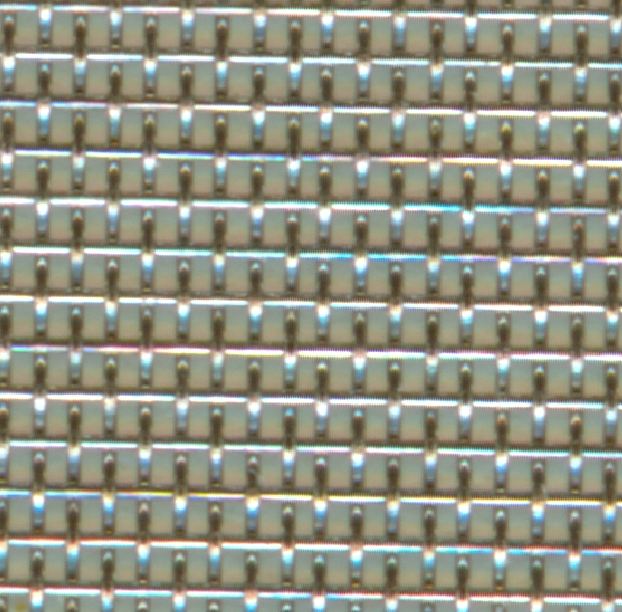
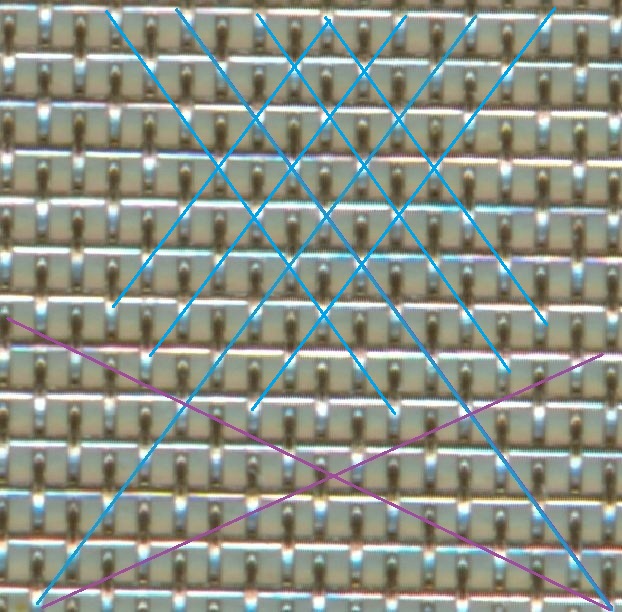
Linen-bindng:
after connecting the cross-overs by a blue line:
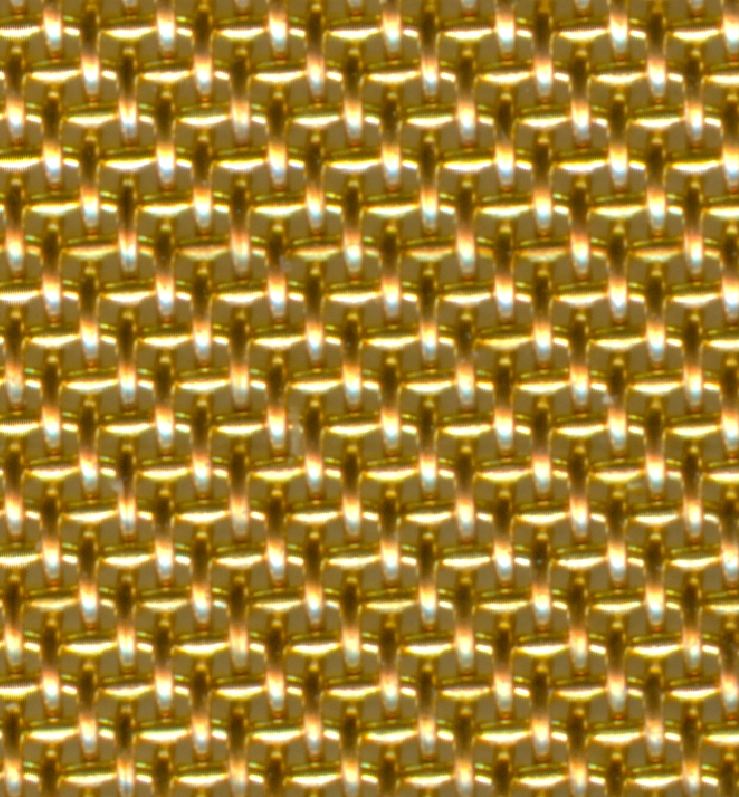
Twill-binding:
after connecting the cross-overs by a blue line:
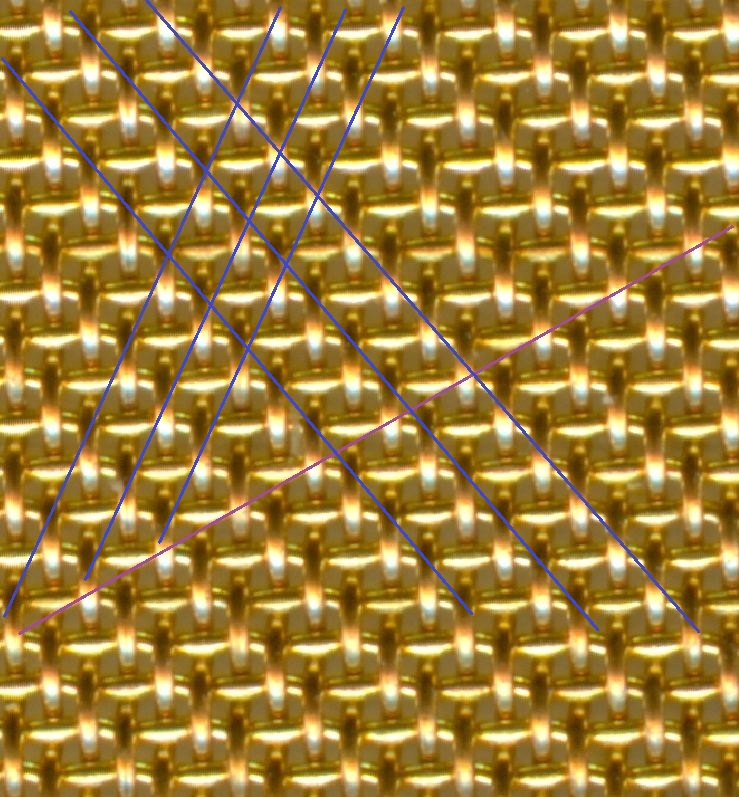
The purples lines represent diagonals our eyes are less likely to see, but still!
In the linen-binding the diagonals are symmetrical and are equidistant - the next parallel blue line is just as far way in the case of the ascending lines as of the descending lines.
In the twill-binding, however, the ascending blue lines are nearer to each other!
I hope this will make it clear why I refer to the linen-binding as symmetrical and to the twill-binding as asymmetrical. It is not just the angles of the blue lines but also the density!
The linen-binding was thre ONLY one for machine made paper since 1850 and it had NO room for "laid" or "ribbed" paper. All that was written by philatelists ever are just fairy tales. Extra "lines" were either applied in a later stage of the paper manufacturing OR were part of a watermark!
So don't believe the fairy tales the US or Canada specialist tells you :)





 Posted 01/08/2016 11:51 pm