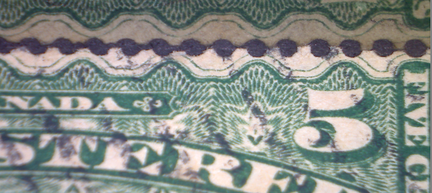
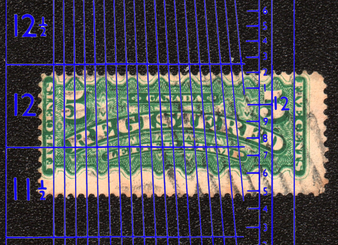
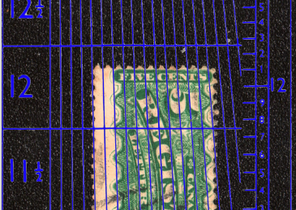
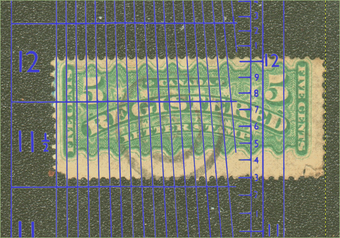
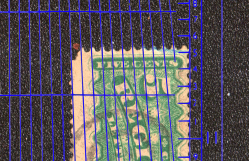
Hi guys...Just want some one to verify tht one of these stamps is a F2b and the other is a F2d...I have enhanced the stamp to get a better look at the perforations...Thanks for any help.
Robert
HERE IS A PICTURE OF THE 2 STAMPS (BOTH TOPS) TOGETHER AND YOU CAN SEE WHAT I AM LOOKING AT.
Wert, I see that you did not get a reply for this topic. I posted some questions about the perforations on registration stamps a while ago (I could not find it in the back entries.) One of the wise mavins here pointed out that it is the vertical perforation that counts, not the horizontal. My dozen stamps (2¢ & 5¢) showed quite a variation horizontally, but were all the same vertically.
I'm not a mavin (that I know of) and I'm certainly no perforation expert, but I think there could be a few reasons the perforations don't match up, wert. Probably they were perforated on different perforation machines (I'm going to assume that the Canadian Post Office of 1876 or after had more than one machine) and the pins could very easily have been at ever so slightly different positions. Also remember these stamps are around 130 years old, give or take. Paper is made up of fibres, as we all know, and is subject to changes in the environment. They expand and contract, just like trees, buildings and roads. After all this time, your stamps have live full lives, and no doubt are just showing you that.
Disclaimer: While a tremendous amount of effort goes into ensuring the accuracy of the information contained in this site, Stamp Community assumes no liability for errors. Copyright 2005 - 2026 Stamp Community Family - All rights reserved worldwide. Use of any images or content on this website without prior written permission of Stamp Community or the original lender is strictly prohibited. Privacy Policy / Terms of UseAdvertise Here





 Posted 01/21/2016 10:26 am