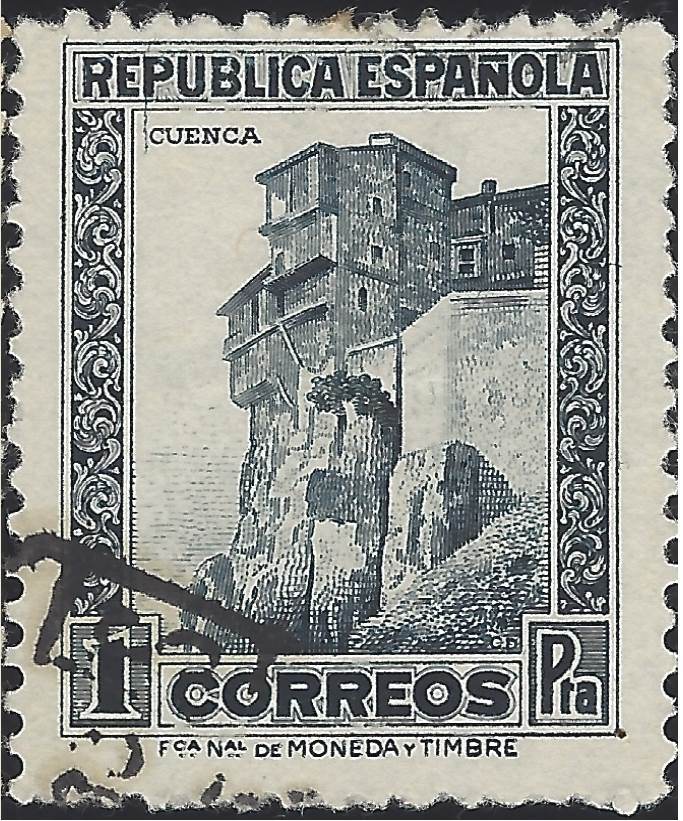
Jon was kind enough to send me a high res image of this, and I gave it a whirl on the digital (browser-based) tool that I'm developing, and with his permission I'm sharing the results/email I sent to him....
The right and left side seem like a clear 10 3/4 (10.71 and 10.67) The top and bottom perf measure approx. 10.6 (so give or take 10½-10 3/4 on manual gauge depending on how you look/place the stamp).

But I recommend you take the above (and attached) results with a pinch of salt because, here comes the 'wacko' part.
One of the features of my tool is that it allows you to measure the distance between individuals perfs and as such 'predict' the upcoming perf one tooth at a time. And now the mystery unravels a bit (and this is what I noted first place by looking at original images):
On the stamp, the 'perforation' between two tooth's can vary between
- 9.3 - 12.6 units on top:
- 9.7 - 11.9 units on left
- 11.3- 12.4 units on bottom (but because this side is what it is, mistakes on the figures are possible)
- 10.2 - 11.8 units on right
On regular stamps You might see differences of 0.5 - 1, sometimes even 1.5 units (fraction of millimeter in marker location makes up easily a difference of 1 unit). But NEVER 2 or 3 units and NEVER in such way (extremely wide and narrow perf holes in random order)
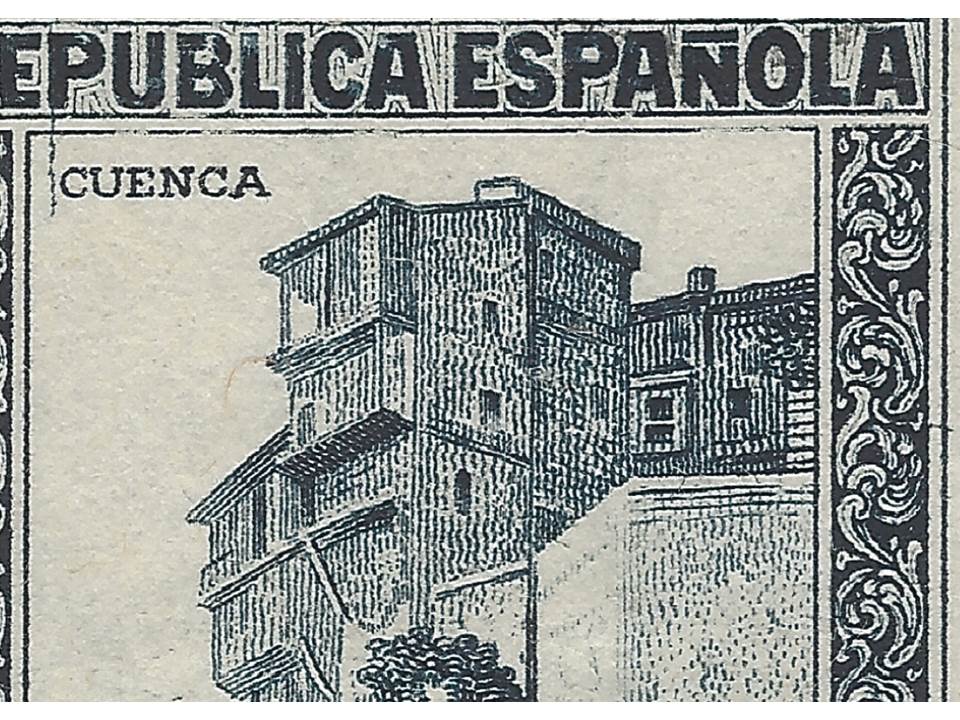
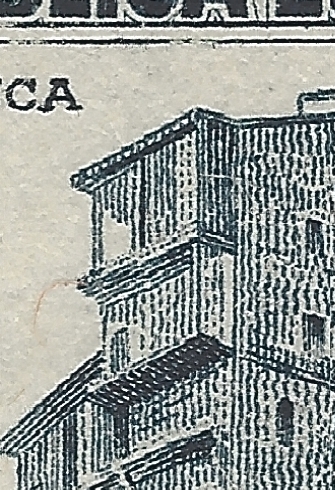
Some other (vision based) observations... The perf holes are in general 'wider' and 'deeper' than with the two other examples shown.
I've got no doubts on the authenticity of the stamp (not a forgery based on the scan), put it definitely had a different set of (very bizarre) perforation pins used than the other two examples. So possibly a private perforation (even sowing machine).Considering the conditions of Spanish Civil War nothing would surprise me.
Lots of speculation (from fellow worldwide collector who knows nothing in great detail buts lots of small details). But maybe somebody will come up with an answer based on these details.
-k-





 Posted 01/31/2016 7:08 pm