Stamp Community Family of Web Sites
Thousands of stamps, consistently graded, competitively priced and hundreds of in-depth blog posts to read


Stamp Community Forum
 
Username:
Password:
Save Password
Forgot your Password?

This page may contain links that result in small commissions to keep this free site up and running.

Welcome Guest! Registering and/or logging in will remove the anchor (bottom) ads. It's Free!

Scott 37 On Cover...different Cancel.

Previous Page | Next Page    
 
To participate in the forum you must log in or register.
Author Previous TopicReplies: 49 / Views: 9,390Next Topic
Page: of 4
Valued Member
39 Posts
Posted 02/27/2016   6:45 pm  Show Profile Bookmark this reply Add Cjusz_911 to your friends list  Get a Link to this Reply
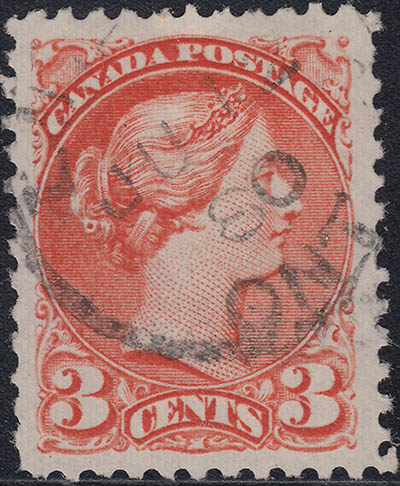
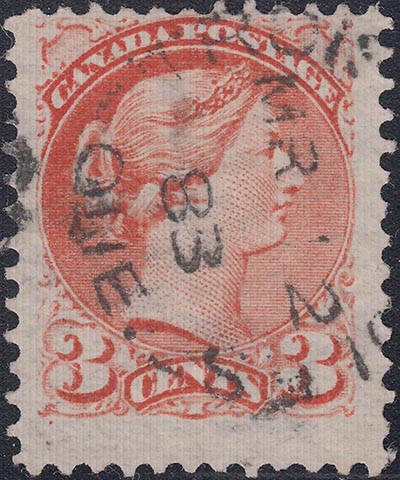
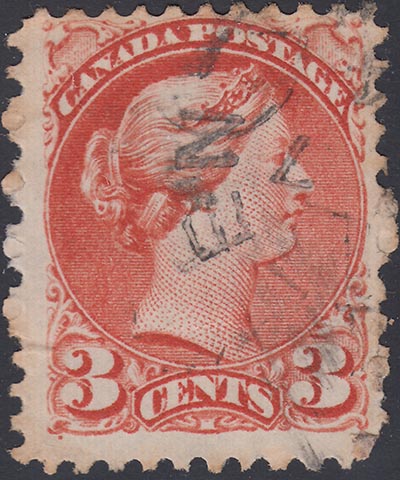
Wert, I agree with gportch's earlier comment that in the end it really doesn't matter whether it's a 37 or 41. Strictly speaking, it was printed in Montreal, but so are the Rose Carmine, and they are 41s.

Most of the printing characteristics of your stamp are probably closer to the 41 (paper and color, though very hard to tell on a computer screen), except maybe the position dot (unless what I said earlier turn out to be true, which would then confirms that it is also normal until the very end of September 1888). Mine, with almost the same date, sure does look like a 41, though maybe a bit more orange than vermilion.

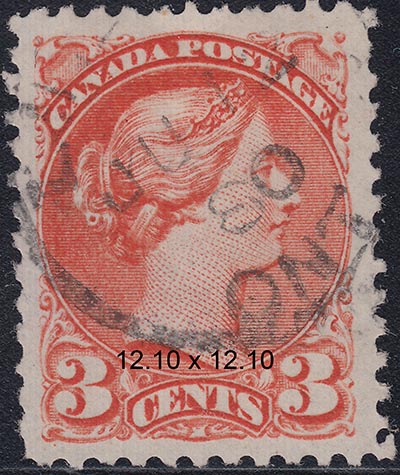
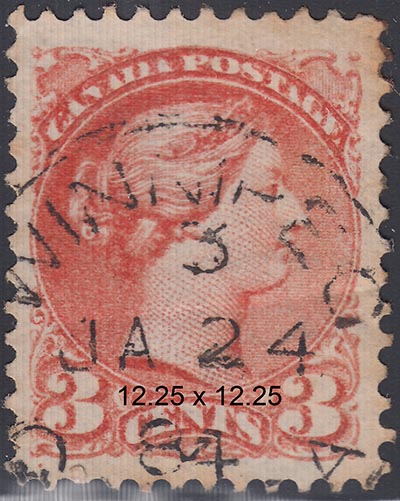
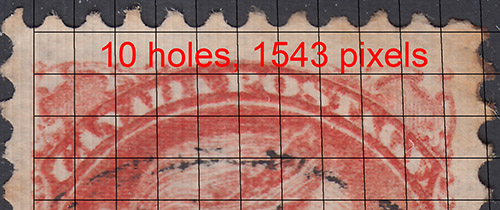
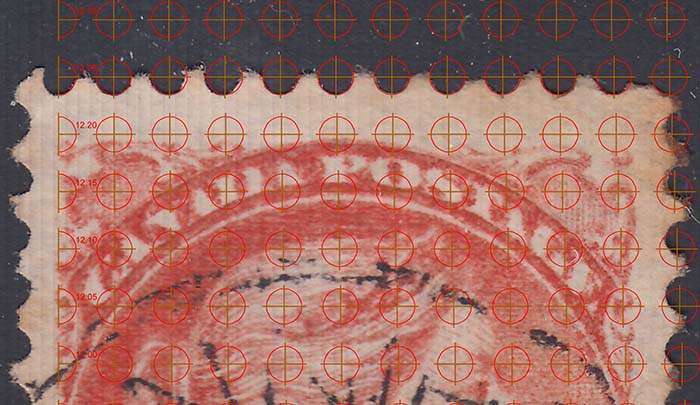
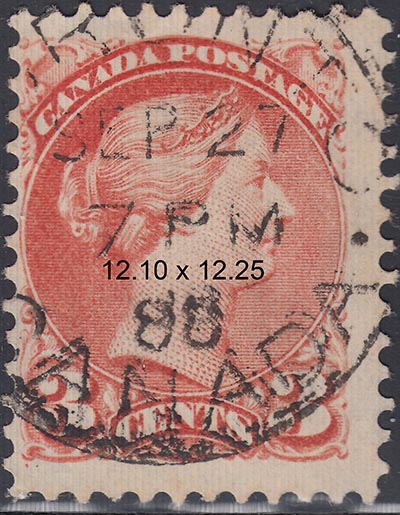
Gportch, I have measured the stamps I have with clearly dated CDS and a LL position dot from 1880 - 1888. They are all close enough to 12x12 except the following three, measured using the technic shown earlier which is pretty accurate. I was wrong on the 1888 though, I'm not sure how I got 12.15 the first time around , it's 12.10 x 12.25 :


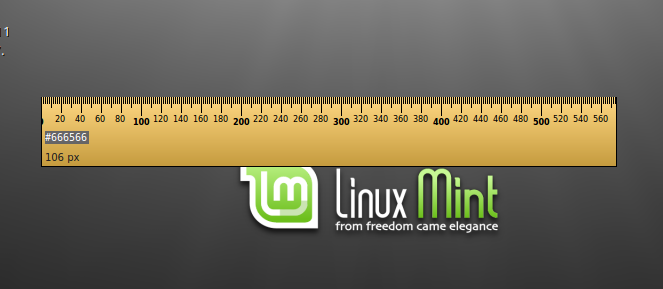
1543 pixels * 0.0105833333 = 16.33 millimeters
10 holes per 16.33 millimeters = 12.25 holes per 20 millimeters


Send note to Staff  Go to Top of Page
Edited by Cjusz_911 - 02/28/2016 07:23 am
Rest in Peace
7742 Posts
Posted 02/28/2016   07:48 am  Show Profile Bookmark this reply Add wert to your friends list  Get a Link to this Reply

Quote:
in the end it really doesn't matter whether it's a 37 or 41


It dose when I am identifying them to place in my collection...

Robert
Send note to Staff  Go to Top of Page
Edited by wert - 02/28/2016 07:48 am
Valued Member
39 Posts
Posted 02/28/2016   12:28 pm  Show Profile Bookmark this reply Add Cjusz_911 to your friends list  Get a Link to this Reply
Sorting SQ always give me headaches!
I have at full page of stamps that I have set aside, some a couple of years ago now, that I can't decide where to place in my collection! Soon it will be two pages...

But for your stamp, I wouldn't hesitate one bit. It would end up in my calendar collection! I wish all my SQ had dated cancels!
Send note to Staff  Go to Top of Page
Valued Member
Canada
382 Posts
Posted 02/28/2016   3:29 pm  Show Profile Bookmark this reply Add gportch to your friends list  Get a Link to this Reply
Headaches earned by sorting Small Queens are easily cured with a sampling of a nice single malt scotch. Why do you think I love the Small Queens?

Back to the subject at hand, I discovered the following on page 57 of John Hillson's book "The Small Queens of Canada"


GJP
Send note to Staff  Go to Top of Page
Rest in Peace
Canada
5701 Posts
Posted 02/28/2016   9:08 pm  Show Profile Bookmark this reply Add BeeSee to your friends list  Get a Link to this Reply
Thanks for to Wert for starting this thread. There seems to be fascinating new information on the small queens here. Cjusz_911, glad to see you are using a similar perforation measurement method as me, and getting good results .

I always thought a position dot on small queens after the early 1880's was just late usage, but it appears I am learning something new .

I will now have to check my covers and dated singles again.
Send note to Staff  Go to Top of Page
BeeSee in BC
"The Postmark is Mightier than the Stamp"
http://brcstamps.com ---- BNAPS, RPSC, APS
Edited by BeeSee - 02/29/2016 4:00 pm
Pillar Of The Community
Canada
1415 Posts
Posted 02/28/2016   9:44 pm  Show Profile Bookmark this reply Add Gilles le timbre to your friends list  Get a Link to this Reply
BC, I could not agree more with you. This is a fascinating area, and 150 yrs later, still puzzles the experts, so even more challenging for the "average" philatelist. I look forward to see a revised table from GPortch in a future printing of the Unitrade....
Send note to Staff  Go to Top of Page
Rest in Peace
Canada
5701 Posts
Posted 02/29/2016   3:44 pm  Show Profile Bookmark this reply Add BeeSee to your friends list  Get a Link to this Reply
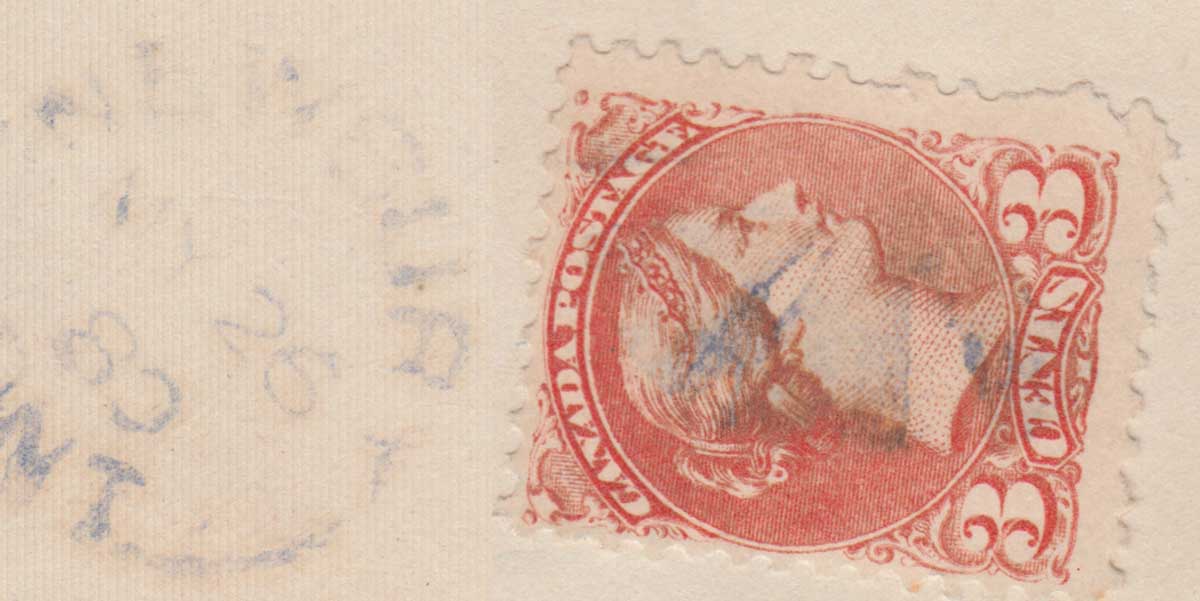
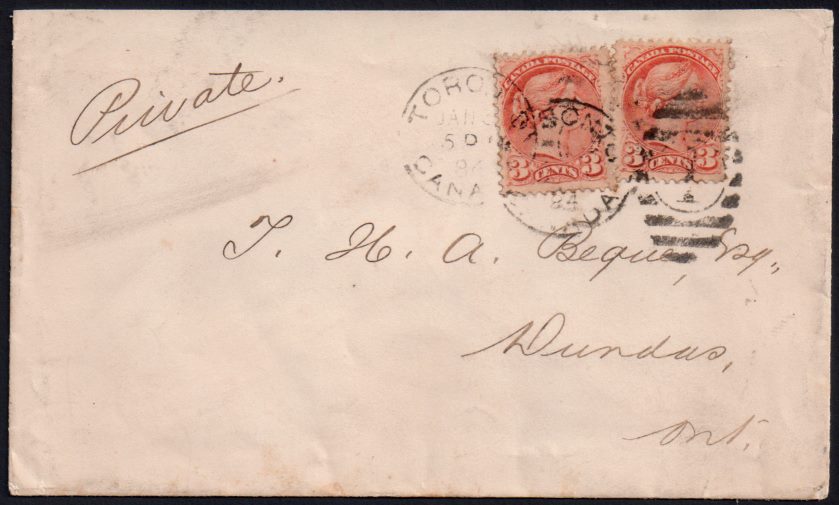
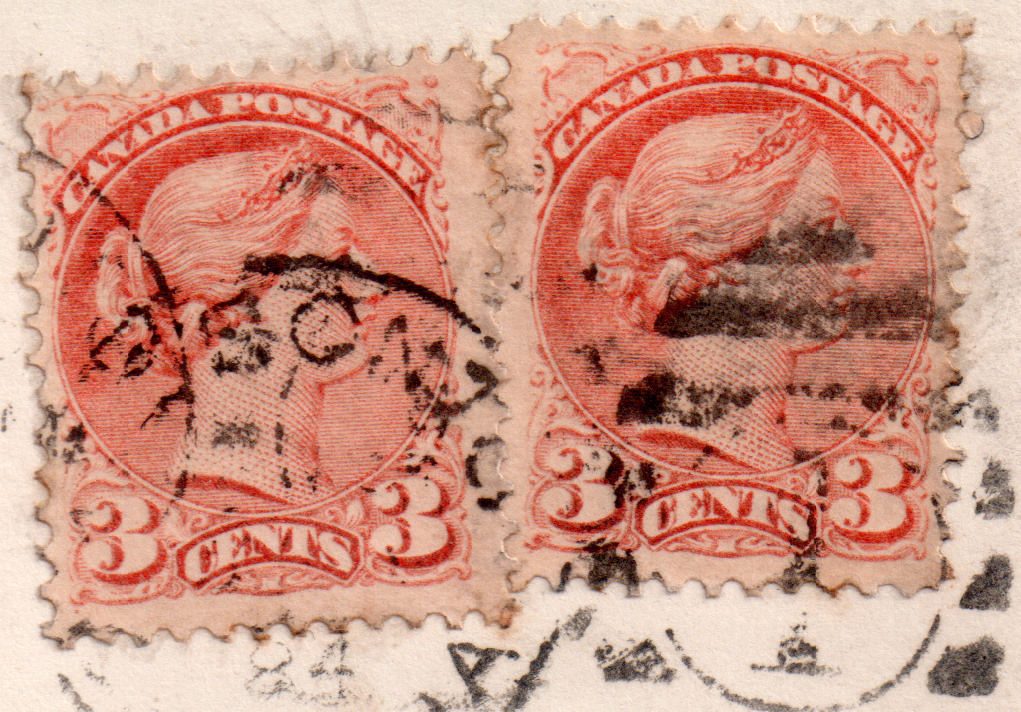
I have checked the few small queen covers I have, and found the following 1880's era covers with position dots:

January 1884:


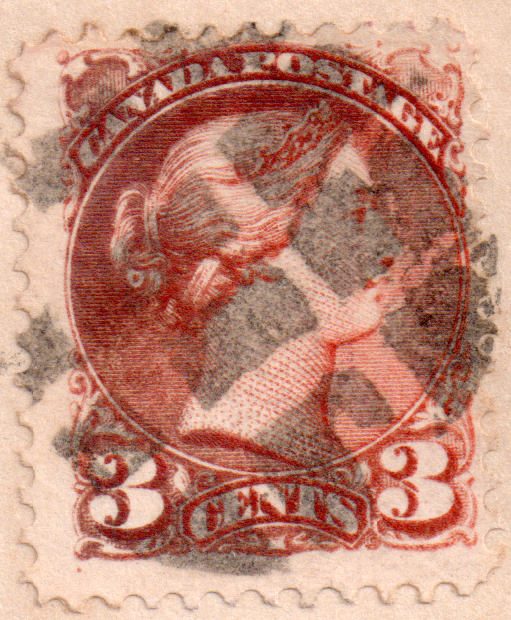
Dots on both stamps:


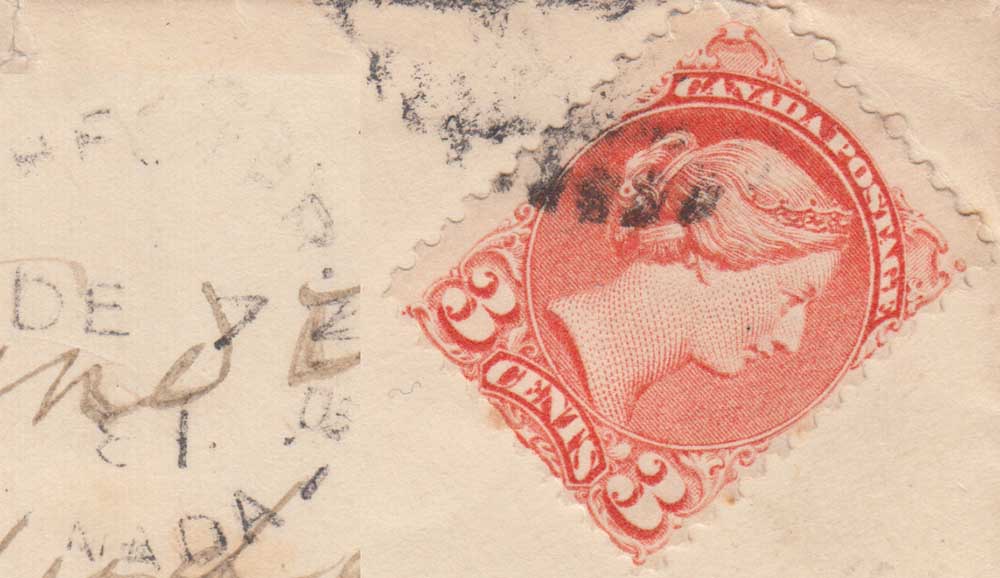
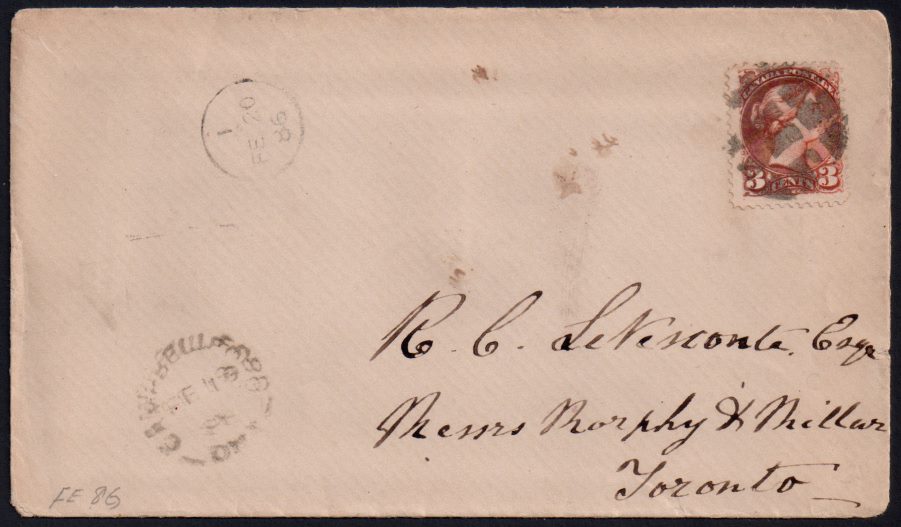
February 19, 1886:


Signs of oxidation on the stamp


I have noted the perforations as 12.2 x 12.2 12.1 x 12.1 for both covers, but I can't remember what method I used, whether a perforation gauge, steel ruler and math, or electronically. I will double (or triple!) check when I get home.
Send note to Staff  Go to Top of Page
BeeSee in BC
"The Postmark is Mightier than the Stamp"
http://brcstamps.com ---- BNAPS, RPSC, APS
Edited by BeeSee - 02/29/2016 10:00 pm
Valued Member
Canada
382 Posts
Posted 02/29/2016   9:23 pm  Show Profile Bookmark this reply Add gportch to your friends list  Get a Link to this Reply
BC, here is an opportunity to test my theory and previously shown perf chart. I suspect that the 1884 cover stamp is 11.75 x 11.9 although that would be a really late usage for Toronto where the mail volume was large. I also guess that the 1886 will be bang on 12 x 12. If you have one, please measure with either the yellow Instanta or the newer Unitrade gauge. If you have the aluminum Kiusalas gauge the readings will be 67 x 66 and 65 x 65 respectively.

Unfortunately, if everyone is using a different measuring system, we are never going to get agreement on this topic. I choose to use the yellow Instanta (a) because I have one, (b) because that is the tool we use in the Greene Foundation Expertizing Committee, and (c) that is the gauge Ted Nixon used when compiling data for his book.

Keep up the good work everybody. This is getting really good!

GJP
Send note to Staff  Go to Top of Page
Rest in Peace
Canada
5701 Posts
Posted 02/29/2016   10:52 pm  Show Profile Bookmark this reply Add BeeSee to your friends list  Get a Link to this Reply
First of all, when I got home, I saw that I had marked these covers as 12.1 x 12.1, not 12.2 x 12.2. I have corrected the post.

GPJ, I have the newer Unitrade gauge, plus my good old machinists rule and a calculator. In addition I have several electronic tools.

My first measurements were done with the Unitrade gauge, and I was getting just over 12 x 12 on both stamps. There is no way I could get an 11.75 anywhere.

The reason I say "just over" 12 x 12, no matter how careful I slid the gauge, I could not get a reading under 12 on either sides of either stamps.

Using electronic gauges came out with the same results, giving me confidence that both stamps were closer to 12.1 x 12.1 than 12 x 12.

I even used the interesting tool provided by SCF member SCB here:

https://goscf.com/t/48116#48116

This tool is interesting because it allows you to mark each perforation, it then adds up all the distances and does the math based on averages.

GPortch, I am willing to send you these covers for examination - they were purchased for less than $5 on ebay a couple of years or so ago.

Send note to Staff  Go to Top of Page
BeeSee in BC
"The Postmark is Mightier than the Stamp"
http://brcstamps.com ---- BNAPS, RPSC, APS
Valued Member
39 Posts
Posted 03/01/2016   11:21 am  Show Profile Bookmark this reply Add Cjusz_911 to your friends list  Get a Link to this Reply
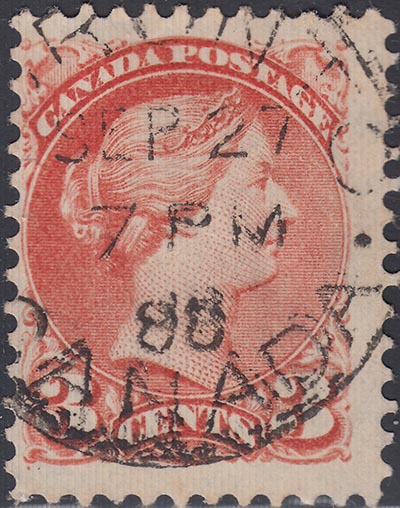
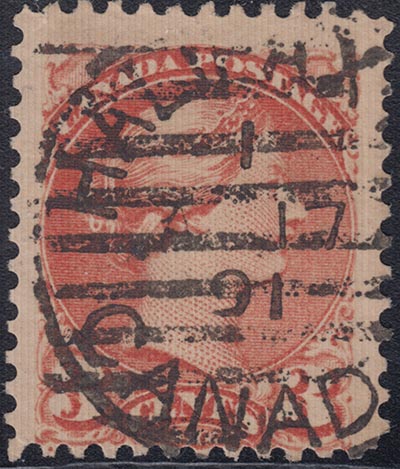
I've recheck my collection and here is the tally :

1880 : 1 on cover, 2 on stamps out of 3 dated stamps found (3/3)
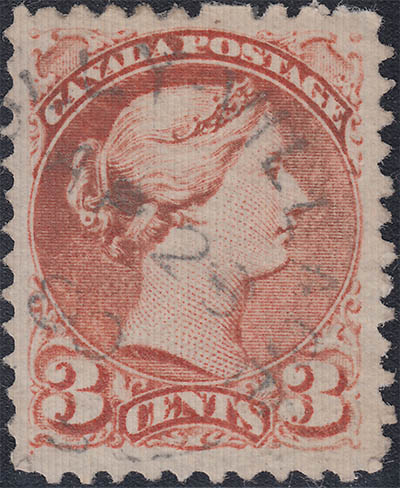


1881 : 2 on cover out of 3 found (2/3)
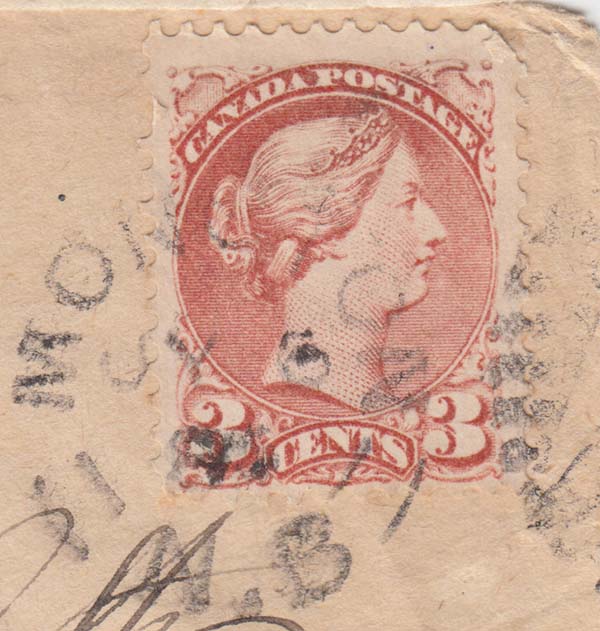


1882 : none out of 2 found (0/2)

1883 : 1 on cover, 1 on stamps out of 3 found (2/3)
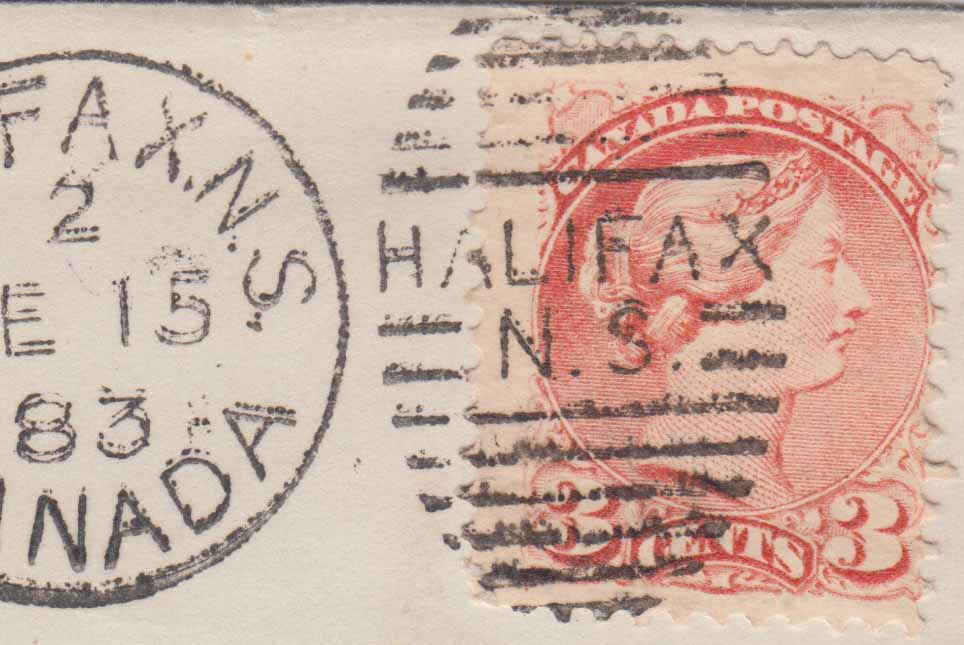


1884 : 2 on stamps out of 2 found (2/2)
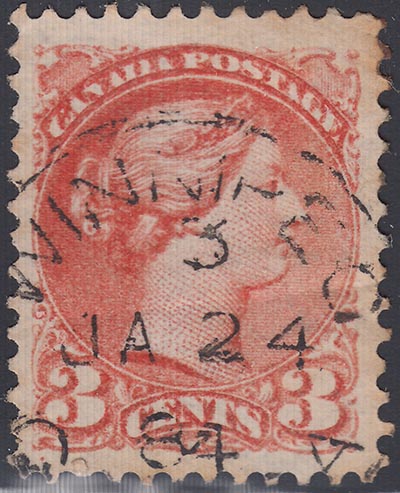


1885 : none out of 1 found (0/1)

1886 : none out of 1 found (0/1)

1887 : none out of 6 found (0/6)

1888 : 1 on cover out of 1 found (1/1)

I've also found a 1991.

I cannot check them using my yellow Instanta because, as I have shown previously, it is off by quite a margin and I agree with GJP that it is difficult to have meaningful measurement if we are not using the same tools.

I'm still of the opinion that some plates with LL dots were used continuously until the end of September 1888, that is, in decreasing numbers as they were slowly replaced by new ones. They were removed entirely when operations moved in the Gazette building.
Here's my reasoning, quoting from Hillson and Nixon unless specified :

Plates 1 through 7 were made in Ottawa in 1872 or before. They were single pane 1x100 subject with LL dot and imprint type III (plate 1-2) and IV (plate 3-7). They suspect that plates 6-7 could possibly have been marked type III since 1) they have never confirmed their existence through known imprinted material and 2) that's real interesting :

"One of the enduring mysteries of the value is why the most common imprint to be found, particularly on used stamps, is the type III, up to the end of the 1870s. Type V is conspicuous by its absence, and we have concluded that there must have been more than one plate with type III imprint. It could be that both plates 6 and 7 were so marked and, if so, they were used extensively." (p.127)

Plates 8-11 were made early in Montreal. They were double pane 2x100 subjects with LL dot and imprint type V. Or they should have until the end of the 1870s. (p.11-16). Strangely enough, as GJP reported from an earlier Hillson's book, no type V imprint with LL dot have been found for the three cents.

Also very interesting is this :

"Curiously, from 1873 forward, one would expect that type V would be the one most commonly found. Yet, as pointed out by the late D. Matthew Carstairs, type V is not found on used, dated stamps before about 1880, whereas the two [...] type III and IV, are commonly found until after that date. (p.15, my italics)

There is also the fact that plates 10-11 are not confirmed by the authors through imprinted material. They are known to exist only through the plate destruction record from 1897. These two might have been type III if we follow Hillson's reasoning. Type III were laid with LL dots as other SQ plates until the end of the 1870s (p.12)

Plates 12-16 were made later in Montreal (after 1880). They are double pane 2x100 subjects with imprint type V. The dots on these plates were at 3 or 9 o'clock and their existence known through imprinted materials except plate 16.

Here is a summary :

Plate 1-7, imprint type III or IV, LL dot on 90% of stamps. Type III were used extensively into the late 1870s and early 1880s, maybe even after (p.15, 127)

Plate 8-11, imprint type V, never seen with LL dot even though it would be logical to assume they were. But, plate 10-11 could be type III and thus, might have also been used extensively into the 1880s.

Plate 12-16 imprint type V with 3 or 9 o'clock dot, replaced the worn out early LL dot progressively beginning in 1880.

Would these type III imprint plates be able to give that many impressions over that long of a period? I think they could. The two 6 cents plates gave something like 125,000 impressions each between 1872-1890, that's 25 million stamps. (p.158). Same for the 2 cents. These plates were rugged way beyond their required durability (Initial contract with the Government stated that each plate should be guaranteed for 25000 impressions before repair and 15000 thereafter, total 40000) (p.3)

Another factor to take into account is corrosion. If plates made before 1875 were stored and put back into use a decade later, they would have rusted. Given the amount of research and attention the SQs have received ever since they were released, I think that something like "pitted plate flaw(s)" would be known, with position, on some mid 1880s 3 cents stamps. It happened with the 6 cents. In 1887 a plate was laid with type V imprint but wasn't used until late 1890, "by which time it had become pitted with corrosion" (p.57-58). That's a brand new plate, stored for three years. Not a worn plate stored for 10. Here's an example that I wish was in my collection!

As for late usage, again I'm not sure. Late usage during this issue is not rare, not even uncommon, but that couldn't account for the amount Kruczynski observed in the article I referred in a previous post. Or, for that matter, the numbers I have in mine (which is a beginner's collection...with allure!). If Kruczynski is right (maybe someone could find cross references or follow ups on his report), late usage couldn't explain that between 30 and 50 percent of stamps between 1880-1888 have LL dots. Or reports from Boggs that 3 cents SQ showed LL dot until 1885, after which "[it] is not discernable in most instances" (p.282)

Anyway, that's my two cents... sorry, that's my three cents on the subject!


Send note to Staff  Go to Top of Page
Rest in Peace
Canada
5701 Posts
Posted 03/01/2016   4:18 pm  Show Profile Bookmark this reply Add BeeSee to your friends list  Get a Link to this Reply
Posted earlier by: Cjusz_911


Quote:
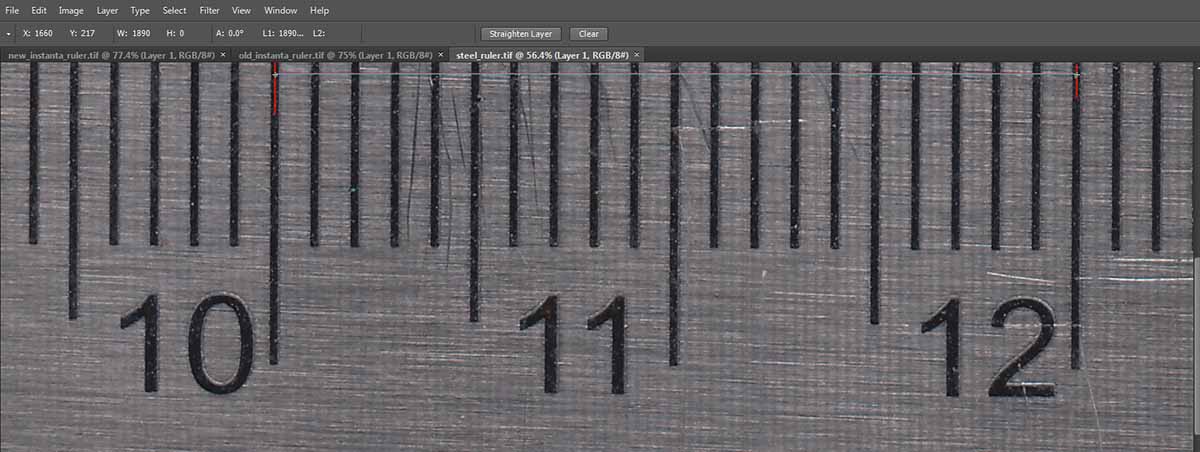
Photoshop Steel Ruler measurements over 20 millimeters :


w: 1890 pixels, thus 1890 * 0.0105833333 = 20.00 millimeters

My conclusion is that my steel ruler is more precise than the Instantas rulers and the combination of my scanner and Photoshop can produce precise measurements.

Here's an exemple from the Old Yellow Instanta :


The 12th hole at 12.0 on the gauge is measured at 1869 pixels, that's 19.78 millimeters, again short by 0.22. Hence the real measurement the gauges give is not 12.0, but 12 holes every 19.78 mm, or 12.13 per 2cm. That kind of also indicate that my yellow has shrink by 0.22 millimeters in width since it was made (if it ever was precise)

That's basically why I stick with Photoshop when I measure Small Queens!

gportch, I'll have the measurements during the evening as well as a little reflexion on the subject!


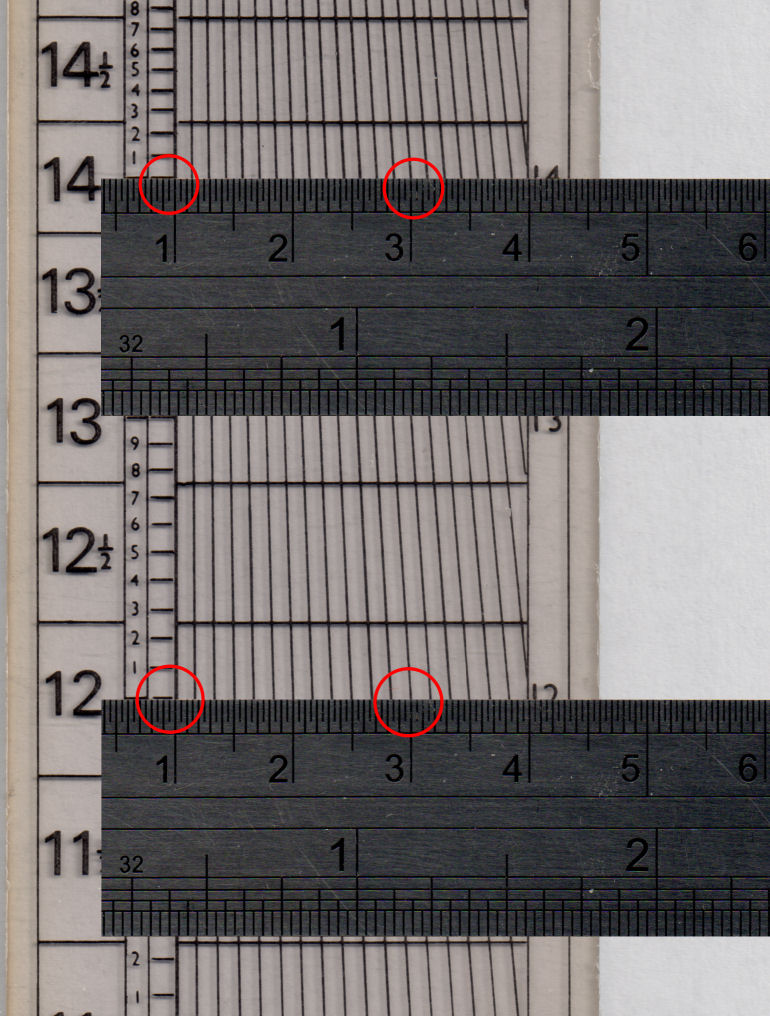
With that said, another simple way to test your yellow gauge is to put your accurate steel ruler over your gauge at where the 2cm (20mm) distance should intersect the last line at the perf 12 area. They should be bang on. I did that with my Unitrade gauge, and it was surprisingly bang on. I checked it in several places on round perforation numbers (10, 11, etc.)

Cjusz_911, you are fast becoming my SCF buddy! Now all you have to do is perf those stamps in the fantastic informative post above.
Send note to Staff  Go to Top of Page
BeeSee in BC
"The Postmark is Mightier than the Stamp"
http://brcstamps.com ---- BNAPS, RPSC, APS
Edited by BeeSee - 03/01/2016 4:19 pm
Valued Member
39 Posts
Posted 03/01/2016   5:49 pm  Show Profile Bookmark this reply Add Cjusz_911 to your friends list  Get a Link to this Reply
Glad to hear you liked my post BeeSee!
I'll be away from my collection for a couple of days, more when I come back!

By the way I found another one in my rpo collection, it's either 1882 with the "2" upside down or a 1885, I don't know if I'll ever be able to find out...
Send note to Staff  Go to Top of Page
Rest in Peace
Canada
5701 Posts
Posted 03/02/2016   01:53 am  Show Profile Bookmark this reply Add BeeSee to your friends list  Get a Link to this Reply
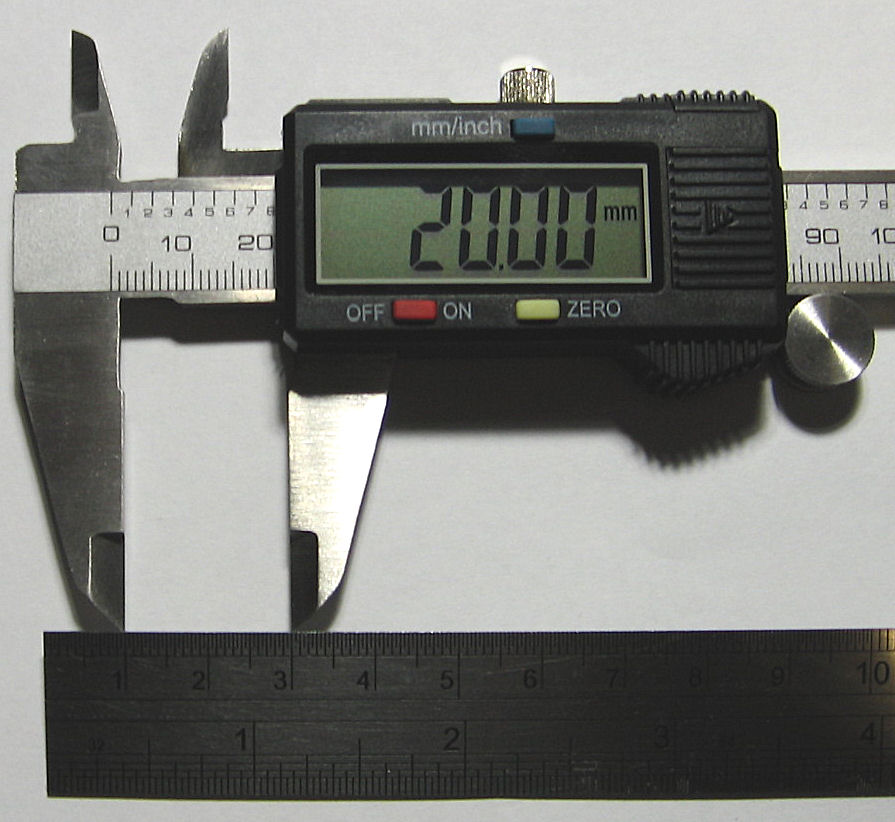
Here is how I tested my gauge mentioned above. You can see how the 2cm distance on my metal scale match the intersection of the perf 12 and perf 14 lines. My metal scale is accurate because I tested it with digital calipers that the machine of the company I work for uses.


All that is left now is the human touch, lining up the gauge with the stamp perforations and getting the right reading - not always an easy task!
Send note to Staff  Go to Top of Page
BeeSee in BC
"The Postmark is Mightier than the Stamp"
http://brcstamps.com ---- BNAPS, RPSC, APS
Edited by BeeSee - 03/02/2016 01:56 am
Rest in Peace
Canada
5701 Posts
Posted 03/03/2016   09:08 am  Show Profile Bookmark this reply Add BeeSee to your friends list  Get a Link to this Reply

Quote:
My metal scale is accurate because I tested it with digital calipers that the machine of the company I work for uses.


There is a typo in the last post I made.

It should read:

My metal scale is accurate because I tested it digital calipers that the machine shop of the company I work for uses.

Here is a photo:

Send note to Staff  Go to Top of Page
BeeSee in BC
"The Postmark is Mightier than the Stamp"
http://brcstamps.com ---- BNAPS, RPSC, APS
Rest in Peace
7742 Posts
Posted 03/03/2016   12:23 pm  Show Profile Bookmark this reply Add wert to your friends list  Get a Link to this Reply
There are plenty of free download rulers to use on your computer to.

Robert


Send note to Staff  Go to Top of Page
Page: of 4 Previous TopicReplies: 49 / Views: 9,390Next Topic  
Previous Page | Next Page
 
To participate in the forum you must log in or register.

Go to Top of Page

Disclaimer: While a tremendous amount of effort goes into ensuring the accuracy of the information contained in this site, Stamp Community assumes no liability for errors. Copyright 2005 - 2026 Stamp Community Family - All rights reserved worldwide. Use of any images or content on this website without prior written permission of Stamp Community or the original lender is strictly prohibited.
Privacy Policy / Terms of Use    Advertise Here
Stamp Community Forum © 2007 - 2026 Stamp Community Forums
It took 0.32 seconds to lick this stamp. Powered By: Snitz Forums 2000 Version 3.4.05