| Author |
 Replies: 15 / Views: 1,866 Replies: 15 / Views: 1,866 |
|
|
Valued Member
77 Posts |
|
|
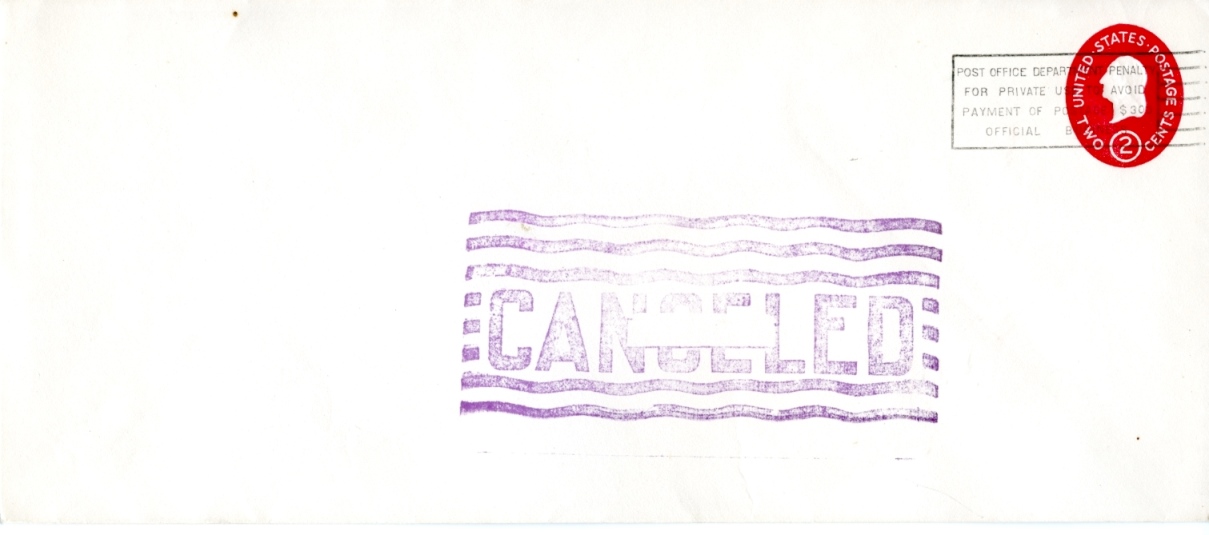 It seems to me that it would have been easier to simply discard obsolete stationary. Was this handstamp necessary for accounting purposes? |
|
Send note to Staff
|
| Edited by j_rogers - 03/23/2016 10:16 pm |
|
|
|
|
Pillar Of The Community
621 Posts |
|
|
This envelope was demonetized twice.
If the penalty overprint was applied first, then there is little rationale for applying the CANCELLED handstamp afterwards.
If a customer returned a bunch of 2 cent envelopes for cash or purchases, whereupon the monster handstamp was applied, then it is plausible that one or more of these demonetized envelopes got into the stream of unused envelopes heading for the penalty overprint machine.
I said plausible, remember. Maybe someone else has another theory?
|
Send note to Staff 
|
|
|
Rest in Peace
United States
4052 Posts |
|
|
Quote:
This envelope was demonetized twice.
If the penalty overprint was applied first, then there is little rationale for applying the CANCELLED handstamp afterwards. I don't follow your reasoning. It seems to me that the penalty imprint 'moved' the cover from stock for sale to the public to stock for use by a government agency - which is not quite demonitization - and the government agency chose not to use it (first class letter rate increased to 3c?) and applied the CANCELLED stamp. As always, I welcome any equally unqualified guesswork. Cheers, /s/ ikeyPikey |
|
Send note to Staff
|
|
|
Valued Member
77 Posts |
|
|
I was thinking along the lines of ikeyPikey. Was it normal for a government agency to apply "CANCELLED" to obsolete stationary or was this a private handstamp added later? |
|
Send note to Staff
|
|
|
Pillar Of The Community
United States
7239 Posts |
|
|
I'm guessing that the "cancelled" imprint was applied because the postal people decided to use envelopes like this for interoffice correspondence, such as memoranda not destined for the mail stream.
Is the white patch over "cancelled" a label which was present when you acquired this postal stationery, or is it a space in the rubber stamp? |
|
Send note to Staff
|
|
|
Valued Member
77 Posts |
|
|
Quote:
Is the white patch over "cancelled" a label which was present when you acquired this postal stationery, or is it a space in the rubber stamp?
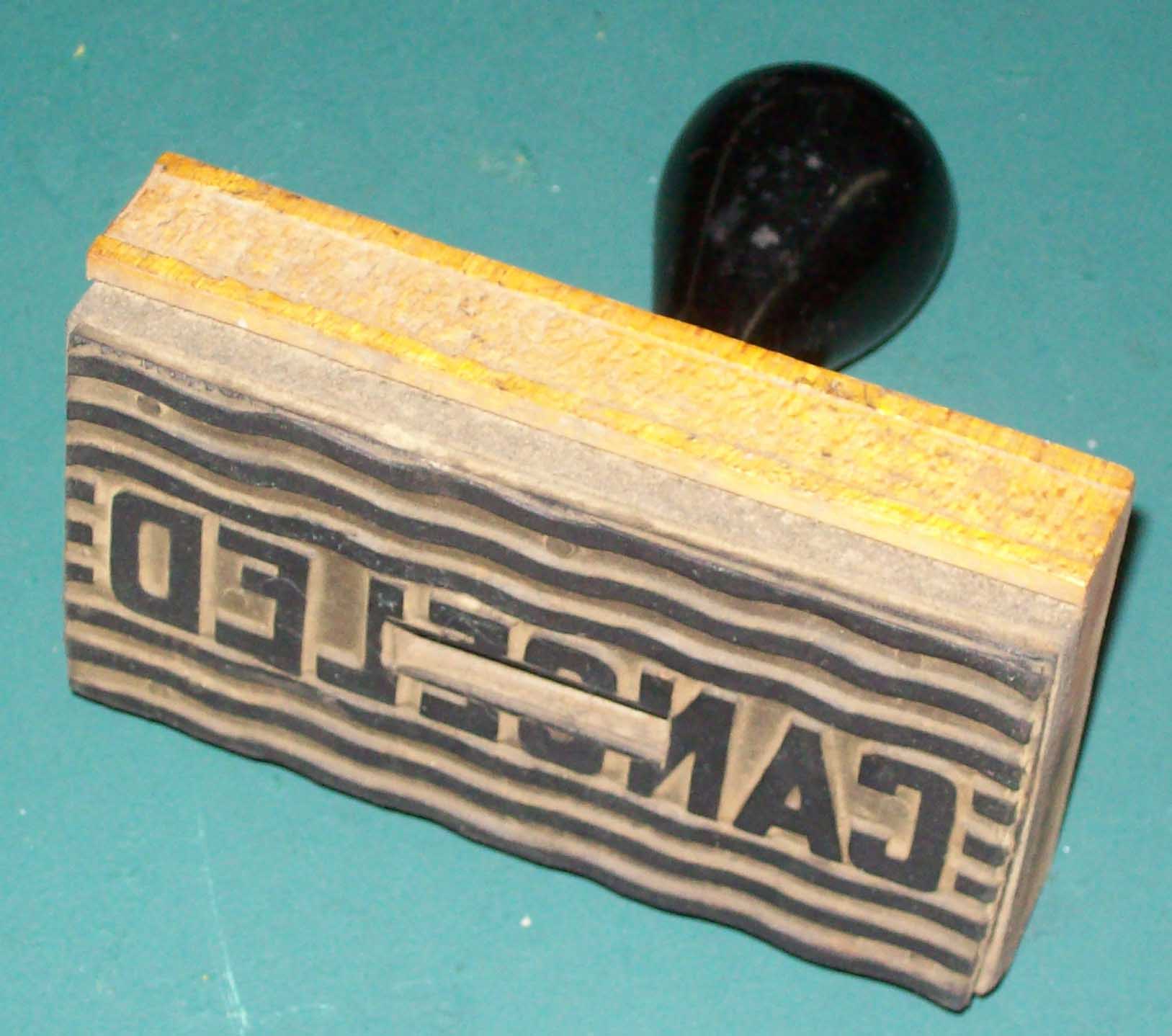
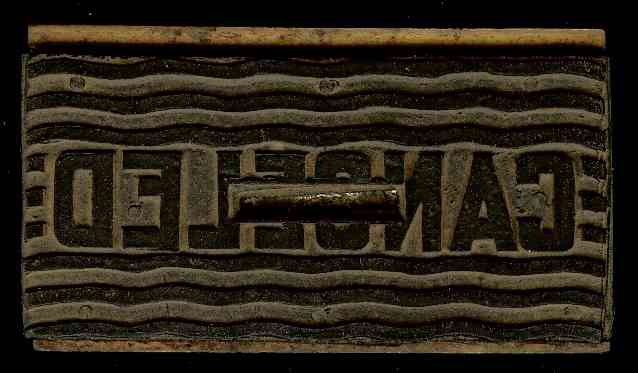
No, it looks like a rectangular void in the stamp device to me. |
|
Send note to Staff
|
|
|
Pillar Of The Community
6366 Posts |
|
|
Valued Member
77 Posts |
|
|
Thanks John - Two of the questions in my mind are answered by your post! I could not imagine why there would be a rectangular cut-out in the stamp. And it does appear that the stamp was applied by the post office department as opposed to a private entity. |
|
Send note to Staff
|
|
|
Rest in Peace
United States
4052 Posts |
|
|
So ... if the CANCELLED stamp clearly belongs to USPOD ... we would have:
1) the PENALTY stamp is applied to the indicia, and the CANCELLED stamp is applied to the 'whole' envelope, more or less at the same time, and both as a way of preventing use, or
2) the PENALTY stamp is applied to the indicia to re-purpose the envelope, and the CANCELLED stamp is applied later to cancel / de-monetize the whole piece, or ...
I don't really see a sufficiently narrow search term to support diving into the Postal Bulletin archive.
If there were a model number, or very specific name for either rubber stamp ...
Cheers,
/s/ ikeyPikey |
|
Send note to Staff
|
|
|
Pillar Of The Community

United States
945 Posts |
|
|
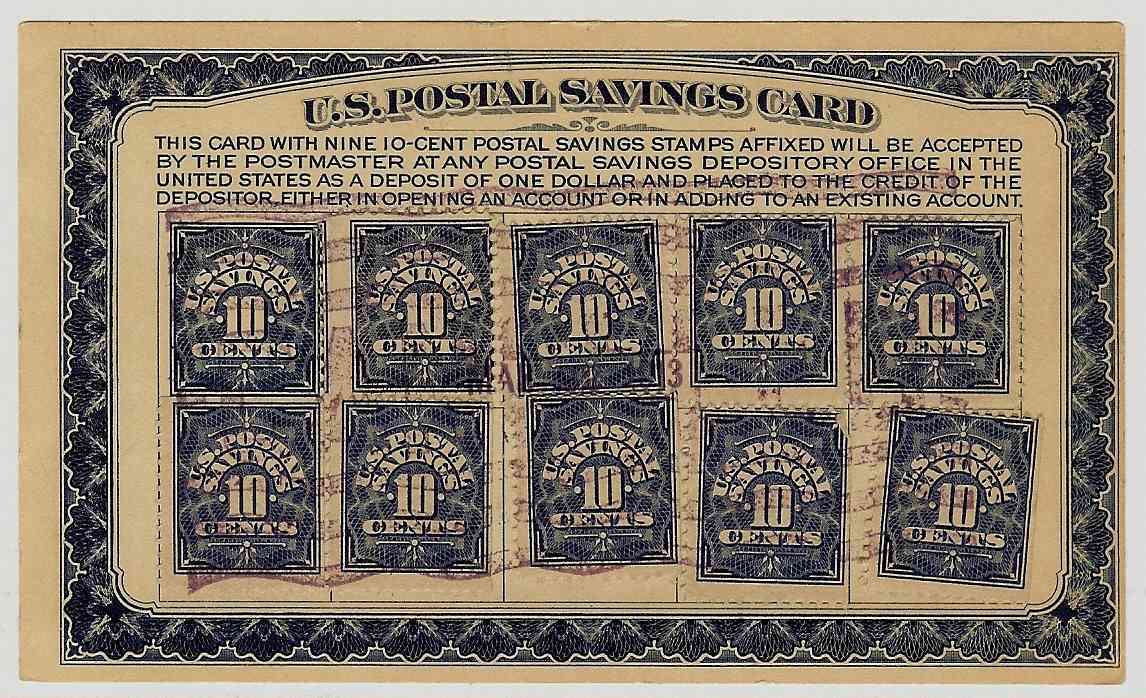
Perhaps the Postal Savings Clerk was merely checking the hand-stamp impression prior to using it on one of these Postal Savings cards. These envelopes were not accountable paper, one could have been the most convenient target at hand for the "test". |
|
Send note to Staff
|
|
|
Pillar Of The Community
6366 Posts |
|
|
I believe in simple explanations. Postal savings cards are from the 1910s and later, the envelope is from the 1950s. There is little reason to link the two other than a convenient wording in the device to achieve a canceling purpose.
ThomasGalloway is quite on-track as a postal stationery scholar. To restate his theory on which mark came first, this envelope was issued in 1950 primarily for the 2 cent bulk rate, later the customer likely returned a stack of these for redemption when a rate increase made them obsolete. They were demonetized with the large CANCELED handstamp (and individual process). Later this envelope slipped through a canceling machine (an impersonal mark-a-whole-stack process) unnoticed by the clerk. If the machine mark were applied first there would be no need to apply any further canceling handstamps. Since cut-outs are not allowed, any canceling mark on the envelope would demonetize it. |
|
Send note to Staff
|
|
|
Rest in Peace
United States
4052 Posts |
|
|
Quote:
... Later this envelope slipped through a canceling machine (an impersonal mark-a-whole-stack process) unnoticed by the clerk ... Except that it was not a 'cancelling machine', it was a machine (or handstamp) applying a penalty indicia. An envelope without the penalty indicia can be used by anyone. An envelope with the penalty indicia can only be used on official business. The penalty indicia does not cancel or de-monetize the envelope, rather, it enables the envelope to be used on official business. With respect, I will stay with ... Quote:
... the penalty imprint 'moved' the cover from stock for sale to the public to stock for use by a government agency ... ... with the CANCELLED coming later. Cheers, /s/ ikeyPikey Edited to strike an unnecessary, distracting & misleading parenthetical aside ... are they not usually thus? |
|
Send note to Staff
|
| Edited by ikeyPikey - 03/25/2016 4:38 pm |
|
|
Pillar Of The Community
6366 Posts |
|
|
Ikey,
The black boxed marking over the indicia was applied by a canceling machine absent a circular townmark. This is well documented in the postal stationery literature. Please get your facts straight before posting.
The black boxed marking did 2 things all at once. It demonetized the envelope to have no face value to the public (and thus was no longer financially accountable paper) AND created a supply of penalty envelopes for the USPOD. |
|
Send note to Staff
|
| Edited by John Becker - 03/25/2016 2:30 pm |
|
|
Rest in Peace
United States
4052 Posts |
|
|
I shall forever be amazed that the written word was invented to lend & preserve precision of meaning. And I shall happily leave it to you to explain the immense difference ( "get your facts straight") between: Quote:
... no face value to the public AND created a supply of penalty envelopes for the USPOD ... Quote:
... the penalty imprint 'moved' the cover from stock for sale to the public to stock for use by a government agency ... The question remains as to which was applied first, the penalty indicia or the massive CANCELLED. Penalty envelopes are only billed to the agency that used them after they enter the mail stream. You would like to think that they were counted but, in most cases, in most of the time since most of you have been born, they were only weighed. (Nowadays, with the advent of Zip+4 barcoding, actual counting has become feasible.) Until penalty envelopes enter the mail stream, they are a pricey but convenient source of scrap paper. I continue to hold that the penalty indicia was applied first, with the follow-on thought that the resulting "official use only" envelope was then used as scrap paper to test the inking (or dating) on the CANCELLED stamp before some clerk got down to business. Cheers, /s/ ikeyPikey |
|
Send note to Staff
|
|
|
Pillar Of The Community
6366 Posts |
|
|
Pillar Of The Community
United States
607 Posts |
|
|
Use of the penalty overprint on surplus stamped envelopes has a lengthy history. Basically the penalty overprint was used to salvage envelopes from scrap paper value to a useful item as an official mail envelope. The original face value has no bearing on the postal rate paid by a penalty overprinted envelope. The penalty overprinted envelope paid the once ounce first class rate at the time of use. This is documented in the literature.
The wavy line cancel was often used to demontize postal stationery, especially postal cards which had been redeemed at a local post office. Policies on this changed from time to time. This procedure is documented in the literature.
The most probably explanation for the item pictured in the original post is that a local postmaster provided a copy of the penalty overprinted envelope to a customer as a favor and added the "CANCELLED" as a "just in case". This action is documented in the literature.
Anyone desiring more detailed information, contact your favorite philatelic library. |
|
Send note to Staff
|
Bill Lehr
US Postal Stationery Specialist |
|
| |
Replies: 15 / Views: 1,866 |
|



 Posted 03/23/2016 10:15 pm