| Author |
 Replies: 22 / Views: 10,194 Replies: 22 / Views: 10,194 |
|
Valued Member
Australia
9 Posts |
|
|
|
|
Pillar Of The Community
United States
2547 Posts |
|
|
One explanation is that the stamp was on a cover or package that was somehow corrugated. After 50 years on a cover some of the color or ridges of the cover paper get imparted to the stamp. |
Send note to Staff 
|
|
|
Valued Member
Australia
9 Posts |
|
|
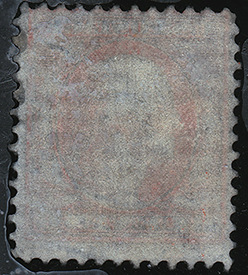
Hi Chasa,
What does corrugated means ? Still on a learning curve sorry. When I feel the stamp it's smooth on back.
Would appreciate if you could post one or two photos, if possible of something similar.
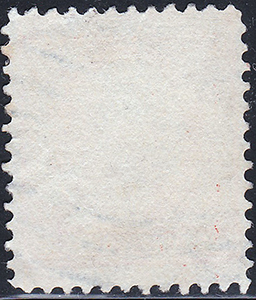
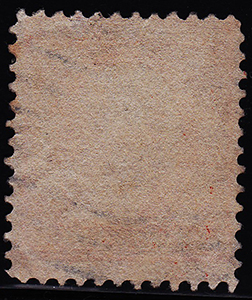
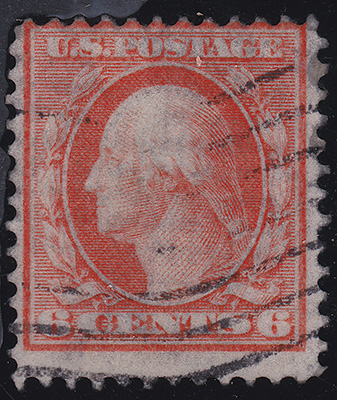
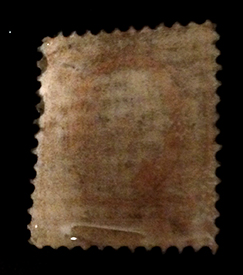
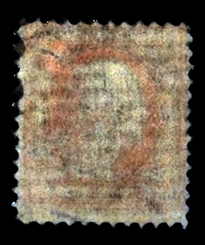
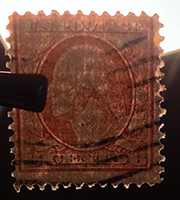
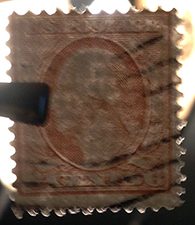
When the stamp is dry there is no indication of any kind of damage or manipulation to the stamp as can be seen I the photo.
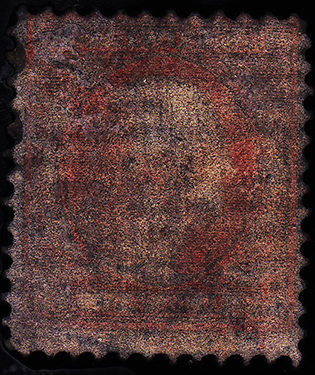
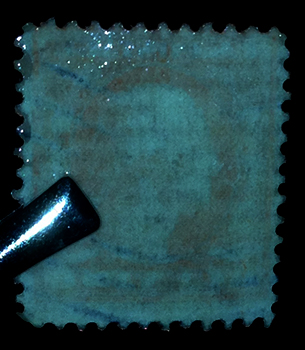
The lines only comes as a watermark; must soak the stamp in water and then those lines becomes visible from both front and back.
As soon as it's dry the lines and watermark both are not visible.
If you clicked the link I have posted in this forum there is a newspaper article. The one with "Apex Certifies two more Washington-Franklin ..." On that particular pargraph starting from Figure 2. shows the back of ..... IN WATERMARK FLUID" It's clear from the paragraph in that articel; the vertical lines to be seen has to be dipped in the watermark fluid.
The stamp posted here, I soaked in water as I don't have WMK fluid.
But it might be anything like you said, but as far as I can tell the lines looks like being created in manufacturing process not foriegn contamination.
Thanks.
|
|
Send note to Staff
|
| Edited by newbiestampguy - 07/08/2016 11:18 am |
|
|
Pillar Of The Community
United States
8956 Posts |
|
|
Corrugated describes a series if ridges and grooves. A roof, especially in poorer countries, can be made of corrugated metal. A lot of cardboard boxes are also corrugated, two sheets of brown 'paper' with a wavy sheet in between. The stamp itself is not corrugated!
By the way, ribbed paper is totally different - your stamp is not printed on ribbed paper or you would have seen it.
Peter |
|
Send note to Staff
|
|
|
Pillar Of The Community

United States
1273 Posts |
|
|
There are those who believe that there is laid paper usage in the W/F series and there are those who refute it as being laid paper. There are two articles by Larry Weiss in the United States Specialist ,the journal of the United State Stamp Society, in the July and August 2007 issues that give his opinion regarding laid paper in this series. An interesting read. Scott has not recognized laid paper as a paper variety in this series.  |
|
Send note to Staff
|
|
|
Pillar Of The Community
3865 Posts |
|
|
Sometimes even the experts are wrong if proof to the contrary is found. |
|
Send note to Staff
|
|
|
Pillar Of The Community
United States
1414 Posts |
|
|
It is not laid paper in the classical sense, but it looks like laid paper and it exists. I have a couple of examples. The paper is flat with no sign of ribbing. There is no clear evidence anywhere that a separate supply of laid paper was ordered or that sheets of laid paper were used to top off an order for the BEP or one of the bank note companies. It seems possible be that the Fourdriner machine used to make paper had some wires missing from a worn belt. However, this theory is speculative. It is difficult to reconcile scarcity and the range of issues where examples have been found unless the cause was somehow related to the normal paper makin process spanning the period from 1861 into the early 20th century. |
|
Send note to Staff
|
|
|
Valued Member
Australia
9 Posts |
|
|
Thanks members for insights. We may never know the actual reason fo this lines. As cfrphoto has explained and detailed, it relates.
It is interesting and most probably will keep the stamp for future reference.. |
|
Send note to Staff
|
|
|
Valued Member
Hong Kong
18 Posts |
|
|
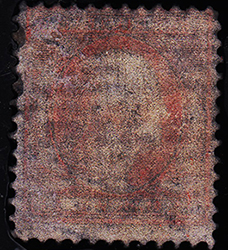
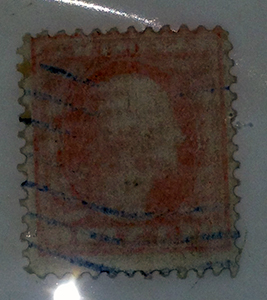
Hi, I have one Franklin 1 cent that looks exactly like the laid paper. Enclosed the picture for your reference. Thanks to advise. Nelson 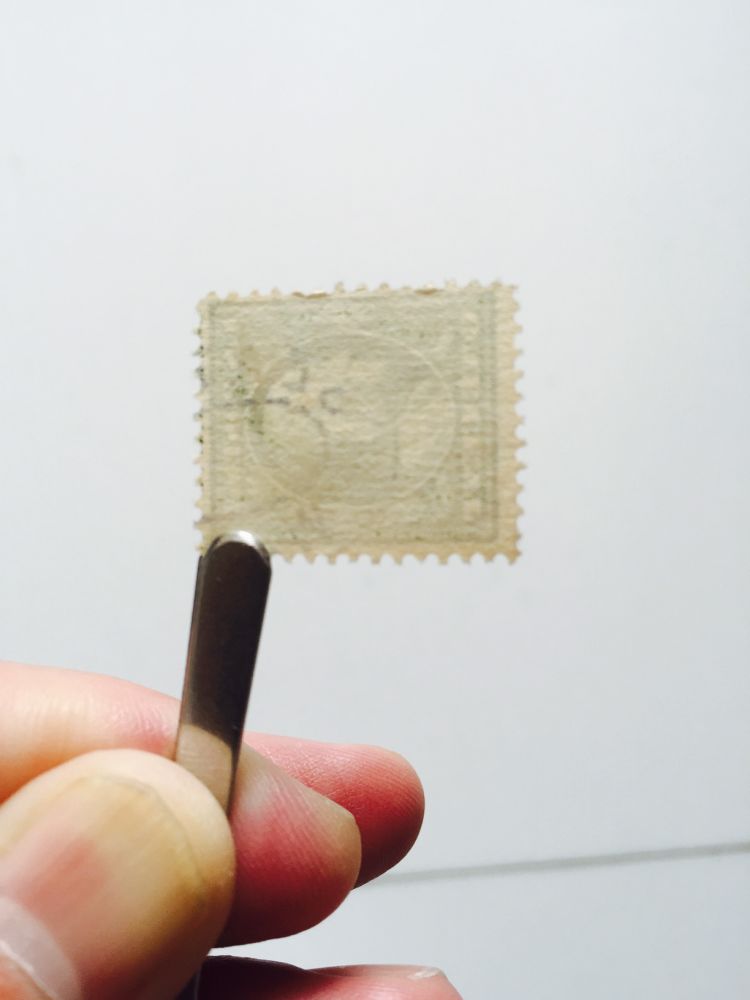 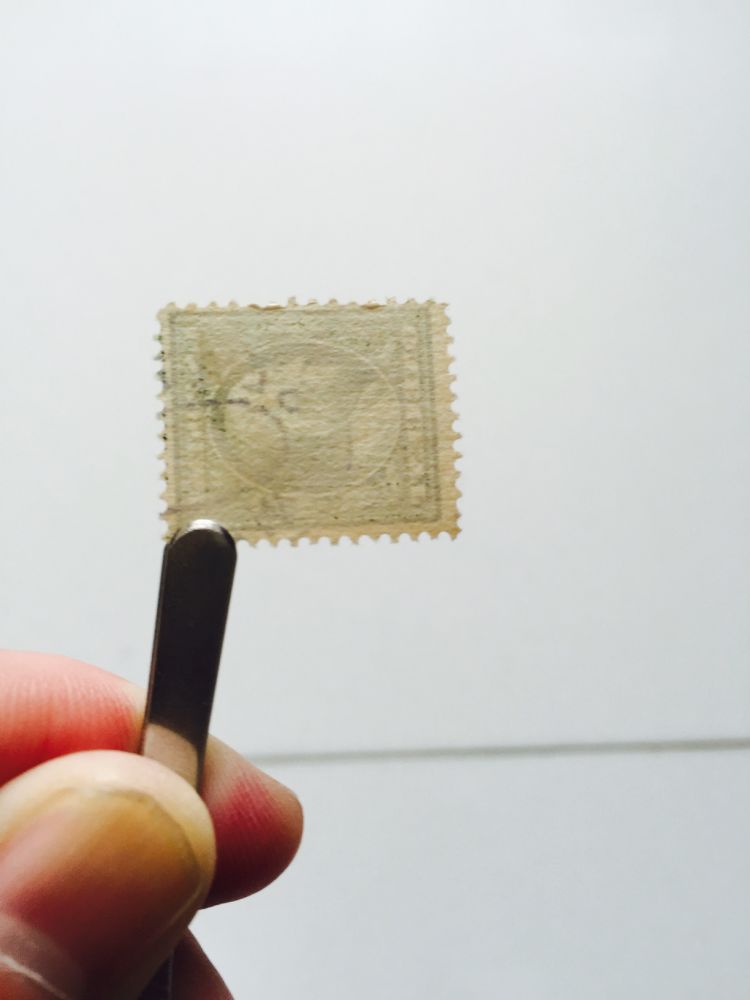 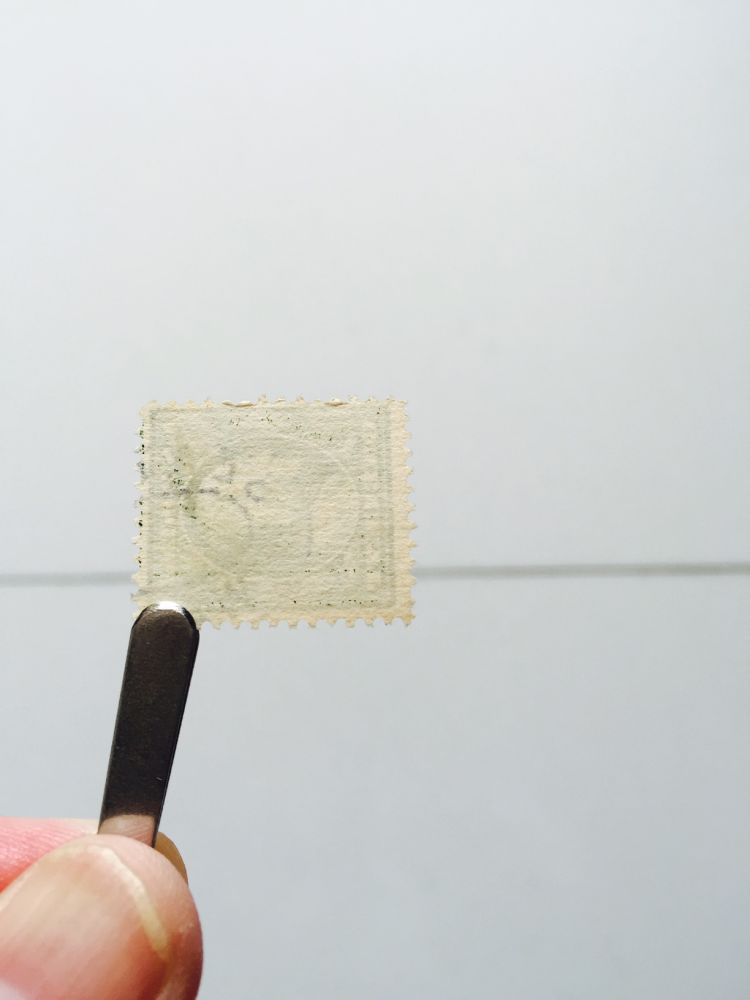 |
|
Send note to Staff
|
|
|
Valued Member
Hong Kong
18 Posts |
|
|
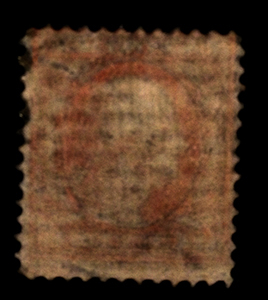
Hi, Additional piece that I can share with the community. 1 cent Washington Scott 543, with gum intact Thanks for any comments. Nelson 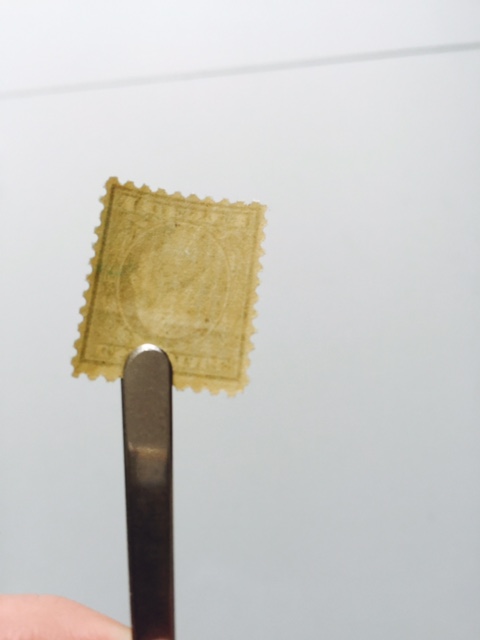 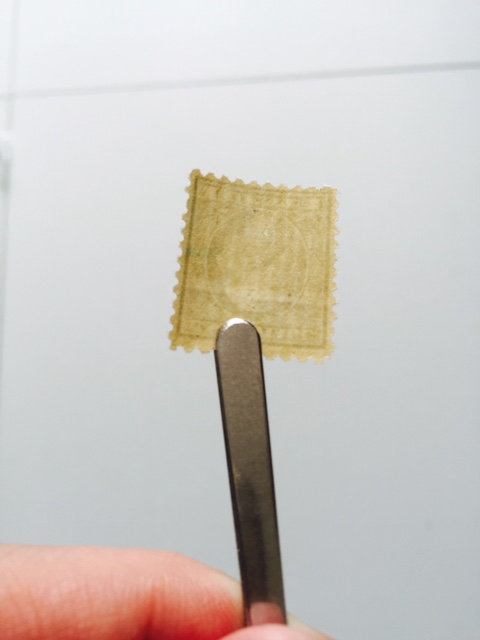 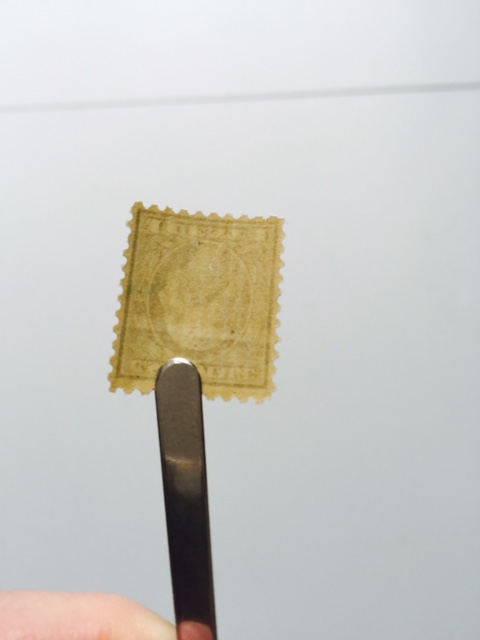 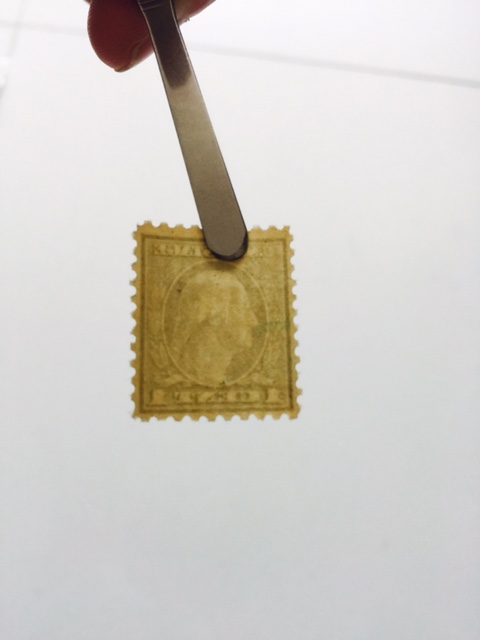 |
|
Send note to Staff
|
|
|
Pillar Of The Community
United States
1414 Posts |
|
|
The one cent Franklin has paper ridges that somewhat resemble Continental Bank Note ribbed paper. If the paper is thin enough the valleys between the ridges will show as lines in watermark fluid. The spacing of the lines is about half that of paper labeled as "laid". Ridged paper is relatively common on a wide range of early 20th century issues. I have a between 50 and 100 examples. Paper ridges can sometimes be found on early duck stamps but the paper is relatively thick and the valleys will not show up in watermark fluid.
The ridging on the Scott 543 is an artifact from the gumming stage of the Stickney press. Similar ridges can be found on later issues including the Prexies. |
|
Send note to Staff
|
| Edited by cfrphoto - 07/10/2016 09:25 am |
|
|
Valued Member
Hong Kong
18 Posts |
|
|
Pillar Of The Community
United States
1873 Posts |
|
|
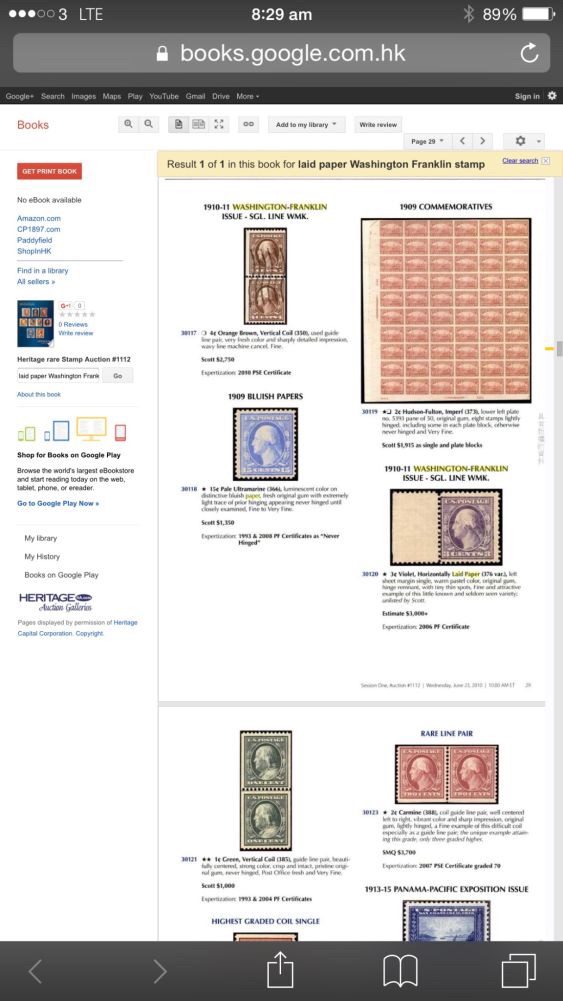
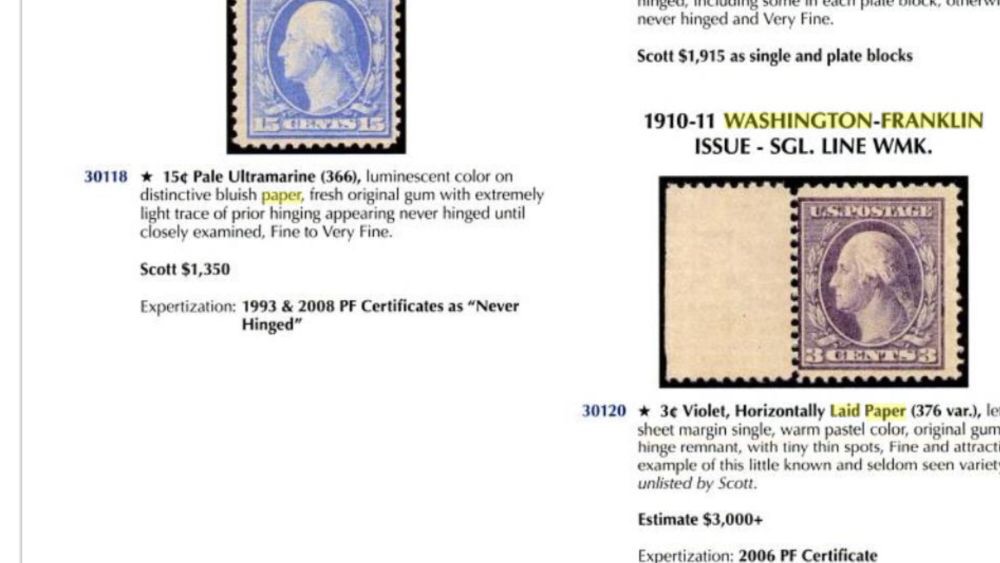
That's an auction catalog, which is subject to puffery in the descriptions by the auction house, which cannot be viewed as an unbiased scholar. It is in their interest to promote alleged varieties even where scholars disagree, to attract a higher price. It does not add anything to the discussion above and is not proof that laid paper was used. However, it would be interesting to know if the PF certificate for this stamp mentions laid paper.
Chris
|
|
Send note to Staff
|
|
|
Pillar Of The Community
United States
1273 Posts |
|
|
Moderator

United States
12330 Posts |
|
|
We have had one of the leading expert on Washington/Franklins give his opinion in this thread. In my mind, Clark's opinion trumps the 2006 cert.
Don |
|
Send note to Staff
|
| Edited by 51studebaker - 07/12/2016 1:17 pm |
|
|
Pillar Of The Community
United States
1873 Posts |
|
|
Al,
Thanks for the reference to the PF certificate; it prompts another question. For the record, this is the text:
Country:United States Of America
Cat. No. Issue Denom. Color
376 1911 3¢ violet
LAID PAPER VARIETY, LEFT MARGIN BLOCK OF FOUR.
AND WE ARE OF THE OPINION THAT
It Is Genuine, VIOLET SHADE, PREVIOUSLY HINGED; THE BOTTOM PAIR WITH REJOINED PERFORATIONS, THE BOTTOM LEFT STAMP WITH TINY THIN SPOTS.
* * * * * * * *
My understanding is that the text appearing before "AND WE ARE OF THE OPINION THAT" is the submitting party's proffer, and only the text appearing after "AND WE ARE OF THE OPINION THAT" is the PF's opinion. Is this correct? Note, for example, that PF gives the opinion that it is "violet shade," but conspicuously does not say "laid paper variety, violet shade, ...". Thus, I interpret the certificate as giving no opinion on whether this is laid paper, so it would be consistent with Clark's view that "it looks like laid paper, but isn't in the classical sense."
Chris
|
|
Send note to Staff
|
|
|
Replies: 22 / Views: 10,194 |
|



 Posted 07/08/2016 01:01 am