| Author |
 Replies: 30 / Views: 10,969 Replies: 30 / Views: 10,969 |
|
Pillar Of The Community
3860 Posts |
|
|
|
|
Pillar Of The Community
3860 Posts |
|
|
Pillar Of The Community
United Kingdom
579 Posts |
|
|
I do not collect this issue but I just wonder how was the gumm applied to the two types of printing. If the same method was used for printed and unprinted paper perhaps the appearence of the gume does not always correlate with the printing method.
Also as the stamps are over 100 years old can we be certain that they have retained their original appearence or have they changed due to staroage conditions ?
AQ |
Send note to Staff 
|
|
|
Pillar Of The Community
3860 Posts |
|
|
These stamps are over 80 years old.
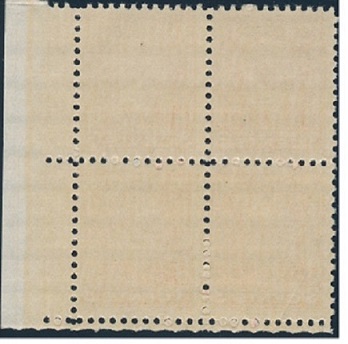
A gum roller that left vertical streaks on the gum was used by the Stickney rotary press after printing for gumming the printed web paper roll.
Paper that was pregummed had better gum coverage on it (no gum gaps in selvege margin).
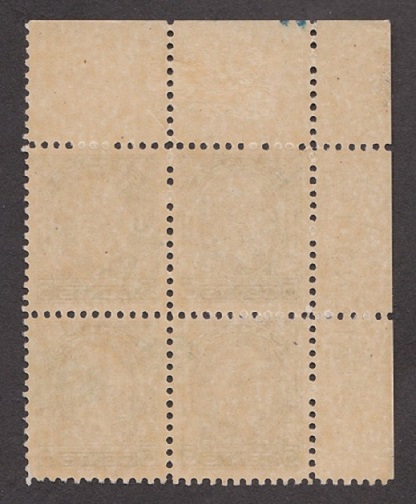
Dry printing tends to leave an embossing effect when seen from the gum side due to greater printing pressure used.
My conclusion is that 195d is a web-fed rotary press dry printed stamp which makes it different than a sheet-fed flat plate press dry printed stamp eventhough stamp catalogues identify it as a flat plate printing.
It is hoped that stamp catalogues will correct this error.
Do you agree or disagree with this conclusion? |
|
Send note to Staff
|
| Edited by jogil - 11/16/2016 08:38 am |
|
|
Rest in Peace
7742 Posts |
|
|
First time I saw mine, ( long time ago) I thought I was looking at laid paper...haha.
Robert |
|
Send note to Staff
|
| Edited by wert - 11/16/2016 08:18 am |
|
|
Pillar Of The Community
3860 Posts |
|
|
The horizontal gum breaker bar lines which were made by the Stickney two-way perforator (not the Stickney rotary printing press) can sometimes be mistaken for laid paper lines.
Most 195d do not have gum breaker lines (but some do) since these were only needed for rotary press wet printings which had a tendency to curl after being gummed by the press. |
|
Send note to Staff
|
| Edited by jogil - 11/16/2016 08:55 am |
|
|
Rest in Peace
7742 Posts |
|
|
Pillar Of The Community
3860 Posts |
|
|
An important stamp production advancement occurred over 80 years ago that combined the best of both web-fed rotary press wet printing and sheet-fed flat plate dry printing into web-fed rotary press dry printing. |
|
Send note to Staff
|
| Edited by jogil - 11/16/2016 4:25 pm |
|
|
Pillar Of The Community
United States
772 Posts |
|
|
Pillar Of The Community
3860 Posts |
|
|
Rest in Peace
Canada
5701 Posts |
|
|
Jogil, what are the EXACT perforations (2 decimal places) of the printings based on your wheel diameters and pin numbers in your book?
|
|
Send note to Staff
|
|
|
|
Pillar Of The Community
3860 Posts |
|
|
BeeSee:
For Stickney rotary press (11.25 x 10.94), there were 247 pins or holes in a long bar length of 17 9/32" which is around 11.25 (11 1/4) perforations per 2 cm (Kiusalas 11-70=11.25) horizontally by 176 pins or holes on a small wheel with diameter of 4 1/32" and around 12 2/3" circumference which is around 10.94 (11) perforations per 2 cm (Kiusalas 11-72=10.94) vertically.
For flat plate press (10.94 x 10.94), there were 176 pins or holes on a small wheel with diameter of 4 1/32" and 12 2/3" circumference which is around 10.94 (11) perforations per 2 cm (Kiusalas 11-72=10.94) horizontally by 176 pins or holes on a small wheel with diameter of 4 1/32" and around 12 2/3" circumference which is around 10.94 (11) perforations per 2 cm (Kiusalas 11-72=10.94) vertically.
For how these perforating wheels were actually made see:
The United States Specialist, "How To Make Rotary Perforating Wheels", Volume 70, No. 7, July 1999, pp. 328-331 and Volume 71, No. 12, December 2000, p. 532 |
|
Send note to Staff
|
| Edited by jogil - 11/20/2016 08:16 am |
|
|
Pillar Of The Community
3860 Posts |
|
|
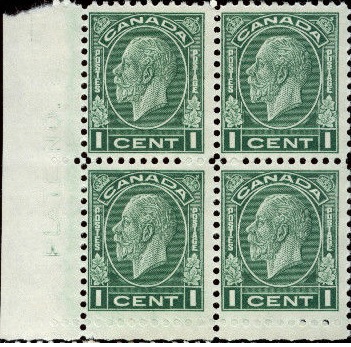
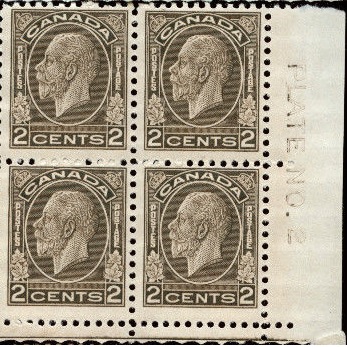
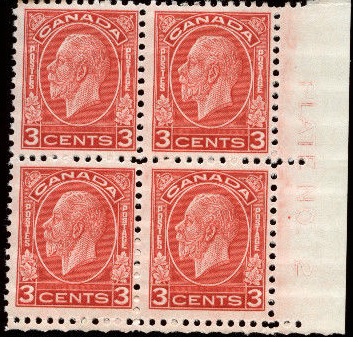
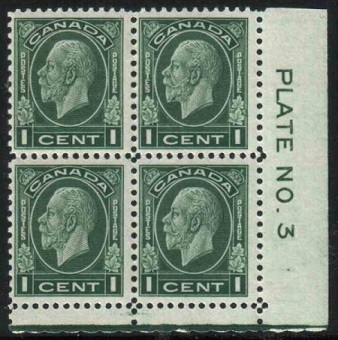
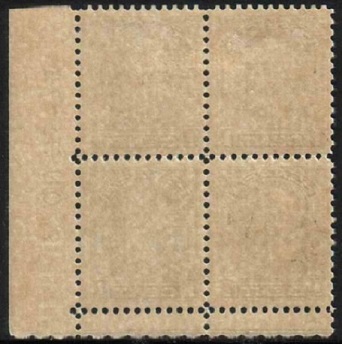
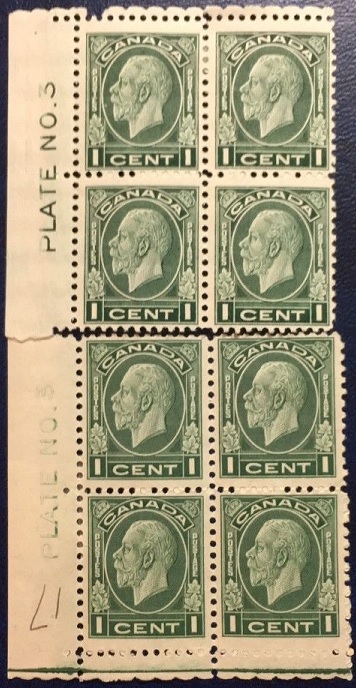
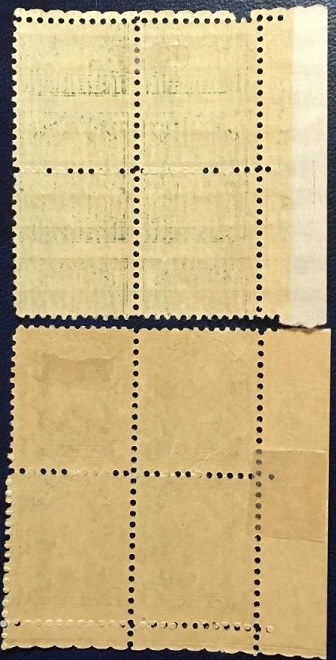
Here's a comparison between 169 (left top) and 169a (left bottom) vs 195 (right top) and 195d (right bottom): 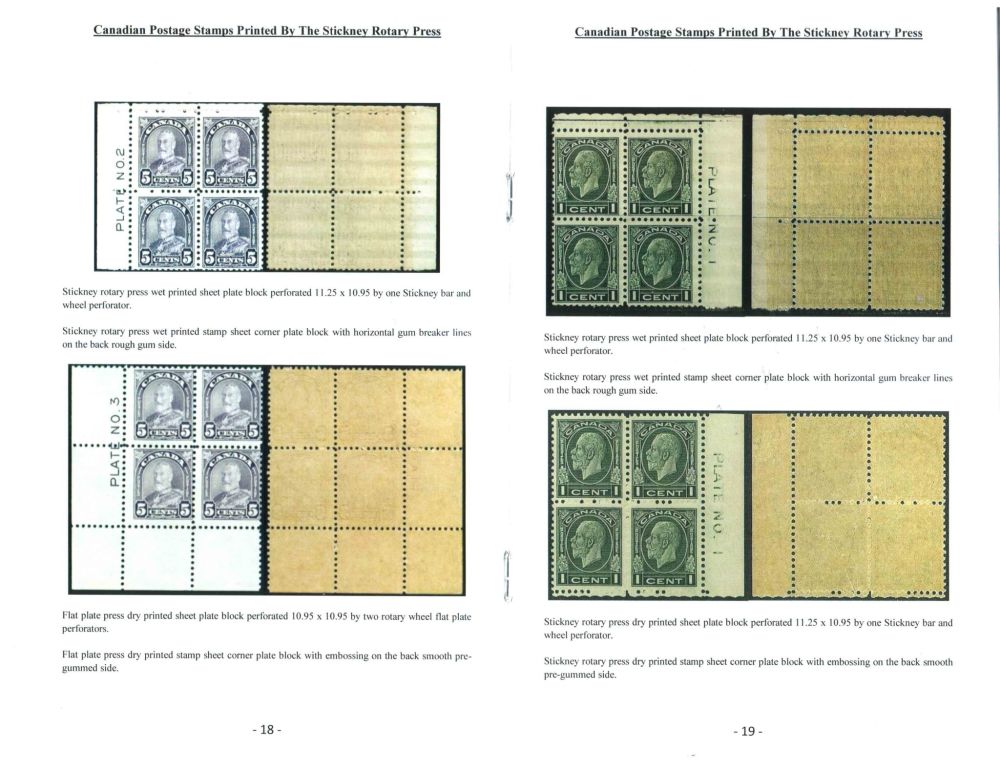 |
|
Send note to Staff
|
| Edited by jogil - 11/20/2016 10:37 am |
|
|
Rest in Peace
Canada
5701 Posts |
|
|
Pillar Of The Community
3860 Posts |
|
|
Pillar Of The Community
3860 Posts |
|
|
The embossed impression found on the back gum side is a dry printing characteristic due to the greater pressure needed for intaglio line engraving printing on pregummed paper with full gum coverage with no gaps in the selvage which is mostly a characteristic of dry pregummed paper. For BABNC printed stamps, it is mostly found on the back gum side of sheet-fed flat plate printed stamps because they were dry printed (used pregummed paper that was gummed before printing) rather than wet printed (used ungummed paper that was gummed after printing). CBNC dry printed Admiral stamps (105d, 107e, 108c, 109, 110d, 112c, 114, 115, 117a, 118, 119, 120, 122, 126, 126a, 128a, 128ii, 130b, ) also show this embossed impression on their gum side and these stamps were sheet-fed rotary press dry printed. The same goes for all CBNC intaglio sheet-fed rotary press dry printed sheet and booklet stamps from 1928 onwards (also coils 160, 161). The only thing that BABNC web-fed rotary press printed 195d has in common with all BABNC sheet-fed flat plate printed stamps is that both were dry printed on pregummed paper which show embossing on their back gum side. The CBNC coils that were issued from 1935 to 1967 were also printed by a similar web-fed rotary press dry printing which shows embossing on their back gum side. |
|
Send note to Staff
|
| Edited by jogil - 04/25/2017 08:33 am |
|
|
Replies: 30 / Views: 10,969 |
|




 Posted 11/15/2016 10:20 am