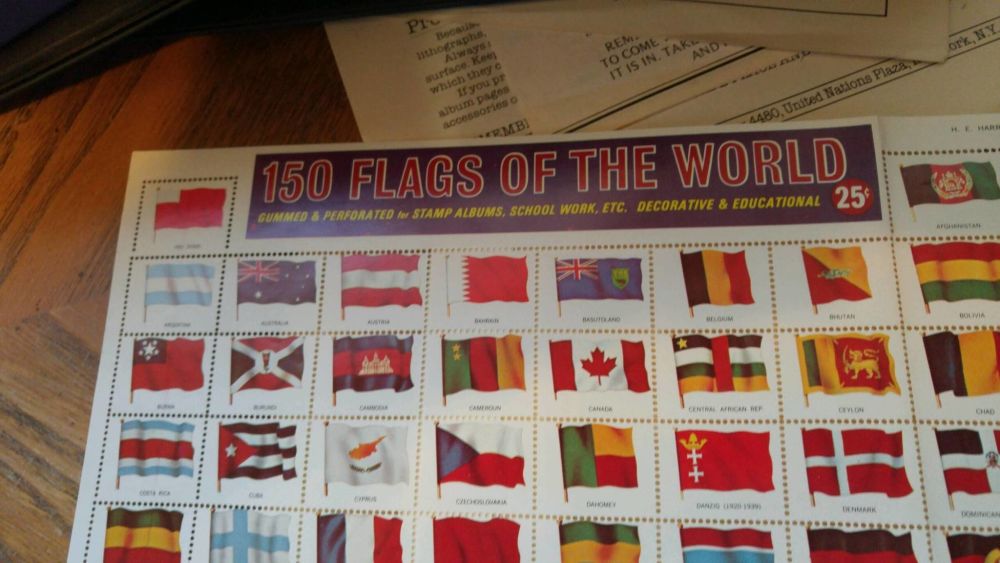
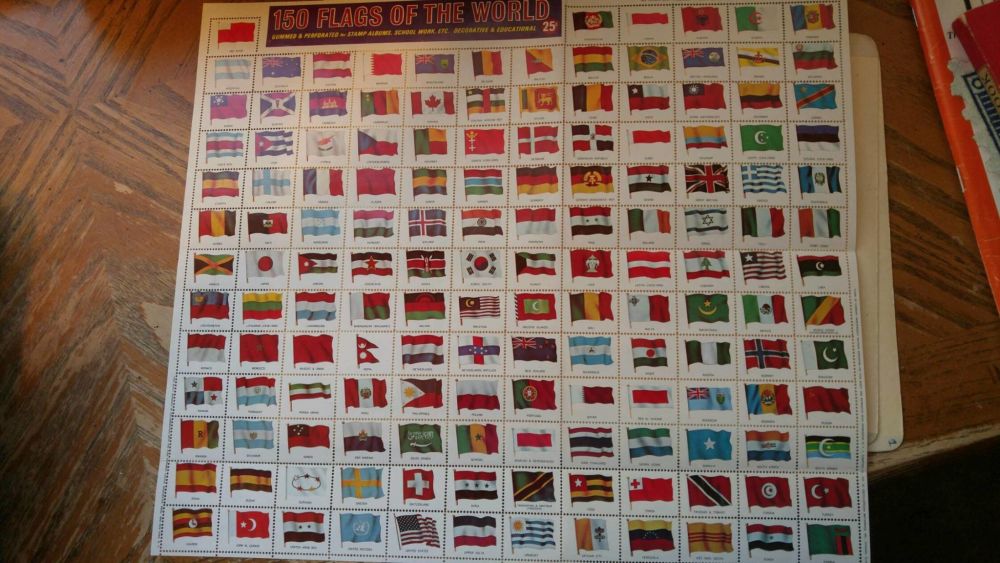
Can realise around $5 sometimes.
Produced by HE Harris USA
for new collectors to adhere to stamp album pages, amongst other things.

Not my image. Author unknown.
Selling stampsHarris began selling stamps at the age of 14 and when the Washington Post offered free advertising,
Harris seized the opportunity to begin a mail order stamp business. He opened his first retail store in 1921 at Kenmore Square in Boston.
Over the years, H. E. Harris's ads, which offered a quantity of stamps for a small amount of money (usually less
than $1) on the condition that additional stamps were sent on approval, became ubiquitous in many magazines and
comic books. While the company was noted for selling low-cost packets of stamps, it sold rarities as well.
The company developed a fully-illustrated postage stamp catalog that sold for a fraction of the cost of the more
detailed Scott Stamp Catalogue.
Stamp ClubProcter & Gamble sponsored the radio show, "Ivory Stamp Club of the Air" during the Great
Depression. The show was hosted by "Captain Tim" Healy, an authentic explorer and world traveler. H. E. Harris
was contracted by P&G to send each new club member a stamp album, badge and packet of stamps in exchange for
an Ivory soap wrapper. To receive more stamp packets, members could send two soap wrappers and 10¢. When the
last show was broadcast in 1936, the club had 2.5 million members. Many of them became Harris customers and
helped build the company into one of the largest stamp businesses in the world.
Litigation
Harris gained media attention in 1962 when he went to court to prevent the Canal Zone and the United States Post
Office Department from issuing large quantities of intentional error stamps to destroy the value of a few stamps
that had reached circulation honoring the opening of the Thatcher Ferry Bridge (now the Bridge of the Americas)
but lacking the silver ink used to depict the bridge. Harris had acquired some of the error stamps, and claimed that
the issuance, which would reduce the value of the error stamps to a few cents each, violated his rights. He was
successful in his lawsuit. For this, he was given the Luff Award in 1966 for exceptional contributions to philately.





 Posted 12/20/2016 8:07 pm