| Author |
 Replies: 258 / Views: 36,700 Replies: 258 / Views: 36,700 |
|
|
|
Pillar Of The Community
United States
1121 Posts |
|
|
Great lessons here!
A question - Since the frames and ovals were changed independently of each other, and replaced with new frames or ovals, depending on the wear, did the ovals or frames wear faster? Were there more new frames or ovals, in general? |
Send note to Staff 
|
|
|
Pillar Of The Community
559 Posts |
|
|
the 4øre - and again, facit catalogue is completely incorrect in most of it's listings.
pic 1 = print 7 facit 29d (which is print 6 to 9 and all prints are completely different and from 3 different frame settings)
pic 2 = print ? maingroup 4 print 14 to print 48 nothing fancy
pic 3 = print 9 so facit 29d again
pic 4 = print 71 maingroup 5, beautiful colours I think
pic 5 = print 71 again
pic 6 = print 67 or 70 can't be sure, these are called teche beche pairs.. and quite a few of them exist, some prints have only 1 normal or inverted frame and are thus called isolated... these are rare to get in pairs.. these are from prints where there are 10-20 or one kind and 80-90 of the other kind.. valued at DKR 250 for a pair.. roughly $40.. and can usually by bought around 20-40 DKR.
pic 7 = could be many prints and facit makes it easy... 29i |
|
Send note to Staff
|
|
|
Pillar Of The Community
559 Posts |
|
|
5øres
pic 1 = print 4 pos 98... this is a VERY good stamp - print 4 is almost always unused, and valued alot higher with a cancel.. and per usual, often fake cancelled.. this stamp is genuine. facit 30c
pic 2 = print 3 facit 30b
pic 3 = print 4 unused facit 30c
pic 4 = print 1 facit 30a
again, you're a little off, but turns out to be better for you this way :) |
|
Send note to Staff
|
|
|
Pillar Of The Community
559 Posts |
|
|
@Richard...
a setting of frames, were used for different values and only the ovals changed.. so naturally the frames took the heavy duty.
and this is actually a very fun part of history of bicoloured.
H.H. Thiele's printing house who made these stamps kept exact records, and these still exist in the postal museum.
in these books he made notes of when he asked the king for money to make new "clichés".. which was often enough.
so 100 some years later, we "the bicoloured community of supernerds" discover that these supposedly new clichés wasn't always used.
as we can trace frames or ovals to earlier prints (meaning he reused alot of the older not so worn clichés) but he still got money to make new ones... so where did this money end up?
most likely in his pockets, and maybe partly to the person who would engrave the clichés, just to make sure he didn't tell
these reused clichés we call "vandreclichés" which means wandering clichés.. this is one of my favorite areas to trace these, to hunt them and to find a certain clichés in all the prints it was used.
i'll give some examples later on. |
|
Send note to Staff
|
|
|
Pillar Of The Community
559 Posts |
|
|
a second note to this is..
top row and bottom row of clichés always wear out quicker due to pressure.
so in alot of prints only top row or bottom row would be replaced. of course sometimes 1 or 2 clichés would be replaced due to some clumsy apprentice dropping it or damaging it some other way.
also.. I have a theory on the paint... some of these paints used would have minerals in them to colour or other strange things
the intricate design of the ovals would mean that some mixtures of paint would either dry much faster making the stamps useless as paint dried.. many ovalflaws are due to this... like the missing A in 3øre and so on.
also some mixtures would harden, making cleaning difficult, some "ovalflaws" I think appear due to this...
every sheet of stamps ever made was subject to control.. if the control found a flaw, the cliché would have to be replaced before production could resume. |
|
Send note to Staff
|
|
|
Valued Member
United States
259 Posts |
|
|
Sorsh: thanks, you provide very interesting information. Unfortunately, a working worldwide collector of classic (19th-century) stamps like me, cannot afford to purchase hundreds and thousands of definitives in order to become a real specialist. So, we need specialists like you to to tell us the truth, and the truth, as we all know, will set us free — whatever it means. Now, to 8 øre, Facit 31; this one is difficult. I think I have Facit 31: a1, a2, b, bv4, c, d, e, ev3, f. 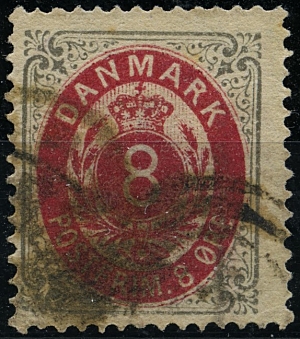 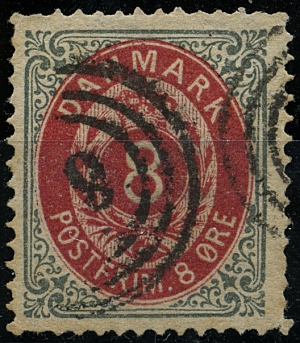 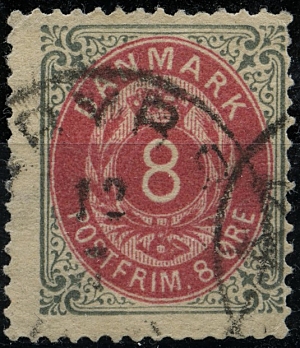 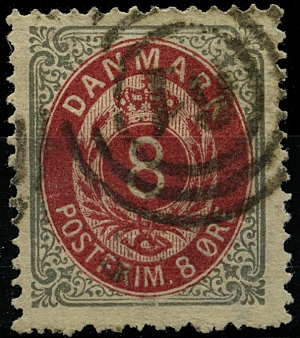 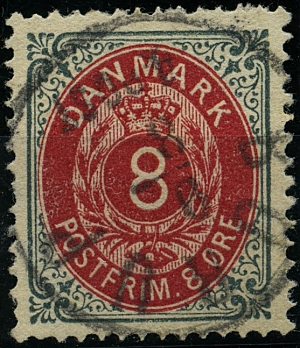 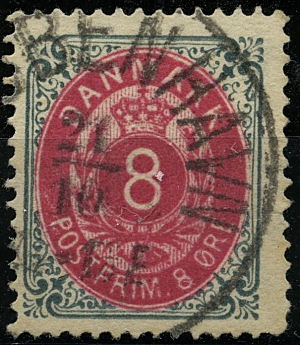 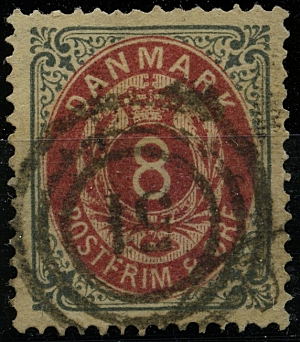 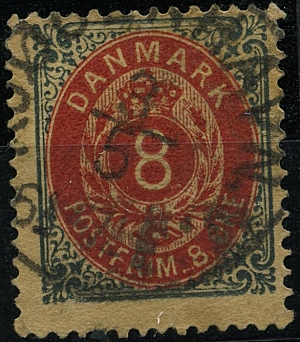 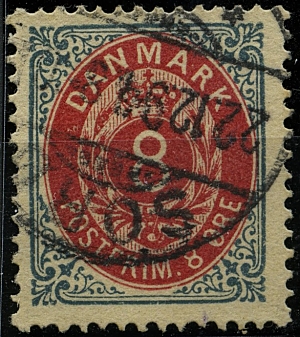 |
|
Send note to Staff
|
| Edited by tvorog - 02/25/2017 6:10 pm |
|
|
Pillar Of The Community
559 Posts |
|
|
i have played a little with 8øre so these are easier than 4øre for me.
and again I feel I need to stress that facit is utter crap when it comes to bicolours. (they are aware of this)
i was approached a couple of years ago by gunnar Lithen who needed help with the bicolour in facit. Nothing came of this as I refused to catalogue from colours and only from prints as colours are easy changed from sunlight, dirt, storage and other things. and the human eye sees colours differently from person to person.
He understood, but due to all the certificates issued in sweden on bicolours they needed to keep their system or these certificates would be referring to something that didn't exist anymore.
the early prints are seperated partly from which comb perforation machine was used.
pic 1 = KII machine so can't be facit a1 it is a maingroup 3 stamp, so from print 3 to 11. and this is print 11 so facit 31b
pic 2 = maingroup 4 so print 14 to 53.. this has a numeral cancel so earlier than print 34. can't get closer.. facit 31e
pic 3 = print 44 (aniline) facit 31d
pic 4 = KI perforation = print 1a facit 31a1
pic 5 = maingroup 5, worn print, around print 60-62. facit 31e
pic 6 = print 43 (strong aniline) facit 31d
pic 7 = same as picture 2.
pic 8 = around print 70, main group 5 worn plate. notice the wear on the lower frame... this is position 91-100 lower row... KIII perforation.
pic 9 = facit 31f
in maingroup 3 only a few inverted frames exist, these are very rare.
maingroup 4 print 54 and 55 each have 99 inverted frames and one normal... a few isolated inverted frames earlier exist some are rare, some uncommon.
maingroup 5 has an even mix of normal and inverted frames... some prints have isolated frames and these are costly, so have a 20/80 mix and these are common.
also note, that in maingroup 5 the paper becomes thicker in general, and thich paper is not the same as carton paper.
|
|
Send note to Staff
|
|
|
Valued Member
United States
259 Posts |
|
|
For Facit 32, 12 øre, I think I have the following: 32 a, b, c, cc, d, e, f, g, gv2, h, i, j = 12 images! Enjoy... 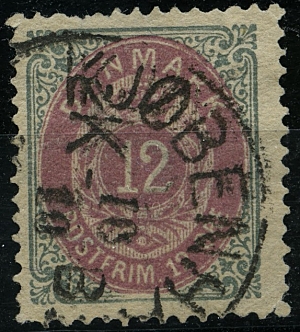 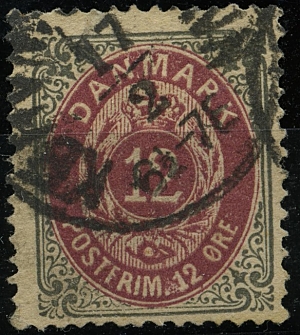 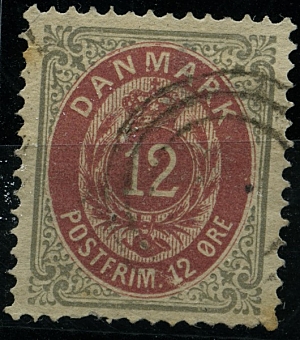 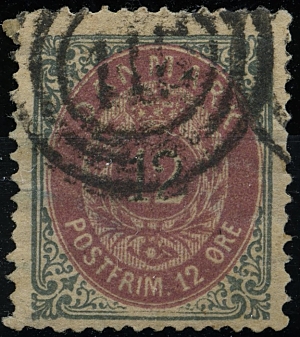 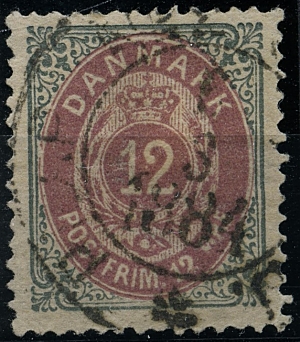 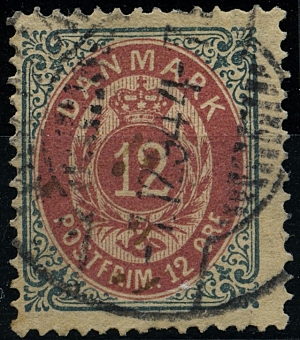 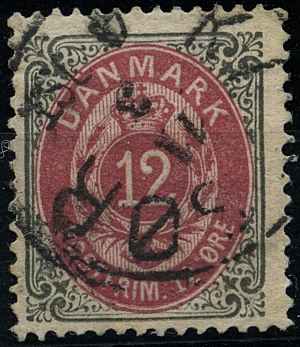 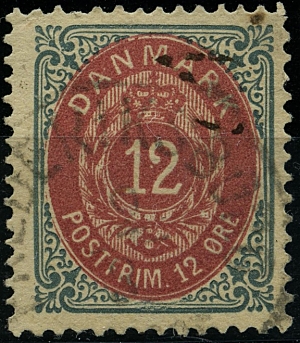 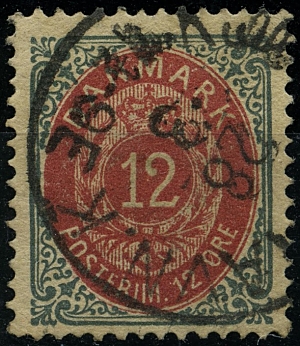 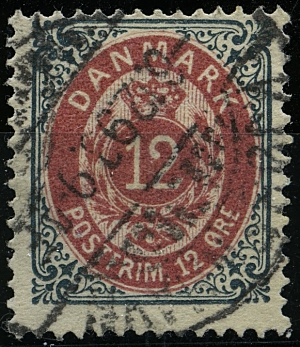 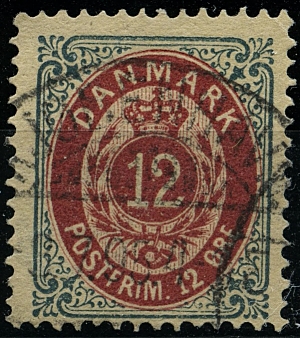 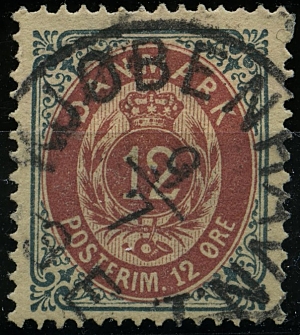 |
|
Send note to Staff
|
|
|
Pillar Of The Community
559 Posts |
|
|
i promised to show some blind perfs. 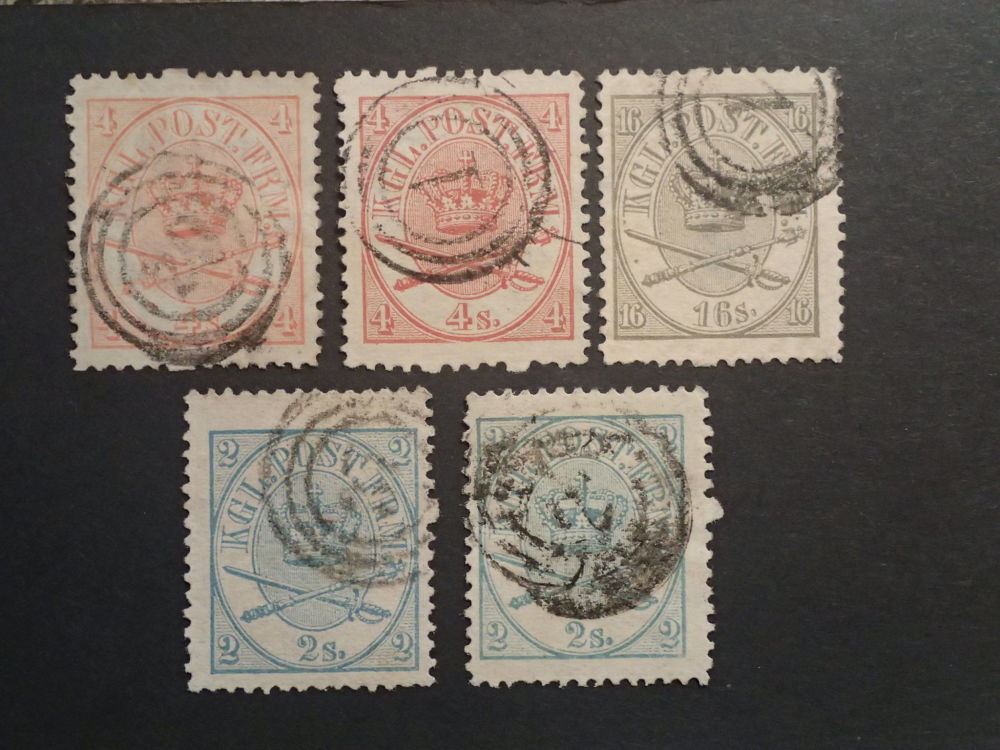 as mentioned, I have yet to see these on 3 and 8skilling. and the double blind perf is the only one i've ever seen. i've only collected stamps for 6 years now, but i've yet fully decide how I want my collection to appear and what it should display. i know I want to illustrate prints and strange specialities. but my dilemma is that I feel the best way to show difference in prints is on unused stamps where you can see everything. however cancellations also interest me, but I feel a collection with both unused and cancelled stamps is messy... maybe it's autistic or OCD or something :) and maybe I need to just make 2 seperate collections 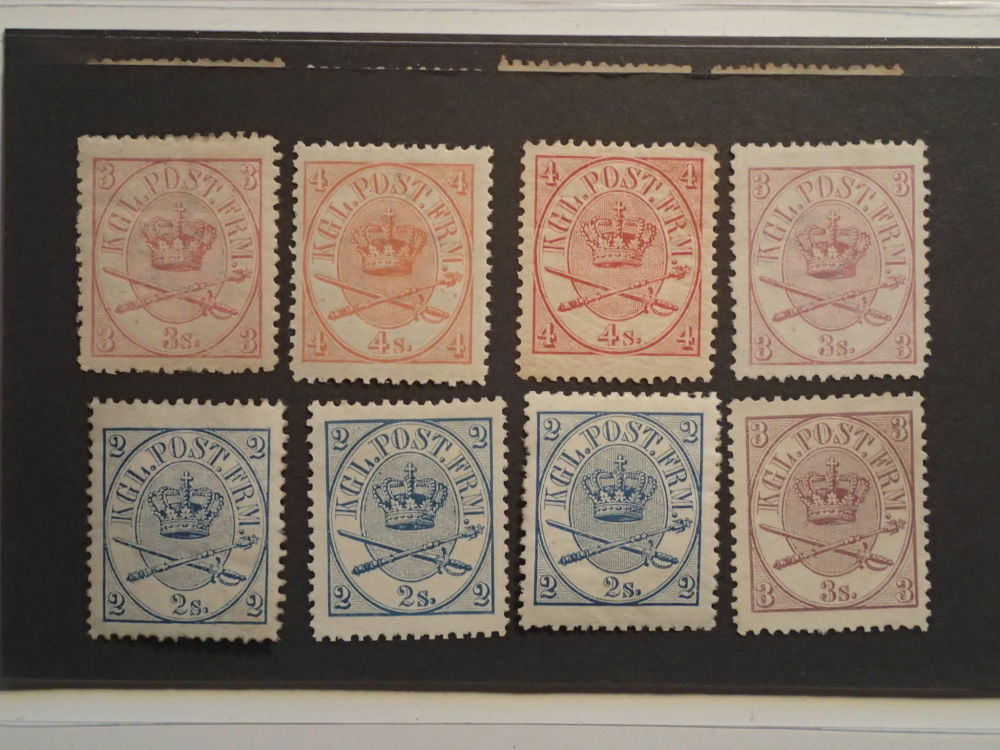 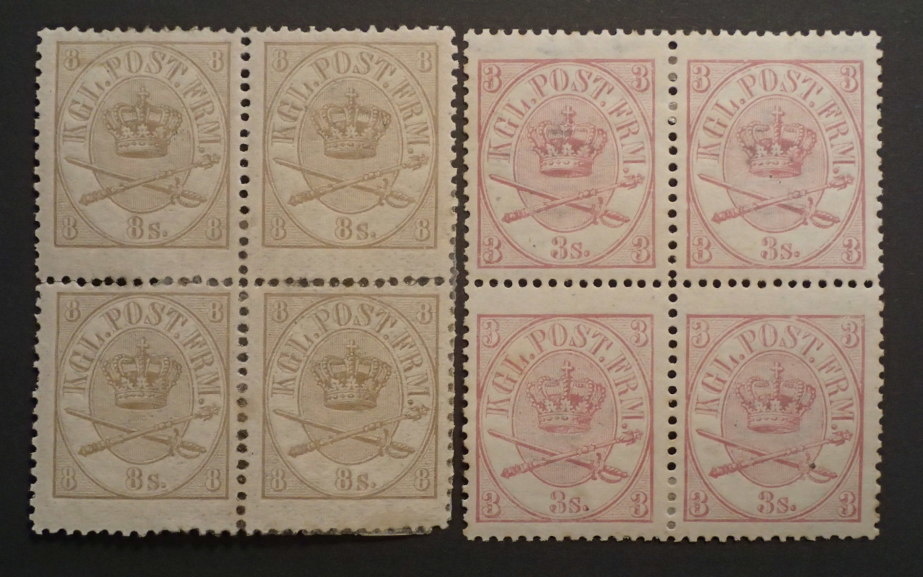 |
|
Send note to Staff
|
|
|
Valued Member
United States
259 Posts |
|
|
Valued Member
United States
259 Posts |
|
|
Sorsh,
Fine stamps with blind perfs, thanks for showing them.
Mint blocks of 4? That's something! |
|
Send note to Staff
|
|
|
Pillar Of The Community
559 Posts |
|
|
some 1870's all 8skilling are print 4, the block is the lightgreen shade which proved impossible to capture on camera. illustrated to see how much a print can vary in colour. as stated earlier, I think the catalogue have too high regard on print 4 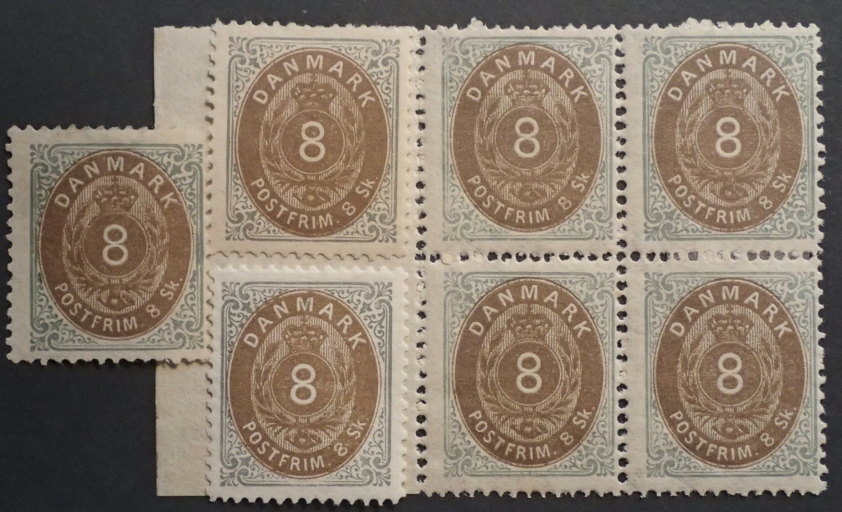 |
|
Send note to Staff
|
|
|
Pillar Of The Community
559 Posts |
|
|
most wouldn't be in doubt I think that I have a huge passion for bicoloured, and I do enjoy looking at them even if they're not mine :) so... facit 32 perforation 14, aside from print 9 and 10, these can be seperated by the most novice collectors (also 16øre) and that is why we always recommend people begin here. colours very alot, maingroups 1, 3, 4 and 5. pic 1 = print 9 position 9.. theres an ovalflaw (outer ovalline is "dented" under M in postfrim) KII perforation vertical row 9.. it all fits. pic 2 = print 11, notice the letters postfrim are worn /fat... the same as 3øre 7 mentioned earlier. (beautiful print) pic 3 = print 3 thick normal frame, same setting as 3øre print 3. pic 4 = your first rarity.  this is print 10 position 61 isolated INVERTED frame. facit 32g v2 listed at SEK 2000 pic 5 = print 10 pos 4.. notice the ovalflaw where most of 12 øre is missing. pic 6 = print 18 facit 32j pic 7 = print 12 pic 8 = print 15 pic 9 = print 14, maingroup 4 inverted (all 100 are inverted) pic 10 = print 17 pic 11 = print 16 pic 12 = print 18 |
|
Send note to Staff
|
|
|
Valued Member
United States
259 Posts |
|
|
Sorsh,
Thank you very much, especially for good news!
Your explanations clearly show, how deficient Facit is.
Which is somewhat discouraging, because so far I relied on Facit in my (mis)judgements.
With your help, I hope now to compile something like a primitive comparison base, at least. |
|
Send note to Staff
|
|
|
Pillar Of The Community
559 Posts |
|
|
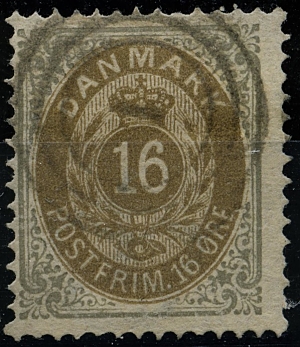
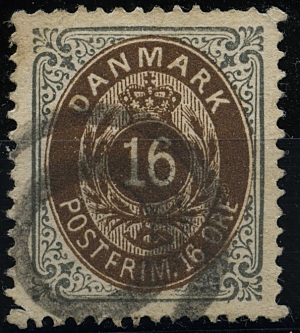
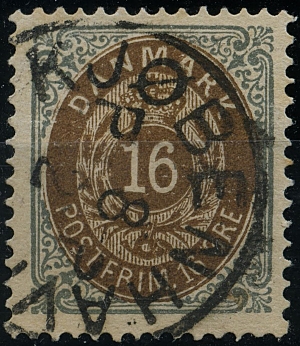
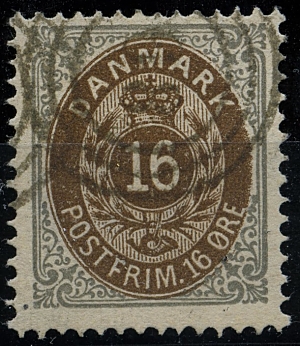
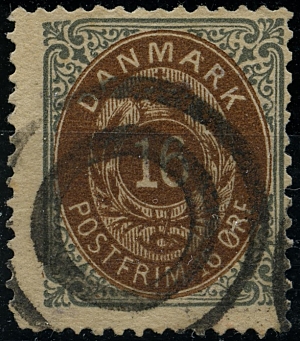
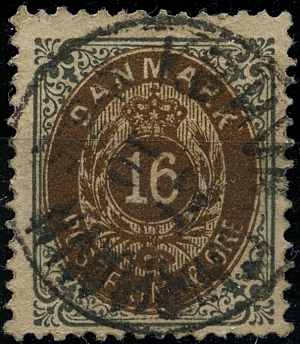
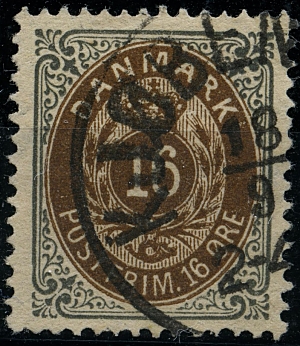
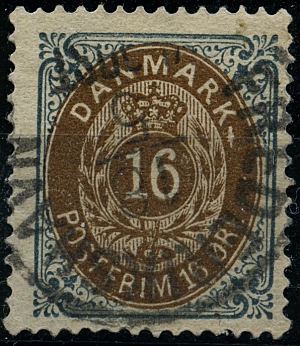
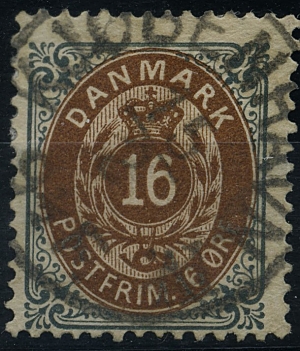
16øre
facit 33
pic 1 = print 3 thick inverted frame
pic 2 = print 9 rubber cancel, used for letters containing valuables.
pic 3 = print 12 or 14 they look a little alike, you can ask Richard of this :) could plate the stamp, but for facit it doesn't matter facit 33h
pic 4 = print 6
pic 5 = print 7 pos 51 huge frameflaw top left feather
pic 6 = print 9-10
pic 7 = print 9-10
pic 8 = print 16
pic 9 = print 19 |
|
Send note to Staff
|
|
|
Replies: 258 / Views: 36,700 |
|




 Posted 02/25/2017 3:11 pm