Hi
There are three things to look for when examining rouletted stamps, proprietary or otherwise, to determine if they are genuine.
The first is obvious, to measure the gauge of the rouletting with a metric ruler.
The second is to measure the width of a normal
perforated tip. That is, the width of the stamp paper that remains between the perforation holes. With the second-issue proprietary stamps perforated 12, this width is just about 1 millimeter. Then measure the same width of the remaining paper on a
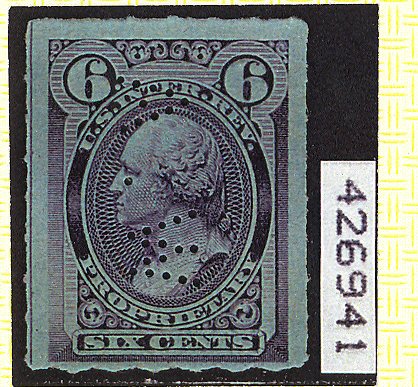
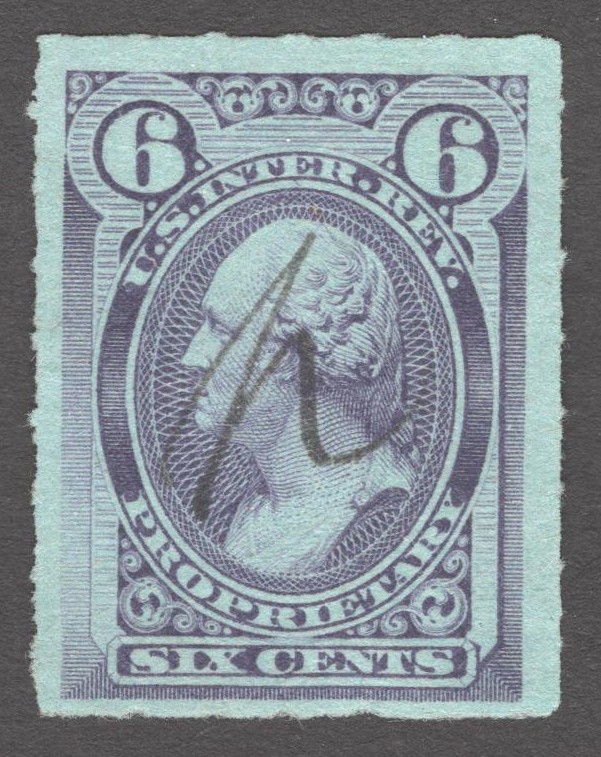
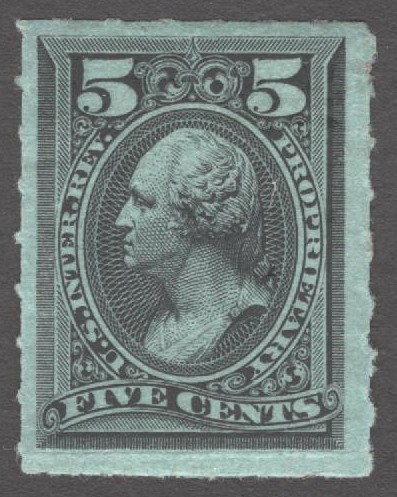
rouletted stamp's tip. If one or more tips is wider than 1 mm., the stamp almost certainly has to be genuinely rouletted. In the example stamp shown below, examine the width of the tips shown at the bottom right, and especially the first one at the top right. You simply can't get this wide of a tip from a perforated stamp. Perhaps one here or there with a "blind" perforated stamp, but not several.
Finally, there is an even better method that I learned from Eric many years ago. This is apparently not common knowledge. Kind of surprising no one has mentioned this.
In a genuine roulette, you might assume that, under magnification, you will see a horizontal (or vertical) "cut", then the tip, then a cut again. You would for sure see this if every other perforated tip had been trimmed off. But look closer. There should be a tiny "divot" or notch that goes into the stamp body, just before the tip. By tiny, I mean very, very, very tiny. May not even see it on every cut. So, on a genuine roulette, it's actually: cut, notch, tip, notch, cut, etc.
See the roulettes on the left side of the example stamp shown below. May have to enlarge the image.
Any suspected rouletted stamp that is missing these two criteria is almost certainly fake.
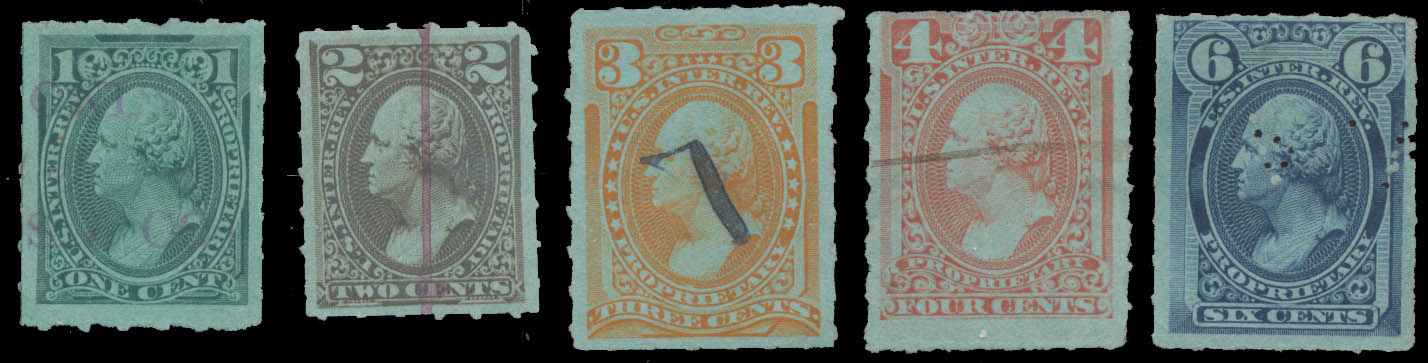
Using this information, it is clear that 1typesetter's one cent stamp is definitely genuine, and the two cent is definitely fake. Once you get used to knowing what to look for, you don't necessarily even need to see them in person.
Hope that this helps.
Jim





 Posted 03/05/2017 12:35 am