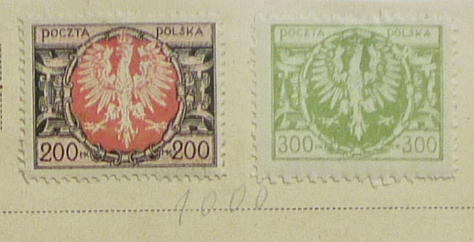
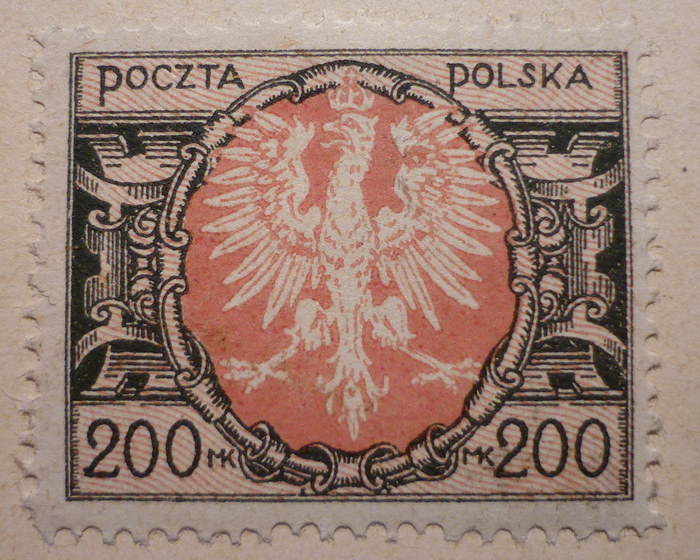
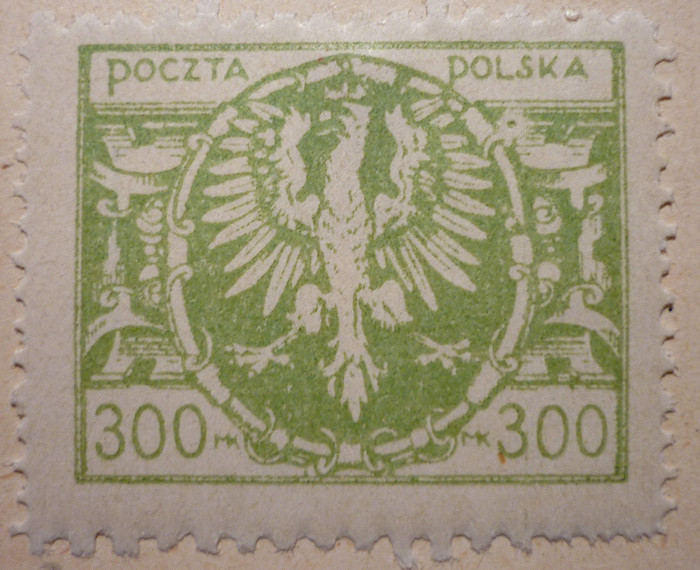
The short answer is that, yes, perf varieties are VERY common on these large eagle issues. The "Polskie Znaki Pocztowe" handbook of 1960 (still the major source of information on pre-war issues) lists a total of 71 perf combinations for all 10 denominations (including the two 25Mk. types)
The main contemporary perf. study in English of the large eagles is by W. Maslowski & A. Droar in the June-August 1973 issues of "Stamp Monthly" entitled "Austrian Machines used on Polish Perforations (especially on 'Large Eagles') during Polish Mark Period". Quite a mouthful but it says it all. The following is a summary of the article.
After WWI, war reparations of money & goods were made to the allies by Austria & Germany. Among these were 18 old perforation machines from Austria to Poland, 15 of which were used for the large eagles. These dated from 1858-1870's & were in good working order insofar as they perforated stamps but not in the constant manner to which we are accustomed to today due to two main factors. 1)The metal in the machines had fatigued after 40-50 years of use & hence the perforation pins had lost some strength. 2)To save time The Poles perforated 20 sheets at a time whereas the Austrians had only perforated 10. These factors contributed to the pins splaying outwards, inwards or out of alignment during use to produce irregular perforations - a fact which would have been irrelevant in that inflation era of stamp production.
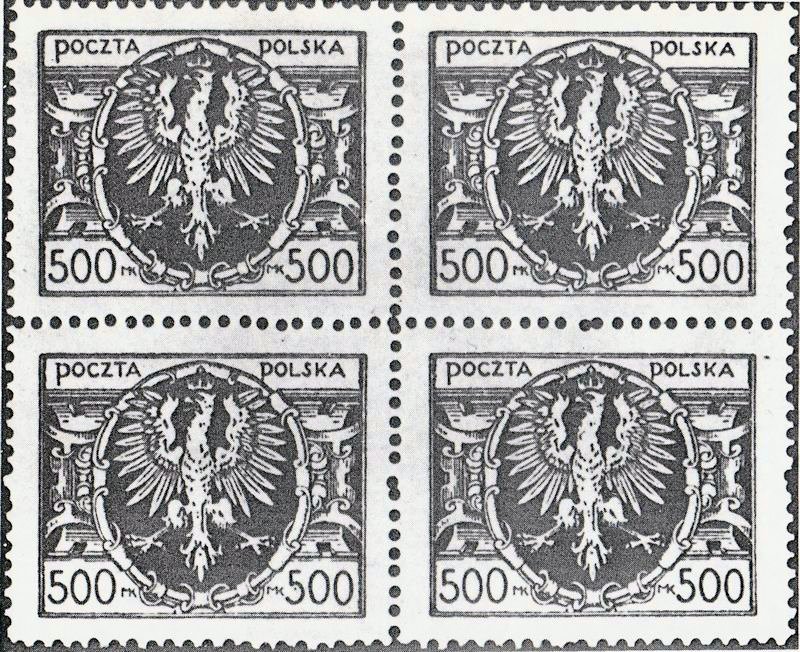
The authors were able to study large blocks & sheets & so were able to see the variety of perfs within one sheet. They do quote one sheet perforated 12 to 12.5 but extending 11 to 18 within the sheet, they do stress that this is an extreme example.
Here's an illustration of a block from the article showing the types of perf problems inherent in this issue





 Posted 08/18/2017 04:44 am