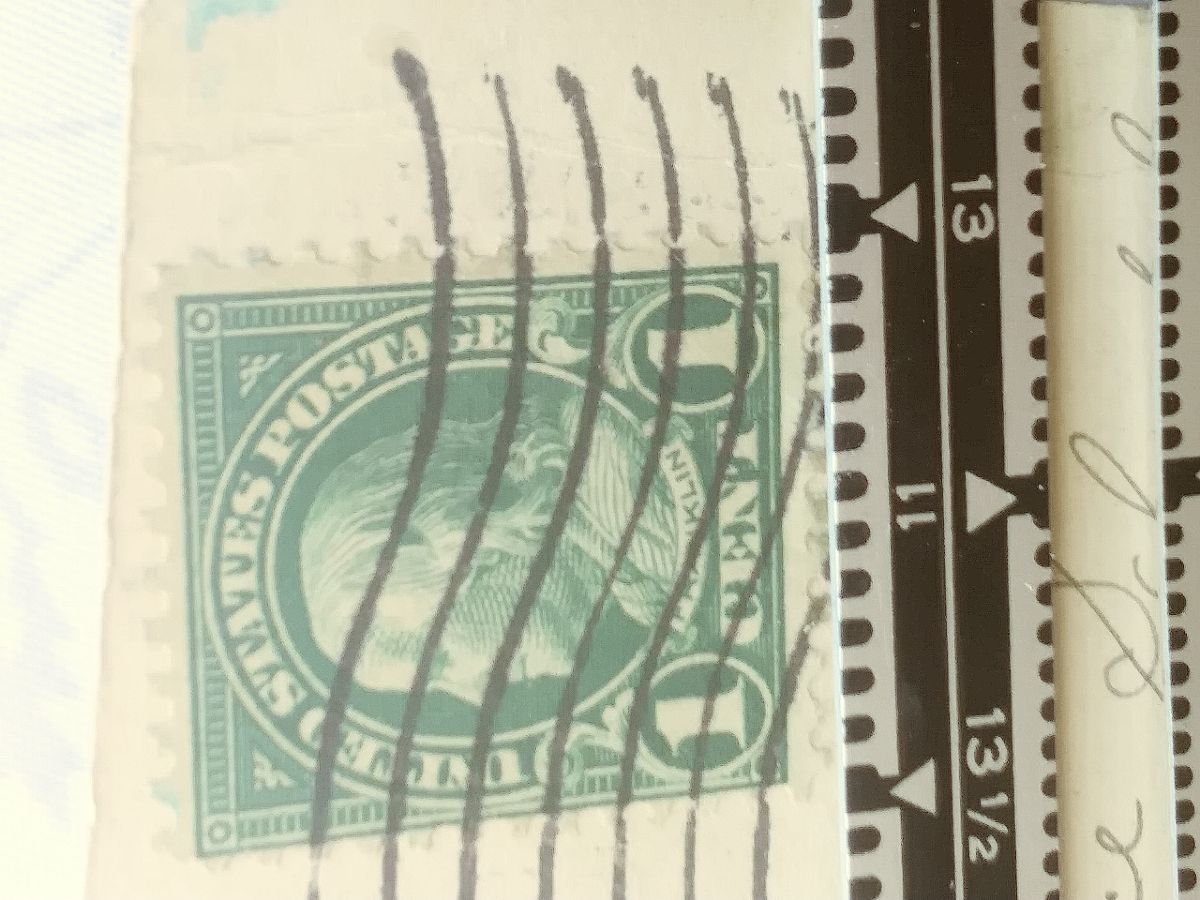
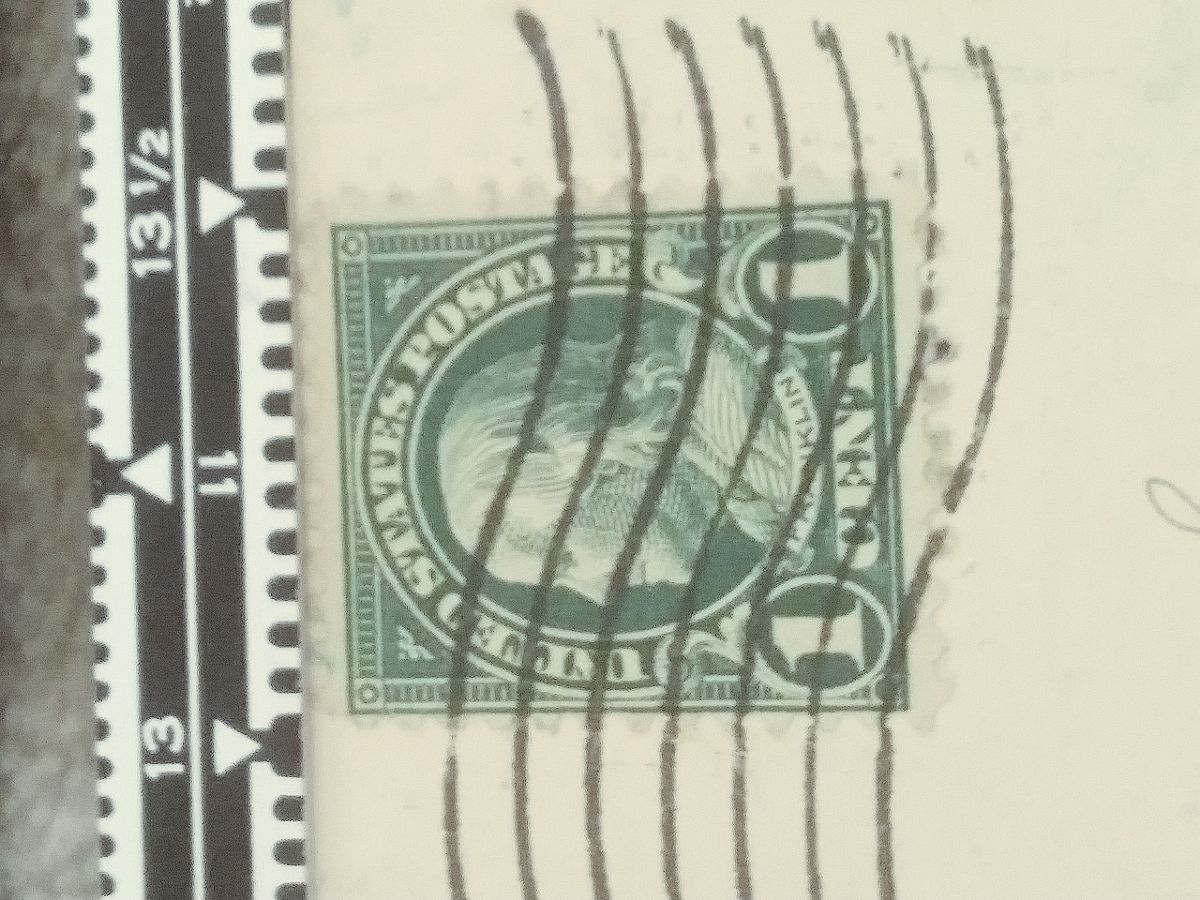
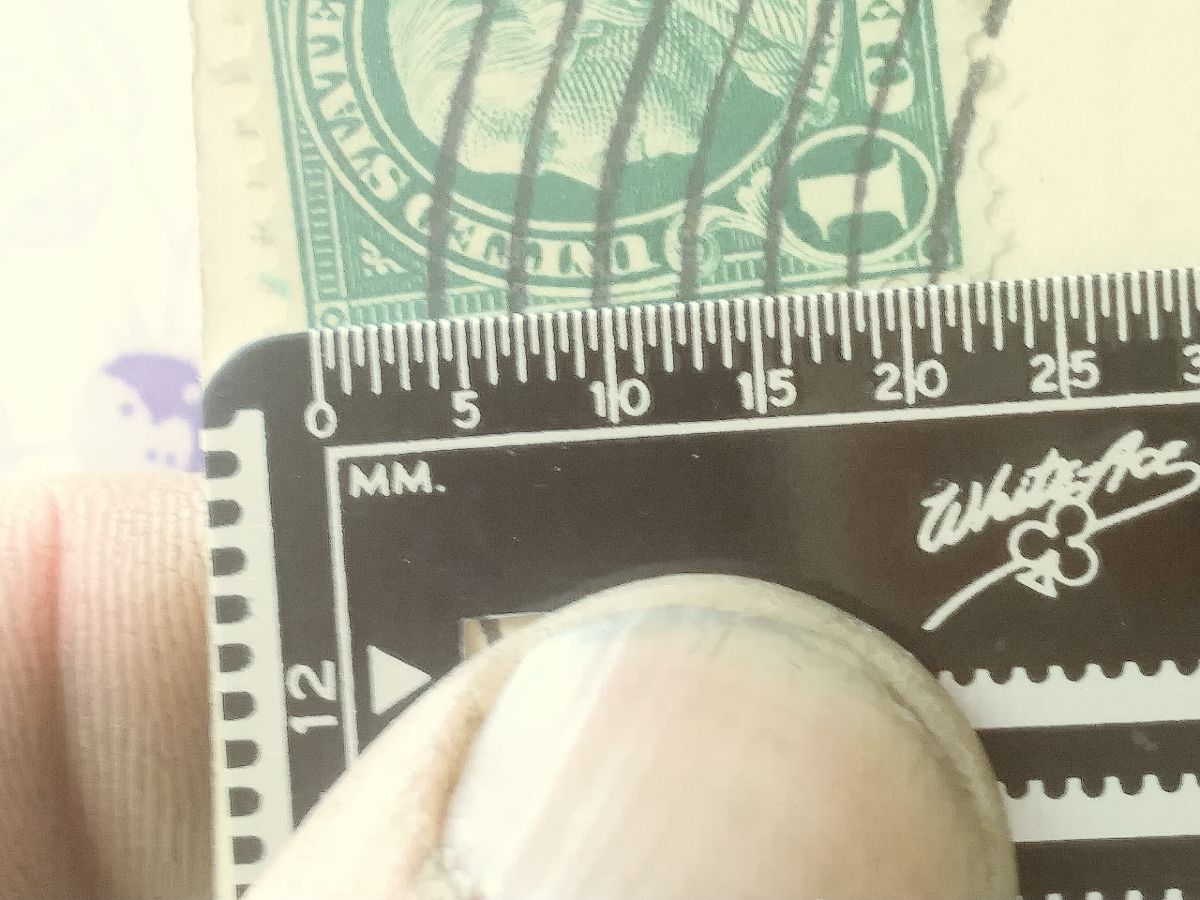
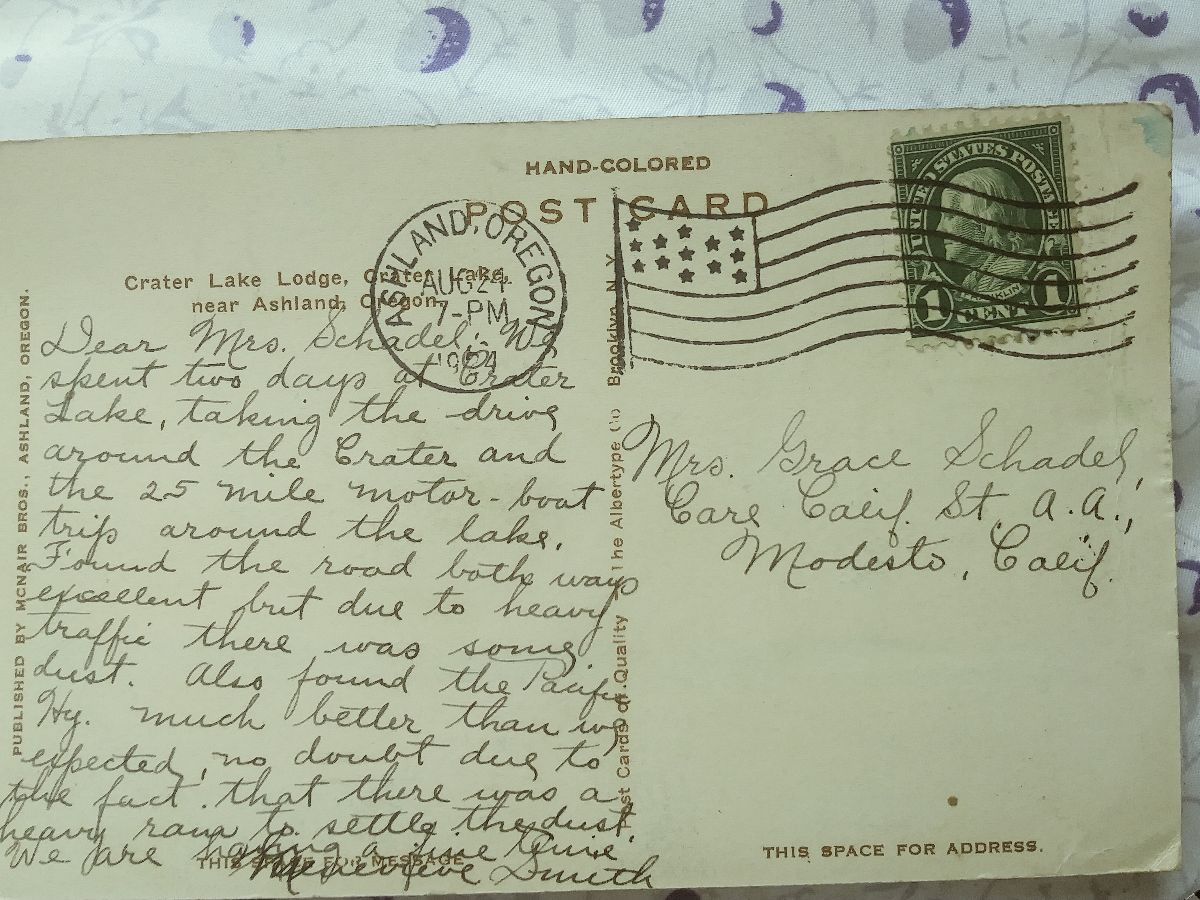
I don't see any reason to get excited. The stamp appears to be an ordinary flat plate perf 11 Scott 552. The best way to find out if happens to be a rotary press stamp is to compare it with a loose flat plate Scott 552. The perforations would have to match exactly, but the design height would have to be at least a frame line taller. Ideally, match the height with a rotary press Scott perf 10 581 or perf 11 x 10 1/2 632. Note that "perf 11" is an approximation (see below). A rotary perf 11 is not the same as a flat plate perf 11 on 552, also used on coil waste 594 or sheet waste 596.
This post is a perfect example of what not to do and also a good illustration of the misleading information supplied in the outmoded Scott catalog description. A crude metal ruler is not accurate enough to measure the height of stamps and the dimensions in the Scott catalog are not accurate enough to be useful. Common metal perforation gauges are not designed to accurately measure perforations on classic and early 20th century US stamps. A specialty gauge or another US stamp with the same perforations is needed. The most effective way to measure US stamps is to use another stamp with known characteristics to compare height, width or perforations.
Finally, management of this forum should start a new category for "rare stamp queries" to allow this category to be used for its intended purpose - discussion of classic US stamps. The category description could advise not using metal rulers, hazards and pitfalls of using the Scott Catalog and a explanation that a perforation gauge is not a measuring device.
Hi Makescents09 - I see that this is your first post, so as one beginner to another, welcome! There is a separate topic where you can introduce yourself and give us all an idea of your interests, what you hope to get out of the community, etc. I hope you will take the opportunity to tell us a little about you and read a little about the rest of us, and that you get tremendous satisfaction from the hobby and your membership here!
It is exciting when you think you found something special. That is part of the learning process. The other part is getting help. Good luck and be certain to post more of your stamps along with any questions you have
Disclaimer: While a tremendous amount of effort goes into ensuring the accuracy of the information contained in this site, Stamp Community assumes no liability for errors. Copyright 2005 - 2026 Stamp Community Family - All rights reserved worldwide. Use of any images or content on this website without prior written permission of Stamp Community or the original lender is strictly prohibited. Privacy Policy / Terms of UseAdvertise Here





 Posted 09/20/2017 10:51 am