| Author |
 Replies: 11 / Views: 1,953 Replies: 11 / Views: 1,953 |
|
|
Rest in Peace
United States
1738 Posts |
|
|
Does anyone other than myself wonder why there are not more unused revenue stamp varieties? Not just uncancelled stamps, but stamps with original gum; stamps that were clearly recognized for what they were at the time, and were carefully saved for generations. As the example stamp shown below was released a decade after the first issue revenue stamps, surely by then the novelty of the stamps would have worn off, and there would be an expectation of what they should normally look like? Why didn't more users save these types of very obvious errors when they saw them? Were they all so over-worked and so indifferent to handling stamps all the time, that an upside-down Washington head was apparently met with a shrug, and a "Meh. Whatever..."? Jim 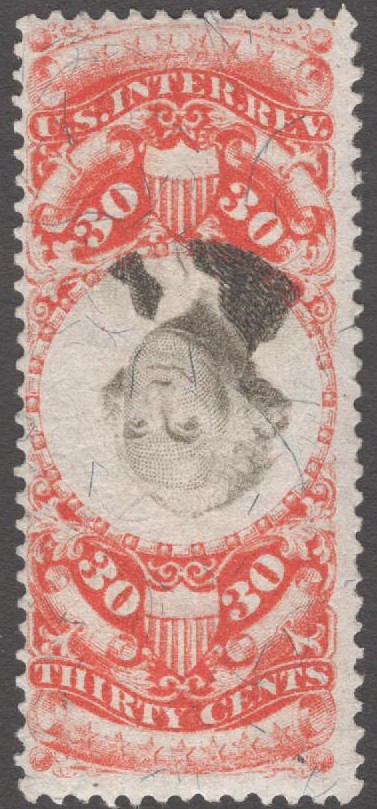 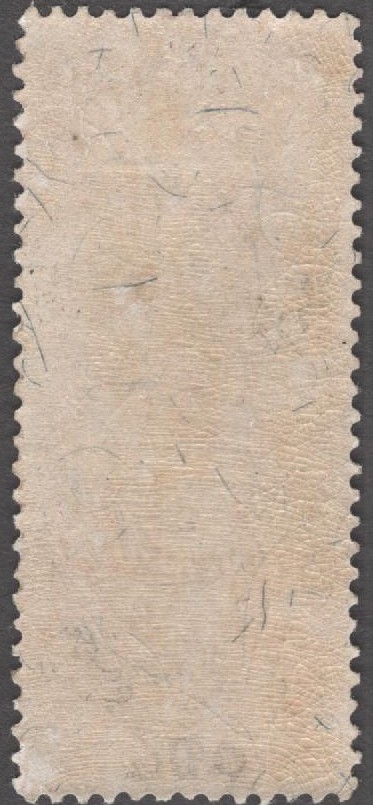 |
|
Send note to Staff
|
|
|
|
|
Pillar Of The Community
United States
1721 Posts |
|
|
I think it would be simple economics. If a sheet of 50 30 cent stamps were discovered and rejected by the user. They would have to be sent back to the collector of Revenue for the district. That would be $15 tied up. The average American in 1870 made $7-10 a week (Ref. US Census) that's a lot of $ to tie up waiting for replacements or to pay and put away for the average person. That is like $1,000- 1,500 today. |
Send note to Staff 
|
|
|
Rest in Peace
United States
1738 Posts |
|
|
I can see that that might be the case for a high dollar denominated stamp, or a pane of stamps as you suggest.
I would assume though that there must have been a clerk in a bank or whatever, somewhere, who would have spotted these things and then found a quarter or two to buy the stamp(s) himself. At least one or two, maybe.
But I guess it was sheer serendipitous synchronicity that what was found and saved, was.
Jim
|
|
Send note to Staff
|
| Edited by James Drummond - 10/21/2017 8:39 pm |
|
|
Pillar Of The Community
United States
1179 Posts |
|
|
You had Reconstruction followed by the Panic of 1873--a Depression that lasted for six years, which may account for people's lack of interest in stamp collecting. As REVSTAMPMAN indicated, 30 Cents then was not what 30 cents buys today. In 1870 one dollar would be equal $18.00 today - in the year 1875, the middle of the Panic of 1873 depression, the same one dollar was equivalent to $21.75 today - things were just that bad! Saving stamps were the last thing on people's mind. Reconstruction in the South caused the U.S. "Great Migration" in 1870s. With the African-American exodus from the South to the North, and the White and African-American expansion West to California, due to lack of jobs in the East caused by the Depression, America was in a great upheaval.
Hal
|
|
Send note to Staff
|
| Edited by Hal - 10/21/2017 11:26 pm |
|
|
Bedrock Of The Community
United States
10853 Posts |
|
|
These were stamps used to pay taxes, so they were only purchased as needed. There was probably only one sheet of inverts created, and they were only used for a very short time, so the odds on a collector finding one was very small. And then there is the extra money involved, 30 cents was real money then; one to two hours wages for many. |
|
Send note to Staff
|
| Edited by revcollector - 10/22/2017 08:20 am |
|
|
Bedrock Of The Community
United States
10853 Posts |
|
|
The 30 cent stamp was issued in sheets of 102, and it was certainly used, not returned. |
|
Send note to Staff
|
|
|
Pillar Of The Community
United States
4178 Posts |
|
|
Quote:
I would assume though that there must have been a clerk in a bank or whatever, somewhere, who would have spotted these things and then found a quarter or two to buy the stamp(s) himself. You are assuming that the clerk would even realize they would have any value. Even today some people turn in rolls of imperf coils back to the PO complaining about them instead of being excited. |
|
Send note to Staff
|
|
|
Bedrock Of The Community
United States
10853 Posts |
|
|
They were for paying taxes. Almost no one cared about collecting them until later (especially not low paid clerks), and even through the sixties revenues had a relatively small following. Fortunately those who did were often great collectors and several were quality writers so much information was discovered and saved. And most collectors did not attach great importance to mint examples, cancels were far more important. And the ARA only had about 1300 total members in the first 25 years of it's existence with fewer real members at that moment.
Postage stamps always had the potential to be used at any time, so people might buy somewhat more then they needed, but revenues were almost always only good for paying a specific tax for as long as it lasted. No one wanted to pay any more tax then they had to. |
|
Send note to Staff
|
|
|
Pillar Of The Community
United States
1868 Posts |
|
|
I'm also not so sure they were that obvious. The portrait is how most people would orient the stamp and your brain doesn't always pay attention to the lettering. The invert is even less apparent when a tall revenue is applied horizontally to a document, as many were. |
|
Send note to Staff
|
|
|
Pillar Of The Community
United States
922 Posts |
|
|
The lack of unused inverts does not surprise me. The 1869 Pictorial inverts are also very rare unused compared to used. The Siegel census has 3 unused 15 cent inverts compared to 101 used; 4 unused 24 cent inverts compared to 86 used; and 6 30 cent inverts compared to 41 used. |
|
Send note to Staff
|
|
|
Valued Member
United States
51 Posts |
|
|
Bedrock Of The Community
United States
10853 Posts |
|
|
Revenues were often "precanceled" by the company that bought them. Most socked on the nose cancels exist for that reason. The tax was paid as soon as the stamp was purchased; it was up to the taxpayer to make sure that they were used in a manner consistent with the law. |
|
Send note to Staff
|
|
| |
Replies: 11 / Views: 1,953 |
|




 Posted 10/21/2017 7:45 pm


