| Author |
 Replies: 10 / Views: 1,958 Replies: 10 / Views: 1,958 |
|
|
Pillar Of The Community

United States
1837 Posts |
|
|
I searched the forum and I guess scanning on an orange background is the best suggestion. Any opinions on what you see here? (The stamps on the left are not bluish - there for comparison.) Would a back scan help? Any other suggestions? 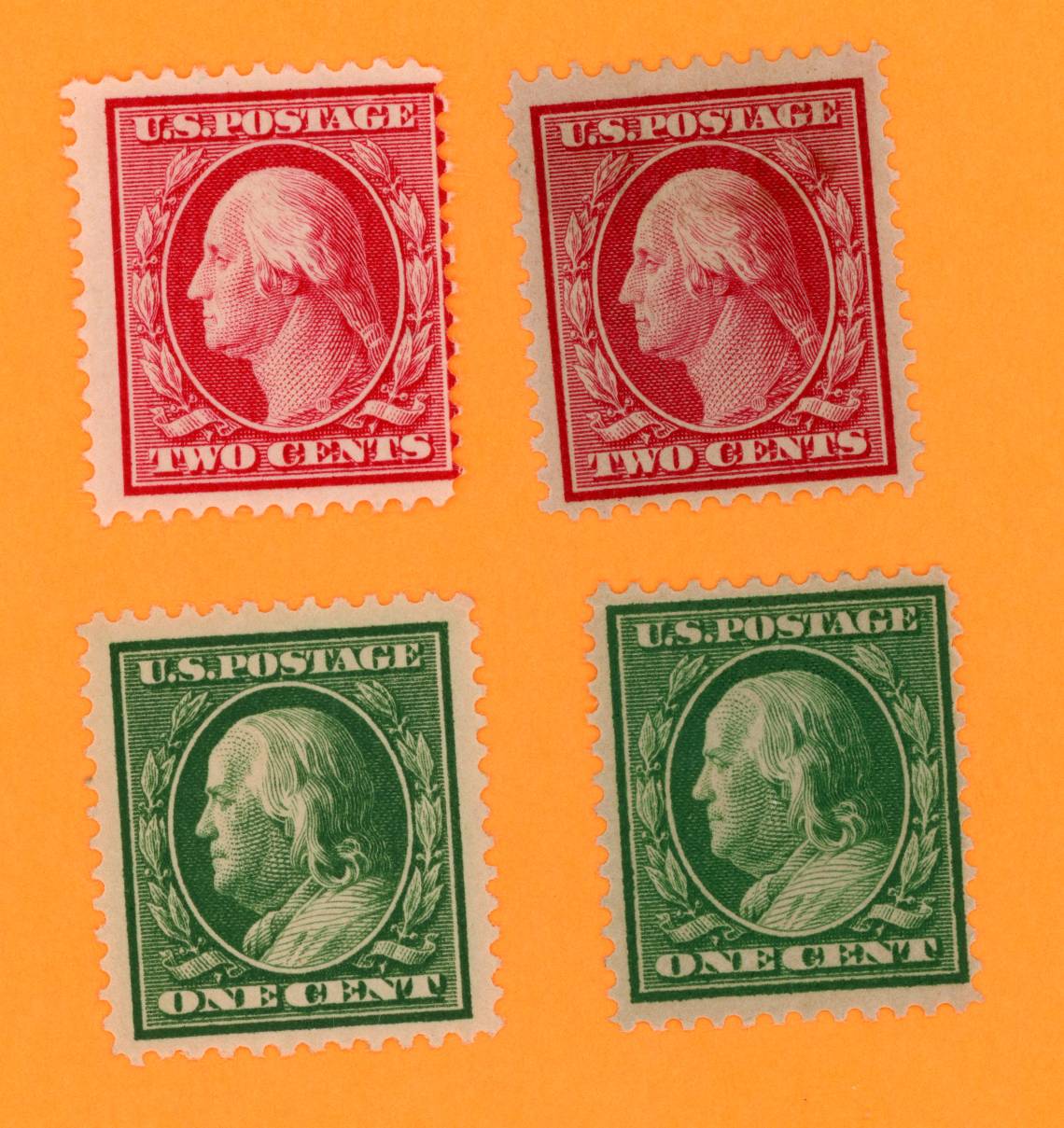 |
|
Send note to Staff
|
|
|
|
|
Moderator
United States
5107 Posts |
|
|
Looks about right to me. I'm assuming gum on the back (to make sure it wasn't soaked and got the blue color from the envelope.) I'll get these someday. Congrats! |
Send note to Staff 
|
|
|
Pillar Of The Community
United States
1837 Posts |
|
|
Pillar Of The Community
United States
578 Posts |
|
|
Both stamps on the right look like excellent bluish paper candidates to me. |
|
Send note to Staff
|
|
|
Pillar Of The Community
1375 Posts |
|
|
This is a helpful scan also for a beginner as me. What I know as characteristics for bluish paper in addition to the darker and gray paper color:
- double line watermark (of course)
- watermark can be seen easily, also without fluid, sometimes even just in oblique light
- often there is not too much setoff on the back
- little black spots in the paper
Which leads to the thing I still don't know: "how big" are the black spots, can you see them with 10x maginification for example? Could anyone perhaps provide a scan of a magnificated bluish paper? I don't find information about the black spots except in some stamp journals, but without images or better explanation.
|
|
Send note to Staff
|
|
|
Valued Member
United States
333 Posts |
|
|
I bought some "blue" stamps from a dealer. The paper looked very much like the paper in your stamps to the right. Not blue; more an off-white or grey.
Don |
|
Send note to Staff
|
|
|
Pillar Of The Community
United States
3224 Posts |
|
|
Little black spots -- these would be otherwise called paper inclusions, specks of material (here, black) in the paper, which has rag content. There are a few per stamp, sometimes relatively large, but can probably be seen from the back without magnification. 10x magnification would show them well. This can't be used alone as an identifier as normal white paper can sometimes have black specks in the paper as well.
Hopefully, someone can give us a good picture of the back to show the spots. Since they are specks, they don't always show up that well in on our computer screens in smaller images. |
|
Send note to Staff
|
|
|
Pillar Of The Community
United States
5471 Posts |
|
|
Pillar Of The Community
United States
1873 Posts |
|
|
The specks are only 5-10 microns in size and may be ultramarine crystals. See Kevin G. Lowther, Ultramarine "Bluing" Is Likely Agent in Shading of "Blue Paper", The United States Specialist, 2016 issue 1040 at p. 446, October 2016. |
|
Send note to Staff
|
|
|
Pillar Of The Community
United States
1179 Posts |
|
|
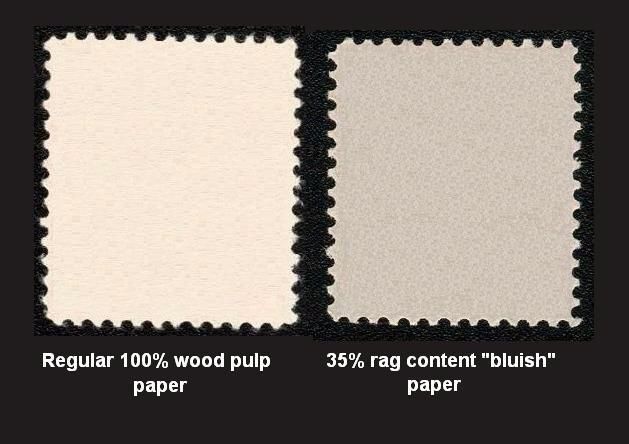
One of the "key" tips in judging "blue" paper is viewing the stamp from the back, unprinted side, as demonstrated by redwoodrandy. |
|
Send note to Staff
|
|
|
Pillar Of The Community
1375 Posts |
|
|
Thank you. I asked about the magnification and the black spots, as I wonder why there are no photos under magnification at all in the internet or in forums concerning bluish paper. I agree totally that it's just looking at the back of the stamp to find the really typical color. But for different denominations the "gray" is different as it seems. And: if there is a difference in the color of the paper without loupe, then there must be a known difference in the paper under magnification? The paper should really look different then. Perhaps anyone has a link to bluish paper with magnification. |
|
Send note to Staff
|
|
| |
Replies: 10 / Views: 1,958 |
|




 Posted 11/16/2017 5:41 pm