| Author |
 Replies: 12 / Views: 2,753 Replies: 12 / Views: 2,753 |
|
|
Valued Member
United States
211 Posts |
|
|
To me this looks like a Austria Offices Abroad 30c Scott 21 used. The mint catalogue value is a few dollars and the used catalogue value is a couple thousand dollars. It is a rare used in the correct time period. How do we find out if this stamp is in fact a 21, and how do we know by the cancel or otherwise if was used in the legitimate time period. Front 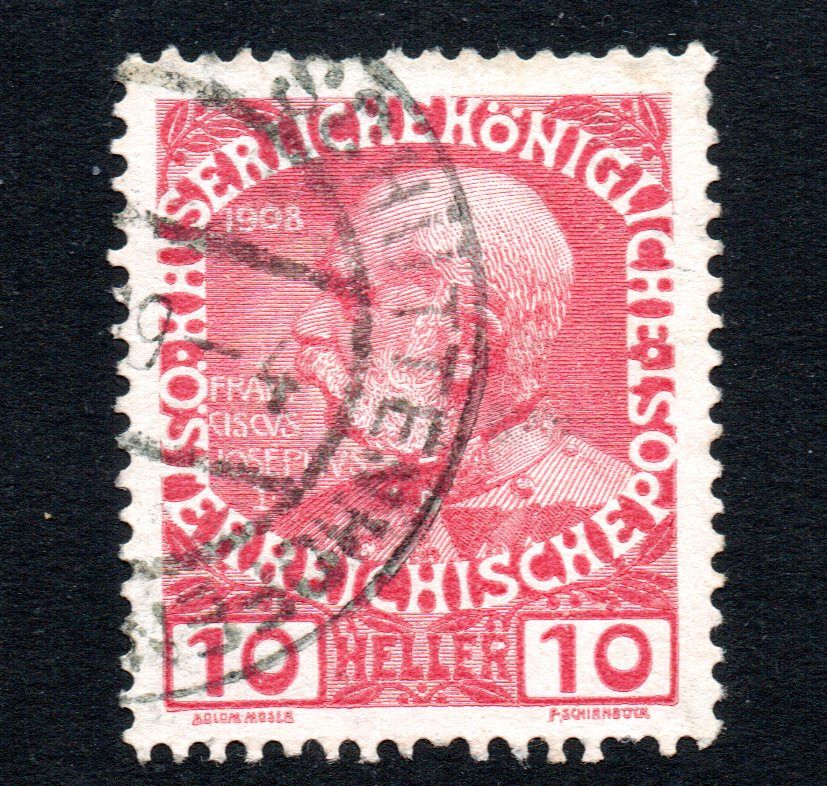 Back 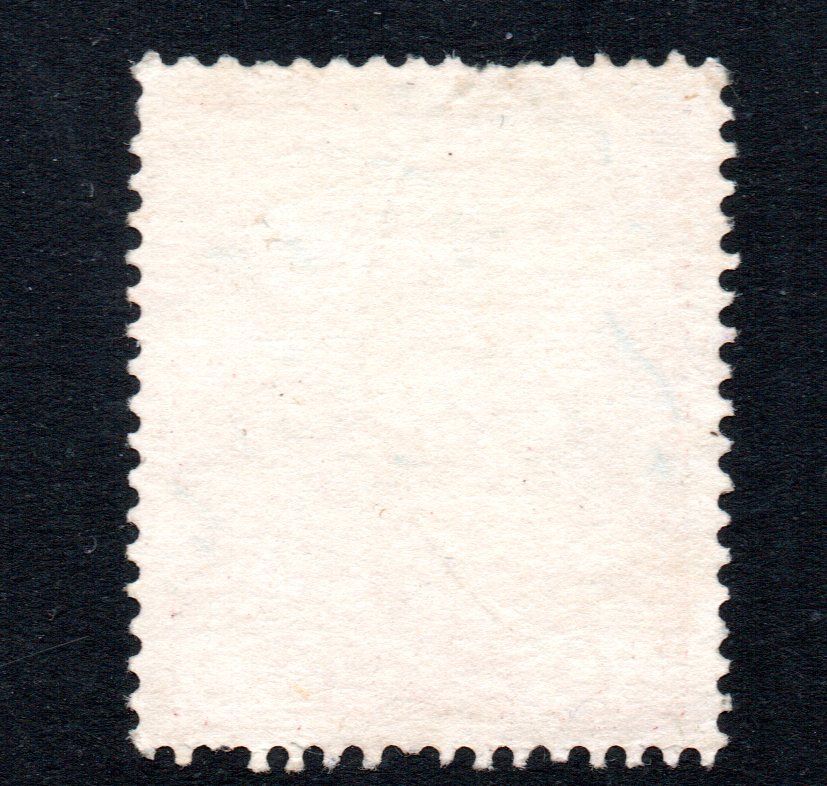 This stamp looks very similar to this stamp on HipStamp: Austrian Offices Abroad 1914 10c rose color through 10c (Sc 21) VFU $2,300 ( https://www.hipstamp.com/listing/au...300/4322524)Thank you for any information. If you all think it is good the next step would be get is certified. |
|
Send note to Staff
|
|
|
|
|
Pillar Of The Community
United Kingdom
3220 Posts |
|
|
Oops, edited after I realised what I was looking at!
To me this loooks like a genuine Austrian stamp used in Bohemia.
The postmark is from Schüttenhofen, now Susice in the Czech Republic.
The postmark date is ok if it is 1909.
It is not from the Austrian Post Offices in the Turkish Empire (as it has the wrong currency).
These offices used Turkish (paras and piastres) or French (centimes and francs) currency stamps in this period.
|
Send note to Staff 
|
Nigel |
| Edited by nigelc - 12/01/2017 2:07 pm |
|
|
Pillar Of The Community
United States
3224 Posts |
|
|
Also, do not be misled otherwise by a stamp with part of a cancel, a "nice face-free cancel". Such a stamp could be genuine, but to be considered genuine and deserve the price, stamps that are rarer used need to have a readable postmark with a date and typically need an expert opinion. |
|
Send note to Staff
|
|
|
Valued Member
87 Posts |
|
|
The one on Hip is in centimes, so probably Office in Crete, the seller pretend it's a #21 , but it can be also a #16 at $1.40 both are on rose paper, but the 16 have color only on the surface, so an expert need to evaluate the paper . And another problem ; the mint #21 is $1.25 so a counterfeit postmark can be very easily done. 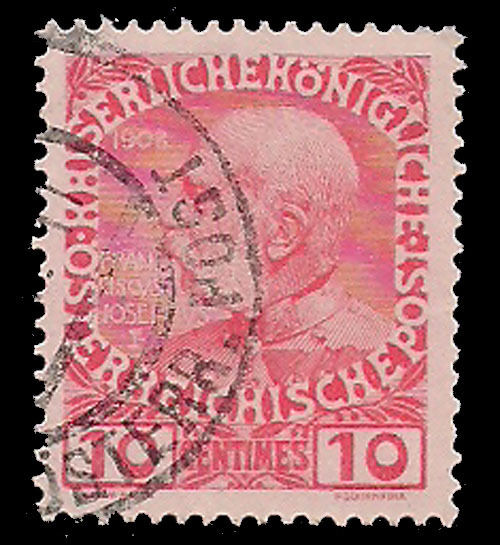 |
|
Send note to Staff
|
| Edited by JPMG - 12/01/2017 3:10 pm |
|
|
Bedrock Of The Community
Australia
38679 Posts |
|
|
Quote:
so probably Office in Crete Indeed it is. However, it can be found with postmarks of Constantinople, and other Levant Post Offices, where they appear to be employed in the pre-payment of postage on printed matter etc, in a similar manner to the German special issue of 1908 (Armstrong) Quote:
so an expert need to evaluate the paper Not really, the papers are easily discerned by the naked eye. |
|
Send note to Staff
|
| Edited by rod222 - 12/01/2017 9:39 pm |
|
|
Pillar Of The Community
United Kingdom
3220 Posts |
|
|
I've long believed that "Austrian Post Offices in Crete" is a misleading term when referring to the French currency Austrian stamps.
Scott and Michel still use this traditional name but I've never seen any evidence that they were intended for specific use in Crete.
I guess the name arose as the French currency stamps were introduced in 1903 not long after the British (1898), Russian (1899), Italian (1900) and French (1902) authorities issued stamps specifically for use in Crete so these were four new "countries" in the stamp catalogues all with names such as "... Post Offices in Crete".
The British and Russian issues were for local use only and are now usually referred to as issues of the British and Russian administrations.
These four countries were the occupying powers in Crete but Austria-Hungary was not one.
There were three Austrian post offices in Crete (Chania, Herakleion (Candia) and Rethymno) and these used both Turkish and French currency stamps (and much earlier they had used Lombardy-Venetian currency stamps).
None of these three was in the part of the island administered by France.
The island of Crete was technically Turkish territory until its union with Greece in 1914.
Crete's own stamps introduced in 1900 used the Greece currency of lepta and drachmas.
As Rod has pointed out, the French currency stamps were used in many other Austrian post offices in the Turkish Empire, again alongside the Turkish currency stamps.
I wouldn't touch the one shown from Hipstamps. I completely agree with hy-brasil.
|
|
Send note to Staff
|
Nigel |
|
|
Pillar Of The Community
France, Metropolitan
3756 Posts |
|
|
Pillar Of The Community
Norway
1661 Posts |
|
|
Useful links perf12!
The link for French PO states that Monte Carlo used GC 7571?? I was not aware the GC numerals went that high? |
|
Send note to Staff
|
|
|
Bedrock Of The Community
Australia
38679 Posts |
|
|
Thank you Nigel, great background, I shall keep / mount this next to my album pages. Thanks Perf12. 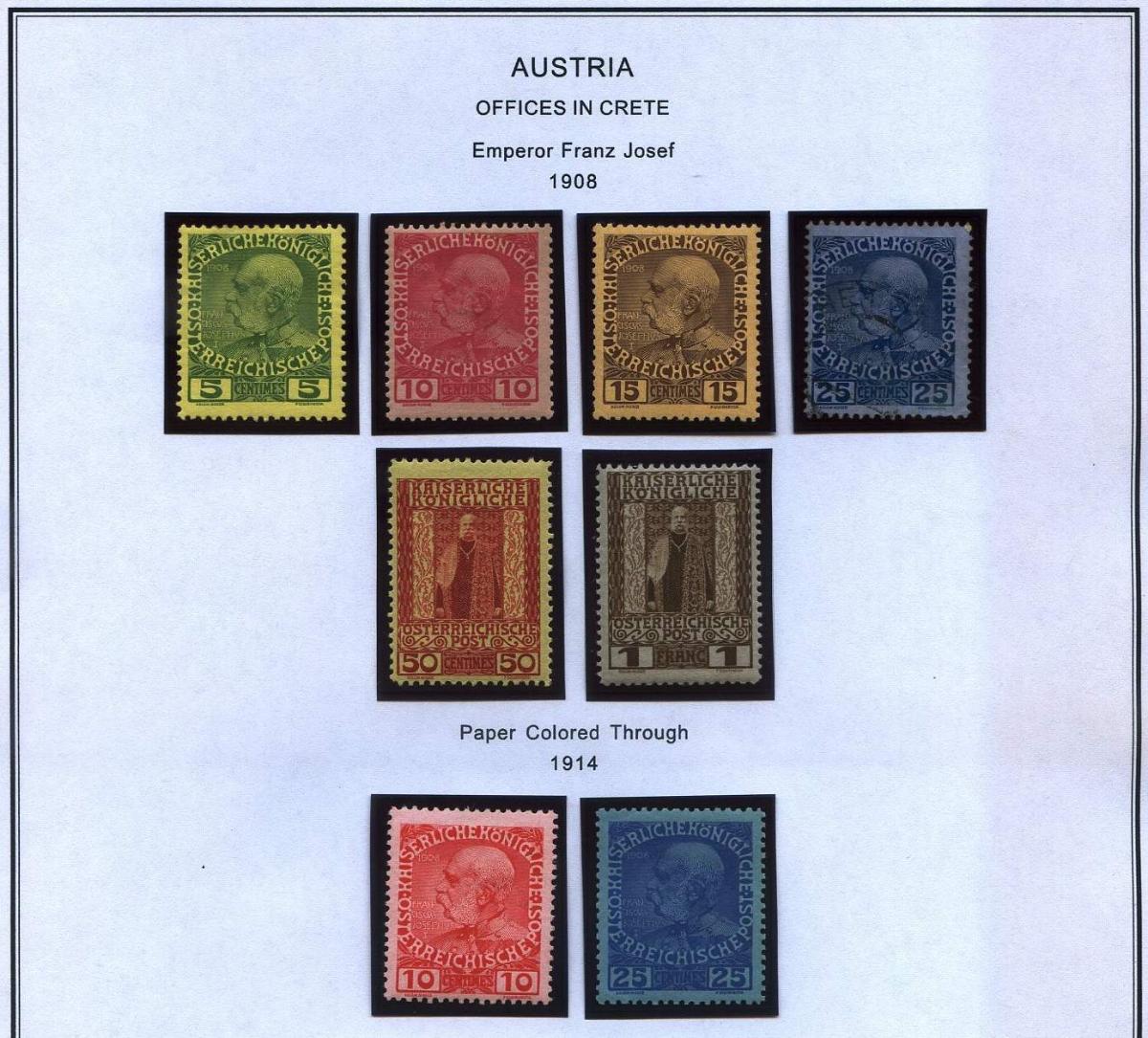 |
|
Send note to Staff
|
|
|
Bedrock Of The Community
Australia
38679 Posts |
|
|
Observation:
The original poster's Pmk, (to me) indicates the Pmk was applied by a steel cancelling hammer, the outer ring gives that ink distribution like letterpress, bolder ink on the sides of the ring, escaping the pressure of the application.
I would tend on the side of a genuine mark.
|
|
Send note to Staff
|
|
|
Pillar Of The Community
United Kingdom
3220 Posts |
|
|
I agree Rod,
I see no reason for the Schüttenhofen postmark to be a forgery. |
|
Send note to Staff
|
Nigel |
|
|
Pillar Of The Community
United Kingdom
3220 Posts |
|
|
New Member
United States
1 Posts |
|
| |
Replies: 12 / Views: 2,753 |
|




 Posted 12/01/2017 12:50 pm


