| Author |
 Replies: 49 / Views: 17,286 Replies: 49 / Views: 17,286 |
|
Pillar Of The Community
1375 Posts |
|
|
Hello, nearly never I read anything about the measurement of paper thickness of US classic stamps, neither in journals nor here in the forum. I found one very interesting article of Barwis here: https://repository.si.edu/bitstream...eb_FINAL.pdfI have a nice tool for thickness measurements by Metrica made in Italy and use it for stamps of other countries, but never for US stamps, so I began to ask myself why not. In the mentioned article there is indeed said that the thickness has variations within each printing period (National, Continental, American) but on the other hand, the statistics also show that there are ranges where the paper thickness would indeed lead directly to one of those, as shown in TABLE 2. So my questions would be: - do you know other articles (links) about this topic? - can we say that the article above is not only relevant for the 3c but also for all banknote stamps (other denominations would be similar)? - did you ever use paper thickness as a help to determine the paper type (soft vs. hard, double paper, "very thin paper" of 3c 1861, thin paper of 3c 1851 and so on)? As an example I show a 15c Interior stamp I just had in my hands wondering about the paper type. Perforation tips could be soft paper, but paper does not really look mottled. So maybe the paper thickness would help here, which is about 0,07mm and could be saying "Continental" and "hard paper" to me - or what about intermediate paper? 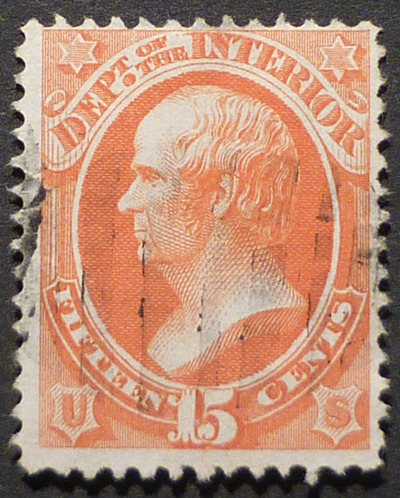 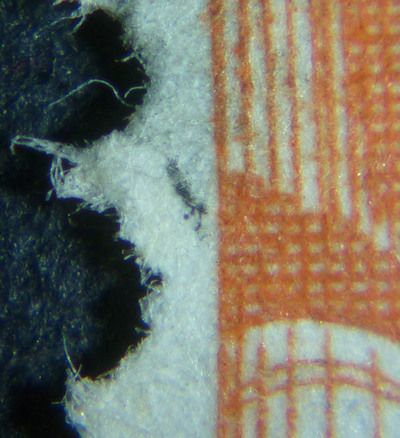 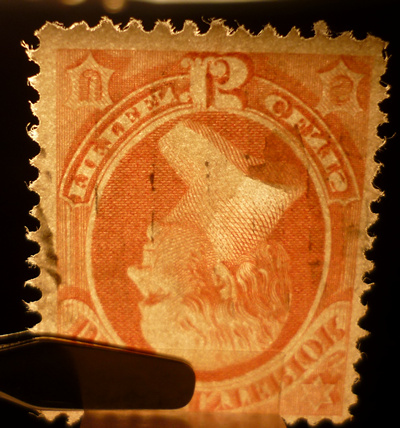 Another example would be this interesting 10c, which has very thick paper, more than 0.11mm, so about 0.0044 inches that does not appear in Barwis' statistics which ends at 0.0041 inches. Also the design is not shining through the paper at all and it looks in general different. So what about this paper? 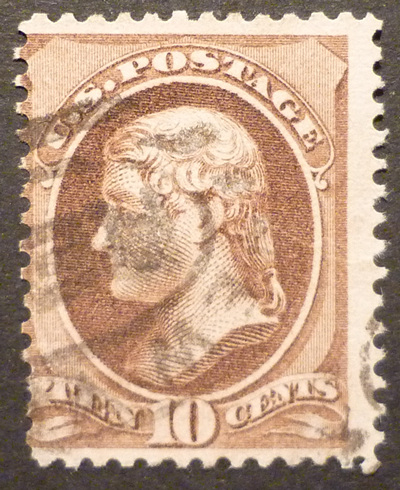 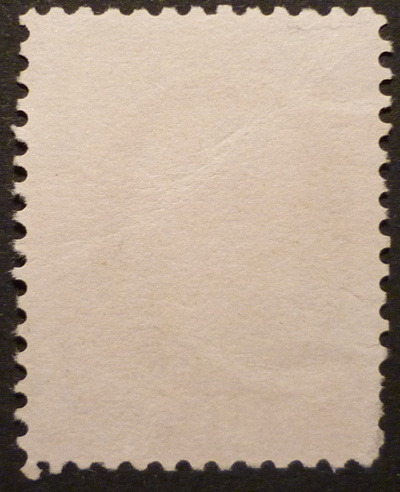 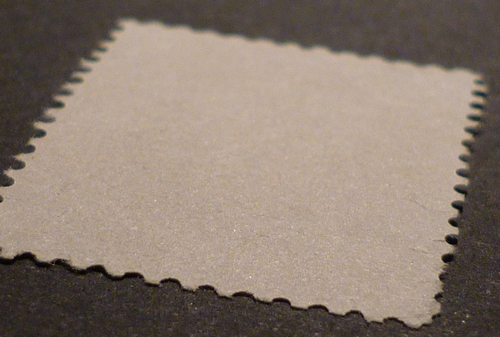 |
|
Send note to Staff
|
| Edited by stamperix - 12/18/2017 11:20 am |
|
|
|
|
Pillar Of The Community
United States
3292 Posts |
|
|
Pillar Of The Community
United States
2555 Posts |
|
|
I have a Mitutoyo micrometer that I use. It is a very nice instrument. I use it on 3c and 12c 1851 stamps to confirm paper type, e.g. thin paper or part India paper. I doubt there are many people that can identify them without a micrometer.
|
Send note to Staff 
|
|
|
Valued Member
213 Posts |
|
|
Yes, I have a digital micrometer I use primarily on the 1851 and '57-'58 perforated issues. Thickness measurements are useful to a degree, though unnecessary on later issues IMO.
I have an upcoming article for the Chronicle on banknote papers that I can't get into right now. But, I believe I can speak to one minor point without raising the hackles of the editor (if he is reading this). Barwis wished to answer the question about whether there was a change in paper mills after Continental won the stamp contract in 1873. Note that stamp paper was not Government property, therefore none would be transferred between NBC and CBC. Ergo, the latter needed to purchase their own paper to begin printing with. Now, subsequent philatelic researchers discovered a small number of ribbed paper examples in initial CBC printings.(1.) The only logical explanation for this is that the paper came from the same mill. I present other strong arguments to support this view, but the physical evidence is the kicker.
1. "Some Data on Continential Bank Note Company Ribbed Paper Stamps," by William E. Mooz, Chronicle of USPCS, August 2000 (No. 187).
|
|
Send note to Staff
|
|
|
Pillar Of The Community
United States
2555 Posts |
|
|
This is what happens when you don't use a micrometer. PSE looking inept... again. Stamp is on normal paper.  |
|
Send note to Staff
|
|
|
Pillar Of The Community
1375 Posts |
|
|
thank you all.
littleriverphil: yes, I know your helpful picture. In addition to the look of the paper, how are the perforation tips of the intermediate paper, more similar to soft or hard, or do they not help?
sinclair: interesting to hear you use paper thickness - what is your measurement in mm or inch to call a paper of a 3c and 12c 1851 a "thin paper"?
AJ Valente: interesting point and I am looking forward to reading this. Although this is not about paper thickness, I may ask: Why is the ribbed paper the cause for it that it must from the same mill, I think the National didn't use ribbed paper? (also thank you about your answer about the sense of measurement of the paper thickness for the issues after the 1850s)
|
|
Send note to Staff
|
|
|
Pillar Of The Community
United States
3292 Posts |
|
|
Quote:
In addition to the look of the paper, how are the perforation tips of the intermediate paper, more similar to soft or hard, or do they not help? The pref tips are quite similar on the Intermediate and the soft paper stamp. Here is a front view of the three, and as you can see there are paper fibers in the perforations of both the middle (Intermediate) and right (soft) stamps. 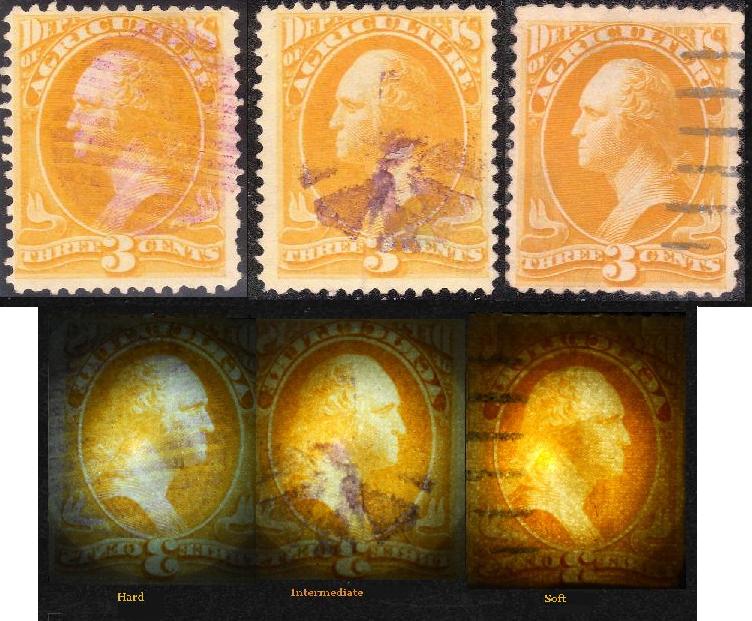 |
|
Send note to Staff
|
| Edited by littleriverphil - 12/19/2017 09:14 am |
|
|
Pillar Of The Community
United States
2555 Posts |
|
|
stamperix, the thin paper stamps of 1851 are about 2/3 the thickness of a normal paper stamp. I have found that while using my equipment and my technique, that they are not as thin nor is the thickness as variable as has been reported. Don't get hung up on any one observable when studying paper but rather use a nuanced approach and consider as many variables as possible. Then you will not get drawn into making erroneous conclusions. |
|
Send note to Staff
|
|
|
Pillar Of The Community
United States
2555 Posts |
|
|
I just love the topic of paper. Too bad there are a few enormous disincentives to really letting our hair down. |
|
Send note to Staff
|
|
|
Bedrock Of The Community
12733 Posts |
|
|
Pillar Of The Community
United States
2555 Posts |
|
|
There really aren't any. It isn't like I have any serious outliers in my collection but to my trained eye, measuring the thickness is a mere confirmation after observing several other defining characteristics. If you must know, my micrometer typically measures a part India or a very thin paper stamp at around 0.0021". A normal stamp measures a fairly consistent 0.0030".
I want to be clear here. The thin paper stamps are different in many ways, the thickness of the paper being only one of them. I would not dream of getting caught up in a debate over whether a certain thickness would disqualify it. |
|
Send note to Staff
|
|
|
Pillar Of The Community
United States
2555 Posts |
|
|
Names are just names, sometimes created to sensationalize more than anything else. |
|
Send note to Staff
|
|
|
Pillar Of The Community
United States
2948 Posts |
|
|
Have you noted any differences in reaction, "normal" to "thin", when soaking the stamps or when using peroxide on them?
|
|
Send note to Staff
|
|
|
Pillar Of The Community
1375 Posts |
|
|
Thank you, littleriverphil, I will have a closer look to my 15c and other similar stamps the next days. sinclair: thank you also, that helps a lot. Of course I will always consider other things to determine that (once I learned them). I also just read your other thread: https://goscf.com/t/55585So it's not sure if there are two types of thin paper. When I look into Scoot then I would read them at the 12c like: there is part-India paper, which is thin, and then there is the "very" thin paper. And for the 3c stamps, in Scott there is only the part-India mentioned, so that I would guess there is no "very" thin paper version. At the end we just would need a research like for the 3c banknote I mentioned above, but for many thin 3c and 12c 1851 to see the differences. I think I don't have enough stamps for that. I found this interesting text, page 61-63, in the following link, also some thickness information given: https://d2jf3tgwe889fp.cloudfront.n...kmarked2.pdf |
|
Send note to Staff
|
|
|
Pillar Of The Community
United States
2555 Posts |
|
|
I have the Jager article. If you want it just send me a message.
I may be the only one that questions the existence of two separate types of thin paper stamps. In the end, I may be proven wrong. I have a 3c on thin but not part India, they just aren't listed in the catalogue.
The part India paper and the very thin paper are essentially the same thickness. All of them rate from fairly scarce to quite rare. The 3c thin but not part India, if it is indeed different, is the rare one. The stamp even has it's own distinct shade.
|
|
Send note to Staff
|
|
|
Pillar Of The Community
United States
3292 Posts |
|
|
Replies: 49 / Views: 17,286 |
|



 Posted 12/18/2017 11:13 am