| Author |
 Replies: 11 / Views: 3,607 Replies: 11 / Views: 3,607 |
|
|
Valued Member
United Kingdom
299 Posts |
|
|
Hi Everybody! A couple of years ago there was a post about a possible 423E: https://goscf.com/t/41600Now, on the same line, I ask your help to identify one of my stamps. My problem is around the perforations, too: they seem genuine, however, the horizontal ones are giving me headaches ... The color is brighter, in reality - scanning it had the brightness diminished. Thank you very much in advance! 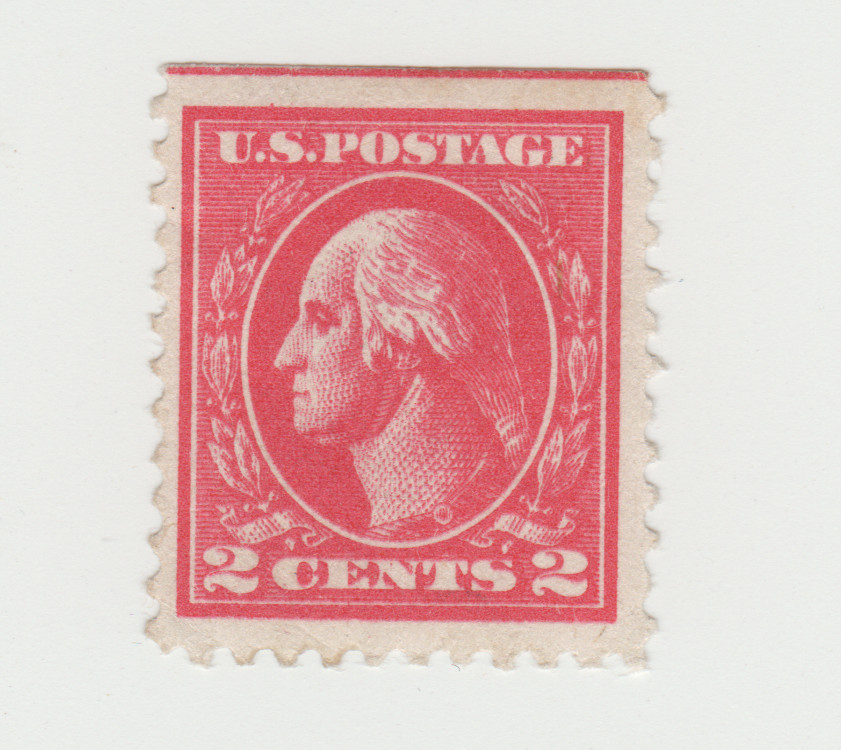 *** Moved by Staff to a more appropriate forum. *** *** Moved by Staff to a more appropriate forum. *** |
|
Send note to Staff
|
|
|
|
|
Pillar Of The Community
6363 Posts |
|
|
Your stamp does not have the perforation rate to be among the Scott 423 family of various compound perforations.
It appears to be a perf 11 offset printing, thus among the Scott numbers 526-528B. Yours looks most like type VII, 528B. |
Send note to Staff 
|
| Edited by John Becker - 12/20/2017 9:56 pm |
|
|
Pillar Of The Community
1375 Posts |
|
|
sorry for the red line question :-) - but do offset stamps panes also have guide lines, as I would supose now? I thought this would only be true for flat. |
|
Send note to Staff
|
|
|
Pillar Of The Community
United States
2547 Posts |
|
|
Valued Member
United Kingdom
299 Posts |
|
|
Today I received the answer from a quick identification saying that it is Scott#528B.
Unfortunately, there are a few differences from the Scott#528Bs available online.
There is a single line 'S' watermark on my stamp while the 528B was printed on unwatermarked paper.
Design wise, the most obvious is the full dark circle around the eye on my stamp. Then, the ponytail string on my stamp has the upper two circles covered by three lines of hair, while the 528Bs have at most one.
So, I measured and compared the stamp with all three types of printing used for 2 cents 2 looking for signs of a stretched image due to rotary printing: no sign of it.
Finally, I went through all 28 pages of Arago looking at every single image and trying to find a similar dark circle around the eye. None of the remotely similar stamps are having such a strongly defined and complete dark circle around the eye.
The dark circle around the eye seems a design element meant to strengthen the shadow, not an improperly cleaned print plate. |
|
Send note to Staff
|
|
|
Pillar Of The Community
United States
8956 Posts |
|
|
aug-stamps, welcome to the forum. I am really surprised to see some very basic things missing from your attempt to ID this stamp. First no mention of perforations - it would help to know what you measured. Secondly a scan of the back of the stamp would go a long way. Also, why did you not go to http://stampsmarter.com where you find a great identification chart for these issues! Peter |
|
Send note to Staff
|
| Edited by Petert4522 - 12/21/2017 7:24 pm |
|
|
Moderator

United States
12330 Posts |
|
|
Valued Member
United Kingdom
299 Posts |
|
|
Hi Peter! I did check the chart from stampsmart. Also, the guide from http://dubinweb.com/USpostagestamps/twocents.html... and the descriptions and the high resolution images of several auction houses and usphila.com The dimensions: - printed image: h 155.6 mm x v 180.3 mm - between edges: h 181.7 mm x v 208.1 mm. Unfortunately, adding all the elements doesn't match any of the sources I checked. The printing guideline at the top (angle, cut, lack of parallelism with the image printed, no perforations etc) makes me suspect the stamp was positioned at the beginning of a trial sheet. That would explain the mint aspect, as well. Unfortunately, the gum is damaged because of repeated hinging, I guess. 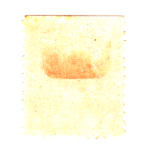 |
|
Send note to Staff
|
|
|
Valued Member
United Kingdom
299 Posts |
|
|
Pillar Of The Community

United States
542 Posts |
|
|
It definitely looks perf 11 with a straight edge at top. It also looks very much like an offset printing; I agree with John Becker who so identified it. If it really is a flat plate printing and it really is perf 11 with a single-line watermark, I think the only possibility is 461. What are the perforation measurements? |
|
Send note to Staff
|
|
|
Pillar Of The Community
1375 Posts |
|
|
this really looks like an offset stamp, my post above was not a try to tell it to be a flat stamp. I just asked about the red line as I wanted to know that. but your stamp, aug-stamps, is still an offset stamp. If you saw a lot of them you see it. especially the area around the eye (much ink) is just typical for offset stamps and one of the best and fast ID areas for that. I also would say it's type VII just as John at the beginning.
but of course it would be interesting to see a photo of the stamp in watermark fluid and you could show us the watermark. |
|
Send note to Staff
|
|
|
Valued Member
United Kingdom
299 Posts |
|
|
Hi All!
Today I had the watermarking checked by an acquaintance using Ronsonol: I was wrong about watermarks on the paper! What I took for a watermark is in fact just damage caused by the previous hinges, looking like a weak watermark when processing the image digitally :)
So, it is definitely a Scott#528B.
Please accept my apologies and thank you again for helping me!
Happy Christmas!
Augustin |
|
Send note to Staff
|
|
| |
Replies: 11 / Views: 3,607 |
|



 Posted 12/20/2017 9:24 pm


