| Author |
 Replies: 111 / Views: 23,116 Replies: 111 / Views: 23,116 |
|
|
|
Bedrock Of The Community
United States
10871 Posts |
|
|
If he did post one it would almost certainly prove the perfs to be the ordinary government issue. Even in this era there is a certain amount of variation; pins got bent, pins got broken, pins got worn, pins got replaced. The basic stamp is easily found used in large quantities, and I suspect that a series of comparisons to a few hundred would lead to finding several other stamps with the exact same perfs. |
Send note to Staff 
|
|
|
Valued Member
21 Posts |
|
|
Don,
I am confused. If the left vertical side has a width of 0 pixels & then you proceeded to cut the perfs off to add private perfs wouldn't they cut into the stamp? It would seem obvious that there would be no margin on the left side. Maybe I am missing something.
For the gent that claims there are hundreds of used # 303's that could achieve what was needed I find the comment interesting. I have asked both the Philatelic Foundation & APS to show an example of a # 303 that supports their position. To date, they have not been able to provide this photo/scan. They did show me photos of # 300 which I thought was rather clever since we know BEP had problems during the early changeover. The result was some super large stamps # 300's.
I am no expert but I believe # 300 is a little different than # 303!
|
|
Send note to Staff
|
|
|
Pillar Of The Community
United States
6480 Posts |
|
|
Quote:
I have asked both the Philatelic Foundation & APS to show an example of a # 303 that supports their position. To date, they have not been able to provide this photo/scan. And this is the fundamental flaw in your approach and why this issue is NEVER going to be resolved to your satisfaction! The philatelic standard is that an item must stend on its own merits, i.e., the burden is upon YOU to prove the item is what you claim it to be, whereas you are coming from the perspective that your word is good enough and the burden is upon EVERYONE ELSE to prove it isn't legitimate. That's not the way this works. Also, you have ignored REPEATED requests for high resolution images of the item in question, so all we have to go by are poor low-resolution images. If I didn't know any better, I'd say you were having a laugh at everyone's expense, just trying to see what contortions you can get people to jump through in entertaining your claims. |
|
Send note to Staff
|
|
|
|
Bedrock Of The Community
United States
10871 Posts |
|
|
Why would you expect the PF to have very many examples of such a common stamp to begin with? Even with the mint examples they have only certified 288 out of hundreds of millions issued. And to expect them to come up with one is illogical. As stated above, it's not up to the philatelic world to prove it fake, it's up to the item to prove itself genuine. It has in no way done so, and you have done nothing but post unsupported statements and a lot of if's to claim it is genuine. Post a high resolution scan or admit it's a fake. |
|
Send note to Staff
|
|
|
Bedrock Of The Community
United States
10871 Posts |
|
|
Pillar Of The Community
United States
6480 Posts |
|
|
Valued Member
324 Posts |
|
|
Ken,
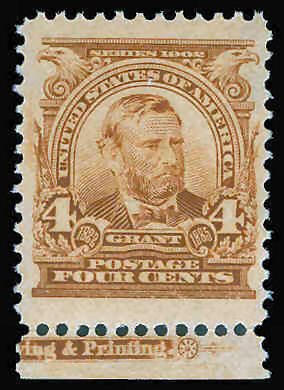
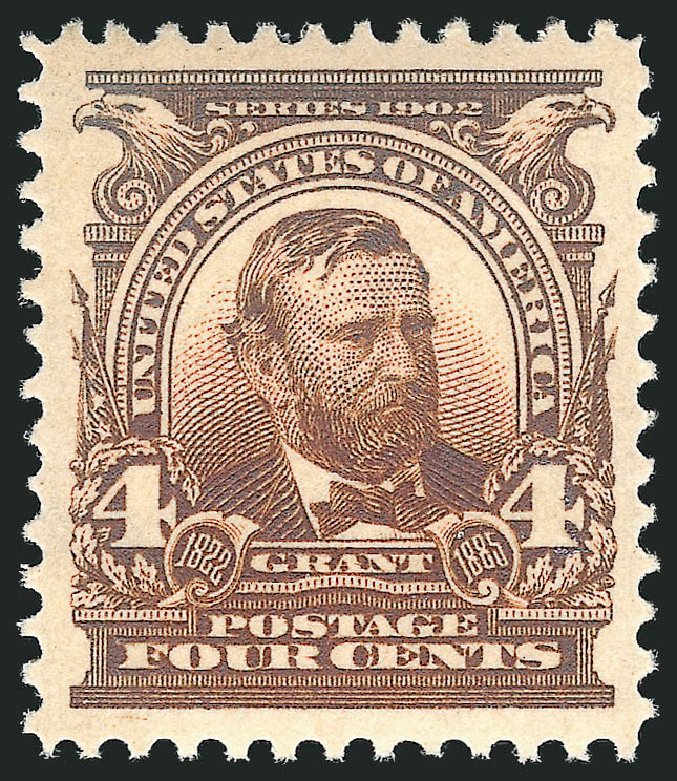
I believe what Don was demonstrating is that theoretically, there is enough spacing on the sides of the #303 to provide the perfs on your stamp--even if they are privately added. Obviously, the stamp he used to compare does not have enough space on one side for this. But, there is a total combined width of 40 pixels between stamp design and perforations on his test subject, compared to just 20 pixels for your stamp. That allows for 20 pixels of width to be trimmed off a better centered example to provide the perfs shown on your stamp. So his demonstration shows that your stamp COULD come from a trimmed #303--unless the combined diameter of the Bureau perfs and the private perfs exceeds a distance of 20 pixels.
Personally, I hope your stamp is what you claim. I'm always excited to see new discoveries. But so far, all I see is that at best you have an argument that IF an imperforate #303 got through the official production process and slipped outside of official channels (of which there is no proof as of yet), then your stamp could be made from that imperforate. There is still a gap between that and stating that the ONLY conclusion is that it was made from an imperforate. |
|
Send note to Staff
|
|
|
Valued Member
21 Posts |
|
|
Revcollector that is a beautiful stamp. What do you think it is worth today. Scott's Specialized suggests a CV 0f $1100. So some forger destroyed a stamp like this to create a cheap 4 cent stamp. I'm missing the logic.
By the way the right side perfs are only a little over 1mm...if you cut them off to make private perfs this stamp does not work.
For all forum readers the expert that got Scott's to state the private perf idea is probably Lawrence. This perception of private perfs is not a casual item. So in essence we have 2 APS experts & the Chairman of USSS Vending Machine Committee suggesting private perfs.
It is interesting that all forum readers are stating the same thing: I need to prove my stamp. However, everyone, but me, is giving the experts a pass. What they are saying is that my coil is a fake since there is a fictional # 303 that could be trimmed on 4 sides to make a coil with private perfs!
Lukusw...I know what Don was suggesting about the 40 pixels concept. The problem is finding the stamp that gives one that balance. So far no one has produced a stamp like that...I have been searching for 14 years.
|
|
Send note to Staff
|
|
|
Rest in Peace
United States
205 Posts |
|
|
I have asked both the Philatelic Foundation & APS to show an example of a # 303 that supports their position. To date, they have not been able to provide this photo/scan.
According to the certificates issued to you by the PF and APEX, their position CLEARLY is that the perforations on your "coil" are gauge 12 bureau perforations. Therefore, EVERY #303 supports their position! The fact that you reject the opinions of bodies of experts, whilst reminding us you are no expert, speaks volumes.
I am no expert but I believe # 300 is a little different than # 303!
Quoth Yoda, "That is why you fail." Before you reject the opinion of any expert or poster you must first understand that Scott #300 was perforated on the same equipment as #303, and reconsider your position accordingly. Do you think the BEP constructed one perforation machine for every denomination? NO! There was one for horizontal perforations and a second for vertical perforations. That's why all the denominations have designs of the same dimensions - to keep from having to adjust the perforation wheels when changing denominations! Therefore, given a single #300 exists that demonstrates adequate margin size that would allow fake perforations to be added, the whole theory that this particular 4-cent stamp had to have been issued imperforate is summarily debunked, having been perforated on the same equipment.
If you had mentioned from the start that you were furnished, at your insistence, a #300 having margins that could have been fashioned into a similar stamp as yours, and you still refuse to believe the experts (while accusing them of ignorance and conspiring against you), we could have avoided several pages of actually trying to help you out. |
|
Send note to Staff
|
| Edited by Tipzi - 01/02/2018 9:14 pm |
|
|
Bedrock Of The Community
United States
10871 Posts |
|
|
Whatever it might be worth today has ZERO relevance to what it was worth in 1907, which was 4 cents. That statement is plain old obfuscation.
And YOU are the only one still talking about "private perfs", which is just a theoretical discussion in any case. The vending coil experts might well be talking about the possibility just because they are contrarians who love to badmouth PF opinions; the "possibility" with no proof is just talk. Come up with a specific company who produced them. Come up with more examples that match exactly.
Without proof and a large high resolution image there is NO reason to believe in the fantasy of some kind of "private perfs". They are simply scissor cut on the right and damaged on the left and they are normal government issued perfs until PROOF exists that they are anything else. |
|
Send note to Staff
|
|
|
Moderator

United States
5109 Posts |
|
|
Valued Member
324 Posts |
|
|
Pillar Of The Community
United States
4189 Posts |
|
|
Pillar Of The Community
United States
5471 Posts |
|
|
Pillar Of The Community
United States
1414 Posts |
|
|
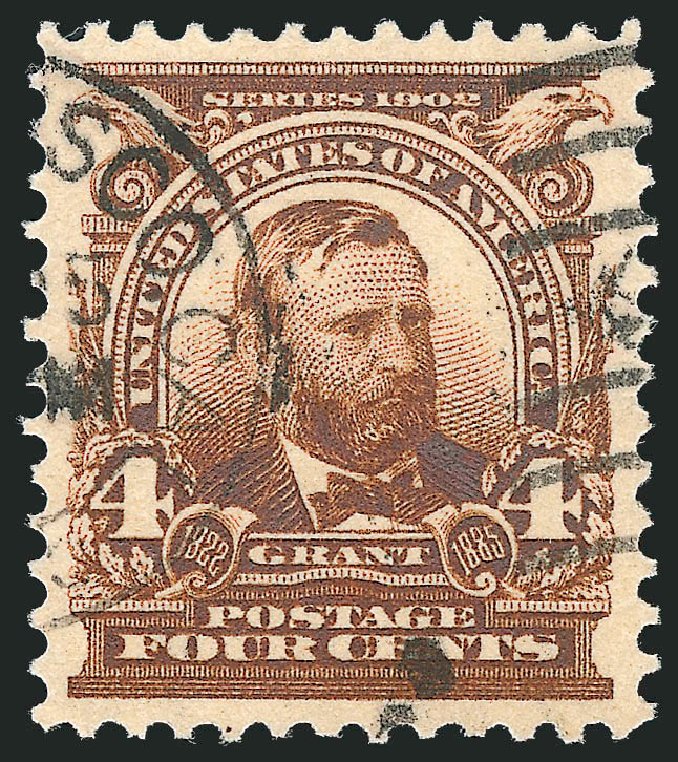
If the stamp is tall enough, this is the typical result. But, this stamp is not the expected 314A shade: 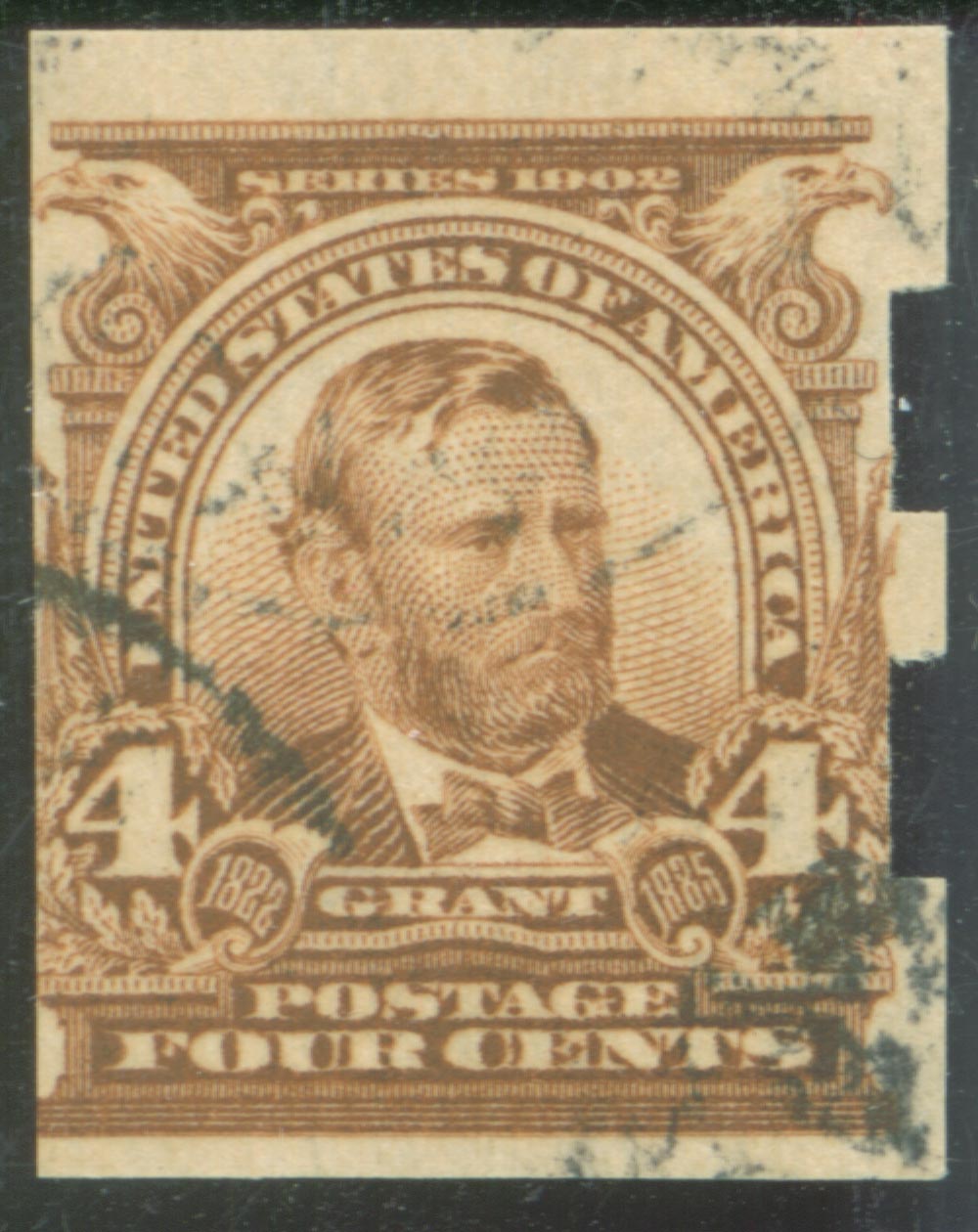 Another error buried in the over-long discussion above was the assertion that fixed knives were used to strip hand assembled coils. It is believed that cutting wheels were used to allow sheets perforated in one direction to be pushed through the device, probably a specially equipped perforator, that would produce strips to be pasted up into coils. When the Stickney coiling machines were finally ready, half sheets were pasted up into rolls that were then pulled over fixed knives allowing the resulting coils to be wound. This forced an immediate change from perf 12 to perf 8½ to avoid breaking the rolls. It is time to end this. |
|
Send note to Staff
|
|
|
Replies: 111 / Views: 23,116 |
|




 Posted 01/02/2018 5:11 pm