| Author |
 Replies: 26 / Views: 5,284 Replies: 26 / Views: 5,284 |
|
Pillar Of The Community
1375 Posts |
|
|
hello, I don't know anything about those stamps, but they were on one page of an old US album, so I would like to ID them. I found in an old Michel catalogue and on stampworld that they are from 1902 (blue green) and 1904-10 (light green). They all have the correct watermark. I would say that the first three are blue green (turquoise), and the others all light green? Or are there more than two catalogue numbers for them? I also see three stamps with a more darker yellow green there. And were they also used in New Zealand? (Auckland cancel) 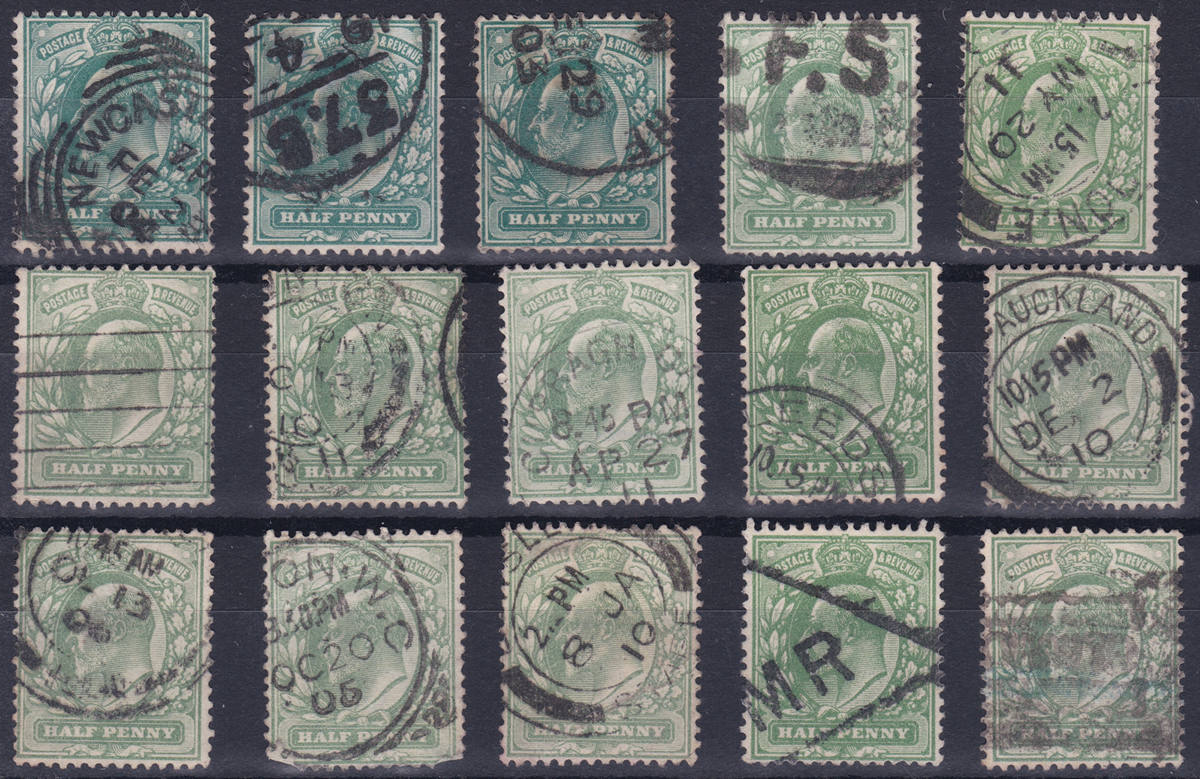 |
|
Send note to Staff
|
|
|
|
|
Pillar Of The Community
United Kingdom
3220 Posts |
|
|
Hi Stamperix,
The "Auckland" postmark in full will have been "Bishop Auckland", a town in County Durham. |
Send note to Staff 
|
Nigel |
|
|
Pillar Of The Community
Canada
4648 Posts |
|
|
I believe the cancel with "FS" was for the "Foreign Section" and the triangle with the "MR" was used by the "Manchester Railway"? Maybe some member with British postal history expertise can clarify this?
Chimo
Bujutsu |
|
Send note to Staff
|
|
|
Bedrock Of The Community
Australia
38679 Posts |
|
|
Yes "FS" = Foreign section, Postmarks printed matter.
MR= Telegraphic code for Manchester...not Manchester railway.
|
|
Send note to Staff
|
|
|
Pillar Of The Community
1375 Posts |
|
|
thank you all, but to begin with the more basic things :) - which SG numbers would they be? Are there two SG numbers for those, so two colors, or more?
(anyway I am glad to find interesting cancels there.) |
|
Send note to Staff
|
|
|
Pillar Of The Community
Australia
3299 Posts |
|
|
There are two different printers of these stamps. The first was by De La Rue 1902-1910 and the second by Harrison & Co in 1911. There are four main shades of the first printing and five of the second. Picking the printings apart can be difficult. The first 3 are blue-green. The 5th stamp 1st row and 4th stamp 2nd and 3rd rows are a different shade than the others. The first stamp 1st row is a squared circle postmark of Newcastle-On-Tyne. The third stamp 2nd row looks like it's postmarked Curragh Camp, a military college in County Kildare in Ireland and a nice find thus! The first stamp 2nd row is a machine cancel. The second stamp 3rd row is a London squared circle postmark. The WC stands for Western Central. Hope this helps  |
|
Send note to Staff
|
|
|
Pillar Of The Community
United Kingdom
3220 Posts |
|
|
Hi Stamperix,
There are quite a few listed in SG Part 1:
De La Rue printing:
Perf 14:
SG 215 - dull blue-green
SG 216 - blue-green
SG 217 - pale yellowish-green
SG 218 - yellowish-green
Harrison printings:
Perf 14:
SG 267 - dull yellow-green
SG 268 - dull green
SG 269 - deep full green
SG 270 - pale bluish-green
SG 271 - bright green
Perf 15x14:
SG 279 - dull green
SG 279a - deep full green
|
|
Send note to Staff
|
Nigel |
|
|
Pillar Of The Community
1375 Posts |
|
|
thank you both, that was helpful. Now I know more about this and can search for the correct ID. I also think that the three mentioned stamps have another green and also a bit blurry printing. Also interesting to get the information about the cancels.
As I see and measure, no stamp is 15x14, so it can be De la Rue or Harrison. I didn't expect to get so many SG numbers, but it seems to be an interesting area, like the Washington Franklins in the US. So I will for sure get more knowledge there.
So am I right that all stamps should have perf 14 then? Do I need a special British perforation gauge? I only ask as some of the shown stamp have at least one side perf 13.5, like the one with the possible Curragh Camp cancel which is perf 14, but 13.5 at the top.
|
|
Send note to Staff
|
| Edited by stamperix - 01/10/2018 4:40 pm |
|
|
Pillar Of The Community
Norway
1661 Posts |
|
|
I am curious about the odd cancellation on the 2nd stamp from left on 1st row. '37.B' - what kind of postmark is it? |
|
Send note to Staff
|
|
|
Pillar Of The Community
Australia
3299 Posts |
|
|
So am I Blaamand but I haven't the faintest idea!
Stamperix, the perforation variation most probably falls into the old perf 13½, 14 definition, whereby any natural variance is rounded up and called perf 14. This standard was adopted in the UK in 1929 or thereabouts. There are 12 perforations on the top and bottom of that stamp, which is another good guide.
No need for a British perforation gauge (I'm not sure such a thing exists!) - all perforation measurements are universal ie: number of perforations in 2 centimetres. |
|
Send note to Staff
|
|
|
Pillar Of The Community
United Kingdom
3220 Posts |
|
|
Hi Blamaand and Bobby,
I think the "37.B" is a London Newspaper Branch mark.
It's similar is style to the example with "27" in Collect British Stamps.
|
|
Send note to Staff
|
Nigel |
|
|
Pillar Of The Community
Norway
1661 Posts |
|
|
Bedrock Of The Community
Australia
38679 Posts |
|
|
37B = Handstamps used at District, Branch and suburban offices, for Printed Matter
Should be 27mm single line outer ring
The "B" indicates it is a small office, that came under a Branch office.
Highest recorded number is B59
Hammer is Code / Date / Time, within single line ring.
|
|
Send note to Staff
|
|
|
Pillar Of The Community
1375 Posts |
|
|
thank you again. I made another scan with the most interesting cancels, also some other I found. About the perforation: it seems that for this stamps the horizontal and the vertical perforation sometimes is not exactly the same. Vertical is 14, but horizontal is a bit different for even most of the stamps I checked. Seems to be normal. Still the Curragh Camp is different again, as sides and bottom are nice perf 14, but top is 13.5. So are there perforation differences in the specialized catalogue(s)? 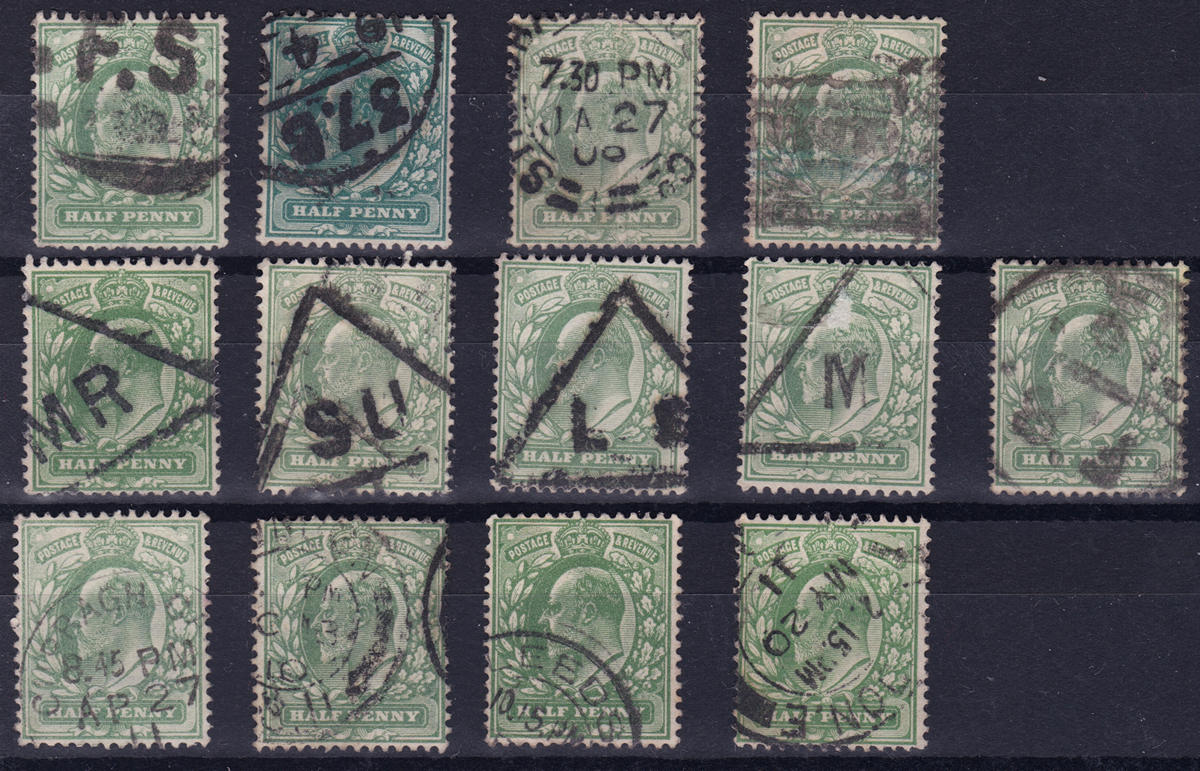 |
|
Send note to Staff
|
|
|
Bedrock Of The Community
Australia
38679 Posts |
|
|
Pillar Of The Community
United Kingdom
3220 Posts |
|
|
Hi stamperix, The top and bottom perfs of your Curragh Camp stamp seem to me to have the same measurement. I've made two identical copies of the image of the stamp, placed one on top of the each other with one rotated by 180 degrees: 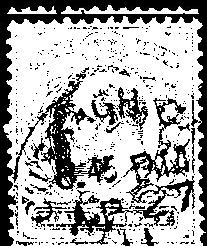 I get the same result when I measure the perfs directly on the computer screen. |
|
Send note to Staff
|
Nigel |
|
|
Replies: 26 / Views: 5,284 |
|



 Posted 01/10/2018 09:20 am


