Stamp Community Family of Web Sites
Thousands of stamps, consistently graded, competitively priced and hundreds of in-depth blog posts to read


Stamp Community Forum
 
Username:
Password:
Save Password
Forgot your Password?

This page may contain links that result in small commissions to keep this free site up and running.

Welcome Guest! Registering and/or logging in will remove the anchor (bottom) ads. It's Free!

Paper Mesh And Design Sizes Of The 1861 Reissue (1875)

 
To participate in the forum you must log in or register.
Author Previous TopicReplies: 4 / Views: 2,105Next Topic  
Pillar Of The Community

1375 Posts
Posted 01/29/2018   06:14 am  Show Profile Bookmark this topic Add stamperix to your friends list Get a Link to this Message
Hello,

I know that the reissue of the 1861 stamps has very white paper, detailed impression and intensive colors (some specific). But still I wonder about the paper. I learned that the paper mesh and the design sizes of the 1869 (re)issue can be differentiated (see below although the size information is not coherent).

So what about the 1861 (re)issue, two questions I would have:

- is there anything known about different paper mesh?
- wouldn't the paper mesh be responsible also for the different design sizes (do they come from the shrinkage?)

---
Information by Bill Weiss about paper mesh for the 1869 reissue:
https://goscf.com/t/14150&whichpage=4#299272

Answer by Tipzi about my recent question:
https://goscf.com/t/57796#513116

Answer by Phil R about size of 1869:
https://goscf.com/t/14150#156219

Article by Hahn about the 1869 paper mesh:
http://www.nystamp.org/postal-histo...the-inverts/
Send note to Staff

Rest in Peace
Netherlands
963 Posts
Posted 01/30/2018   12:55 pm  Show Profile Bookmark this reply Add Galeoptix to your friends list  Get a Link to this Reply
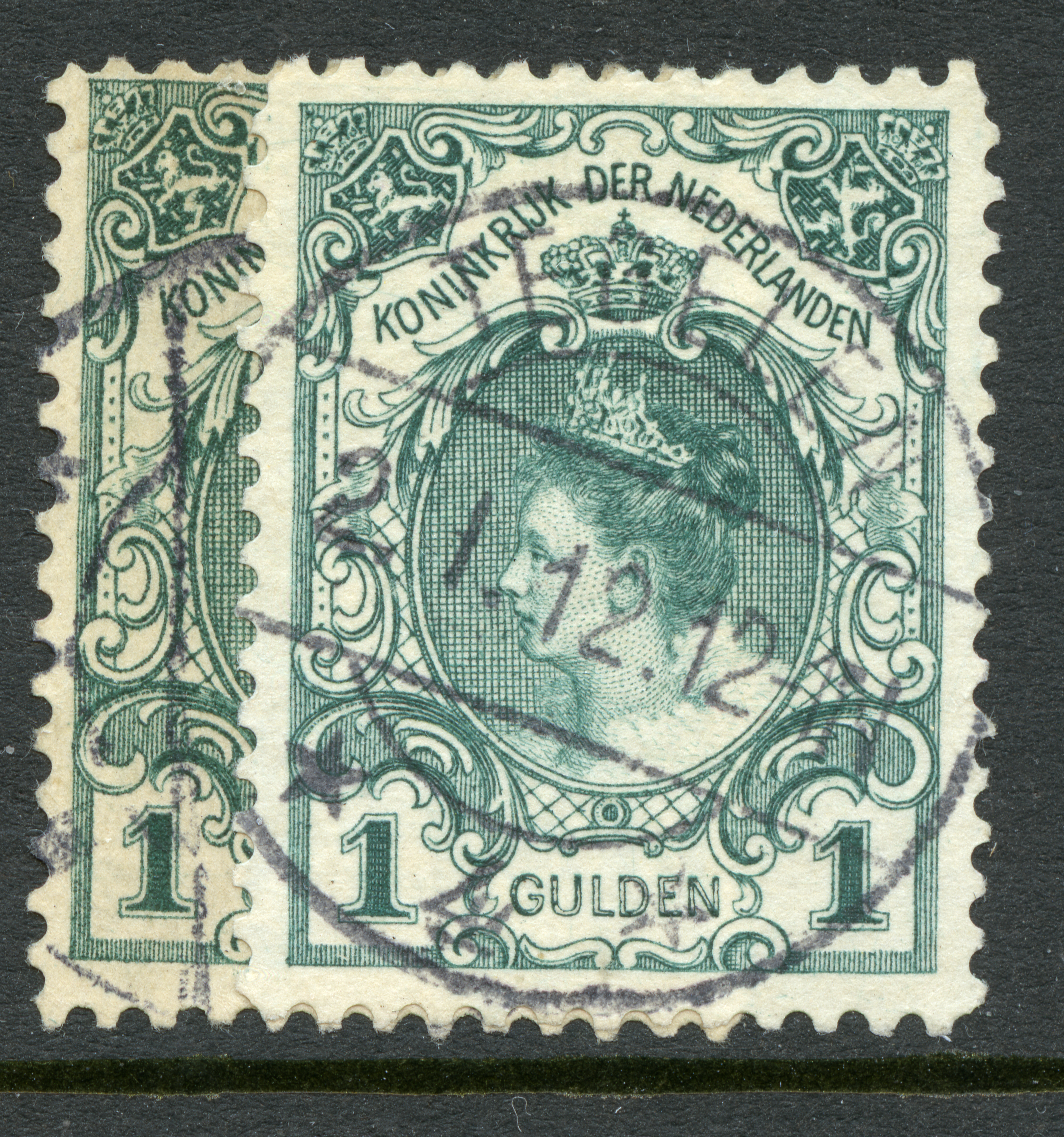
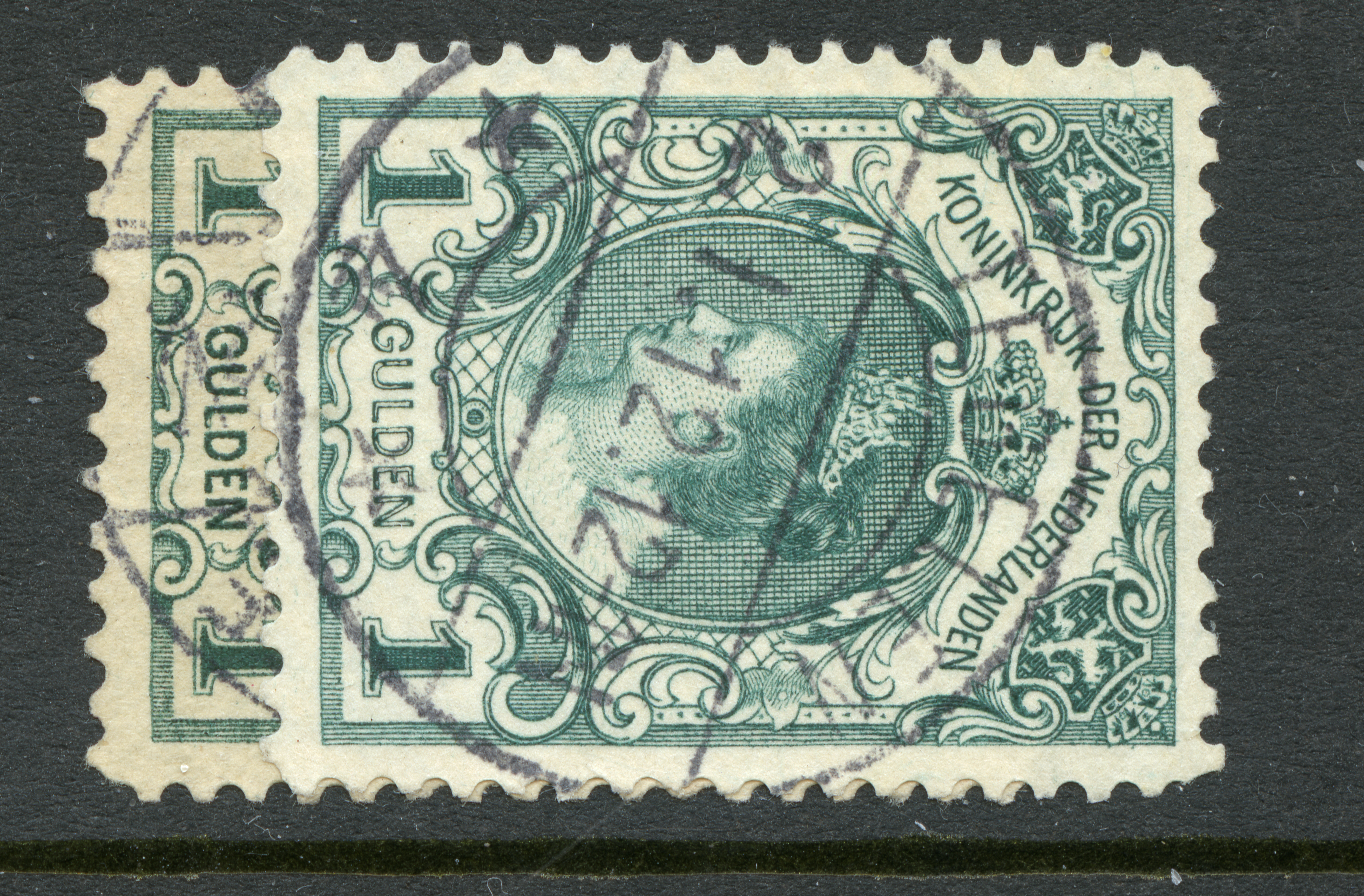
The direction of mechanically made paper always can be established it being either horizontal of vertical. In the days before 1938 the mesh is always symmetrical - so-called linenbinding.

And also because recess printing neeeded paper that was more or less wet, the wet paper's fibres grew thicker [hardly ever longer!]. After the printing the paper was dried and the fibres full of water got thinner! And so th esize of the stamp design changed! I.e. it shrunk a bit in comparison with the original size of the plate/cylinder.

Stamps with the direction of paper vertical got narrower than its width on the original plate/cylinder, stamps with the direction of paper horizontal got less high than its height on the original plate/cylinder.

So, with 2 apparently the same stamps printed in (wet) recess with one being higher AND narrower than the other one, it will result from its having the vertical direction of paper - the other stamp will have the horizontal direction of paper!


Send note to Staff  Go to Top of Page
Pillar Of The Community
United States
3166 Posts
Posted 01/30/2018   3:22 pm  Show Profile Bookmark this reply Add littleriverphil to your friends list  Get a Link to this Reply
"a very white hard paper" is about all the description given by Calvert M. Hahn in his 1998 Cornicle article on The 1861 Special Printings: A Philatelic Key, which would be the re issues.

http://chronicle.uspcs.org/PDF/Chro...81/11866.pdf
Send note to Staff  Go to Top of Page
Pillar Of The Community
1375 Posts
Posted 01/31/2018   10:23 am  Show Profile Bookmark this reply Add stamperix to your friends list  Get a Link to this Reply
thank you both.

that's interesting, Galeoptix. I suppose your "paper direction" is the same what I called "paper mesh" and also the same as "paper grain"?

So I had a closer look at some stamps in the Siegel database, and indeed, as Tipzi already said in the other thread, all the stamps from the 1861/1875 reissue are more square, so less high. You can even see it just looking at them, but I also compared all 1861 denominations in Photoshop with overlays, and they are all shorter and more square. So there is no difference for higher or lower denomination. When I understood you correctly, Galeoptix, this means that the 1861/1875 reissue has another paper mesh than the normal 1861 issue.

As the reissue of the 1861 is more square it would be horizontal mesh for all denominations vs. vertical mesh of the normal issue?

I also looked at the 1869/1875 reissue. For the lower denominations (2c, 3c) the normal issue is more square, while the reissue is narrower. For the higher denominations (e.g. 24c and 90c) I can't see any design size difference. But the 1869 reissue is not my topic here as it's easy to see if there is a grill or not as difference here.

By the way: also the grilled issues of the 1861 have different design sizes. You just have to compare the circle around the head of the 12c. A recent example of a possible Z grill here at SCF:
https://goscf.com/t/58975

So if the design sizes of the 1861/1875 reissue and also the grilled issue is because of different paper mesh, then also the grilled issue would have a horizontal mesh?
Send note to Staff  Go to Top of Page
Pillar Of The Community
United States
2555 Posts
Posted 01/31/2018   12:50 pm  Show Profile Check sinclair2010's eBay Listings Bookmark this reply Add sinclair2010 to your friends list  Get a Link to this Reply
Galeoptix, those image files seem to be unnecessarily huge. Any chance you can make them smaller?
Send note to Staff  Go to Top of Page
  Previous TopicReplies: 4 / Views: 2,105Next Topic  
 
To participate in the forum you must log in or register.

Go to Top of Page

Disclaimer: While a tremendous amount of effort goes into ensuring the accuracy of the information contained in this site, Stamp Community assumes no liability for errors. Copyright 2005 - 2026 Stamp Community Family - All rights reserved worldwide. Use of any images or content on this website without prior written permission of Stamp Community or the original lender is strictly prohibited.
Privacy Policy / Terms of Use    Advertise Here
Stamp Community Forum © 2007 - 2026 Stamp Community Forums
It took 0.14 seconds to lick this stamp. Powered By: Snitz Forums 2000 Version 3.4.05