One of the things I learned here, on SCF, is that the most constant element in identifying a stamp is the design. Anything else is subsequent to the printing of the design: paper, perforations, size etc. Studying and analyzing various large bank note stamps, I believe I found a particular mark, which along the years was ignored, most likely assumed to be caused by excess ink.
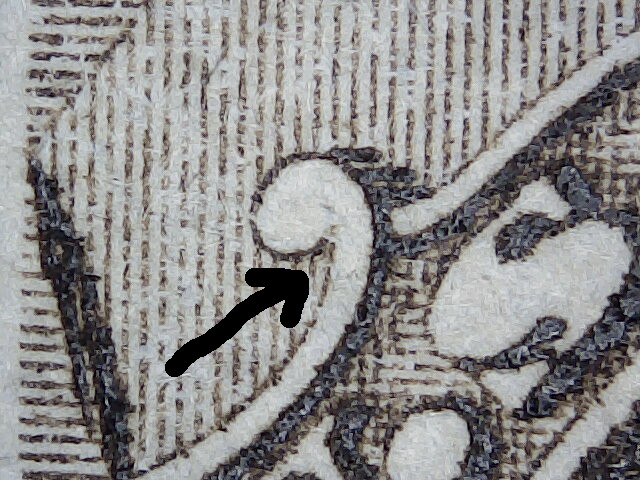
Below is a magnified image of this particular mark at the top of the first line under the left scroll on a 2c Jackson:
And here is the same area of a Scott#157 sold by Robert Siegel in 2014, with no trace of the above mark:

Before answering to this post, please check if any of your other A45 and A45a present such a line: it ends obliquely to the right, towards the point of junction of the scroll lines! Then, please look through the available higher definition images of Siegel Census and Arago, with focus on the issues printed from 1879 onwards.
Finally, please answer this question:
can this be a mark resulting from burnishing the plates used by American starting 1879 for producing again this design?
If your answer is 'yes' then please consider the following!
Some of the certified Special Printings have this particular detail, to a greater or smaller degree: at least three specimens are showing it clearly.
If this is a particularity of latest issues of 2c Jackson (after 1879) then how were the certified Special Printings assessed, please? Would this be a design detail able to qualify or disqualify the existing and future certifications?





 Posted 02/27/2018 11:21 am


