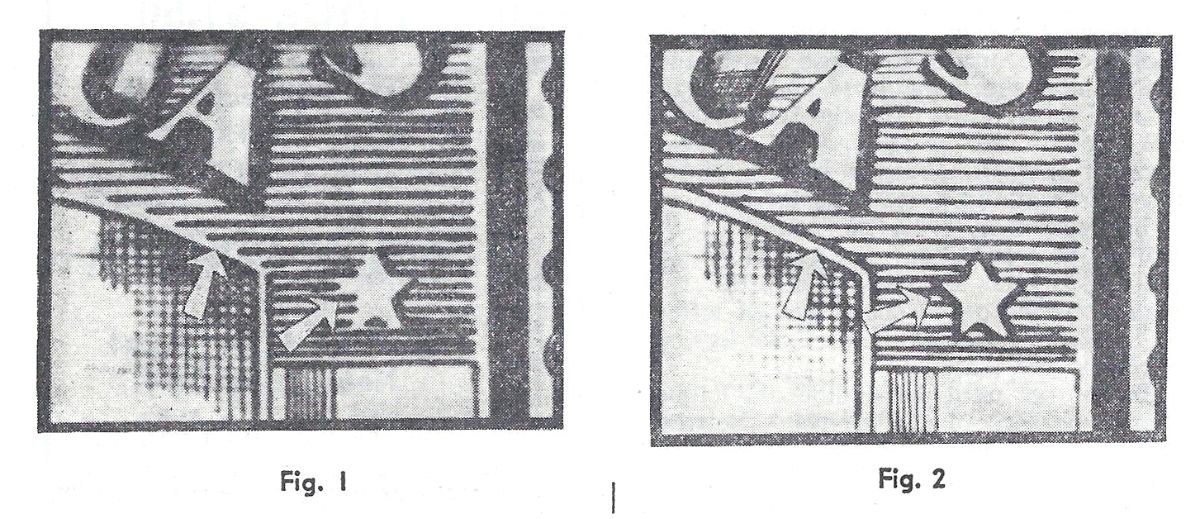
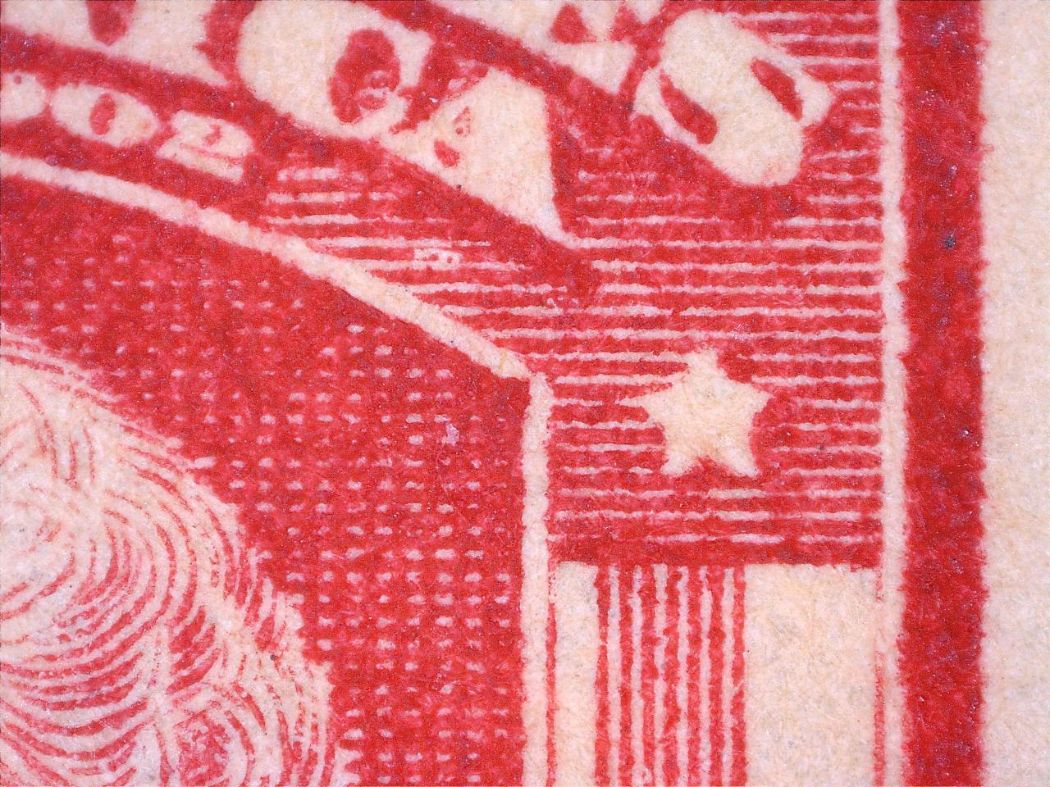
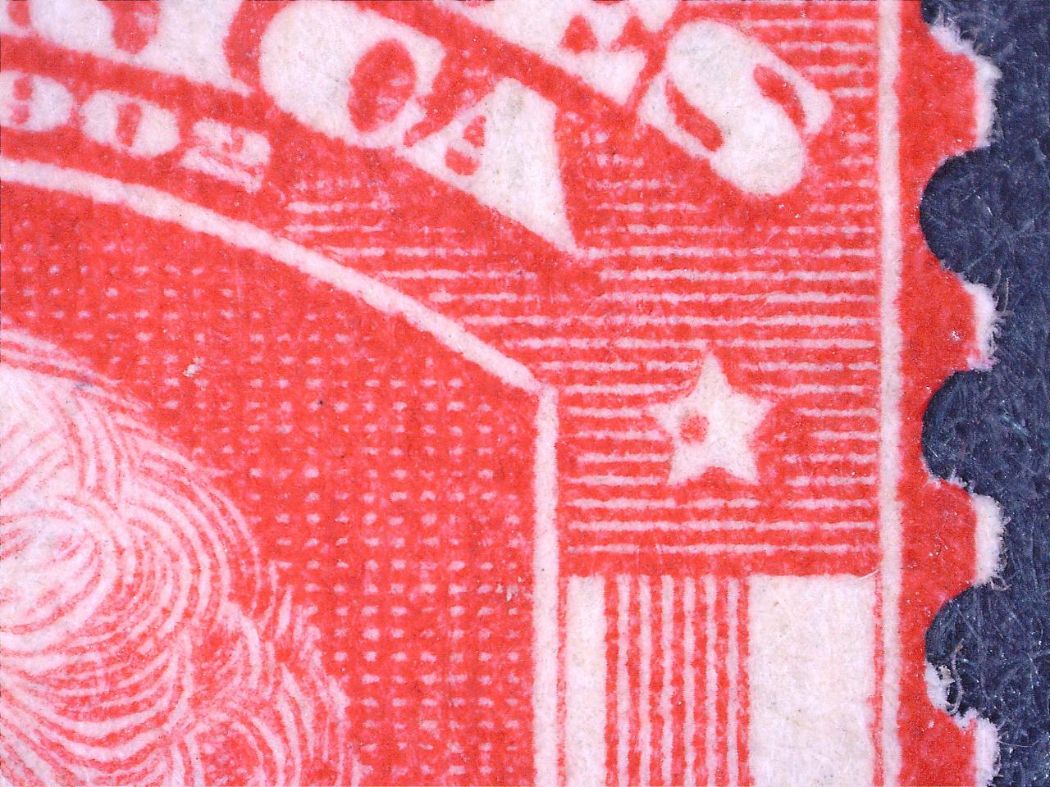
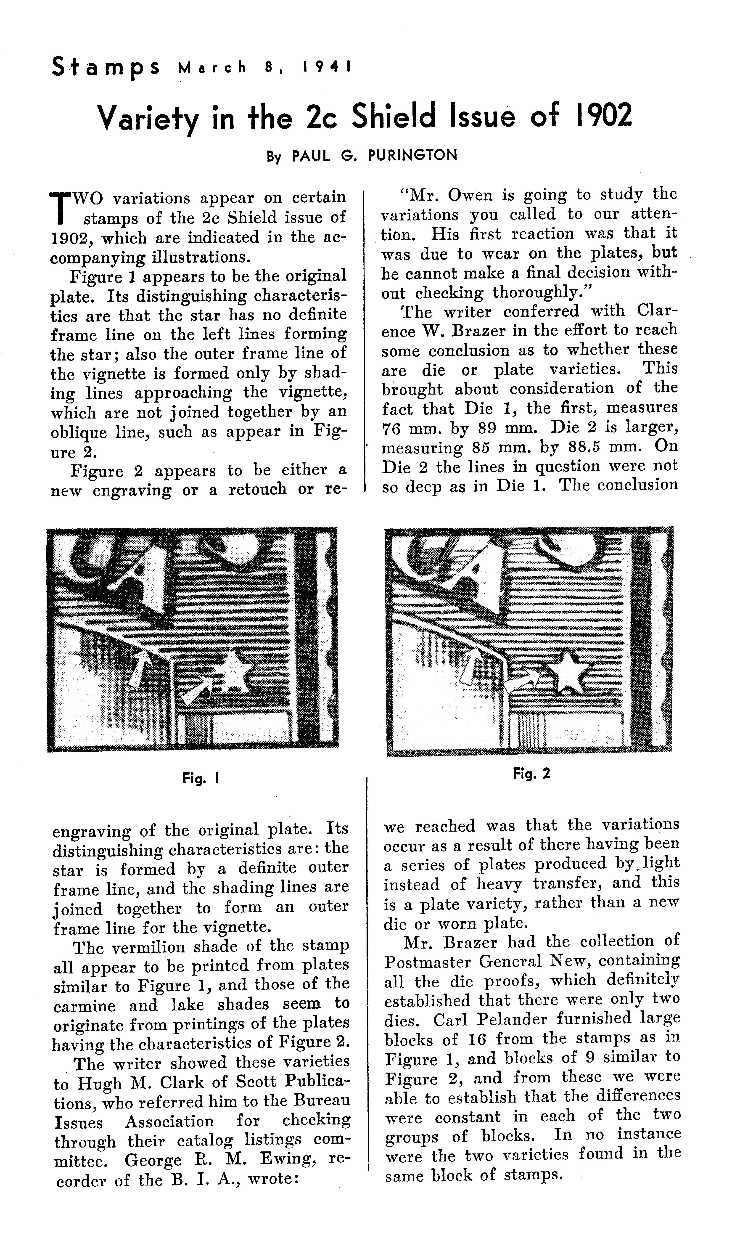
The October 1991 Bureau Specialist article "The 1903 2¢ Washington on Shield, Type I and Type II" By ROGER S. BRODY is the most complete and useful article describing the five differences between the type I and type II dies. The two major identifiers are listed in the Scott catalog. Three additional minor identifiers are not described by Scott and may not always be present. The Scott catalog is sufficient for identification unless both major identifiers are obscured.

It would take some time an a good scanner to produce color images of the quality found for the Washington/Franklin Issue to expand the "Types of the 2¢ Washington of 1903 - US 319" on Stamp Smarter:
http://www.stampsmarter.com/1847usa/1902/319.html
Additional information from Brody:
"Norbert J. Eich, while studying plate varieties of the stamp, noticed a constant difference between the early and late printings. Eich's review of Bureau records confirmed the use of a second die. His findings were first reported in the June 1937 issue of The Bureau Specialist."
"The Five Identifiers It is the author's opinion, having studied die proofs privately held as well as those in the Smithsonian's National Philatelic Collection, that only five differences exist.
Brazer's observations of the recut right vertical margin enclosing the oak leaf is incorrect. Die proof copies show that the oak leaf is enclosed within a fine outline on both the Type I and Type II varieties. Production printed stamps often do not exhibit this line on either of the two die varieties. This apparently results from insufficient impression from transfer roll to plate (observed to occur randomly on plate proofs) as well as ink starvation during the printing.
Thus, of the five distinct differences between the dies. two result from the omission of lines worn on the original die and not recut on the new die and three result from the addition of recut and enhanced lines.
The distinction between the worn and recut lines is important for accurate identification. Transfer rolls unable to reproduce Type I lines which had worn (flattened) over time produced stamps that appear, like all Type II stamps, without these lines. By definition, stamps which do show these lines must be Type I. The recut lines on Type II stamps, for reasons described earlier, may not show clearly and these stamps may appear to be Type I. Once again, by definition, stamps which show the recut lines must be Type II.
It should also be noted that, while the shading lines Eich observed above the T on the die proofs do appear to have been recut, it is virtually impossible to consistently detect the difference on production copies.
Usually no more than two or three identifiers are discernible, even with strong magnification. The suggested order of comparison illustrated in Figure 3 adopts the convention described by Brett6 categorizing the differences as major or minor (Figure 5).
Major Differences
These two differences usually are quite clear and distinct between the die types:
1. The inner-frame line at the lower left corner.
2. The left-side border line at the lower laurel leaf.
Minor Differences
These three are definite differences, but they are not always clear, as in the case of worn subjects, light lines or heavy lines in close proximity.
3. The left-side ribbon shading line.
4. The shading line left of the P in POSTAGE.
5. The background lines above the left tip of the T in TWO.
It would be useful if the five identifiers were described in current catalogs. At the very least, illustrating both major identifiers would greatly assist collectors in distinguishing between the two types."





 Posted 03/11/2018 3:46 pm