| Author |
 Replies: 19 / Views: 2,861 Replies: 19 / Views: 2,861 |
|
Rest in Peace
7742 Posts |
|
|
I was looking at one of my bank certificates and some thing does not look right... Look at the left edge of this stamp..NO overlap on certificate...Also the security punch hole looks like some one tried to align the 2 holes but did bad job..What do you think..FAKE..? Robert 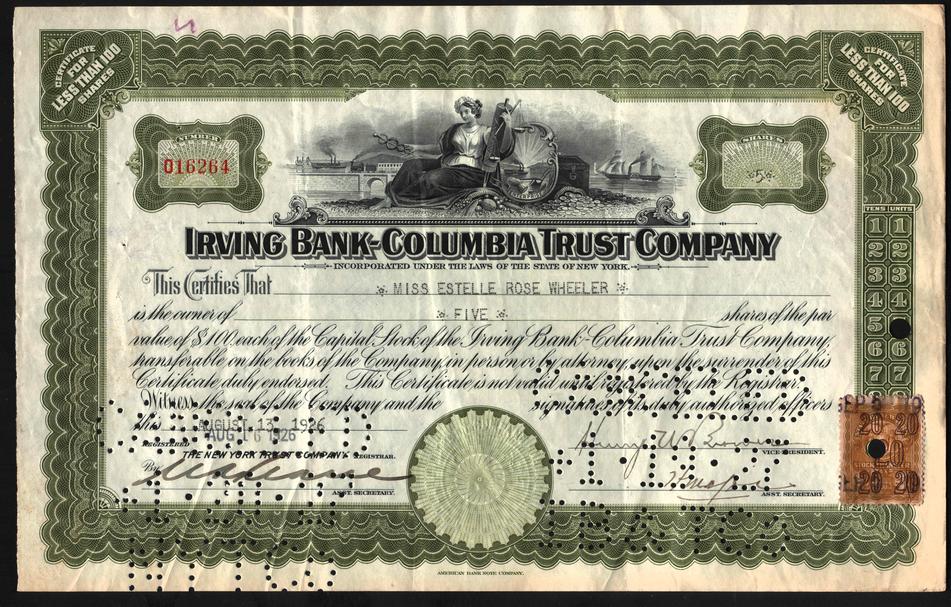 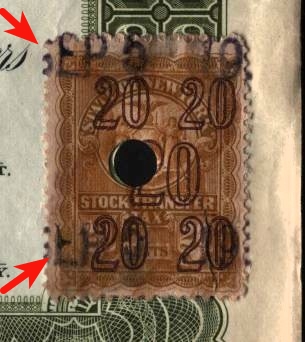 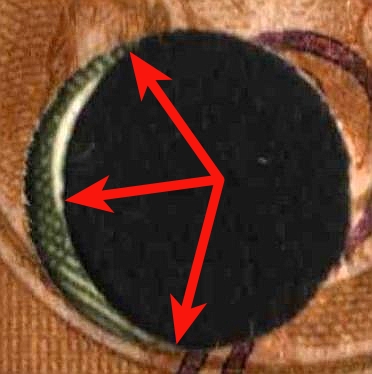 *** Moved by Staff to a more appropriate forum. *** *** Moved by Staff to a more appropriate forum. *** |
|
Send note to Staff
|
|
|
|
|
Pillar Of The Community
United States
8956 Posts |
|
|
I believe I go along with your prognosis Robert! Something does not look kosher here,
Peter |
Send note to Staff 
|
|
|
Bedrock Of The Community
United States
10870 Posts |
|
|
The stamp was probably cancelled as part of a sheet. And why would anyone bother to fake this, there is nothing scarce about it. |
|
Send note to Staff
|
|
|
Pillar Of The Community
United States
868 Posts |
|
|
On the one hand, I agree that there is no monetary reason to fake this, but ...
What is a stamp contemporary to 1910 doing on a certificate that was issued in 1926? The cancellation date should be the same as the issue date. It does not match, but is a few days off. Maybe, okay. I do not have the rate tables readily at hand, but the second area to explore is if this is the correct rate. In 1916 the rate was 2¢ per $100 face value of the certificate. That points to a transfer tax of 10¢ for five shares at $100 per share of face value. If the state tax was paid on the certificate, why wan't the federal tax (same rate) also paid there? I agree with the original poster that something doesn't seem to add up.
Perhaps someone else has the stock transfer rates for 1926 to confirm or explode my rate analysis. |
|
Send note to Staff
|
Ron Lesher |
| Edited by revenuermd - 07/27/2018 06:27 am |
|
|
Bedrock Of The Community
United States
10870 Posts |
|
|
Rest in Peace
7742 Posts |
|
|
Quote:
In 1922, it merged with the Columbia Trust Company, a New York State-chartered bank, creating the Irving Bank and Trust Company...Later, in 1926, it acquired by merger the American Exchange-Pacific Bank This means it was only Irving Bank for approx. 4 years..This share certificate was near th end of its pre merger with another company. So, having said that and yes I know it is not valuable, does the stamp look like it was faked..? Thanks, Robert |
|
Send note to Staff
|
|
|
Bedrock Of The Community
United States
10870 Posts |
|
|
Unless it was done by the people involved at the time for some reason I just can't imagine anyone bothering. |
|
Send note to Staff
|
|
|
Pillar Of The Community
United States
796 Posts |
|
|
possible use of a leftover stamp to cover (incorrectly) both taxes? other that that why bother? |
|
Send note to Staff
|
|
|
Pillar Of The Community
United States
868 Posts |
|
|
That series of stamps was replaced in 1913 by a single numeral in a large vertically oriented rectangle. Beginning in 1916 the vertically oriented stamps were replaced with a horizontally oriented design. To believe that this stamp was still in the broker or banks possession more than a decade after it was no longer in use is a BIG stretch in time. I agree with Dan that there is no philatelic motivation for putting that old stamp on this certificate, i.e., no financial gain. In its long journey to the collectibles marketplace, could it have fallen off another document and adhered to this certificate? |
|
Send note to Staff
|
Ron Lesher |
|
|
Pillar Of The Community
United States
670 Posts |
|
|
For a few dollars more...
After looking at a bunch of civil war photos, I got the impression that some of them had revenues attached after the fact. I don't know if that's true either, and in most cases it didn't bump the value much. Maybe enough to sell them for a few dollars. So maybe someone had documents with no revenues and vice versa? |
|
Send note to Staff
|
|
|
Rest in Peace
7742 Posts |
|
|
Well, this putting stamps on certificates that probably should not be there is apparently more common than I imagined...Found a few more in a box and this one has the same thing..stamp cancel not on certificate and on the stamp only..weird. Robert 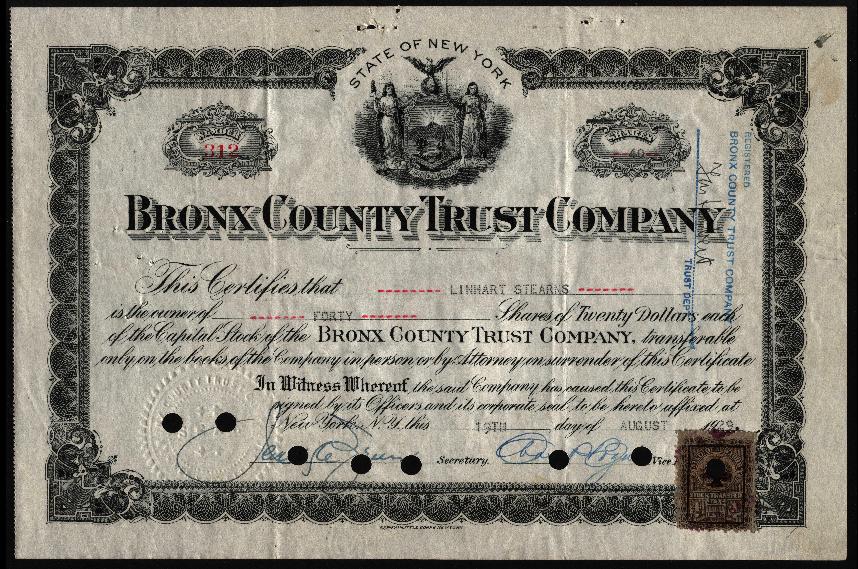 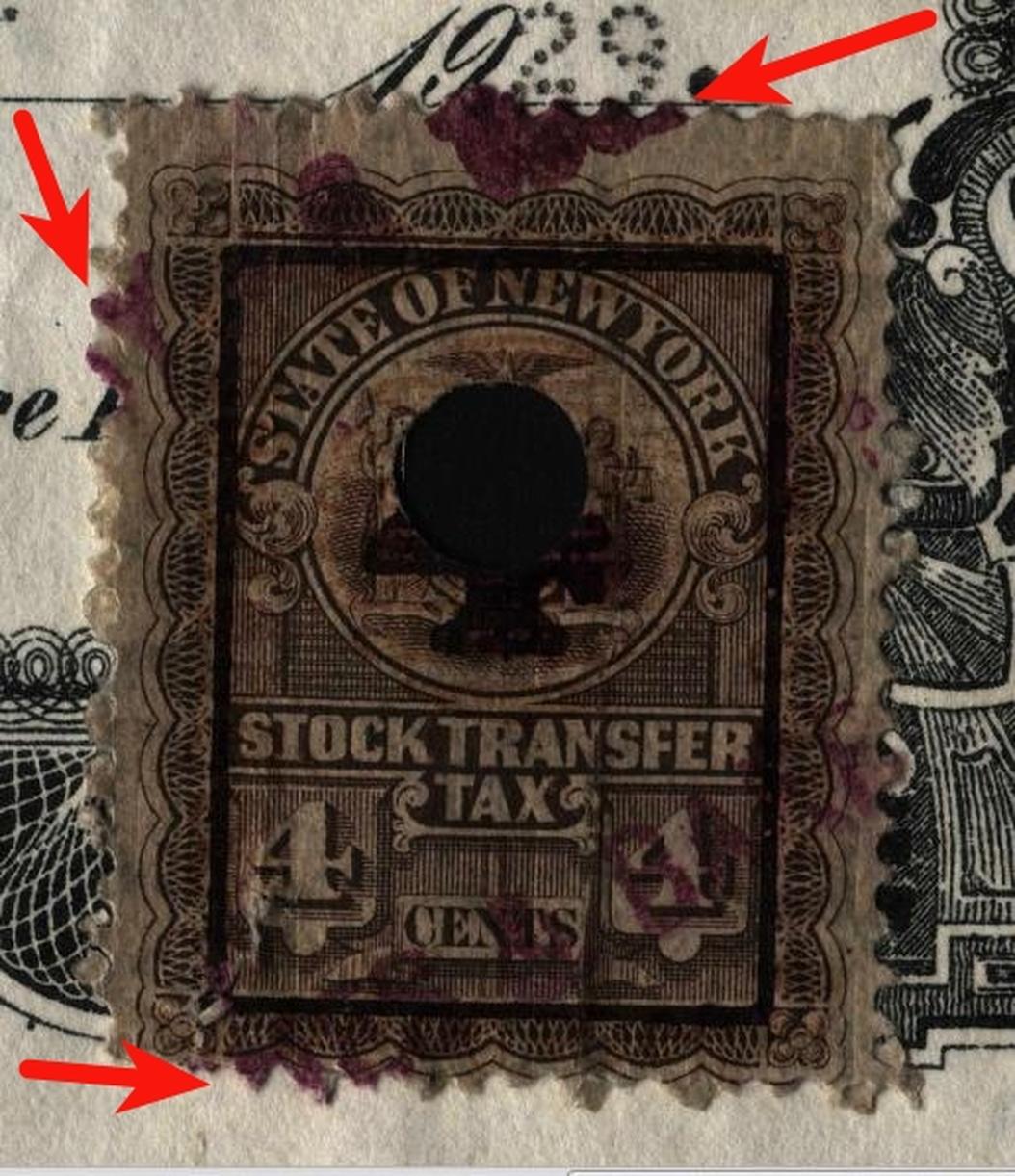 |
|
Send note to Staff
|
|
|
Moderator

United States
12330 Posts |
|
|
Hi Robert,
revcollector explained that, the stamps are 'precancelled'. The misaligned holes are a bit more puzzling.
Don |
|
Send note to Staff
|
|
|
Rest in Peace
7742 Posts |
|
|
Quote:
evcollector explained that, the stamps are 'precancelled'. Sorry I missed that Don..Bad me. Robert Thought I would show this certificate..Kinda neat..1874. I know it is no valuable, but neat..Got more of these..Keepers eh..? 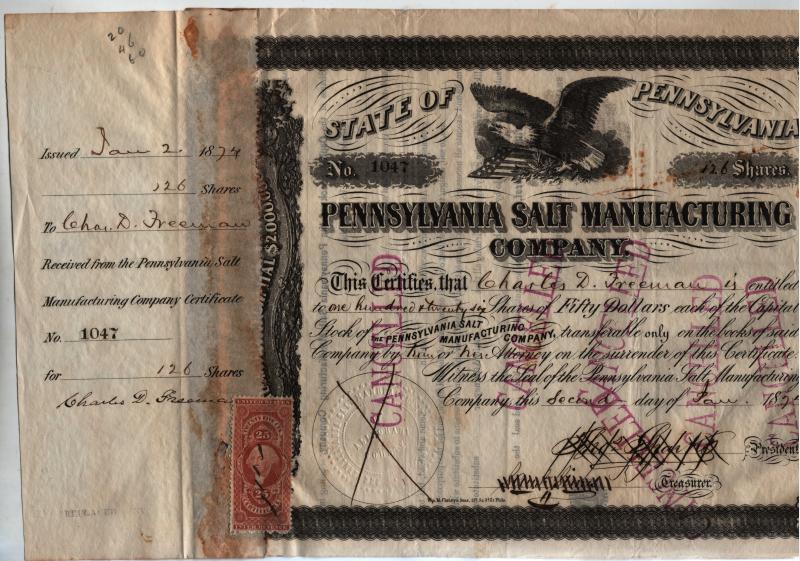 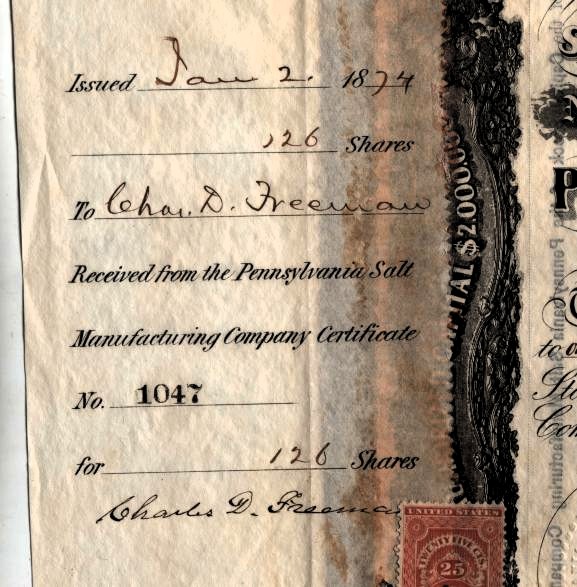 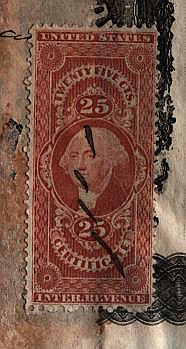 |
|
Send note to Staff
|
| Edited by wert - 07/27/2018 4:12 pm |
|
|
Pillar Of The Community
United States
868 Posts |
|
|
The stock transfer tax from the Civil War era ended October 1, 1872. The use of first issue stamps ceased about a year before, replaced by the second issue bicolor stamps. I see no reason why a 25¢ stamp should be tying a certificate to the stub if applied in 1874. Maybe you first issue collectors can offer an explanation.
As to the precancellation of the NY stock transfers, I have many examples where a perfin cancel is applied after the stamps are put on the document. The holes match! So I am not as confident as Bart is that this stamp was precanceled before application to the stock certificate. |
|
Send note to Staff
|
Ron Lesher |
|
|
Pillar Of The Community
United States
868 Posts |
|
|
I wish someone could confirm that 20¢ was the correct rate for NY stock transfers of five shares of par value $100. |
|
Send note to Staff
|
Ron Lesher |
|
|
Pillar Of The Community
United States
6480 Posts |
|
|
Quote:
I agree with Dan that there is no philatelic motivation for putting that old stamp on this certificate, i.e., no financial gain. Ron, I think you mean you agree with Bart. I'm Dan. *waves*  revcollector vs. revenuecollector... can't imagine why it would it would be confusing.  For the record, this Dan agrees with the other Dan and the Ron.  |
|
Send note to Staff
|
|
|
|
Replies: 19 / Views: 2,861 |
|




 Posted 07/26/2018 9:44 pm




