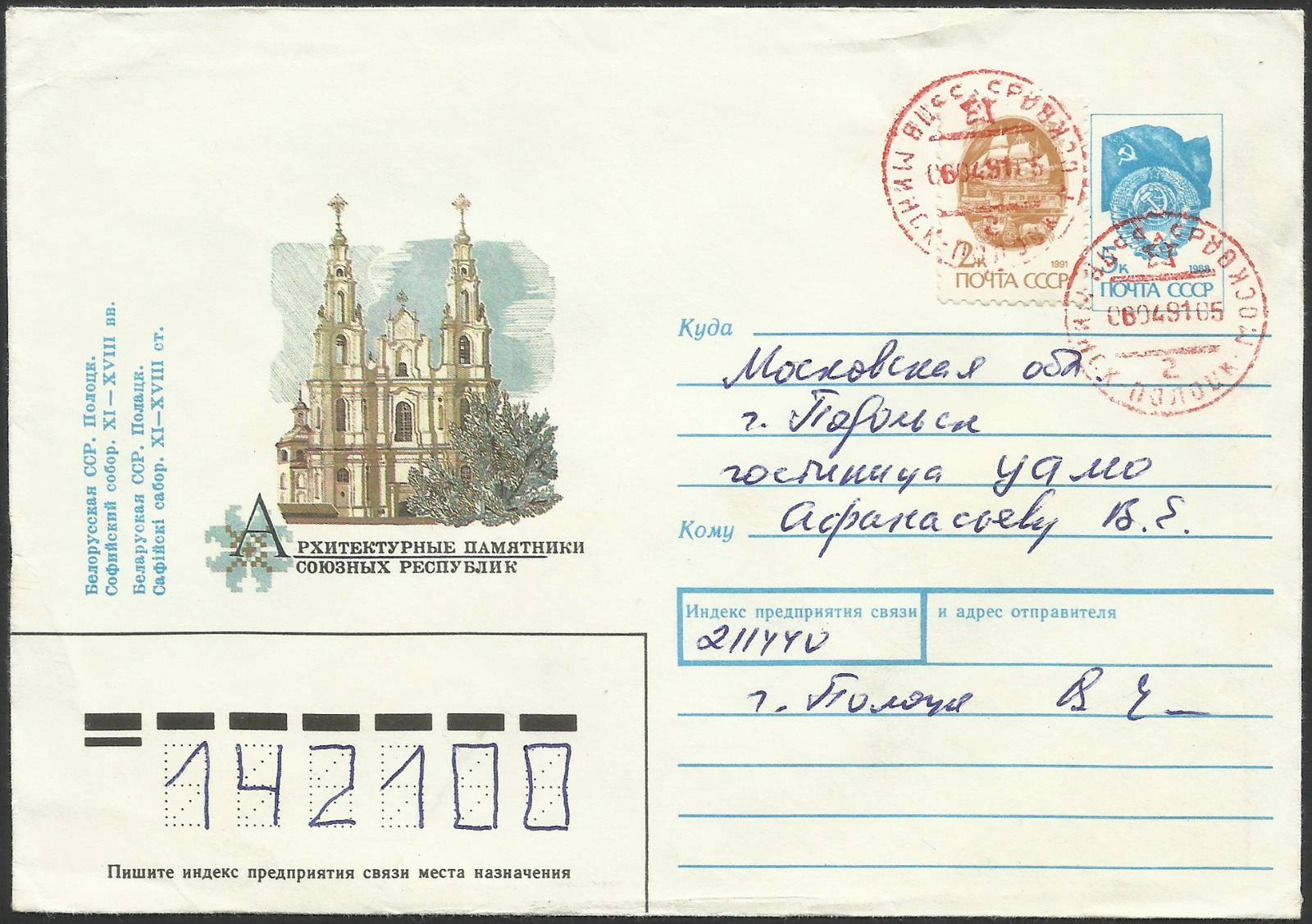
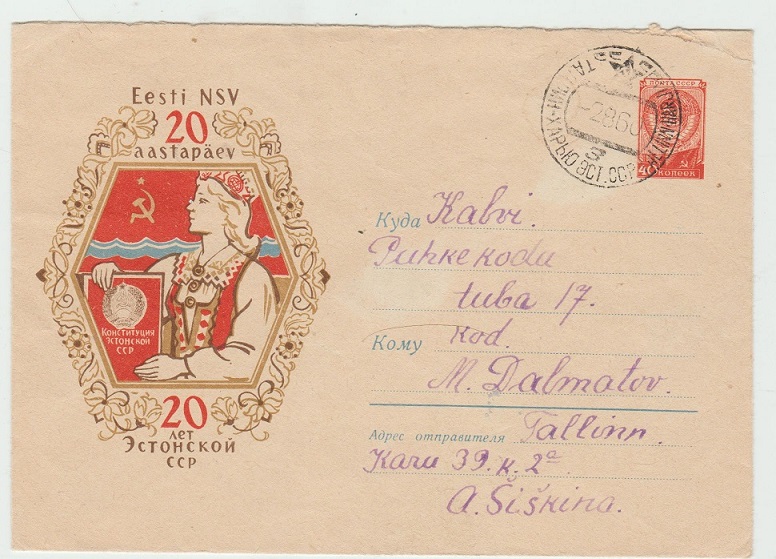
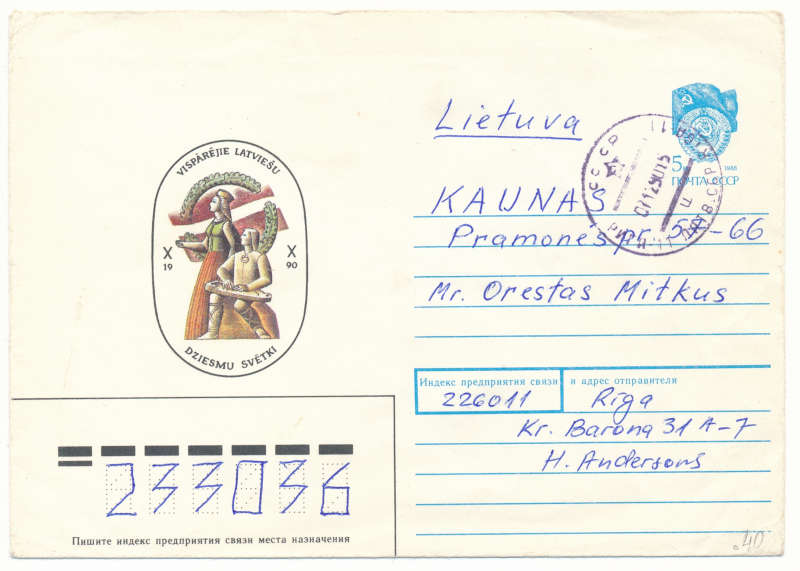
This post is meant as an introduction to postal stationery covers from the Soviet Union as they were issued from the first half of the 1950s until the Soviet Union ceased to exist. The covers shown in this post were intended for domestic use, i.e. for destinations within the Soviet Union and other communist countries around the world. Postal stationery covers intended for registered domestic use and for destinations outside the communist block also exist, but are not shown in this post.
First of all a short description on how a Soviet postal stationery can be recognized.
Soviet postal stationeries have an imprinted postage stamp in the upper right corner. The postage stamps can be of either a definitive series or of the commemorative kind. This post will focus on the different definitive series.
In the lower right corner there are lines printed to where the address of the recipient is to be written, below this the address of the sender. Some Soviet postal stationeries were issued plain, i.e. without any images printed to the stationery. This post is about the Soviet postal stationeries that have an artistic image printed on the left side of the cover.
Information on who issued the postal stationery, the date it was commissioned, the price of the stationery and the artist of the image is printed to the backside of the stationery cover.
In the late 1960s a six-digit postal code indexation was printed under the artistic image in the lower left corner of the postal stationery cover. This indexation was to be filled out by the sender, indicating the recipients postal code (ZIP code).
Soviet postal stationeries were printed in large volumes. The ones with artistic images were issued with tens of thousands of different images. Some of them are pure propaganda while others show scenes of the different Soviet republics and their cities, landscapes. For a topical collector there is always an interesting Soviet postal stationery to spice up a collection. The following images are scans taken of Soviet postal stationeries from my collection: "
Lettonica - related to but not issued by Latvia".
The first postal stationery cover is of the earliest series from the 1950s. The imprinted postage stamp has 40 kopecks as face value, which is the only imprinted postage stamp that does not indicate a year. It shows the Soviet coat of arms. The stationery cover is from 1960 (28/VI-60) and the image commemorates the 20th anniversary of the Latvian SSR, showing it's flag, coat of arms and a panoramic view of Riga.

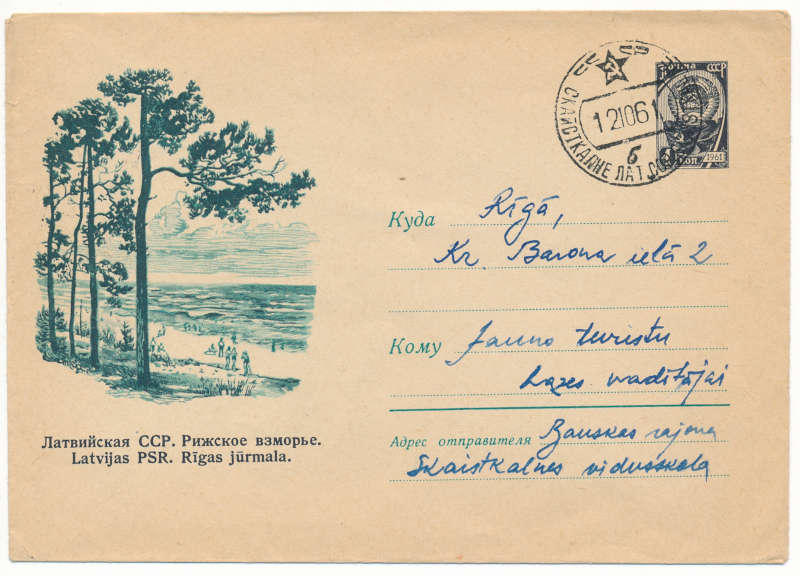
The second postal stationery cover is of the 1961-series. The imprinted postage stamp has 4 kopecks as face value (the Soviet ruble was redenominated in 1961) and shows the Soviet arms and flag. The stationery is from 1961 (17/VI-61) and shows a view of the beaches at Riga.
The third postal stationery cover is of the 1966-series. The imprinted postage stamp has 4 kopecks as face value and the the Soviet arms, hammer and sickle. The stationery is from 1971 (20/VII-71) and shows a view from the Ethnographic Open-Air Museum in Riga.
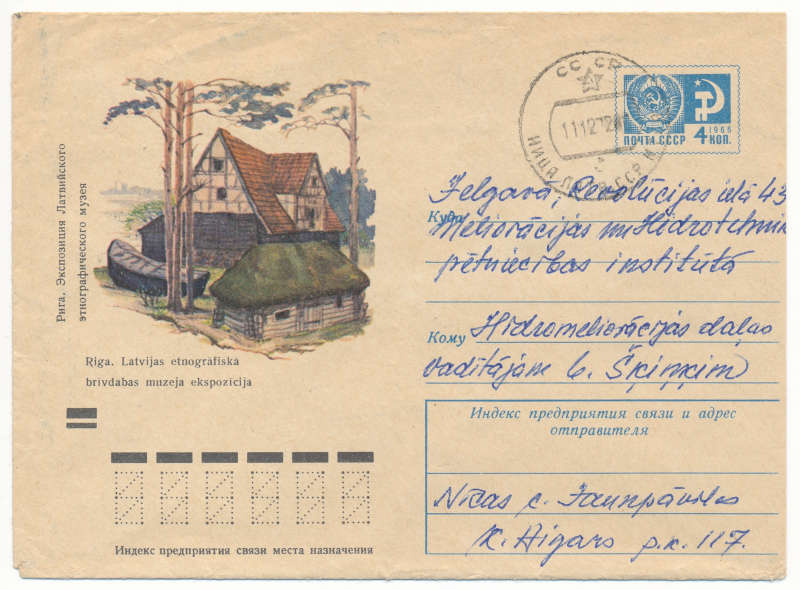
The fourth postal stationery cover is also of the 1966-series. The imprinted postage stamp has 6 kopecks as face value (airmail) showing means of transport. The stationery is from 1973 (5/VI-73) and commemorates the 100th anniversary of the Latvian Song Festivals, showing the huge bandstand in Mezaparks, Riga.
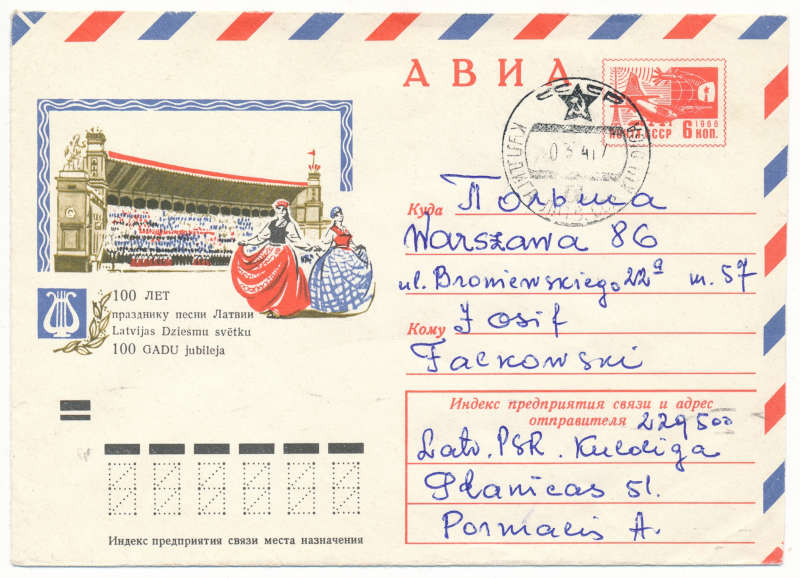
The fifth postal stationery cover is of the 1976-series. The imprinted postage stamp has 4 kopecks as face value showing the Soviet coat of arms. The stationery is from 1978 (15/II-78) and shows a view of the Zvartes rock (
Zvartes iezis), a Devonian sandstone rock outcrop located in the Gauja National Park, Latvia.
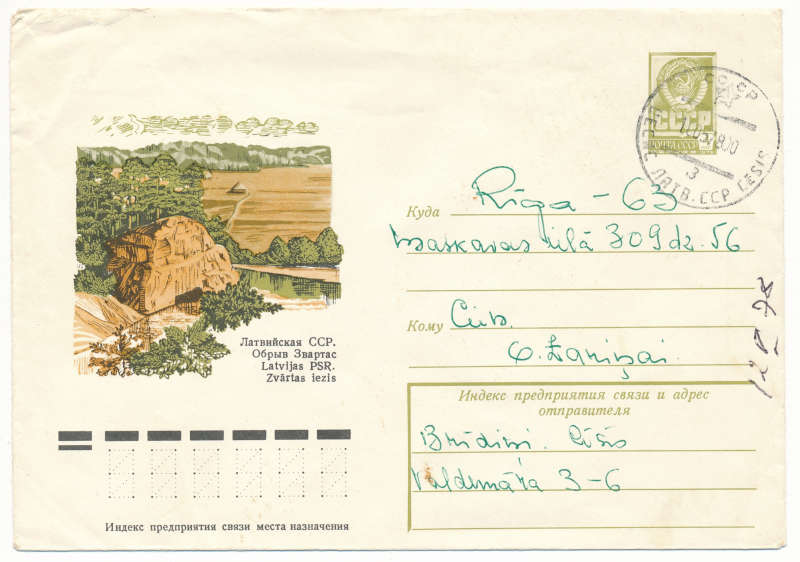
The sixth postal stationery cover is of the 1982-series. The imprinted postage stamp has 5 kopecks as face value showing means of transport. The stationery is from 1988 (08.12.88) and shows the Latvian communist
Arvid Pelshe (
Arvids Pelse; 1899-1983), First Secretary of the Communist Party of Latvia (1959-1966) and Chairman of the Party Control Committee of the Central Committee (1966-1983).
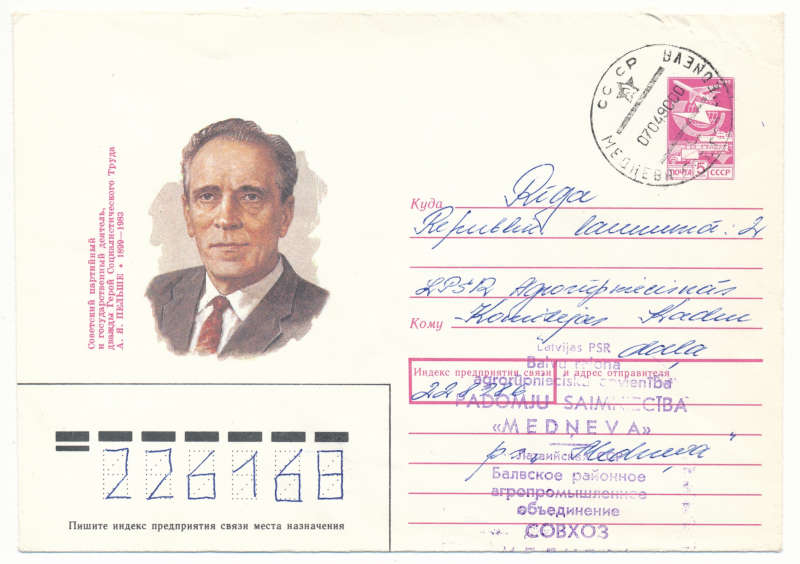
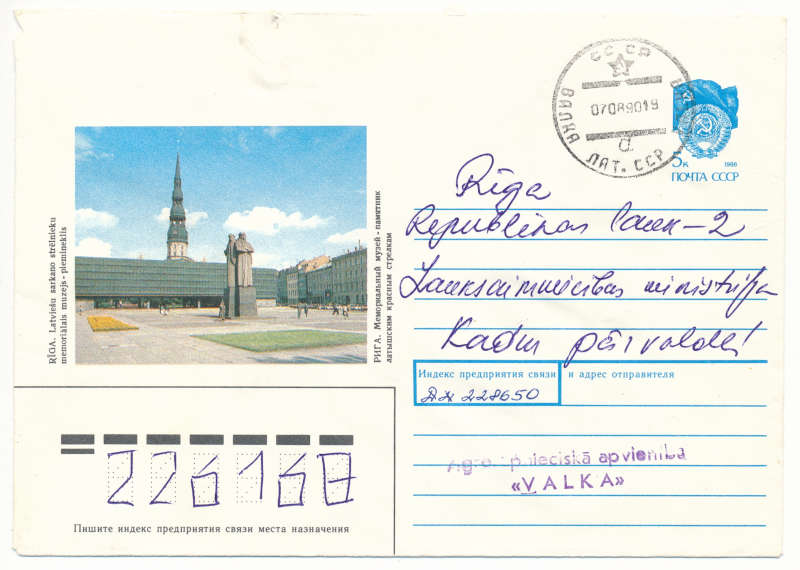
The seventh postal stationery cover is of the 1988-series. The imprinted postage stamp has 5 kopecks as face value showing the Soviet flag and coat of arms. The stationery is from 1990 (22.02.90) and shows the memorial of and the Museum of the Latvian Red Riflemen (today the Museum of the Occupation of Latvia) in Riga.
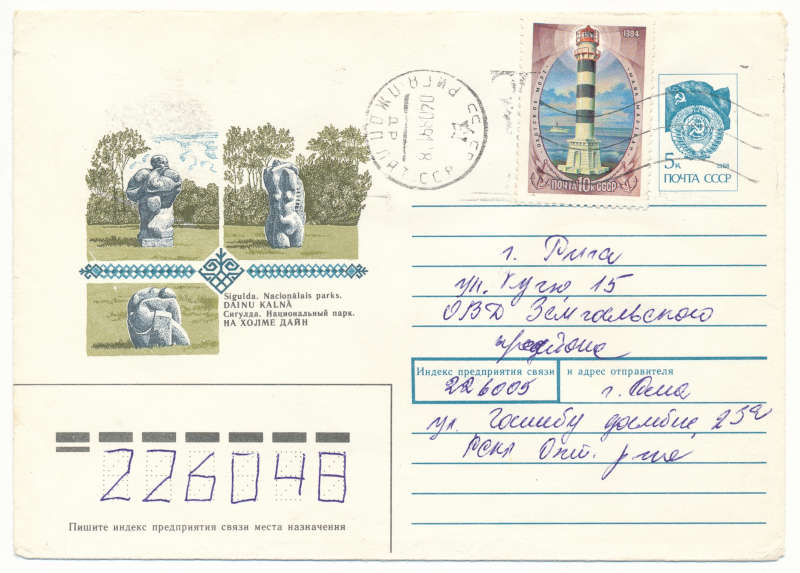
The eigth postal stationery cover is also of the 1988-series, but with the postage stamp within a rectangular box. The stationery is from 1991 (28.02.91) and shows Dainu kalns (Mountain of songs), Soviet style statues within the Sigulda National Park, Latvia.
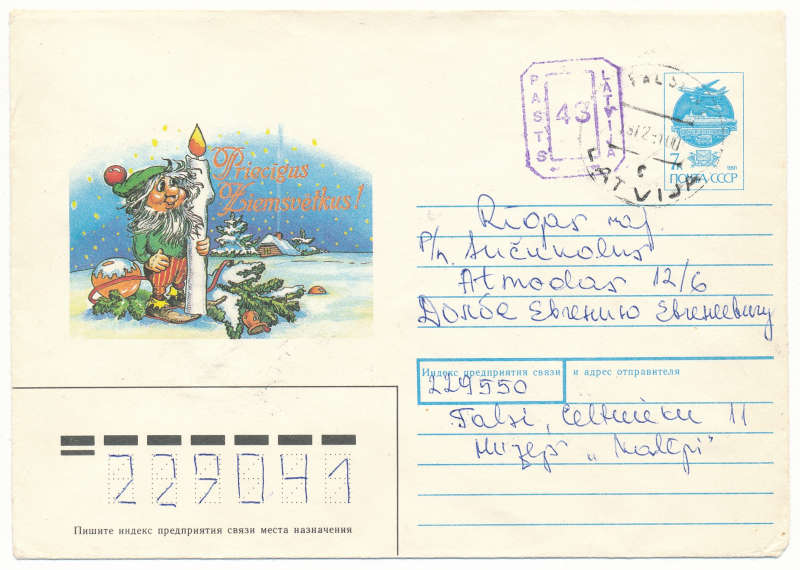
Finally, the ninth postal stationery is of the 1991-series. The imprinted postage stamp has 7 kopecks as face value showing means of transport. The stationery is from 1991 (20.05.91) and shows a winter scene and the text in Latvian: "
Priecigus Ziemsvetkus!" - Merry Winter solstice! or Merry Christmas! to some. The image refers to Latvian pre-Christian beliefs about the Winter solstice.





 Posted 07/20/2023 04:10 am