| Author |
 Replies: 65 / Views: 6,567 Replies: 65 / Views: 6,567 |
|
|
|
Pillar Of The Community
Canada
1416 Posts |
|
|
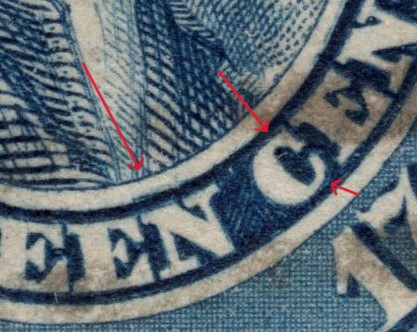
Here is position 72 - One that I find most difficult to positively identify, due to the less visible weak frameline to the left...with no obvious other markings, beside the pos dot in the left oval.   Last from 2nd column is 92. The key feature is the large Dot in the bottom margin below the 7. That shows that sometimes, off-center stamps may provide good clue for identification. (in this case, large bottom margin is preferable, while for top row, large top margins provide most of the needed clues.   If you have actual copy of any of those (12, 22,32,72 or 92, please feel free to Post them here. |
Send note to Staff 
|
| Edited by Gilles le timbre - 01/05/2019 11:53 am |
|
|
Pillar Of The Community
923 Posts |
|
|
May I re-ask a naive question? I see that there are some positions unidentified. Is it possible that those stamps have NO identifiable marks and are all the same? |
|
Send note to Staff
|
|
|
Pillar Of The Community
Canada
1416 Posts |
|
|
Sak,
based on the great work of K. Kershaw, all positions are identifiable. The gaps in the plating project represent actual stamps missing from my collection. My goal remains to reconstruct a complete sheet of the 100 positions that exist. What renders some more difficult to identify is sometimes the off-centering or heavy cancel that hide the recognizable features needed to positively identify a specific plate position. |
|
Send note to Staff
|
|
|
Pillar Of The Community
923 Posts |
|
|
Gilles le timbre, thanks.
The next naive question is: were these markings made deliberately by the engraver to make each stamp unique? (and can all early issues be completely plated?) |
|
Send note to Staff
|
|
|
Pillar Of The Community
United States
728 Posts |
|
|
The marks are not deliberately produced to make each stamp unique. They are caused by various things like un-erased plate layout markings, double transfers of the design, plate damage or wear, improper handling, or plate damage while in use just to name a few.
Many of the stamps of the early issues produced on flat steel plates can be plated to plate position and possible printings due to a flaw or double transfer being present. It can be quite a challenge to sort and plate them. A number of books have been written that help in plating just one particular stamp. For example I have five or six references pertaining to the 5c Beaver (1859 issue) and have identified a few hundred to specific printings, positions and or states of the plate. Still have many more to try and identify and some I may not be able to.
Most of the features used in identification of plate position were not done deliberately but some maybe attributed to repairs as well. |
|
Send note to Staff
|
|
|
Pillar Of The Community
923 Posts |
|
|
Valued Member
Canada
265 Posts |
|
|
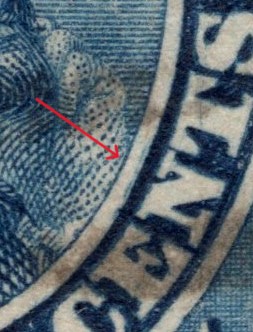
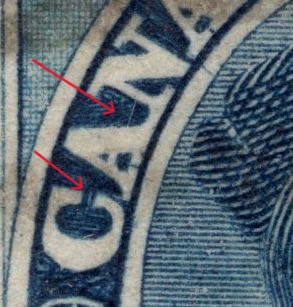
Hey Gilles, great work on the database. Spent the afternoon trying to identify my four Canada 19's. I could only identify two of them. The other two I believe are not in your database. Please prove me wrong  POSITION 96 Dot on Nose and guide dot at bottom 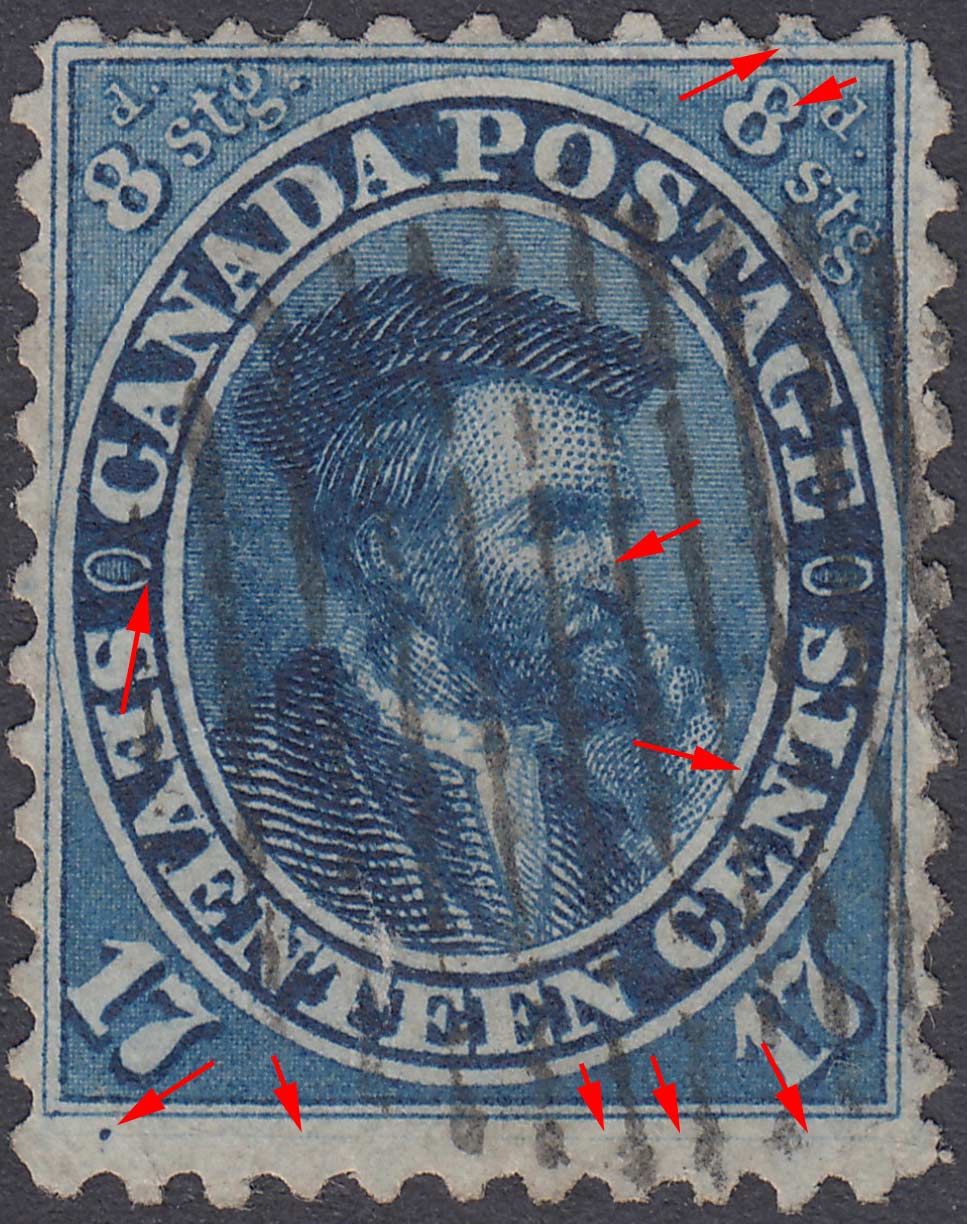 POSITION 79 Guide dot at left at 330ish, guide dot on RH margin 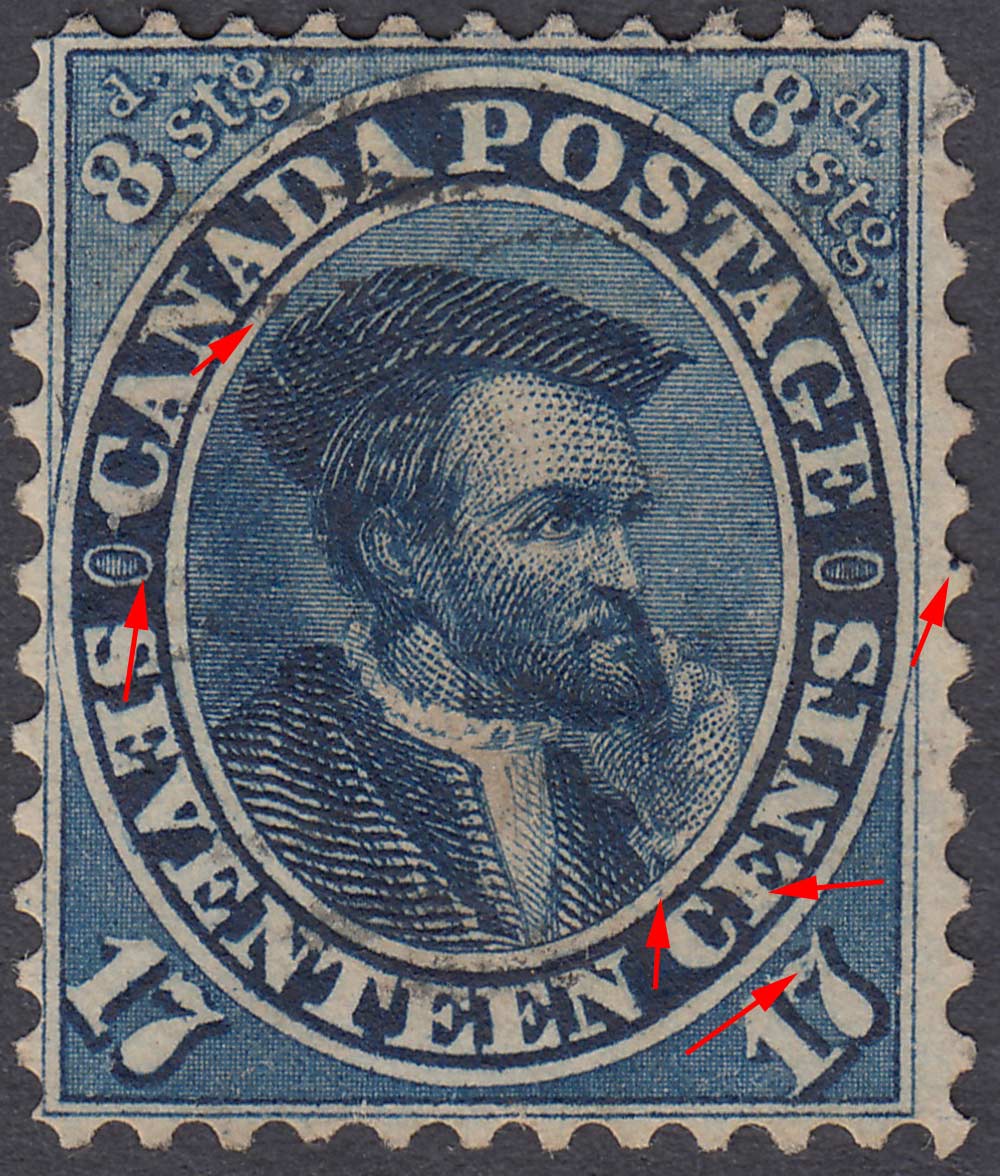 These two I could not identify These two I could not identifySmall guide dot and slash on top of G 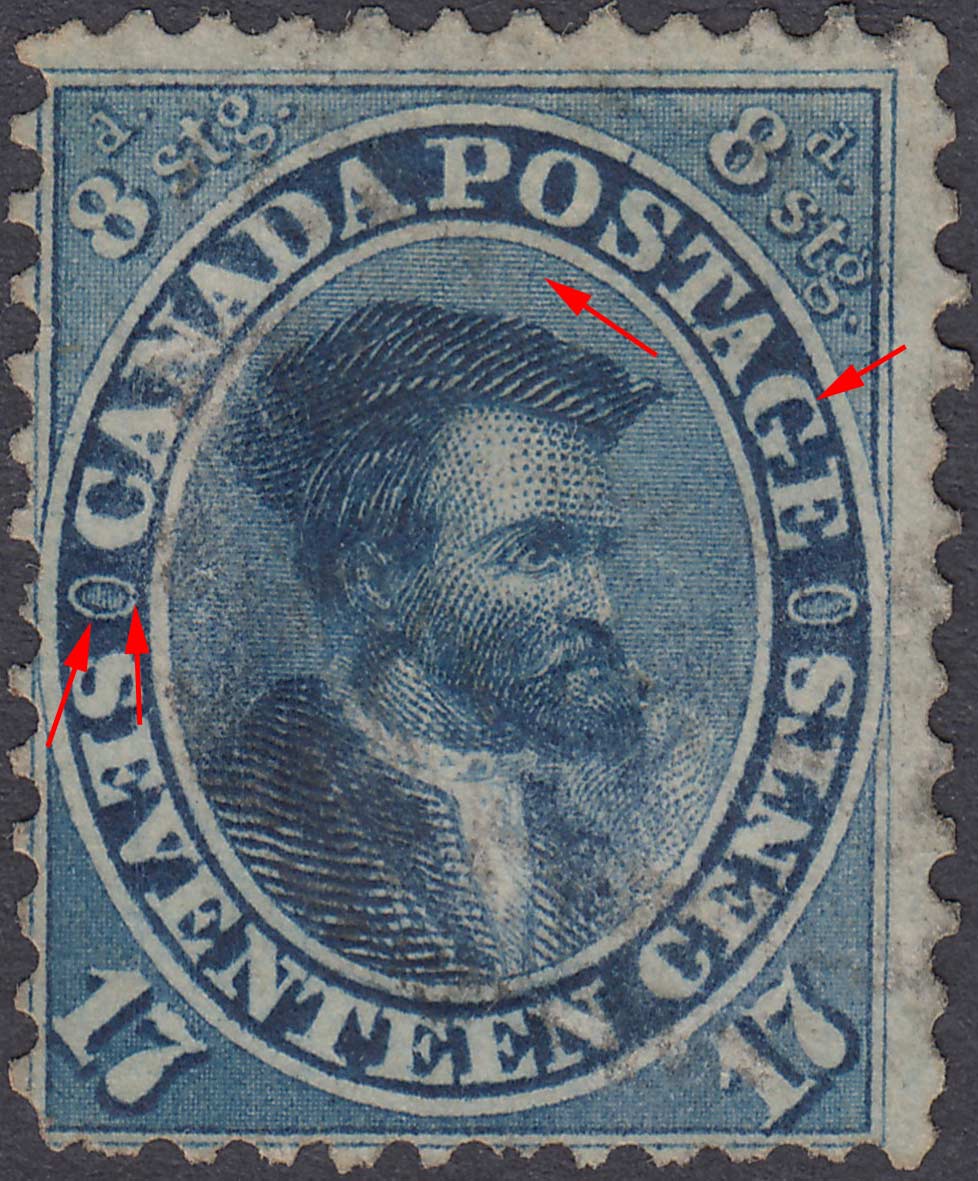 Horizontal guide line on both the left and right hand sides. I'm thinking in the 41-49 range. 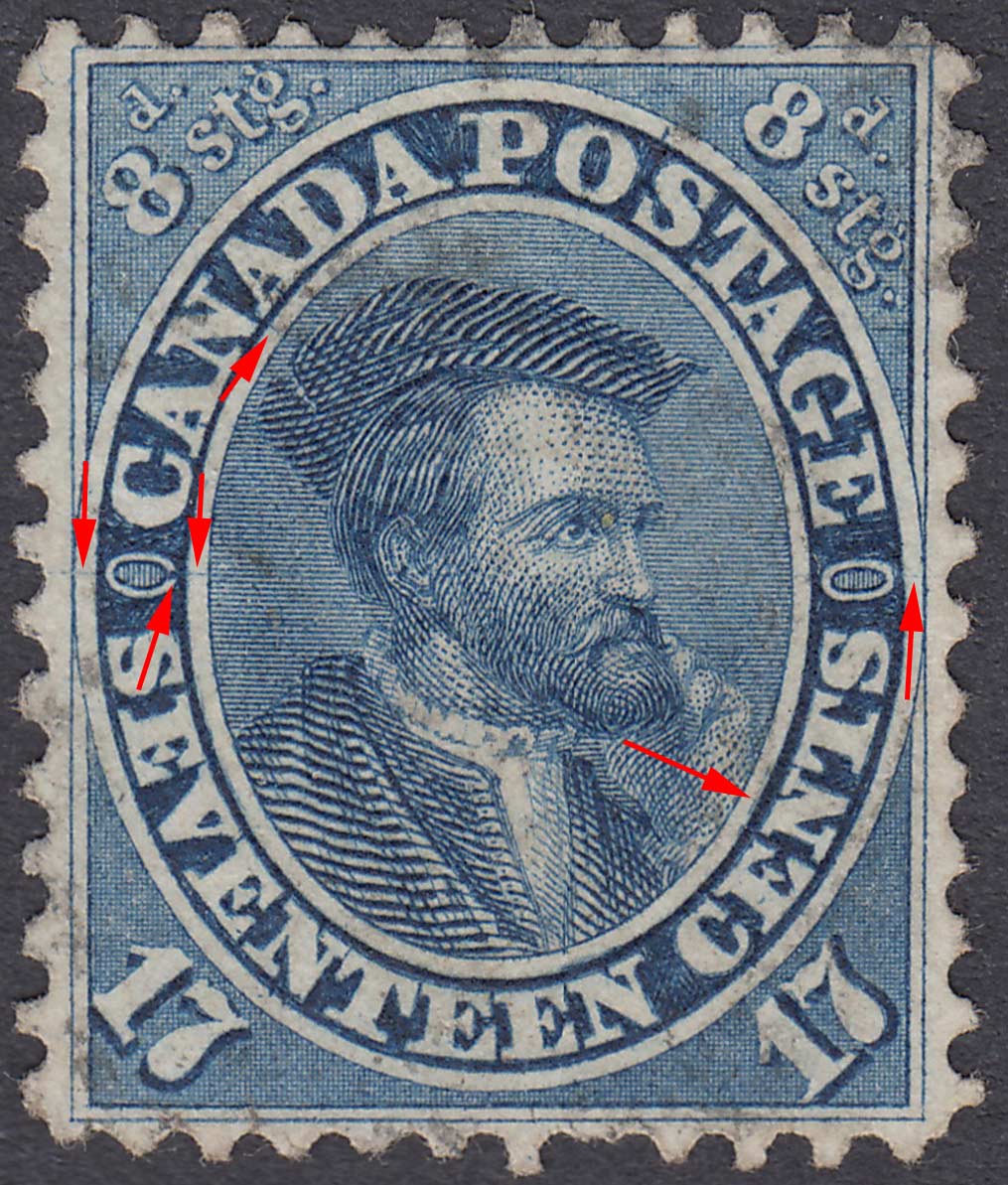 Thanks Trodent |
|
Send note to Staff
|
|
|
Pillar Of The Community
Canada
1416 Posts |
|
|
Trodent,
the last one looks like position 44, indicated by the position dot of the left small oval, and the dot on the ear (column 4) as well as the slight weak transfer, on top right.
I am not positive about the 3rd one, but looks like you are right on the first 2 (96 and 79).
The position 79 shows 2 distinct markings in the white band UL of the C of cents, and 2 small dots lining up in the top part of the 7 in the bottom right 7. these markings are consistent with those in Kershaw book, as well as with 2 other in my inventory
Good work Trodent.
For your 3rd one, it is most likely from the 2nd or 8th column, but I need more work on it. |
|
Send note to Staff
|
| Edited by Gilles le timbre - 01/13/2019 8:30 pm |
|
|
Pillar Of The Community
Canada
641 Posts |
|
|
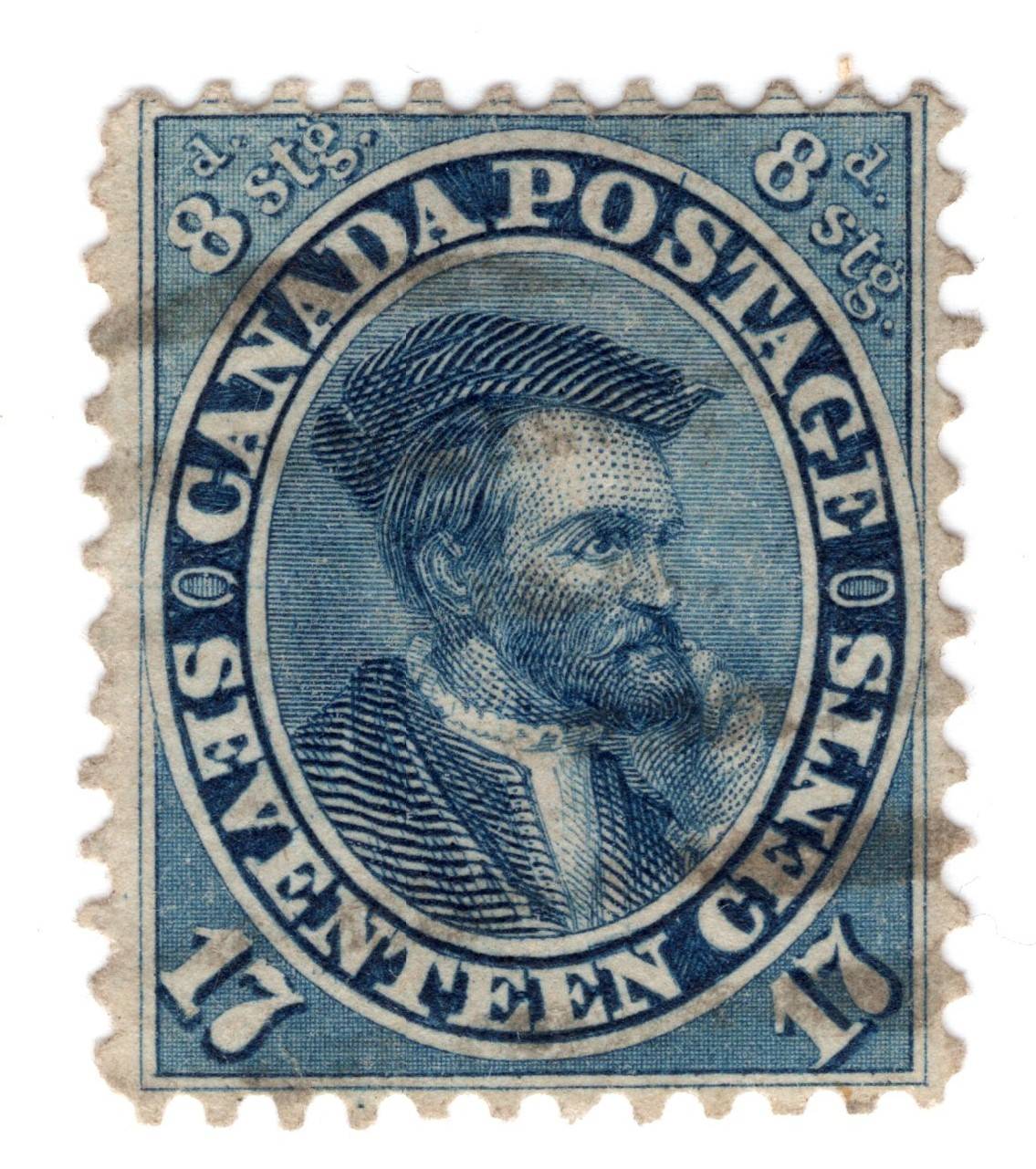
What an amazing thread! Unfortunately, nobody wrote anything since 6 years. But I hope more people will contribute in the future. Plating stamps is my favourite area of philately, so I would really like to contribute to the plating of this amazing stamp, though I'm still a newbie. And how's your sheet reconstruction project going? Did you finish it? I have a question: how do you do to reconstruct a sheet stamp by stamp? Except using some references, of course. What kind of references do you use and how do you use them? And another question: Are you the first person to reconstruct a sheet of the #19 Jacques Cartier? Here's my only #19. Looks like there's a guide dot on the nose, right? From which position do you think it is? Thanks in advance and hoping to make this topic alive again!  CS 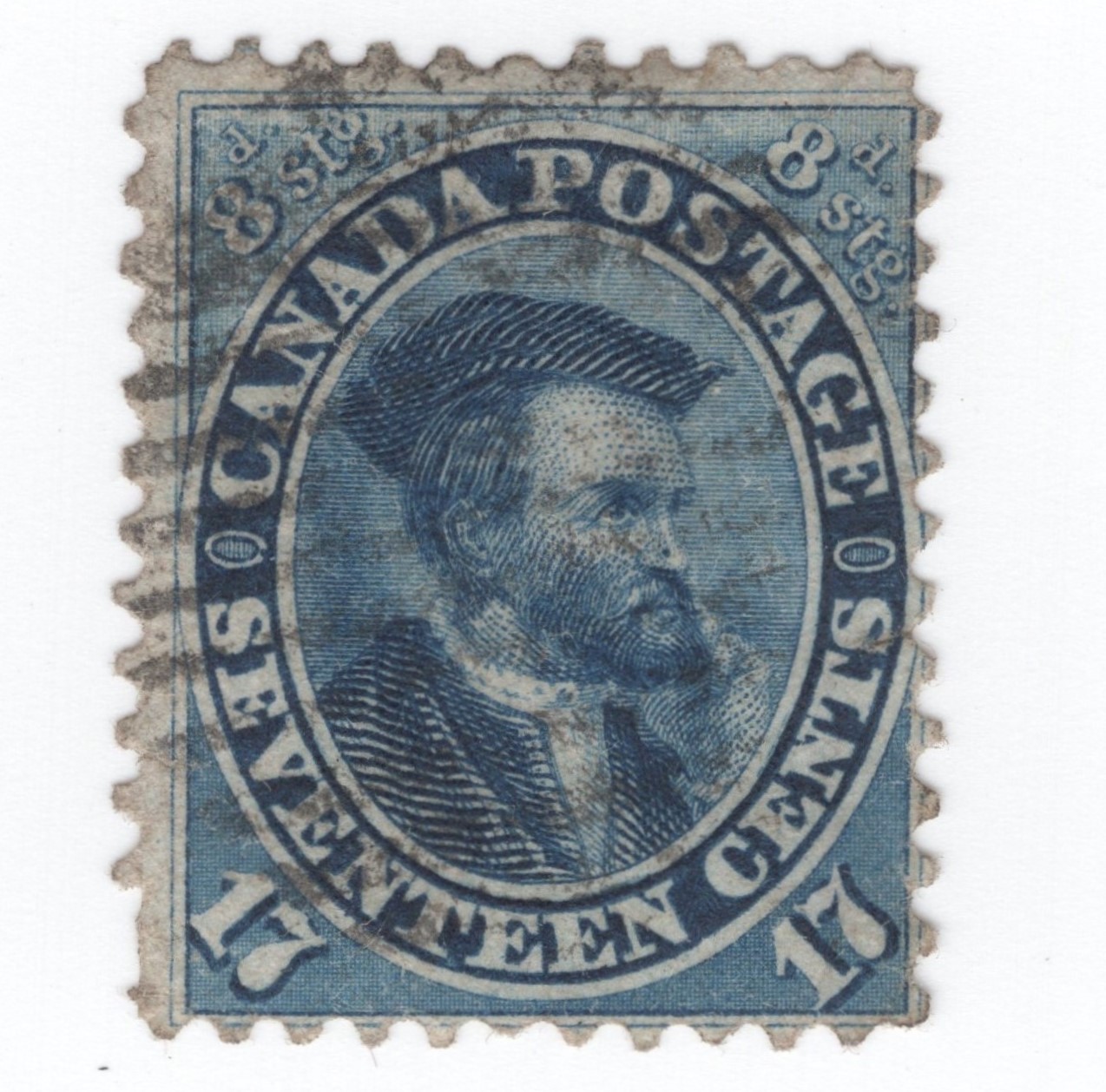 |
|
Send note to Staff
|
| Edited by Captain Stamp - 03/15/2025 01:29 am |
|
|
Pillar Of The Community
Canada
641 Posts |
|
|
Thank you really much for your accurate plating position information on the stampsmarter website, Gilles le timbre! I really appreciate your work. Because of all this accurate information, I plated my only #19 as position 46. Am I right? The guide dot on nose, the dot in left oval and the "scratch" around the A of POSTAGE and on all the right side around this letter are the characteristics that helped me plating it. And, again, thank you really much for your admirable work!  |
|
Send note to Staff
|
|
|
Pillar Of The Community
Canada
1416 Posts |
|
|
Captain stamp, my project has been completed in summer 2023, and the complete reconstuction was the subject of an exhibit at the 2003 BNAPeX meeting in Darthmouth, NS. I can confirm your position is definitely a position 46. That is a great start in the plating this lovely stamp. I have been working on a detailed tool to assist philatelists like you, with interest in plating. As mentioned in earlier posts, it is still available on Stampsmarter site ( https://stampsmarter.org (under projects, with a description and pictures of every position), and a new site ( https://cartier17cent.com/ is also avilable with much more detailed descriptions, both in English and French, for those interested. I am curently working on identifyind new features that were discovered with today's technology and that will be presented at different forums (including the stamp community forum), time permitting. Welcome to the wonderful world of flyspecking and plate reconstruction. |
|
Send note to Staff
|
| Edited by Gilles le timbre - 03/20/2025 2:13 pm |
|
|
Pillar Of The Community
Canada
641 Posts |
|
|
Thank you really much! I got inspired by your plate reconstruction and would like to reconstruct an entire plate of the #18. Maybe could you give me some advice about the plating reconstructions steps? I can't see what links you gave me, because there's a 404 error for one, and another kind of error for the other website.
By the way, I sent you an email a few minutes ago. |
|
Send note to Staff
|
| Edited by Captain Stamp - 03/19/2025 11:12 pm |
|
|
Pillar Of The Community
Canada
641 Posts |
|
|
Pillar Of The Community
Canada
1416 Posts |
|
|
Captain stamp,
your 19a may be position 32.
There are no travelling dots and no dots in the right oval, and only a dot on the left oval. That is typical of column 2.
Since there a no visible frame breaks, no visible weak transfer, and the left oval dot is large, superimposed on the horizontal guideline, (pos. 32 or 62 or 72 or 92).
The bottom margin does not show a large dot under the LL 17 so that rules out 92.
The key confirming criteria for pos 32 is the V shape mark that is supposed to be visible above the top right 8 is not visible, perhaps due to the interference with the perforation at that particular location.
note: with regards to the other marks you mentioned in oval frame, these marks are constant on all positions, and some "witish lines" are likely the result of underinking during the printing. (not a determining factors for plating.)
In conclusion, yours is likely 62 or 72, depending on closer examination of the frameline at left, and the upper right shaded area for a minor weakness in transfer at the right of stg. Hard to conclude without examining the stamp itself. |
|
Send note to Staff
|
| Edited by Gilles le timbre - 03/20/2025 10:15 am |
|
|
Pillar Of The Community
United States
3295 Posts |
|
|
Gilles le timbre, I noticed that in the two links in the above post that you've apparently inadvertently included an extra ) at the end of each. Also in another post (Need References For The Plating Of 1859 #18 And Have Other Questions About The Plating Of It.), there is another link with the extra ). Thought you'd like to know what was wrong.  |
|
Send note to Staff
|
|
|
Replies: 65 / Views: 6,567 |
|




 Posted 01/05/2019 11:35 am