| Author |
 Replies: 14 / Views: 1,283 Replies: 14 / Views: 1,283 |
|
|
Valued Member
Canada
31 Posts |
|
|
What is the best testing method to ensure the rocket was not removed afterwards? UV lamp testing shows no markings, HQ scan(over 1200 dpi) shows no damage to the paper. The remaining blue color is no different than an original with rocket. Some stamps had colors removed chemically (8 cents US Copernicus as an example), but how do you test such a stamp? I have a few of these 1963 errors in my collection and your advice is greatly appreciated. Do I have the real or the fake ones? 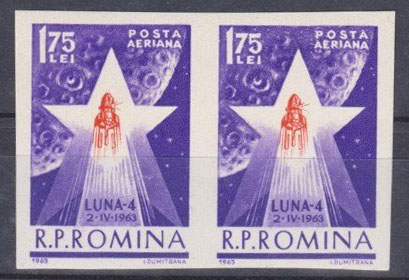 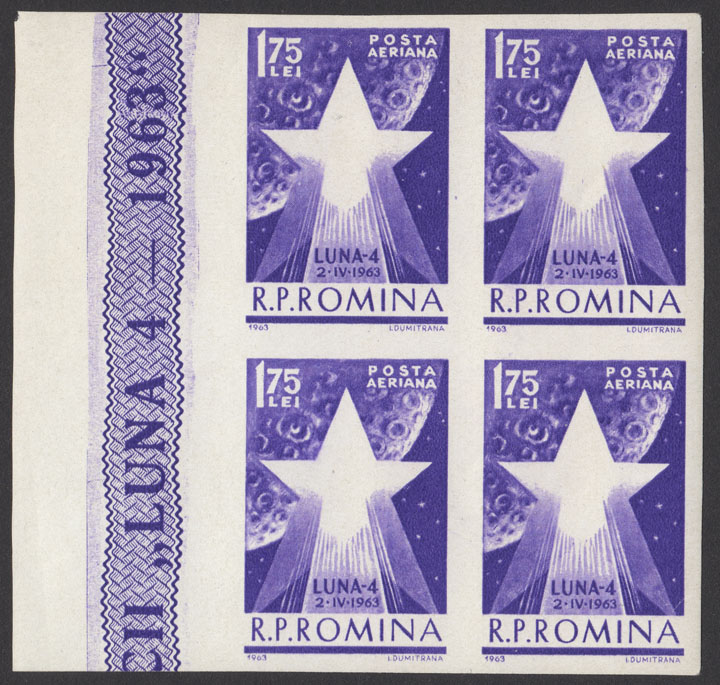 *** Moved by Staff to a more appropriate forum. *** *** Moved by Staff to a more appropriate forum. *** |
|
Send note to Staff
|
| Edited by zuzelu - 10/12/2018 5:13 pm |
|
|
|
|
Bedrock Of The Community
United States
10826 Posts |
|
|
Putting it under a UV light should show if a chemical was used to remove the red color. |
Send note to Staff 
|
|
|
Valued Member
Canada
31 Posts |
|
|
Thank you for your answer.
Nothing under UV light and I am using a HQ Lighthouse 366nm lamp. Is this a definitive proof? |
|
Send note to Staff
|
|
|
Moderator

United States
12330 Posts |
|
|
Here is your image with the red channel split out, to my eye I think I see some remaining red present. 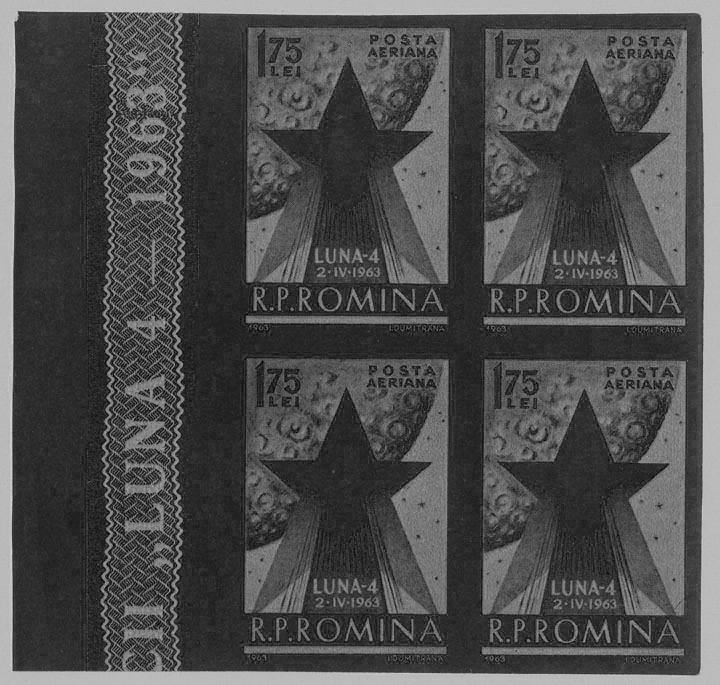 Don |
|
Send note to Staff
|
|
|
Valued Member
Canada
31 Posts |
|
|
Please let me know what program and option have you used to show it like that?
From your photo I can also see similar stains present on the left side of the block where is the white paper. I am not clear if this option can confirm the stamp is not real, however I will do it myself on a very high resolution after you tell me the soft and option.
Thank you |
|
Send note to Staff
|
| Edited by zuzelu - 10/12/2018 6:22 pm |
|
|
Moderator
United States
12330 Posts |
|
|
I used Paint Shop Pro but any graphics good application has the ability to split out the color channels. The key with using digital analysis is to not use any filter/process which adds data, splitting the color channels only subtracts data. Another example of color channel splitting is RetroReveal http://stampsmarter.com/learning/Ho...oReveal.htmlI agree this analysis is not definitive, it is only an additional piece to the puzzle. Don |
|
Send note to Staff
|
|
|
Valued Member
Canada
31 Posts |
|
|
I've managed to replicate your Photoshop work. Here is a comparison between one with and one without rocket. If any red will be there should shine. Also on both are very visible the stains in the white paper, so this is something that can be discarded from conclusion. Another thing I did was to turn each channel off, invert colors and posterize. No visible traces of red rocket. BTW I've used 1200dpi scans but I can't post here such a large file. Any other options for investigation? Thank you 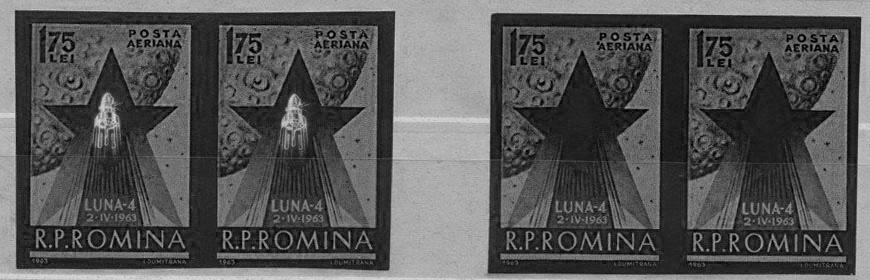   |
|
Send note to Staff
|
|
|
Pillar Of The Community
6360 Posts |
|
|
Quote:
Putting it under a UV light should show if a chemical was used to remove the red color. This is much too broad of a statement. I would politely re-phrase the above as "Putting it under a UV light MIGHT show" ... something amiss but not every chemical is UV reactive. Red is at the end of the visible spectrum and is more easily sun-faded. Quote:
Nothing under UV light and I am using a HQ Lighthouse 366nm lamp. Is this a definitive proof? No. Not definitive. UV examination can often reveal alterations, but absence is not proof to the contrary by itself. One needs to try (and pass) with several analytical tools: both long- and short-wave UV, high magnification examination, Don's color analysis, etc. Each done side by side with a normal stamp. Your journey is just beginning. Ultimately, most collectors/buyers would insist on a certificate. On a different tangent - it appears unused. Does it have gum? Also, what does the specialty literature say about this error? What catalogs recognize it? How could it be differentiated from printer's waste? |
|
Send note to Staff
|
| Edited by John Becker - 10/12/2018 7:43 pm |
|
|
Valued Member
Canada
31 Posts |
|
|
It has immaculate gum. And is a listed error in Michel catalog, also is well known in Romania. However it's also known that are fakes, even Michel has a warning. I've done a huge 9600 dpi scan and it shows the paper details at very finest but no traces of red. UV light is clear. Gum in the back is perfect (see photo). 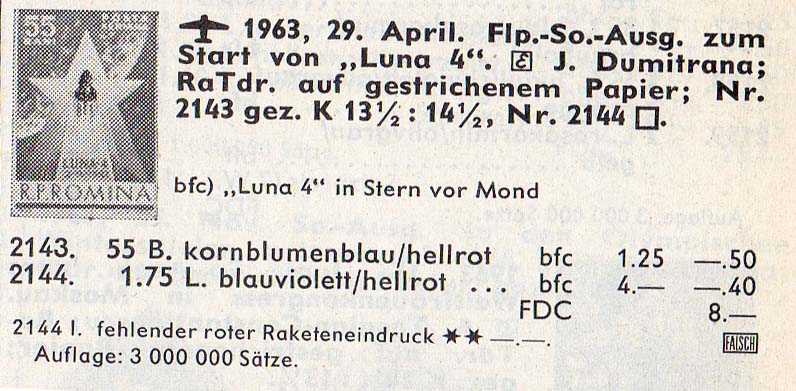  |
|
Send note to Staff
|
|
|
Bedrock Of The Community
United States
10826 Posts |
|
|
Pretty much anything modern that might be used to remove the color will be florescent. And also probably affect the gum. And the purple is fairly unstable as well; sunlight would damage it to the point of being obvious. |
|
Send note to Staff
|
|
|
Pillar Of The Community
6360 Posts |
|
|
Quote:
Pretty much anything modern that might be used to remove the color will be florescent. Again, too broad of a brush. What one is looking for with both long-wave and short-wave UV is not fluorescence or its absence. One is looking for relative differences in appearance across the entire area of the philatelic item. Various treatments and alterations may cause increases, decreases, or unevenness in how the paper/ink appear. Treatments often show differently. Period. So far, your stamp looks pretty good. The original condition of the gum side is a positive point. P.S. I have a degree in chemistry. |
|
Send note to Staff
|
| Edited by John Becker - 10/12/2018 8:43 pm |
|
|
Bedrock Of The Community
United States
10826 Posts |
|
|
I don't have a degree in chemistry, but I have years of expertising and looking at stamps under UV. |
|
Send note to Staff
|
|
|
Valued Member
Canada
31 Posts |
|
|
Guys, please don't fight over testing issues. I appreciate all the inputs.
Unfortunately I don't have a "genuine fake" to compare, so I assume that after all these UV tests, HQ scans and Photoshop color removal that I have a genuine error.
And I always listen for more testing options.
Regards |
|
Send note to Staff
|
|
|
Pillar Of The Community
Singapore
750 Posts |
|
|
Pillar Of The Community

United States
5468 Posts |
|
| |
Replies: 14 / Views: 1,283 |
|




 Posted 10/12/2018 5:08 pm