| Author |
 Replies: 59 / Views: 4,743 Replies: 59 / Views: 4,743 |
|
|
|
Pillar Of The Community

Netherlands
641 Posts |
|
|
perhaps a silly question, but on what scott numbers can we find potential silk paper used for producing the stamps (not rev) |
Send note to Staff 
|
|
|
Pillar Of The Community
1375 Posts |
|
|
Pillar Of The Community
673 Posts |
|
|
Bill Weiss and I discussed this stamp a lot over the course of a few years, but we never reached a specific conclusion. The problem is the fibers are not silk... (though we also now know that most of what is called a "silk fiber" isn't silk either), but they are not those fibers.
What I find fascinating is the fibers are EXACTLY the color of the 24c Winfields. But they aren't "ink spills" or extra ink because specific fibers are colored, without bleeding around to fibers next to them, and are visible both on front and back of the stamp. I've seen no other stamp with this characteristic of any type, from any print runs on any paper. So if anyone can find some other examples that have the fibers the same color as the stamp (which is why I am seeking the 156 "colored fiber" as mentioned in Scott). Siegel mentions only 156 with "silk fiber", which Scott doesn't mention at all.
It's been a mystery for me for years, and with the wide reach of this forum, have been hoping to shed some more light onto it. Hopefully someone out there has another stamp with a similar characteristic.
Otherwise, I'm left to describe this as "unique" not just among Winfields, but among all US Bank Note Era stamps. And I am quite sure that won't be the case if we can look at enough examples.
I want to be clear that I'm not trying to prove, nor suggest that it is a 164. I'm rather suggesting its an example that has been previously unidentified.
|
|
Send note to Staff
|
|
|
Pillar Of The Community
1375 Posts |
|
|
hello, maybe it would be better then to rename this thread or start a new one to get the audience for this very specific topic.
In the current topic name and in your first post you talk about the Continental bank note stamps and mainly silk (and also coloured) fibers. Now the focus is a National bank note stamp (your 24c) with very unique fibers, and even not silk.
I also think this is an interesting stamp, and I am looking forward to reading the answers of collectors much more experienced than me. My comment here is just to help you get your answers or understanding really the focus of your topic.
To add something to the content I wonder how it should have worked in the printing process to "produce" fibers in the color of the stamp design and then add it to the paper. That was probably not the case, or we should have some sources for this. So if it is really the color of the design, it must have happend during printing (not before or after) in my opinion. As the fibers are only couloured in those areas where also color of the design is there, it is possible that those are fibres of some specific tree or rag which "like" the color and absorb it quickly. |
|
Send note to Staff
|
|
|
Pillar Of The Community
673 Posts |
|
|
Stamperix,
I understand your point, but want to keep the discussion as is. I am seeking examples of colored fibers in Continental issues. I'm seeking those specifically to compare it to this example, and since the 156 is "known" to have such fibers, I'm curious to compare them.
If I call it a National, then it's a different view, and I get your point there, that may be the case.
What I want to know is, what caused Scott to classify all the other Continental issues as "Silk Fibers", while the 156 is described as "colored fibers". I would likewise describe this as "colored fibers". |
|
Send note to Staff
|
|
|
Pillar Of The Community
1375 Posts |
|
|
Understood, of course we can continue here, now I think the topic is more clear to everyone. I think it's a interesting area of collecting, and I will have a closer look to my bank note stamps.
what does Scott say about their entry "coloured fibers"? They must have an explanation for it. |
|
Send note to Staff
|
|
|
Pillar Of The Community
United States
1414 Posts |
|
|
The 24 cent stamp with colored fibers, or the appearance of fibers is not unique. Other examples exist and may be much more common than 24 cent stamps with fibers resembling other Continental "silk" denominations. I have additional information, but this thread has been fatally compromised with irrelevant posts about revenue stamps. Also, the Scott 6 cent Continental listing may have been influenced by one collector/exhibitor without taking into account the existence of normal Continental "silk" examples. |
|
Send note to Staff
|
|
|
Pillar Of The Community
United States
2555 Posts |
|
|
Quote:
What I find fascinating is the fibers are EXACTLY the color of the 24c Winfields. But they aren't "ink spills" or extra ink because specific fibers are colored, without bleeding around to fibers next to them, and are visible both on front and back of the stamp. I've seen no other stamp with this characteristic of any type, from any print runs on any paper. So if anyone can find some other examples that have the fibers the same color as the stamp (which is why I am seeking the 156 "colored fiber" as mentioned in Scott). Siegel mentions only 156 with "silk fiber", which Scott doesn't mention at all.
It's been a mystery for me for years, and with the wide reach of this forum, have been hoping to shed some more light onto it. Hopefully someone out there has another stamp with a similar characteristic. I temporarily forgot that I have a close match albeit with only fibers on the back of the stamp and on an 1857-58 printing of a Scott #24. 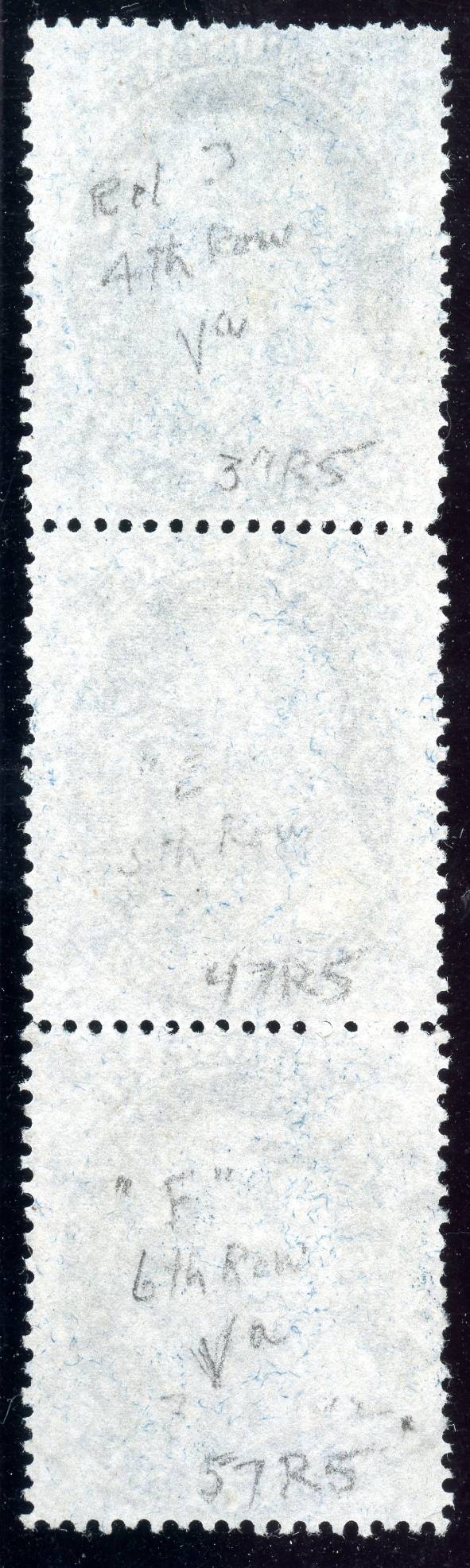 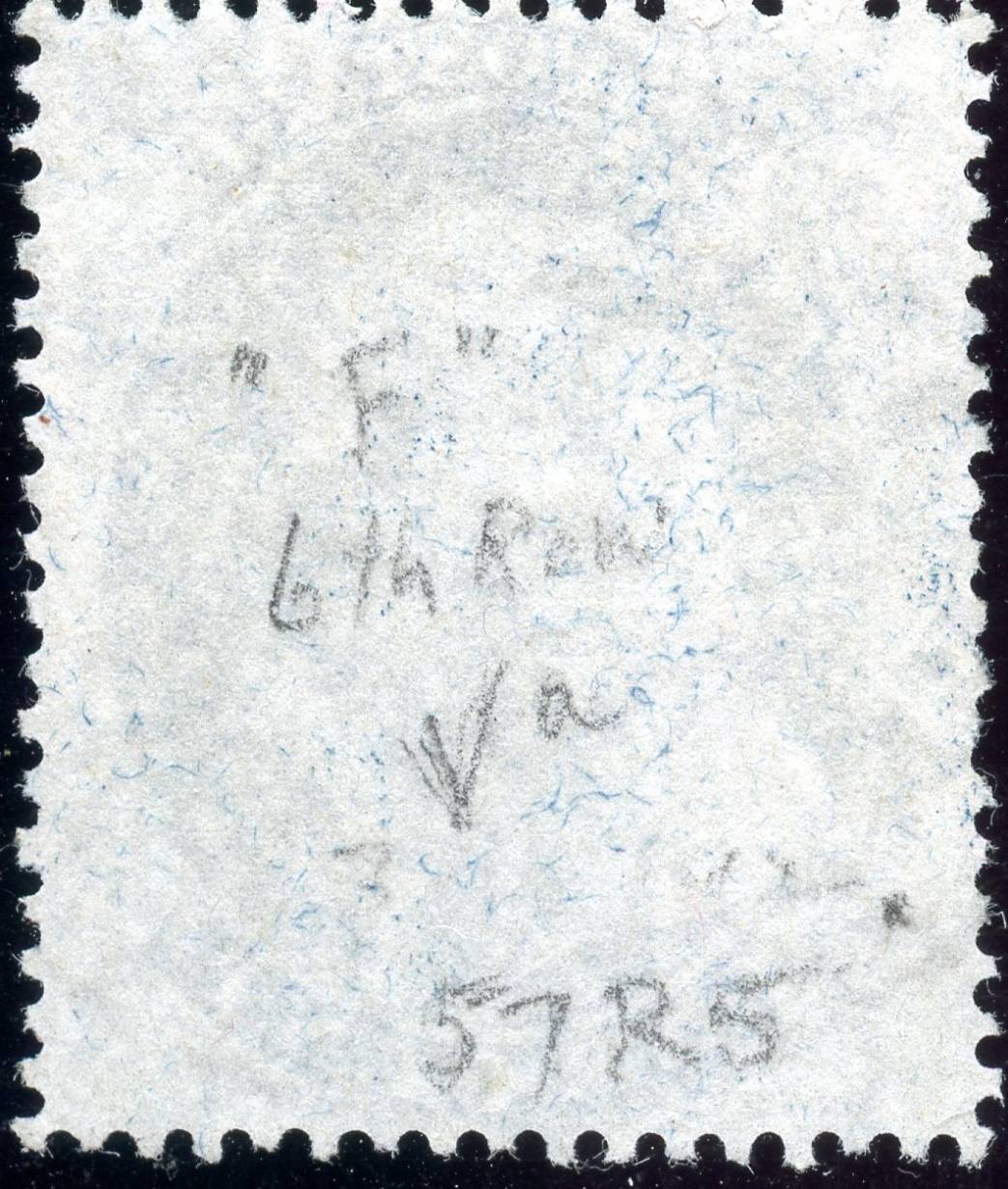 |
|
Send note to Staff
|
|
|
Valued Member
213 Posts |
|
|
I need a shot at redemption here. I also have a few of these stamps. This is what I know at present;
The entire Crane family were noted for their specialty papers and the Crane Brothers were one of the most innovative paper-makers of the bunch. The brothers were always experimenting with something new and got rich through innovation.
If this were a run-of-the-mill facility we wouldn't be having this discussion. The Crane Brothers paper mill doubled as an experimental lab, and what you are experiencing are remnants of some of their projects.
The proper name should be "Experimental Paper Fibers." What the Crane Brothers were doing at this time and how these fibers found their way into U.S. stamp paper is a mystery.
It's exciting and entertaining to look at these papers and experience them first hand. As a researcher I am trying to get to the back-story, and I kindly ask for your patience.
Is that better? |
|
Send note to Staff
|
|
|
Pillar Of The Community
United States
1414 Posts |
|
|
Bedrock Of The Community
12734 Posts |
|
|
Dumb question: Could it be possible in some instances to have the "fiber" issue be a simple case of contamination of the paper? |
|
Send note to Staff
|
|
|
Pillar Of The Community
United States
2555 Posts |
|
|
Pillar Of The Community
United States
3224 Posts |
|
|
Quote:
Could it be possible in some instances to have the "fiber" issue be a simple case of contamination of the paper? Most definitely, but they are typically some other fibers than those that identify the paper type. Plus one or two fibers per stamp don't confirm silk paper (to me). For example, I've had other collectors lecture me on how I missed seeing silk paper fibers on US and other countries' stamps. They were calling one or two very short, tiny/little dark brown fibers in the paper "silk paper". Those are just from (probably) tree bark or tree knots from times when paper pulp was not massively bleached out. |
|
Send note to Staff
|
| Edited by hy-brasil - 01/07/2019 7:30 pm |
|
|
Moderator
United States
12330 Posts |
|
|
Good bath towels are made with 100 percent cotton for good reasons; because cotton is most efficient at absorbing or soaking up water. The cellulose in the cotton contains a negative charge, this makes it attract dipolar water molecules and absorb them (this is called 'hydrophilic'). But cotton can also also absorb water through capillary action, the fibers are able to draw water through the interior of the fiber (think drinking straw).
Of course all paper-making fibers are not 'made the same', some may be highly absorbent while others may not be absorbent at all. It seems reasonable to me to assume that some of the highly absorbent fibers would be able to draw up the ink (or other colored liquids) while others around it would not; well after the paper had been made.
Don
|
|
Send note to Staff
|
|
|
Pillar Of The Community
673 Posts |
|
|
Sinclair2010,
The 24 example is interesting. But seems to be only surface. What I find really interesting about the Winfield is that fibers embedded in the paper also are of matching color. And of course, at the surface, which is really interesting.
But this is the closest example I've seen to what is occurring on the Winfield. |
|
Send note to Staff
|
|
|
Replies: 59 / Views: 4,743 |
|




 Posted 01/06/2019 04:21 am


