| Author |
 Replies: 59 / Views: 4,742 Replies: 59 / Views: 4,742 |
|
|
|
Valued Member
213 Posts |
|
|
Revcollector, I refer to the proprietary stamps of the 1880s. On some of these I find no silk threads, while on others I find only a single strand. Others have more than a few, I can't deny that. But, overall the impression is of a significant reduction of silk fibers after 1875 or so. |
Send note to Staff 
|
|
|
Pillar Of The Community
United States
2555 Posts |
|
|
So what happens if I send my Continental Silk Paper stamps to APEX for certs? Do I get one over AJ's apparent doubts of the existence of that paper type/variety or do I get a negative opinion? What happens?
Enquiring minds want to know. |
|
Send note to Staff
|
| Edited by sinclair2010 - 01/04/2019 12:10 pm |
|
|
Bedrock Of The Community
United States
10851 Posts |
|
|
The 1875 proprietaries were issued on both watermarked and silk papers. Those without threads are watermarked; occasionally there may be fibers and other detritus from the papermaking process, but they are not silk threads. There was never any specific attempt to reduce the number of silk threads. |
|
Send note to Staff
|
|
|
Valued Member
213 Posts |
|
|
RevCollector, You make the same argument (debris, etc.) I made previously about the Continental stamps.  Anyway, the S.D. Warren & Co. transferred production of revenue stamp paper to Fairchild Paper Co. in 1882. I don't believe there has been a study done of the differences between the Warren and Fairchild papers. Below is a unwatermarked stamp with a single silk fiber of the same black color and length as found in other silk paper varieties of the issue. Since RevCollector has already acknowledged that other unwatermarked stamps share similar properties, ipso facto, this is evidence of a decline of silk fiber distribution in revenue stamps. 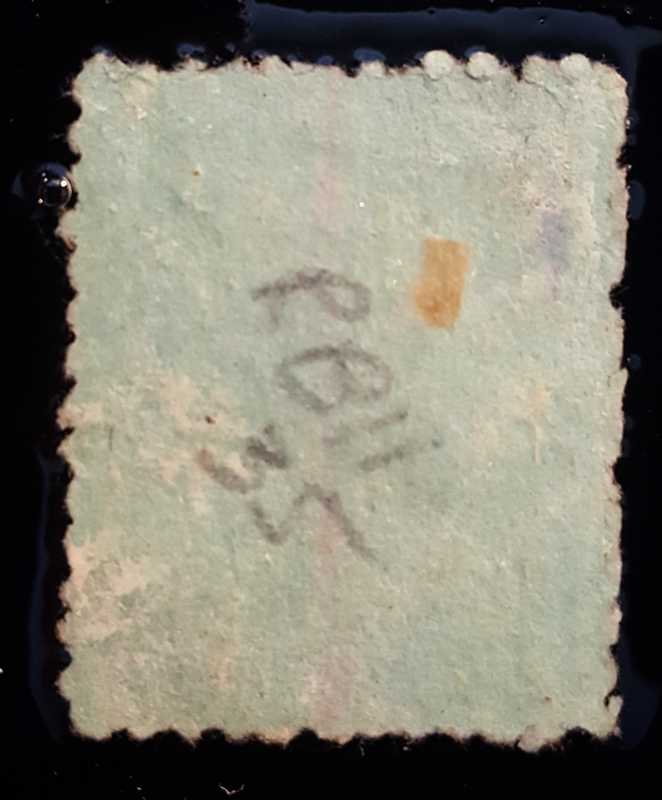 |
|
Send note to Staff
|
|
|
Bedrock Of The Community
United States
10851 Posts |
|
|
I would have to examine that stamp in person before I would consider it either silk or unwatermarked. |
|
Send note to Staff
|
|
|
Pillar Of The Community
United States
796 Posts |
|
|
as far as I am aware black was never a color associated with any form of silk paper, experimental or otherwise. both red and blue or both of various sizes and shapes are mentioned and often seen. black & brown colored bits often are wood or jute fiber and frequently present. the maroon color thread often seen in pink paper match and medicine's is thought to be jute reacting to the dye used to color the paper. long blue fibers are also seen on stamps that were attached to drug paper wrappers, but are easily eliminated by their being on the surface of rather than in the body of the paper.
i would point out that rag papers often had some fiber impurities present and an occasional fiber presence would not support a contention of a deliberate decline in the use of silk. |
|
Send note to Staff
|
|
|
Valued Member
213 Posts |
|
|
Revcollector, that stamp is photographed in a watermark tray and is in fluid. |
|
Send note to Staff
|
|
|
Valued Member
213 Posts |
|
|
OK. Silk paper. Below is an example of silk paper. The fibers are evenly mixed throughout by the hollander. Some fibers show through on the front, some on the back, etc. Some fibers are longer, some are shorter, some are thicker, some thinner, etc. All fibers are of the same color, excepting (and, this particular example is chosen for this reason) occasionally some foreign matter may be found. In this case a brown fiber of unknown origin is seen at upper left on the reverse. Without a doubt, this is a fine example of silk paper that everyone can agree on: 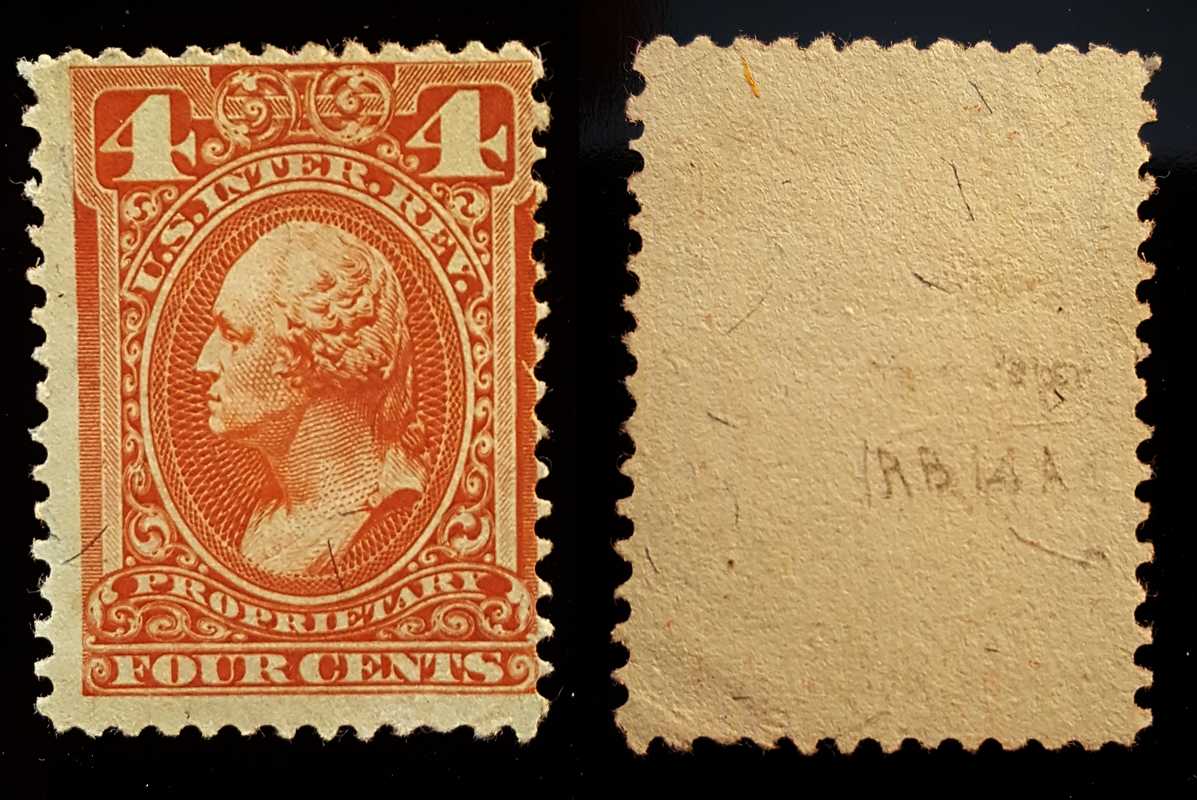 OK--Now, here's the main argument; The following is junk: Why call it junk? Well, with only a single fiber one can hardly justify calling it silk paper. Still, we know this stamp came from the same issue as the previous silk paper, and for that reason we may also assume the single strand is of silk origin. Still, on that basis alone, do we call it silk paper? Not IMHO. Papers with a single fiber (or perhaps two or three) are not the same as multi-threaded silk paper. One is intentionally made while the other is purely accidental. |
|
Send note to Staff
|
| Edited by AJ Valente - 01/05/2019 4:12 pm |
|
|
Bedrock Of The Community
United States
10851 Posts |
|
|
Might well be a "U" or "I" watermark in the bottom right corner. A bit fainter than usual, but this stamp has an awful lot of extraneous material stuck to the back.
BTW, experimental silk paper (paper with one to three threads) was intentional, not accidental. |
|
Send note to Staff
|
| Edited by revcollector - 01/05/2019 5:14 pm |
|
|
Bedrock Of The Community
12734 Posts |
|
|
Moderator

United States
12330 Posts |
|
|
Bedrock Of The Community
12734 Posts |
|
|
Pillar Of The Community
673 Posts |
|
|
So I found something interesting, and I've been unable to "classify" it for some time. It has to of course be in one of the more controversial stamp items as well, so sure to make for some interesting split views. I'm going to avoid "labeling" this stamp anything at this point. But it is a 24c Winfield Scott. I've examined literally hundreds (maybe thousands) of these, with this one being the only one that has this characteristic. Attached are a series of images under magnification of around 30x. 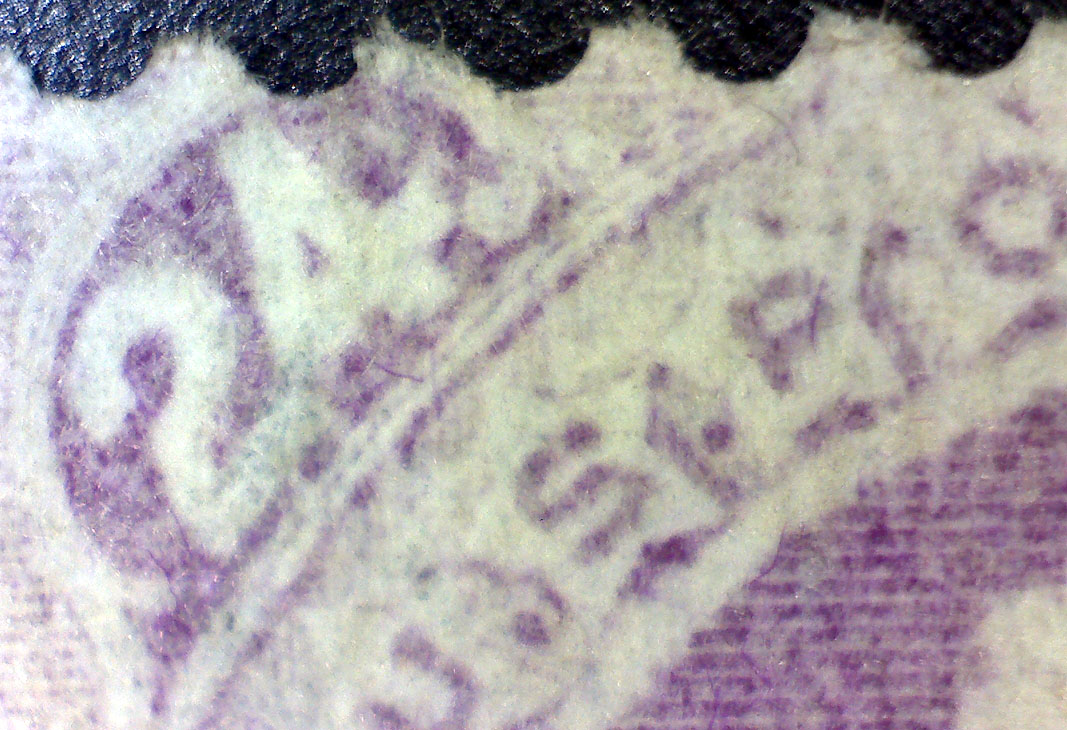 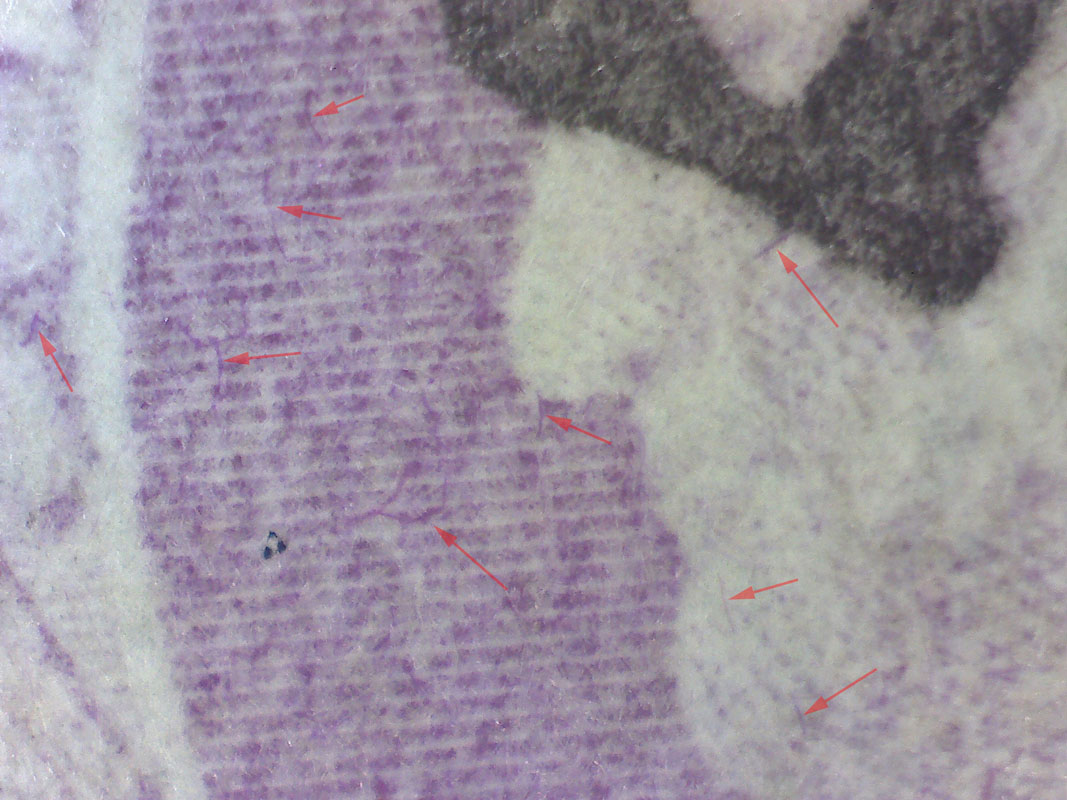 Red Arrows point to fibers embedded in the image These images are from the back 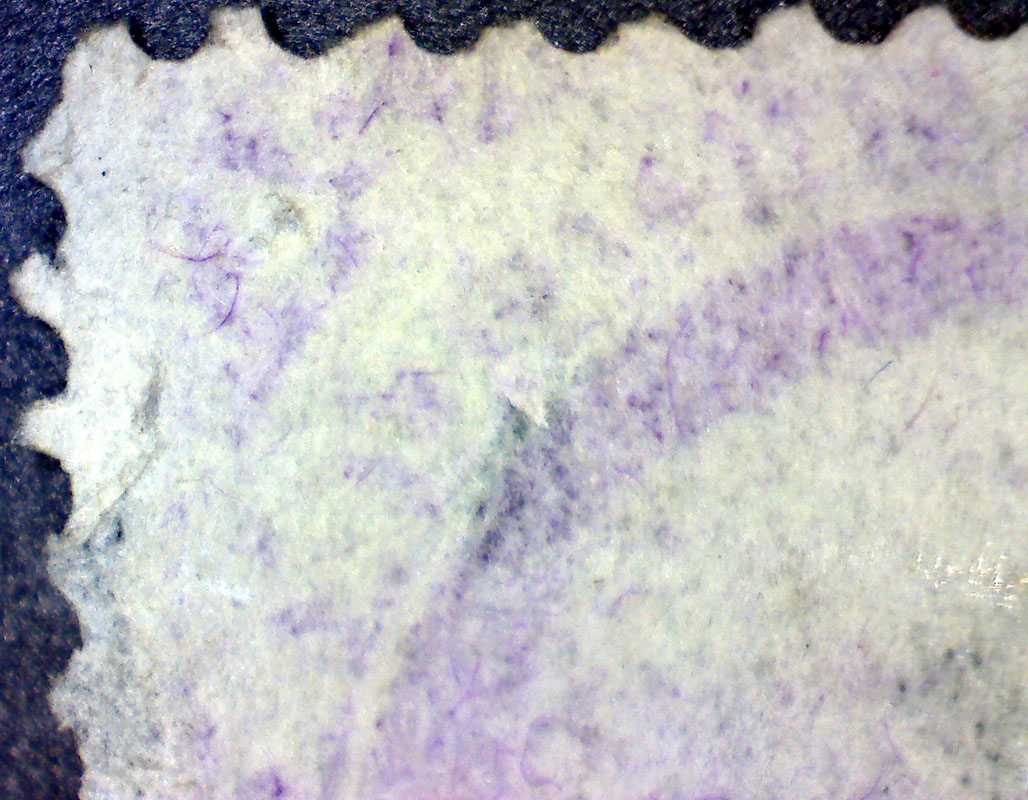 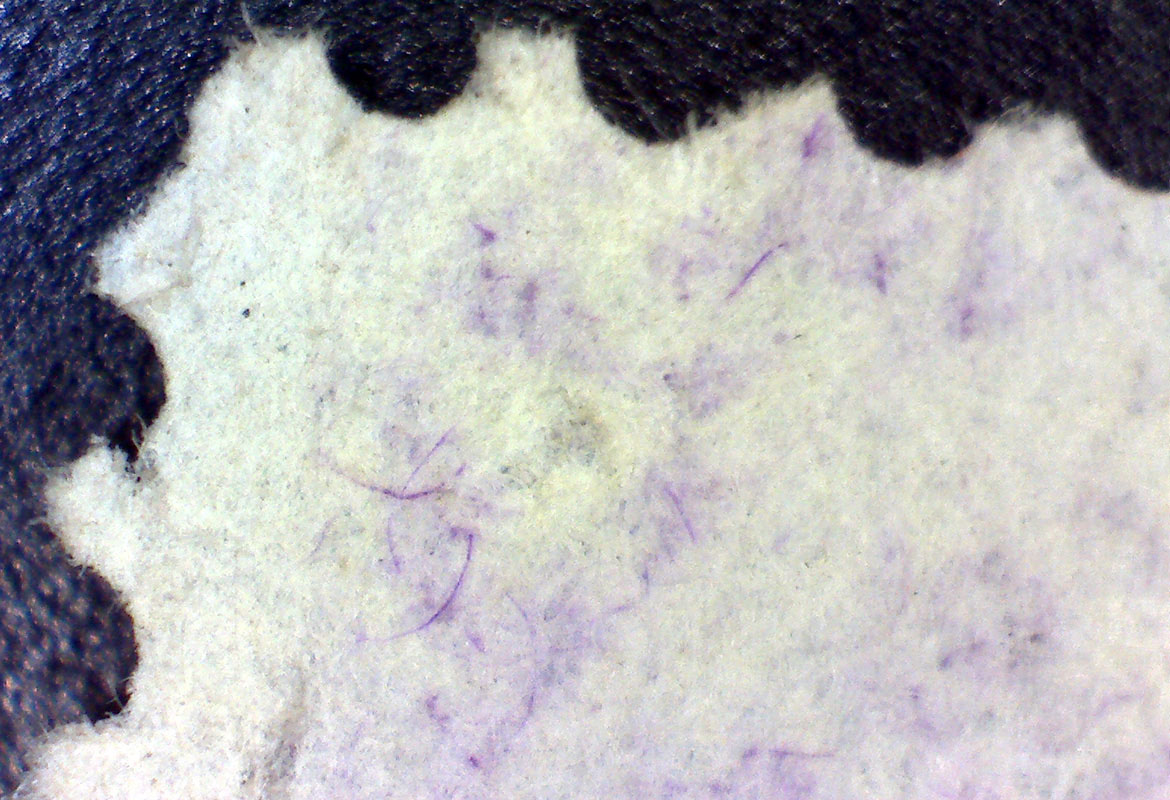 |
|
Send note to Staff
|
|
|
Pillar Of The Community
United States
2555 Posts |
|
|
Would this be an item from Bill's reference collection? I can remember him talking about this "variety" what is now quite a few years ago. Find one with identically colored fibers on a different denomination or explain why the color of the fibers is the same as the stamp. Until then, the only thing you can do is theorize how this can happen rather than call it a form of "silk" paper, or even better, a Scott #164. It's an interesting stamp, I will give you that. |
|
Send note to Staff
|
|
|
Pillar Of The Community
673 Posts |
|
|
Sinclair2010,
Hence the particular interest in the 156 which Scott lists as "Colored Fiber" as opposed to "Silk Fiber". And yes it's from Bill's reference collection. He and I discussed it on many occasions, but it remains "ambiguous". One thing I have contemplated for quite a number of years is, what would cause fibers in the stamp to be colored the same as the printers ink, while being embedded INTO the stamp. And this one certainly has a very very large number of such "colored fibers", though I've been able to find no examples of a "colored fiber" 156...
|
|
Send note to Staff
|
|
|
Replies: 59 / Views: 4,742 |
|




 Posted 01/04/2019 09:31 am


