| Author |
 Replies: 142 / Views: 19,072 Replies: 142 / Views: 19,072 |
|
|
|
Pillar Of The Community
United States
3532 Posts |
|
|
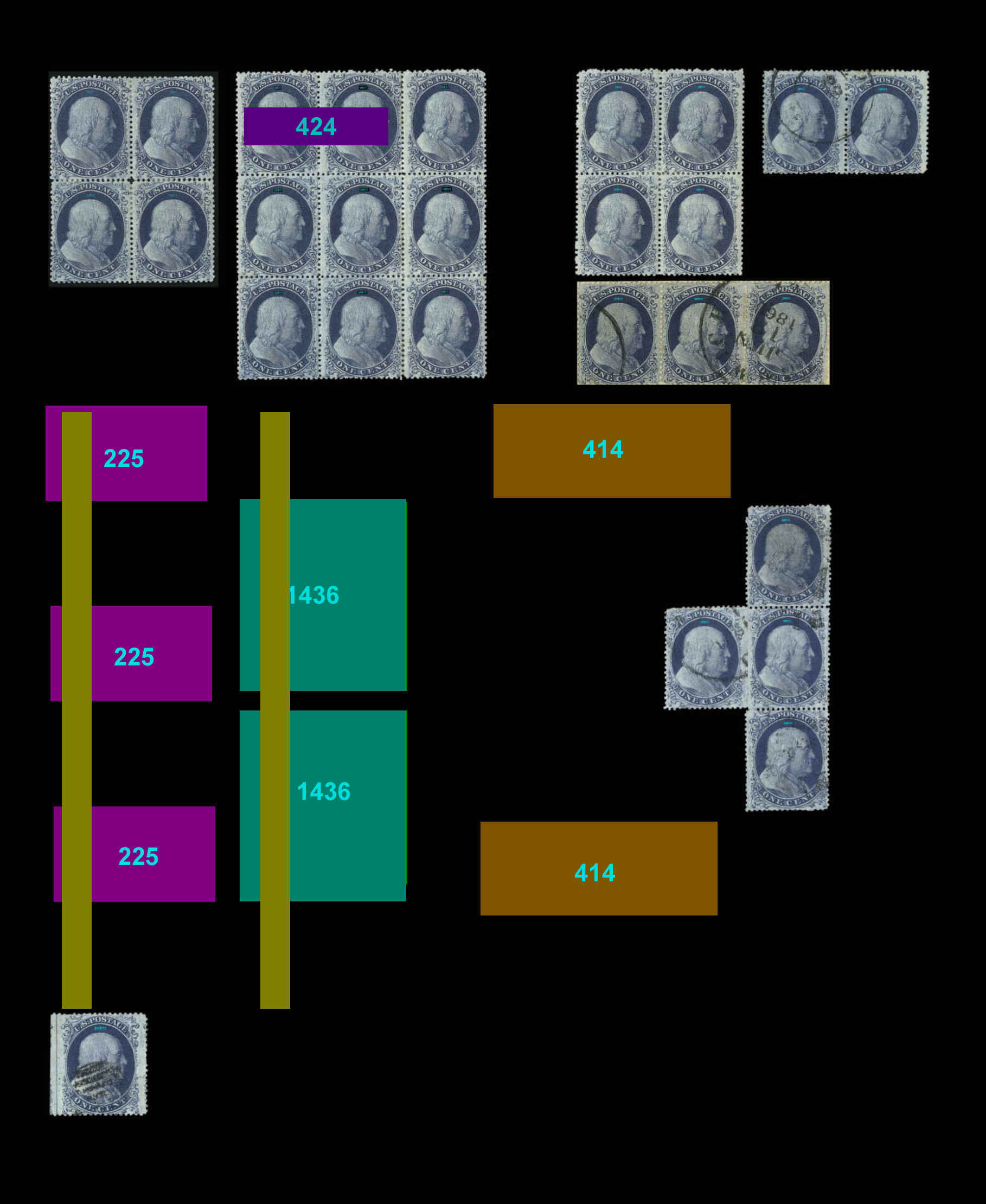
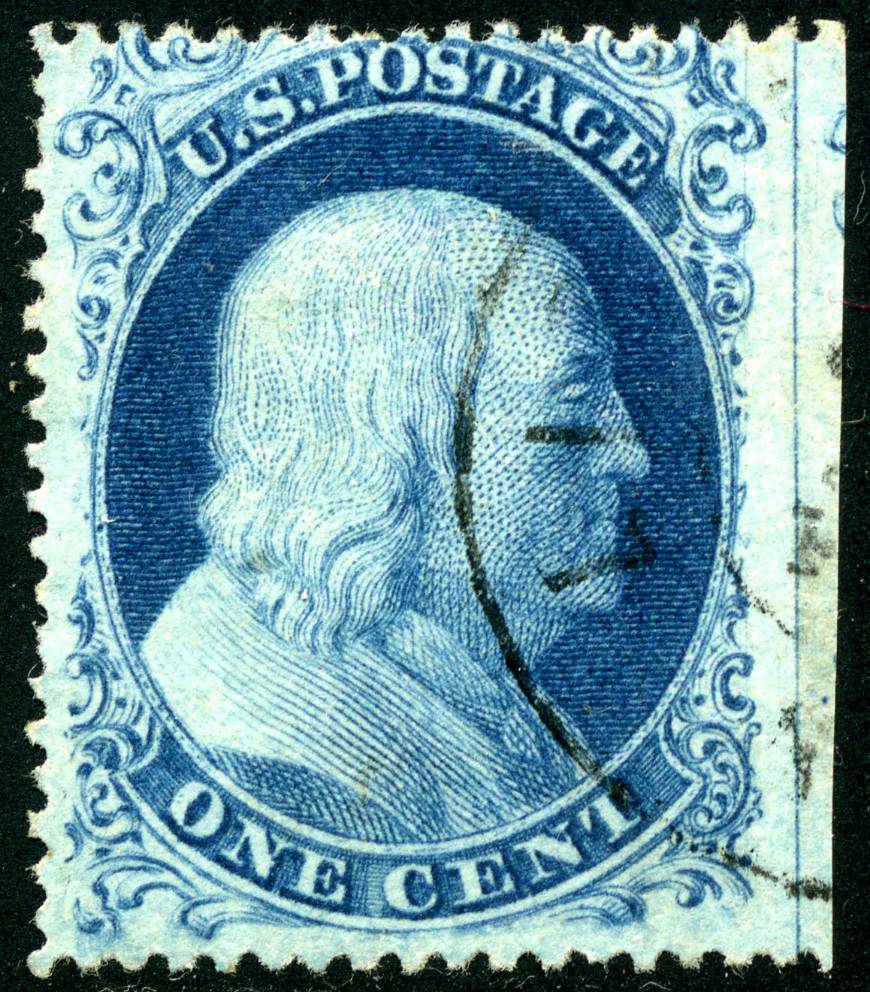
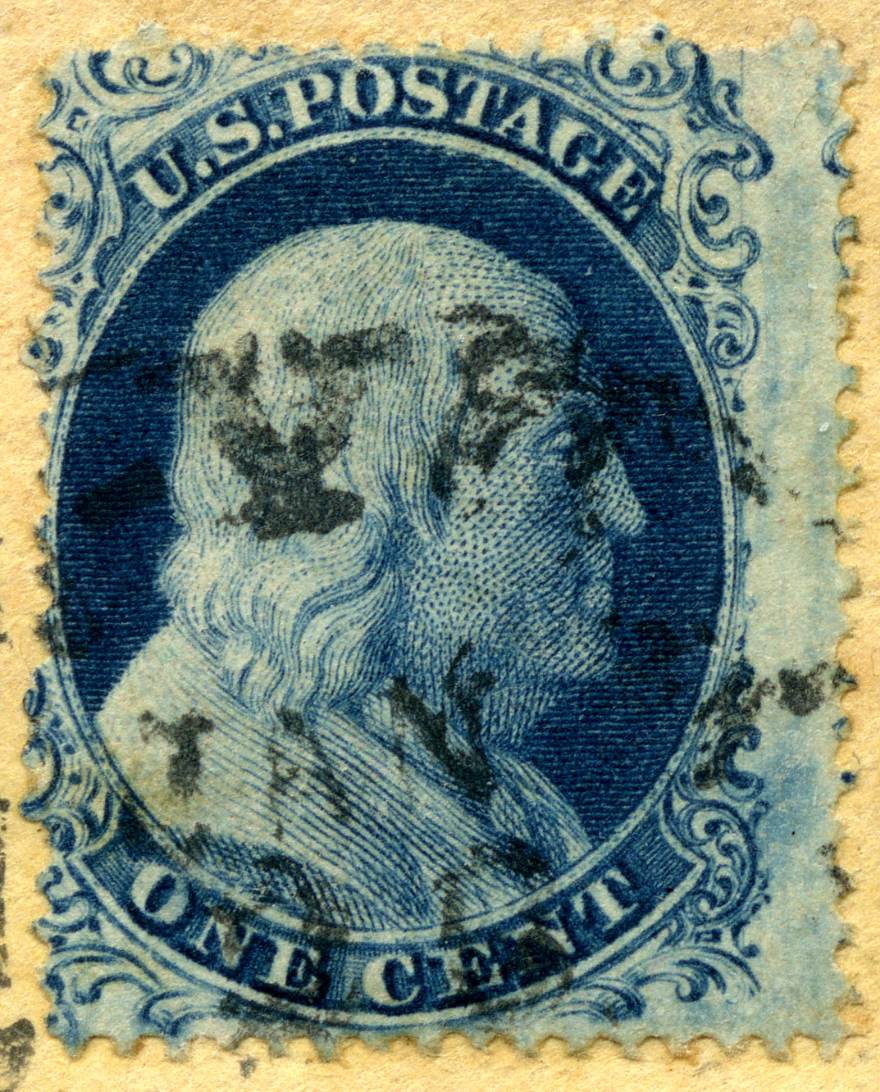 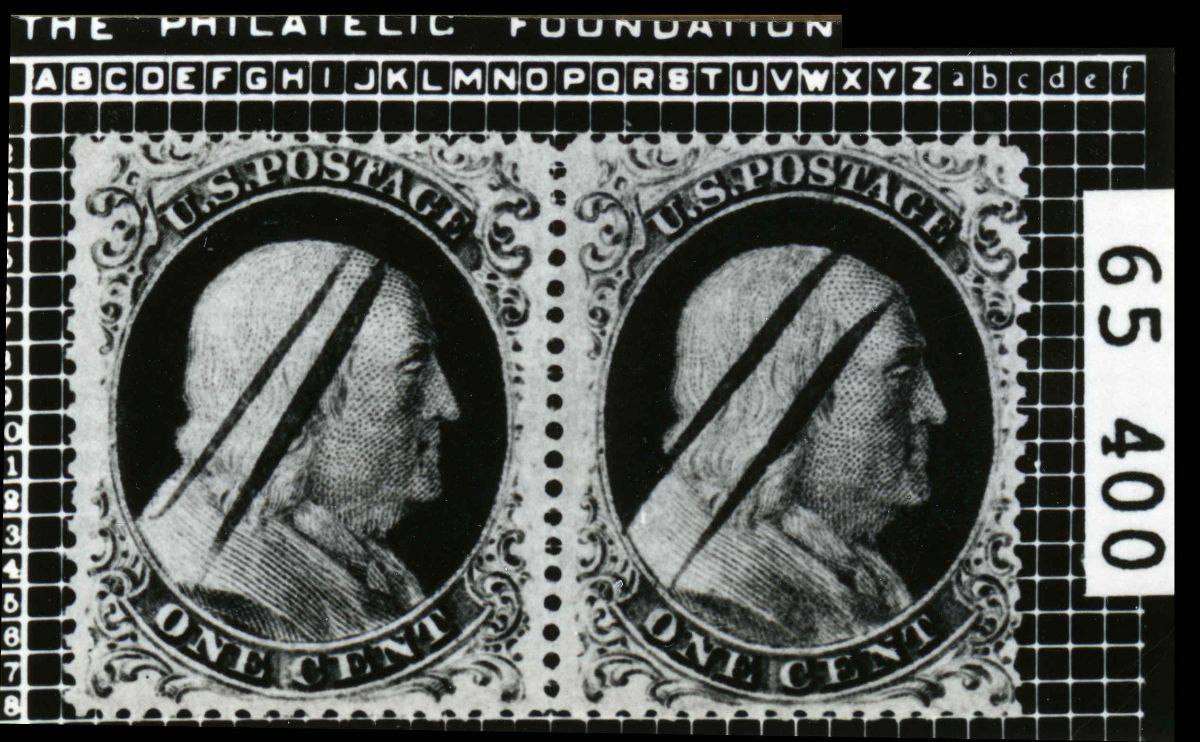 So the first image is 2R11 with a margin so you can see distance to 3R11. The upper left stamp of the Siegel 1006-1436 block that you posted is the double transfer that is Figure 22-T in Neinken on page 477. The second scan is the Photo from PFC 65400, which is a pair, with the right stamp being the 22-T DT. Possibly this info will help you along with your exercise. |
Send note to Staff 
|
|
|
Pillar Of The Community
United States
3532 Posts |
|
|
Pillar Of The Community
United States
1341 Posts |
|
|
Mark, thank you for the images. The #2 with the partial #3 was enough to give me a spacing image. If the block I positioned above is correct, that would make 22-T-DT as position 43R11 or 63R11. I played with the PF image you posted. The 2-3 column spacing was so close but would not match exact. So I did a couple other tests and I have come to the conclusion that my method will not work with photos. I scaled the entire image to match the correct height and the width was incorrect. Set the width and the height is incorrect. So I resized the horizontal separate from the vertical. I could not get the exact match in size, There is some kind of distortion going on. I got the images as close as I could then compared the spacing again and the shown image is what I came up with. I have not had this issue with any scanned stamps so I think it is a slight distortion caused because it is a photo. I have not had problems with working with photos but it seems that scans and photos are slightly different spatially. I will test some Ashbrook photos against scanned images and see what I get. I will do some rechecking on the strip of 4. I have not done any work on left pane yet. On the next strip of 3 that I worked on I have narrowed the left stamp to 36R11 or 76R11. See second image. Had the strip started at column 4, then I would have exact plated the strip and the block of 9 (including 22-T-DT). Eventually these strips will overlap and reveal some answers. 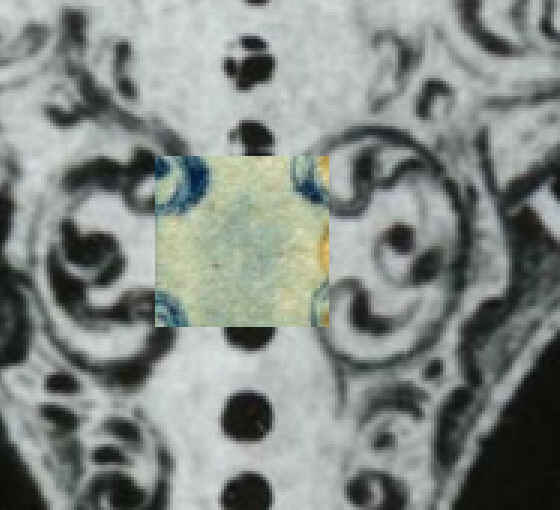 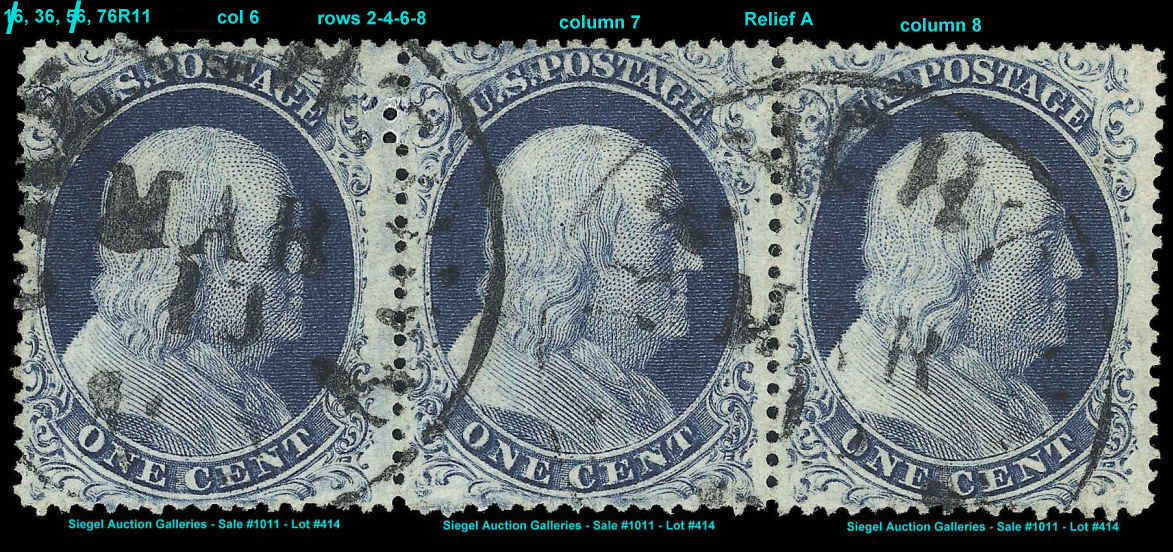 |
|
Send note to Staff
|
| Edited by jaxom100 - 03/29/2019 10:37 am |
|
|
Pillar Of The Community
United States
2555 Posts |
|
|
Photos do not have a uniform scale and are all but useless for any kind of work that is sensitive to image distortion. |
|
Send note to Staff
|
|
|
Pillar Of The Community
United States
1341 Posts |
|
|
Here is a pair that was easy to plate. The spacing technique worked well and pointed to 3-4R11. That image is Siegel 1006 lot 1424. 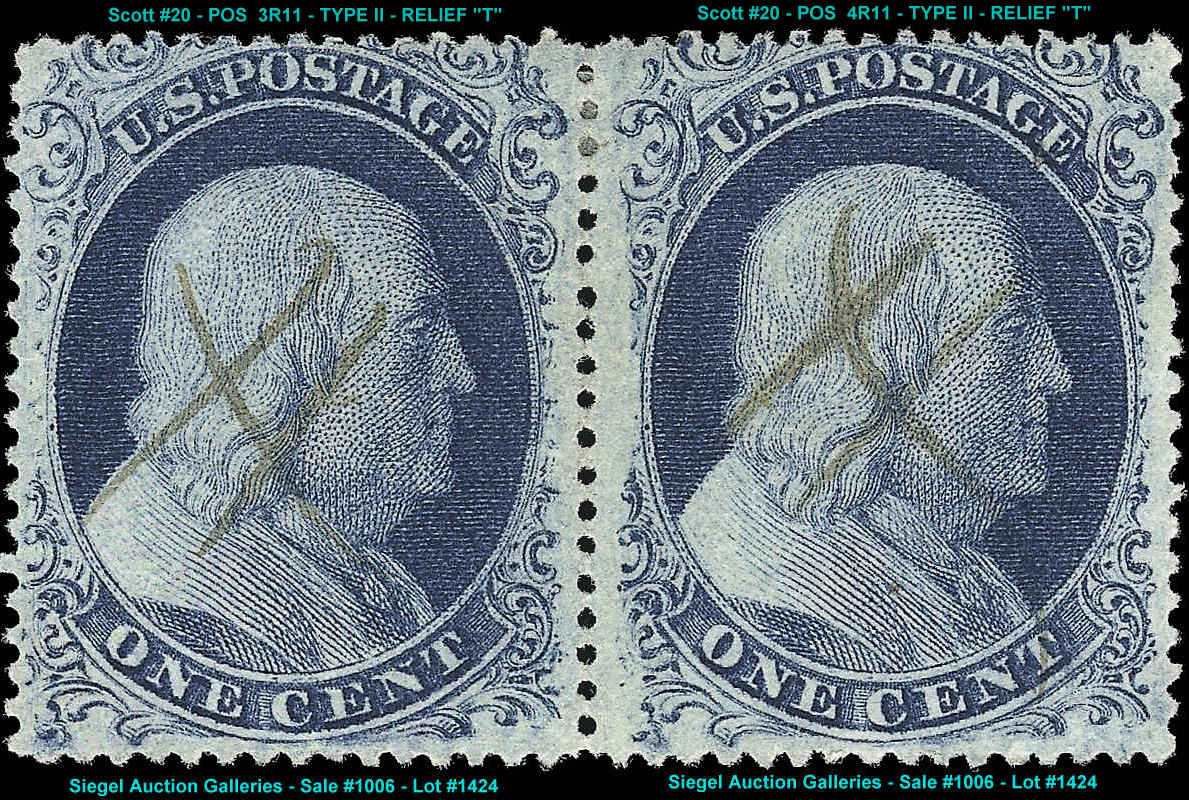 |
|
Send note to Staff
|
|
|
Pillar Of The Community
United States
1341 Posts |
|
|
Pillar Of The Community
United States
3532 Posts |
|
|
Good morning. So on the RAS pair 1006-1424, that you have as 3-4R11 - it is not that. Compare with the UL stamp on the block of 9 for a real 3R11. The left stamp is Neinken's Figure 22-L, page 471. It is a nice top row double transfer. Fig 22-L Top Row Double Transfer: 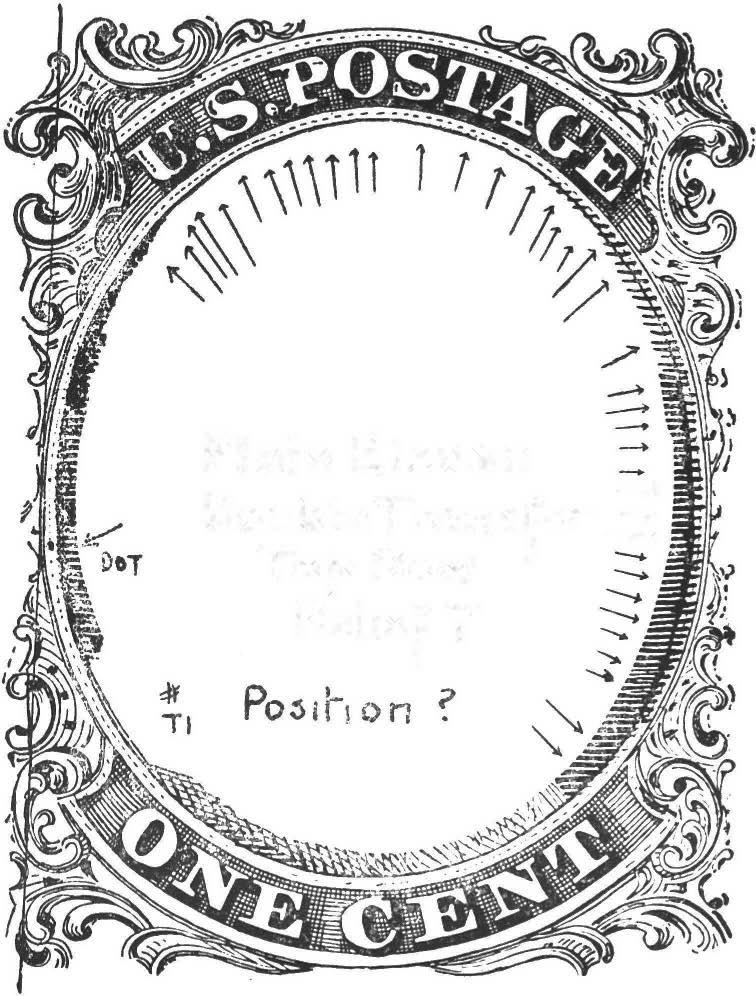 So, the spacing experiment you are doing, probably isn't going to work, as expected, for Plate 11. Or at least it didn't work for this pair. I still don't want to discourage you from poking around and experimenting with Plate 11 though. |
|
Send note to Staff
|
| Edited by txstamp - 04/01/2019 11:45 am |
|
|
Pillar Of The Community
United States
1341 Posts |
|
|
It is a left pane pair. My fault for not looking at details other than relief and spacing. I have not done anything there as far as getting spacers. I have seemed to notice that a guide line on the left indicates a left pane stamp. Is this a true fact?
I have only seen one pair that I considered "odd". It was a real high/low pair. More so than anything normally found.
|
|
Send note to Staff
|
|
|
Pillar Of The Community
United States
3532 Posts |
|
|
For reference, do you have a link to or picture of the high/low pair you mention? I'm curious to see it. |
|
Send note to Staff
|
|
|
Pillar Of The Community
United States
3532 Posts |
|
|
Pillar Of The Community
United States
1341 Posts |
|
|
Well, the pair was a strip of three. So much for my memory at work. Here it is. The space between column 1 and 2 looks real low to me compared to all others I have been looking at. And the horizontal B-A-B relief. 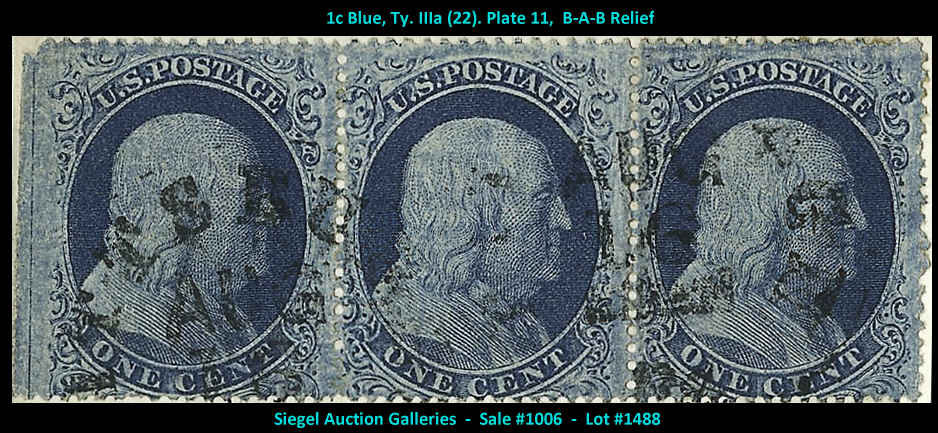 |
|
Send note to Staff
|
|
|
Pillar Of The Community
United States
3532 Posts |
|
|
That is a very important strip in helping to understand Plate 11.
In addition to showing the centerline, as you state - it is a B-A-B combination.
So it seems pretty clear that a misplaced relief is in play here.
The method of entering Plate 11 is not uniform, and this proves it.
Non-uniform transfer roll settings can also of course, impact the accuracy of your spacing and alignment exercise. This is because the transfer roll isn't necessarily being put down in the same uniform method in each column. If they change their methodology, say, mid-column, and start with a B instead of the usual A-B combo, then that changes a lot.
For the First Contract 3-relief plates, they would do the 10th row adjustment, where instead of A-B guided by T, they would do B, guided by A. That caused the dingle on 9th row B reliefs and made the 10th row a B relief instead of an A.
An A relief in between two B reliefs is just plain madness, so its a bit hard to know what they were thinking here, without seeing the bigger picture. |
|
Send note to Staff
|
|
|
Pillar Of The Community
United States
1341 Posts |
|
|
My first thought was that it is a row 9 strip. If they missed position 82R11 for some reason while laying down rows 8 and 9, they could make it up while laying down the 10th row by placing the A relief instead of using the A to line up bottom row. That would also misalign the spacing in both directions as it is shown.
|
|
Send note to Staff
|
| Edited by jaxom100 - 04/02/2019 11:31 am |
|
|
Pillar Of The Community
United States
3532 Posts |
|
|
The Plate 11 Layout Lines
* Plate 11 Data and information herein courtesy of the Plate 11 Study Group.
Early in the process of making a plate, prior to making any entries with the transfer roll, a siderographer often would sketch out very fine straight lines directly on the plate. These could then be used to help organize the transfer roll settings to come. These are often referred to as "layout lines". They are found on many line-engraved stamps. Since they are so fine, they often wore out quickly, or even would get partially ironed out by subsequent transfer roll entries. For these reasons, they are not visible on many if not most such stamps.
Many stamps from plate 11 do show remnants of a vertical layout line. Many do not. If one goes back through this entire Plate 11 thread, and examines images of the stamps that have been posted, many show a faint, or strong vertical line in the space between ornaments L and M. It often extends much further up or down, and often is not present. This will be called the "right-side" layout line.
Now, focus on the horizontal strip of four, with the NEW YORK APR 8 CDS. It looks like it may actually be 2 pairs. The second stamp from the left has a visible vertical layout line between ornaments A and B. It extends further, both up and down if one looks closely. This was Siegel sale 1006, lot 1491, for reference. Its on cover. Next, take note of the top row T relief pair, with pen cancel, which was Siegel sale 1006, lot 1424, and posted earlier in this thread. Refer to my post, indicating that the left stamp is Neinken's 22-L double transfer. The drawing of the 22-L double transfer shows a strong vertical layout line through ornaments A and B, progressing through F and G, and the entire left side. Looking closely at the left stamp in the pair, that line is most visible between ornaments F and G. These will be called examples of a "left-side" layout line.
The Plate 11 study group has determined that right-side vertical layout lines are found in ten consecutive columns, from the 10L column through the 9R column. The 10R column does not appear to have one. So, all right-pane columns except 10R have a right-side line. The only column from the left pane that has a right-side line is the 10L column.
Columns 1L through 9L, in the left pane have left-side layout lines. So the left pane, except for 10L, has left-side vertical layout lines.
Refer to the 10L11 image, showing the centerline, that I posted recently, to see the right-side layout line on that left-pane stamp.
From this, we would conclude that the second stamp in the "strip of four" (actually two pairs?), Siegel 1006-1491 is left pane. The pair with the left stamp being the 22-L double transfer is also left pane.
This is obviously an enormous and badly needed plating aid, for a plate whose material is so scarce. It is also a very significant breakthrough in helping to understand something about Plate 11.
Images of Plate 11 material from anyone is solicited. Post it in this thread, and the Plate 11 Study group will see it. |
|
Send note to Staff
|
| Edited by txstamp - 04/02/2019 4:28 pm |
|
|
Pillar Of The Community
United States
3532 Posts |
|
|
jaxom - I wanted to point this out explicitly, that Siegel 1006 lot 1491 - the purported 'strip of 4', is not in fact, a strip of 4.
It is at least 2 pairs, maybe even another separation as well. |
|
Send note to Staff
|
|
|
Replies: 142 / Views: 19,072 |
|




 Posted 03/28/2019 4:45 pm