| Author |
 Replies: 24 / Views: 2,333 Replies: 24 / Views: 2,333 |
|
Valued Member
Norway
60 Posts |
|
|
Can anybody help me with this 1C Green Franklin ? Im not so good with stamps but learn a lot by reading your forum, in the past I spend the most of time to collect banknotes. I have 19 1C Green Franklin, spent a lot of time measuring sizes and now its 16 left with different sizes from 18,70 to 19,20 * 22,20 to 22,50. And 4 - 5 different level of green coor, 2 stamp have even green paper, and some cancell/postmark with just a number, 1 and 2.... This stamp I measure to 18.70 + 22.60 but not with right tool but its a start.. , no ink on the backside, probably mirrorimage/imprint . But I dont know how to deal with the stamp perforation. And I know after some reading thats the 11*11 ore 11*10,5 its a big topic ... I had also learn by reading here that the famous nr 15 is a funny thing.. So, can anyone say anything about this stamp ? 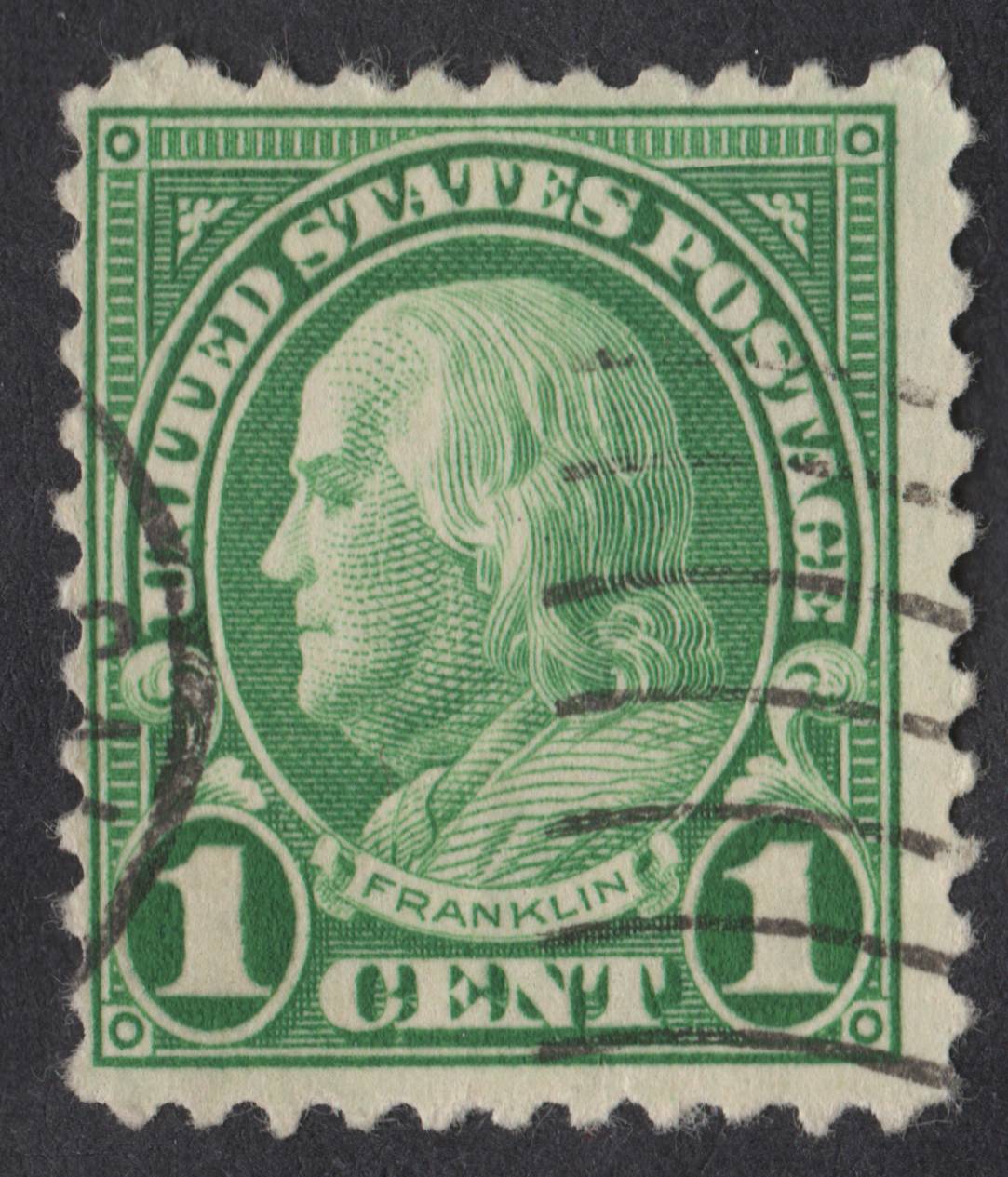 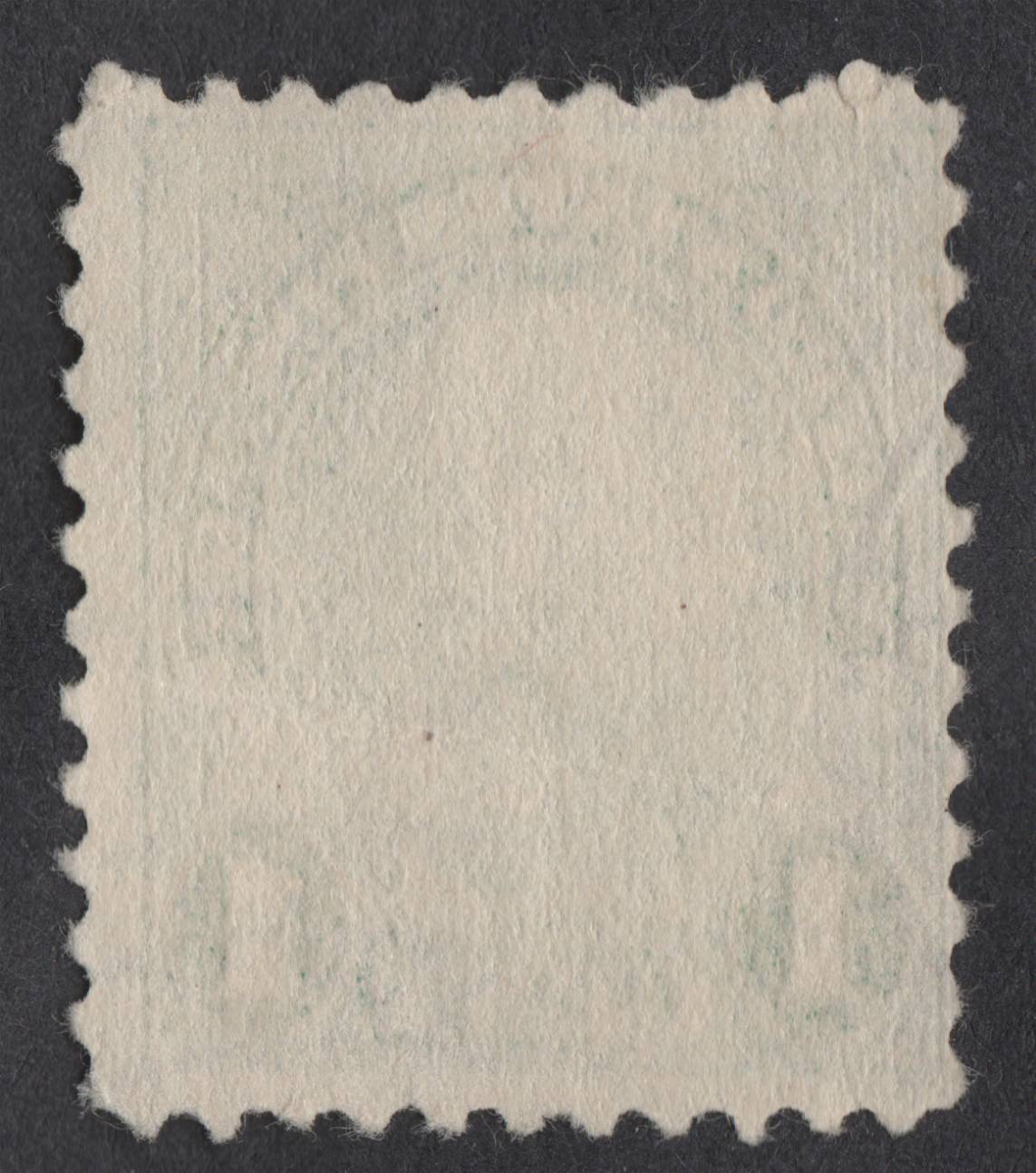 |
|
Send note to Staff
|
|
|
|
|
Moderator

United States
12330 Posts |
|
|
Welcome.
You have read enough to know to look for ink on the back, so you must have read enough to know that measuring this stamp is not how you should identify one of the extraordinarily rare varieties of this stamp.
Start with gauging the perforations. Do you have a perforation gauge and if so, what were the perforations of this stamp? (Hint, the perforations are not 11 x 11).
In reply to your other thread...
'Treasure hunting' is a part of our hobby; everyone enjoys finding a previously unidentified uncommon stamp. Problems arise when people do not do the simplest identification steps first like gauging the perforations.
Additionally, our hobby cannot guarantee that anyone will ever find a really rare stamp. But we can guarantee a rewarding hobby that will expose a collector to the cultures and history of our world. So many of us would rather emphasize the things that we know our hobby can deliver instead of 'treasure hunting'.
Don |
Send note to Staff 
|
|
|
Pillar Of The Community
673 Posts |
|
|
Dronen71,
Good to see you here on SCF. Don's pointed out the main things here. You really have to get a perforation gauge and eliminate all the common issues first, since there are around 1 billion to 1 vs the rarities. (Rarities are rare because they are RARE, ie. not common, not even scare or hard to find but RARE).
But happy hunting.
|
|
Send note to Staff
|
|
|
Pillar Of The Community
United States
713 Posts |
|
|
There is a printable perforation guide at stampsmarter.com to get you started.
|
|
Send note to Staff
|
|
|
Valued Member
Norway
60 Posts |
|
|
ok. so that meen you cant say anything about this stamp ? So to perforations. I the last 4 days I been cauting perforations all day long, many our ,many. I also work hard to get perforation cauge, it take time, you cant just go to the local store and get it. Im not focus on the 596/594 and the needs for 11*11 so lets forget that. I understand that you dont like to talk about that. I try for some time to learn more about this so it feels a little strange to get criticizes for things I dont know, everybody has to start somewhere ? If this forum is just for the higher level, thats ok :-) The problems for me has been where to start counting perforation, start whit the half one the corner ore start with the first complete, then count to other side and se if you end on 10, 10 1/2, maybee 11, and when im lucky maybee 12, I think max is 18 south africa ? I must open that book some day, my uncle travel around the world for many years. So the collection is big. So I know I must get some tools but try to upgrade my self in the meantime. Of course, a human cant split 70/1000 and 75/1000 to bee absolute sure in the distance between perforation, but the rotary from 1854 has a littlebit leaning so im looking for that also. And some of my stamps has that leaning (12*12 ) i have a "couple" stick together , 1c Green Franklin, but I wonder , its perforated on two opposite side and imporforated at the 2 other sides, that is typical coil but still it can be bookled, so its not so easy to find out what I have..but someday I find somebody to help :-) I have some stamp 1 and 2 cents whit 12*12 then it can be "blue" paper , then 335 since it 12*12, isnt it 504 when its 11*11 ? Its better to look on backside but then, whats old  , gum mark from strip etc, I dont know . Maybee I should show pictures because its not so easy to tell how my stamps looks, and not good I gramma . |
|
Send note to Staff
|
|
|
Pillar Of The Community
1375 Posts |
|
|
you don't count the perforation holes but just put the stamp on the gauge and "read" the correct perforation from the gauge, where it fits best.
(this is then the number of holes per 2cm) |
|
Send note to Staff
|
|
|
Valued Member
United States
182 Posts |
|
|
Valued Member
Norway
60 Posts |
|
|
stamperix and prexie, thanks a lot! That good information, then I can do more by my self. So thats the main thing, how many in the space of 20 mm.
I actually think one should count so that it matched the technique with which the stamp was made. And then it was 11 by coil etc, now I see the logic
Something else I wonder. As I have understood, it is the production method that makes the paper stretch which gives these small differences in size, and sometimes the paper direction was reversed or direction or something that gave new differences? And this happened at rotary ... its that right? Why is there a size difference in the booklet because it is well stamped through the plate? Has it been first coil? That's hard to get, for a beginner :-) |
|
Send note to Staff
|
|
|
Valued Member
Norway
60 Posts |
|
|
Valued Member
Norway
60 Posts |
|
|
Prexie, I have to actually commit to adobe / subscription to open the file, and the only option is then to bind to $ 27 each month, everything is expensive in norway, adobe makes our own prices for us here, we do not get the same item at the same price as you :-) |
|
Send note to Staff
|
|
|
Moderator
United States
12330 Posts |
|
|
Valued Member
Norway
60 Posts |
|
|
Don - he he, I did for some time ago, not again, you get just one time :-) and im not paying 27 dollar for month ! then I read on your other forums, about digital measuring, im self skeptical, but I tried it, no other way today, others writes it can help you to a closer result, then I try one of the 1cents franklin. I get 13,5 * 12,5 ( size 19,50 mm * 22,55 mm ) is this something you can look at and give your opinion ? |
|
Send note to Staff
|
|
|
Pillar Of The Community
United States
1414 Posts |
|
|
The stamp is a common 1 cent perf 11 x 10½ Scott 632. The color is a lighter green, characteristic of most printings of that issue.
Rotary press stamps are taller or wider than flat plate stamps because the plate is bent, stretching the stamp design, to fit on the press cylinder.
Stamps of the period were printed wet for better ink adherence. After drying, stamp designs would shrink slightly across the grain, vertical for most flat plate sheet stamps, narrowing the stamp and horizontal for most flat plate booklet panes, shortening the pane. The effect of bending rotary press plates is more significant than effects of paper shrinkage. Attempting to stretch paper, wet or dry is likely rupture it creating tears. |
|
Send note to Staff
|
| Edited by cfrphoto - 01/25/2019 7:38 pm |
|
|
Valued Member
Norway
60 Posts |
|
|
Valued Member
United States
264 Posts |
|
|
Valued Member
Norway
60 Posts |
|
|
thats clear a bit, because efter reading about rotary, streching etc , in my world the biggest stamps in size was from that periode, or teknic, coil/rotary ....another thing, mirrorpicture on the back, is that from rotary ? leftovers ink on coils ? and then its indicate rotery ? and inkspot/dots will tell me that is flat plate ? |
|
Send note to Staff
|
|
|
Replies: 24 / Views: 2,333 |
|



 Posted 01/25/2019 01:46 am


