Couple points of clarity to this:
1. I'm not recommending using a soap on every stamp... only stamps that are so far deteriorated by some other "defect" that you can't make it worse by cleaning it. Here is an example of when a stamp is ok to have some cleaning done.
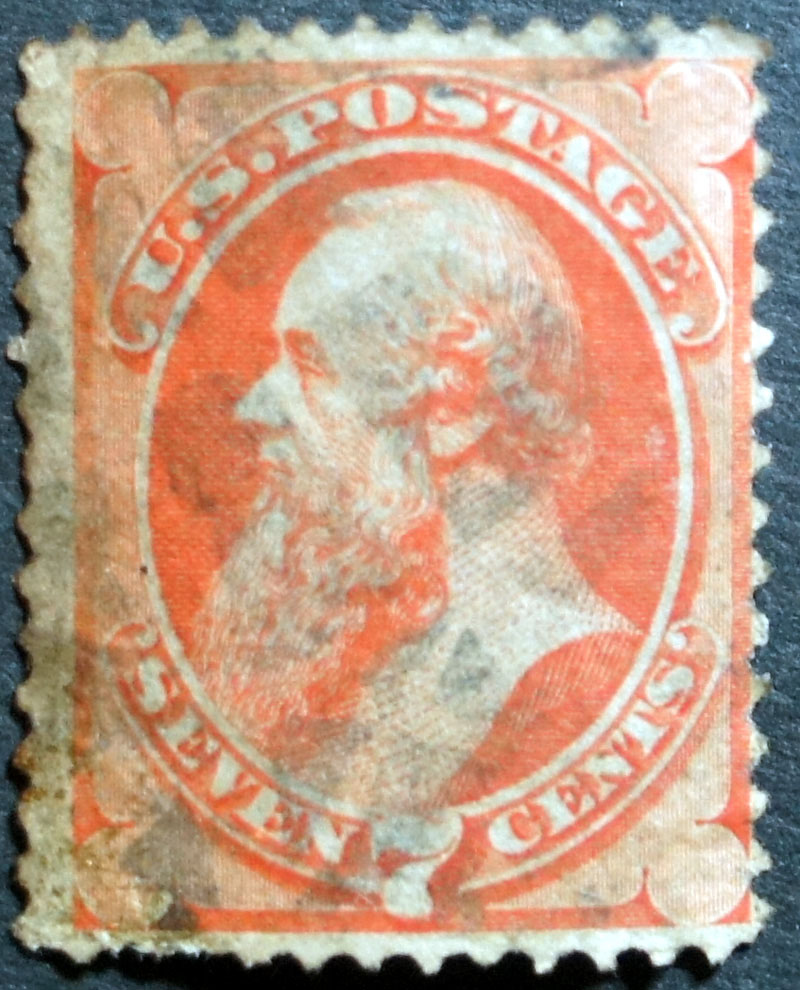
There is no chance to make this worse.
Not all soaps contain optical brighteners. Laundry soaps are the most common, and most do have, but I wouldn't recommend using them anyway. Dish soaps do not (in fact, I can't find a single dish soap that contains an optical brightener). Not saying they don't exist, but I am saying, majority of dish soaps are safe (not including dishwasher soaps).
So that wasn't enough for me, I want to debunk this myth that using a light soap emulation to remove unwanted dirt from a stamp neither a) alters the paper or fibers, nor b) alters the color, either short term OR long term.
Today I ran a test. Here is what I did.
I randomly selected 6 219's from my vat of about 400 of them to use in this test:
1. Control - These stamps had nothing done to them.
2. Water only - These stamps were submerged in cold water only for 3 minutes
3. Soap emulation (just used my counter top dish washing liquid) Soaked them in the liquid for 2 minutes, then rubbed them gently between thumb and index finger for 1 minute, dipped back into the same emulation only to get the soap off of them.
Then, I took them out. There are 2 of each stamp "exposed" to the 3 conditions above.
I took photos of them in natural light which are presented here:
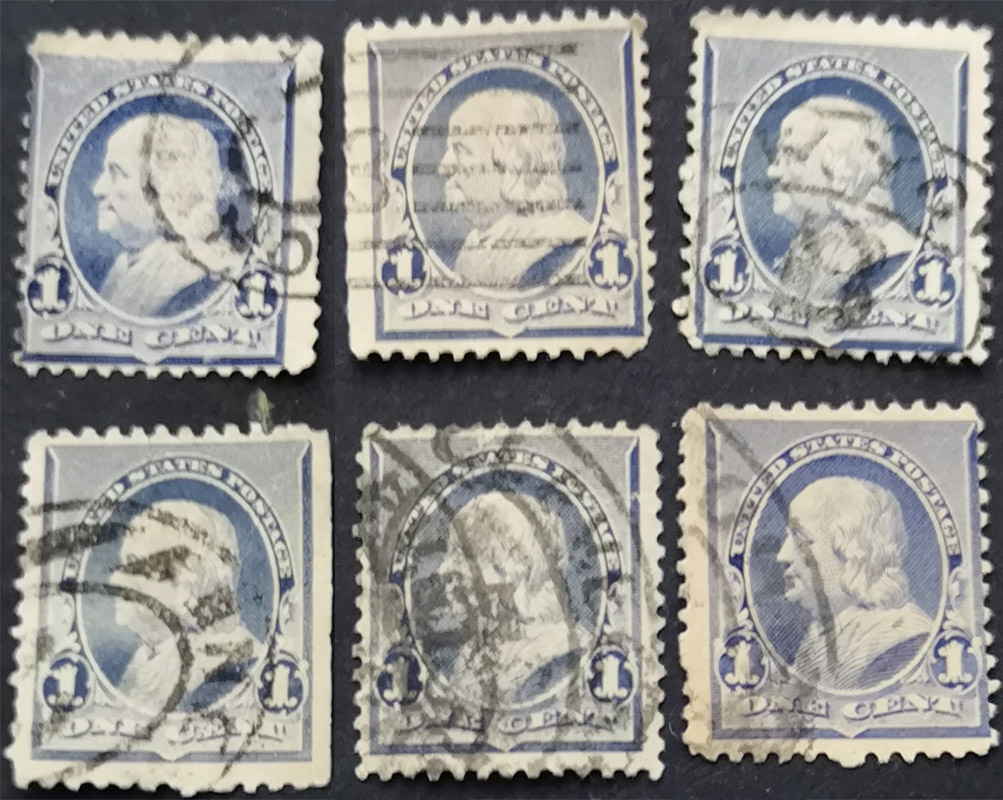
This is the regular light image.
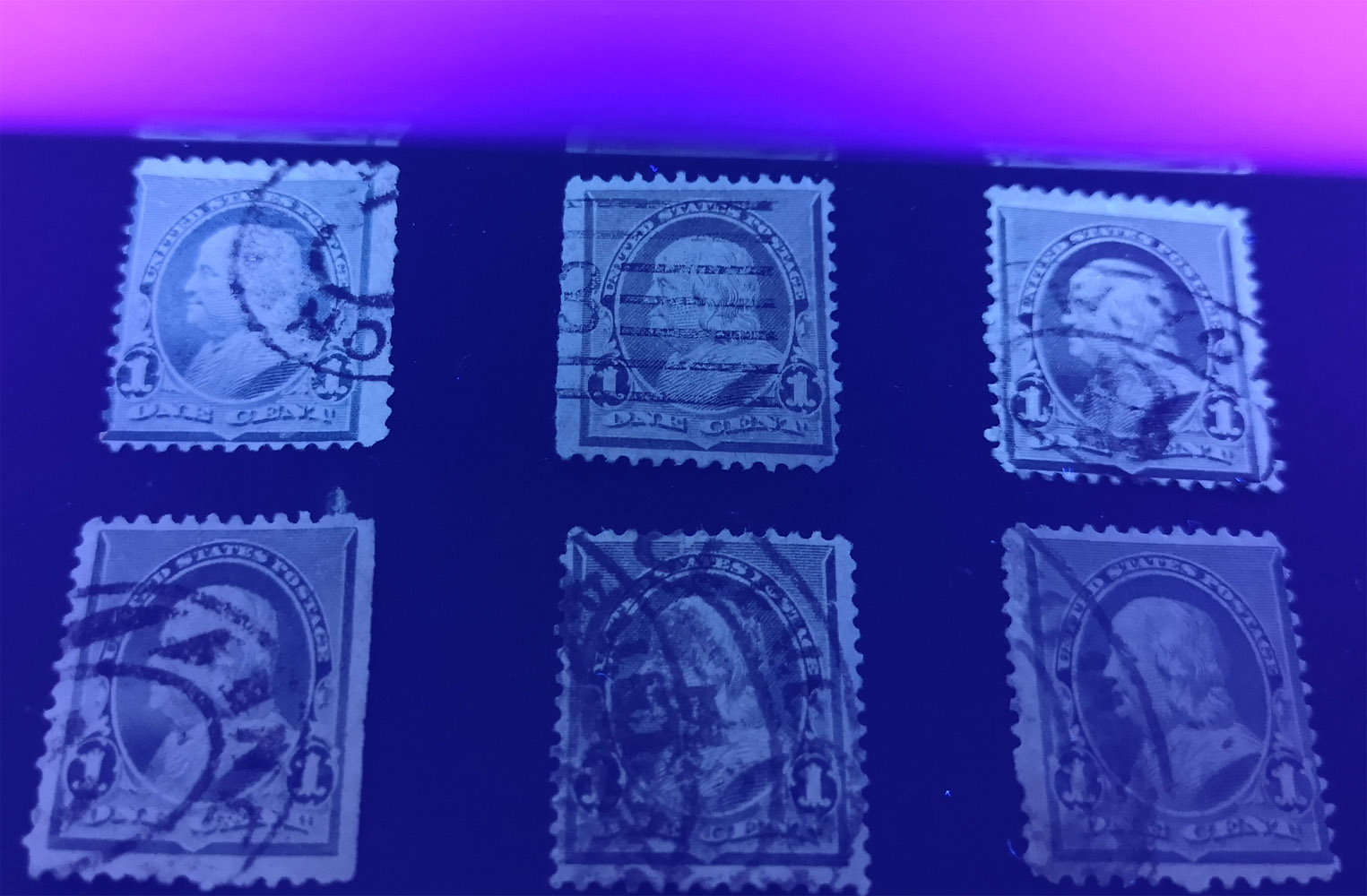
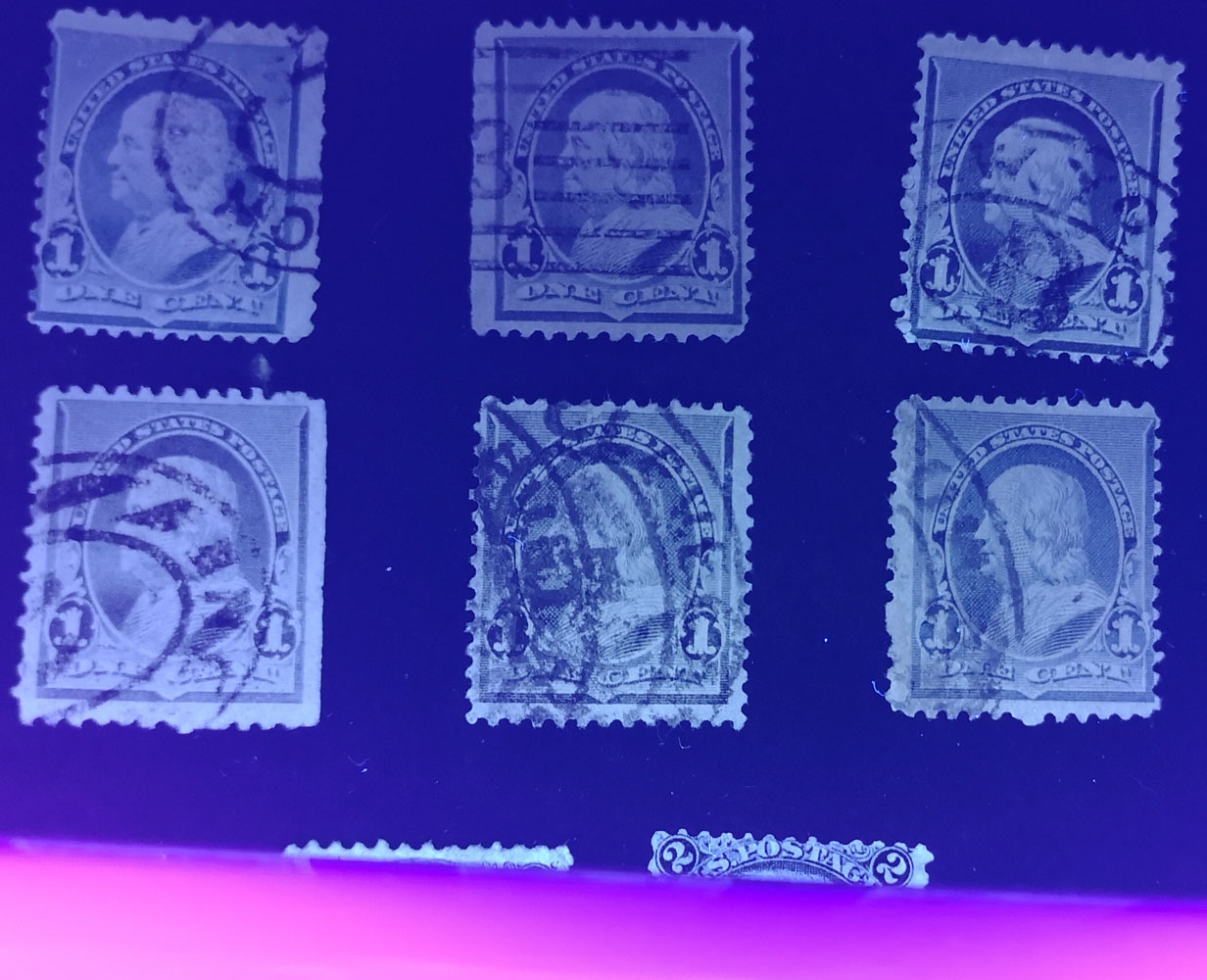
These two images are under a UV-B (very strong) black light. I also tried it with a UV-A 380nm light (very light), a UV-A 254nm light (pretty strong) black light as well. But the STRONGEST result comes from my 10BL-B UV-B light, so I went with that.
This image is the top row under UV:
And this is bottom row under UV:
So my challenge is this:
I will allow the pick of your choice from my dealer stock, nothing off limits, to anyone who can accurately identify which 2 were washed in soap, which 2 were soaked in water, and which 2 were the control (just pulled out of the binder).
My point here is this: A light washing of a stamp is most certainly NOT an alteration of the paper OR the color. There is nothing wrong with stamp preservation. There are advocates for some stamps (particularly CSA) even to soak of their OG because IT is damaging the stamp! (I see both points of this argument actually).
But to argue that removal of dust, dirt, grease, or other soil is an "alteration of the stamp" is just misinformed.
AND this "Myth" and "fear mongering" of attempting to do so, irreversibly alters the stamp to some degree that is detectable by any reasonable means. (Sure, if you expose it to chromatic spectrograph, you may be able to detect the presence of some substance, but I submit that if you subject a stamp to 10,000x magnification you will ALWAYS find a fault in it as well).
Finally attached is an example of CHEMICAL CLEANING, which clearly alters the stamp both in visible and UV light. The stamp on the left was chemically cleaned. Guess what, compare it to any other stamp, and you will be able to EASILY identify it as such, and if not, stick it under a UV light and it will be obvious.
Visible Light:

Back under UV Light:
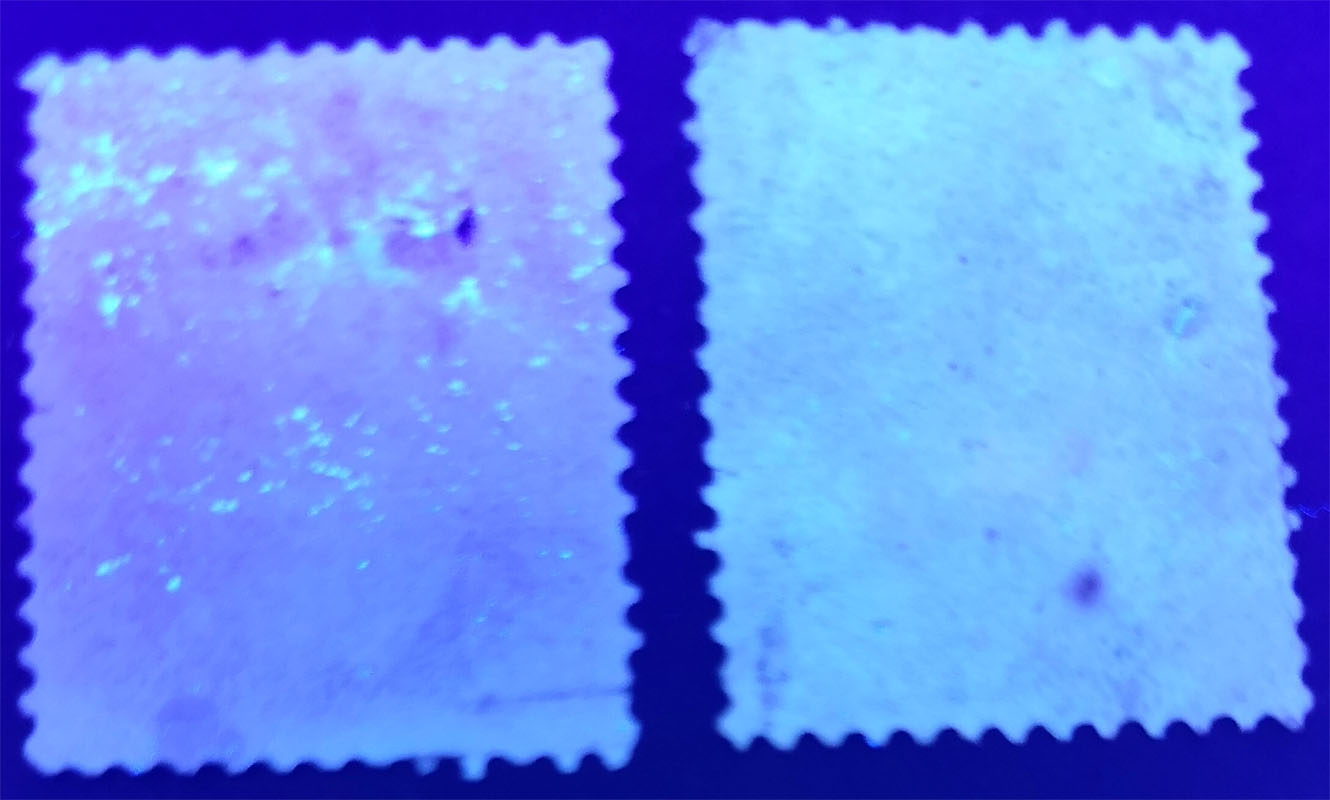
The stamp on the left (A 73) has been chemically cleaned. The design still looks "fresh", the paper is almost "bleach-like". It has a different feel to unaltered 73's, but the design has minimal loss of coloration (this is particularly effective in black stamps, some stamps like the Grey Blue/Ultramarine 206 will turn "monochrome" in some solutions.)
So the gauntlet is dropped. Let's stop the myth that washing a soiled stamp is a bad idea. Done right, it's really not.
Note on edit: Corrected a auto-correct typo from "solicitations" to "solutions".





 Posted 02/07/2019 12:19 am


