| Author |
 Replies: 28 / Views: 3,462 Replies: 28 / Views: 3,462 |
|
Pillar Of The Community
United States
901 Posts |
|
|
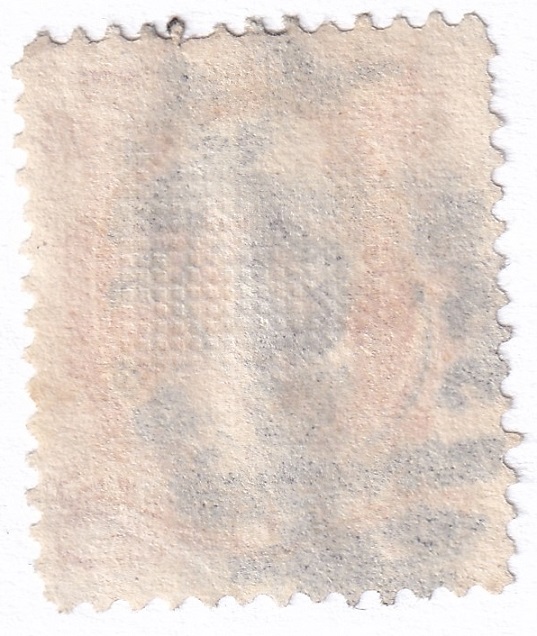
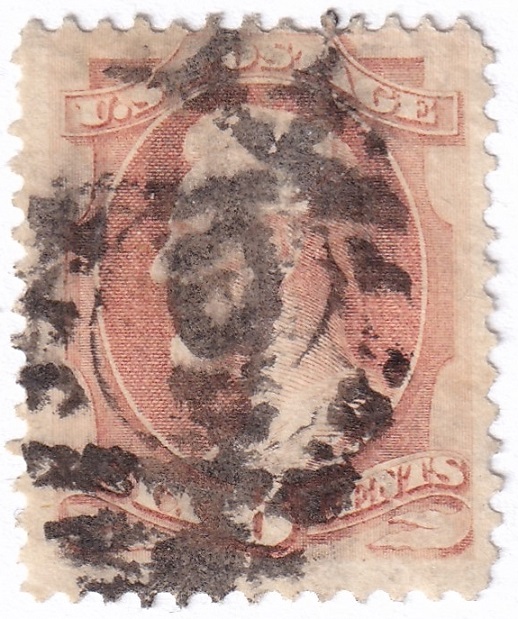
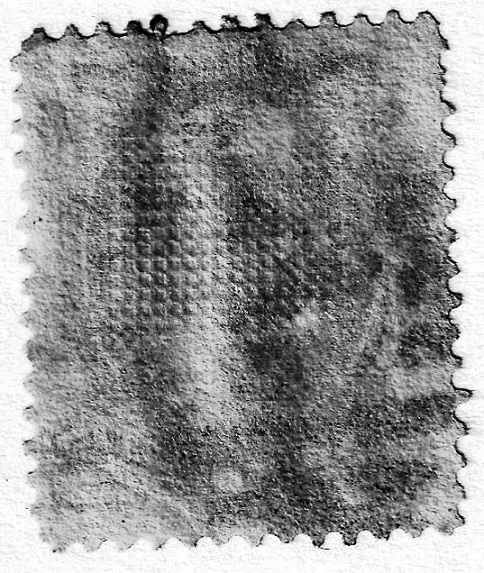
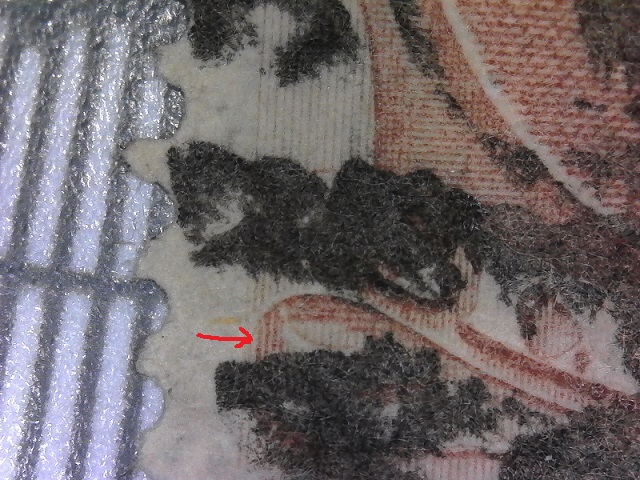
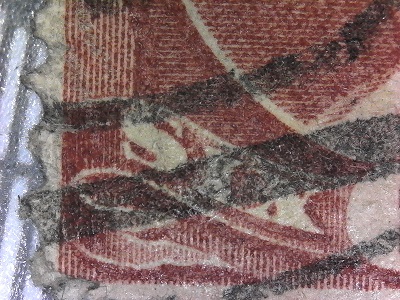
Hi I am wondering if this stamp should be sent to the PF for a cert given the overall condition of it. The stamp has a heavy cancel which I'm afraid would make it less than desirable. The Grill however is clear and appears to be a late state H Grill with 13 x 16 rows with points truncated to the point of looking like boxes. Does anyone have an opinion on what would be a reasonable course of action in this instance? All opinions appreciated. 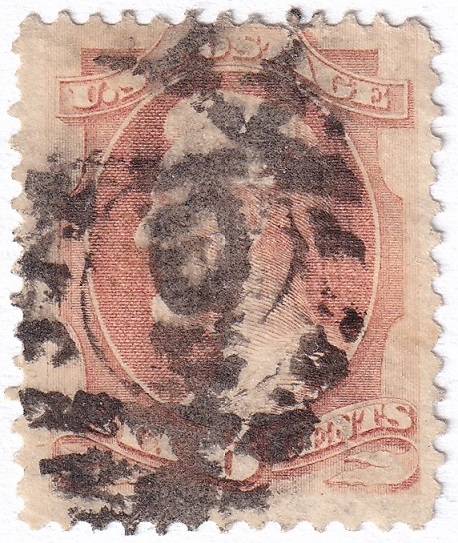 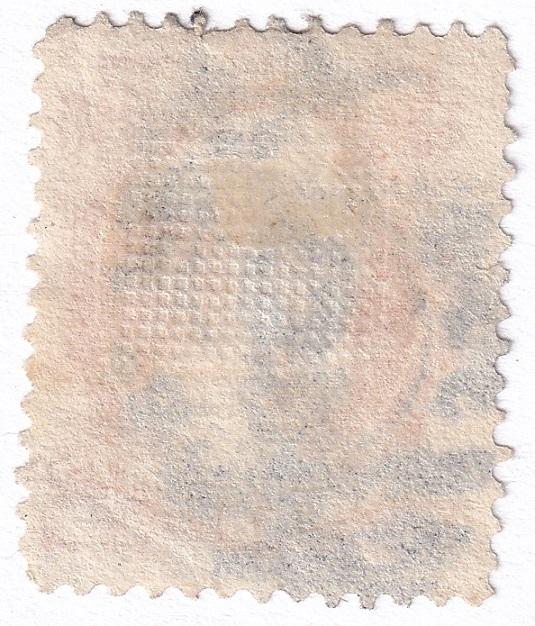 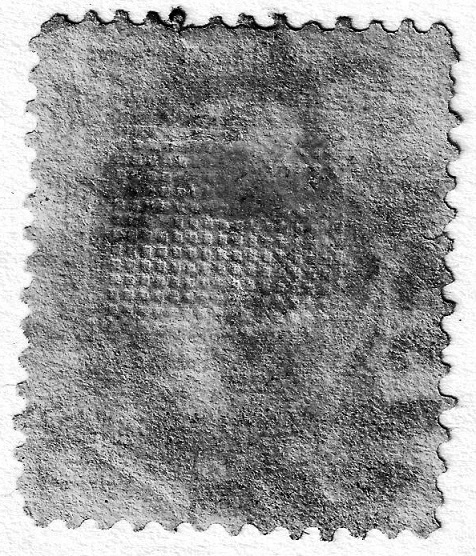 |
|
Send note to Staff
|
|
|
|
|
Pillar Of The Community
United States
1414 Posts |
|
|
Step 1: Soak to remove extraneous hinge remnants and gum.
Step 2: Re-image the back and the front of the stamp.
Potential issues:
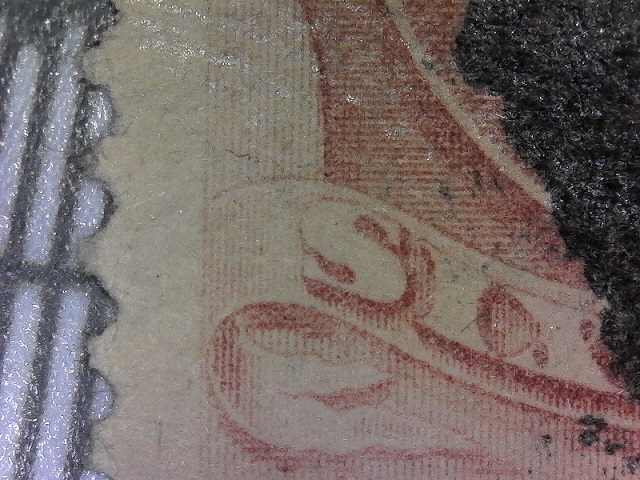
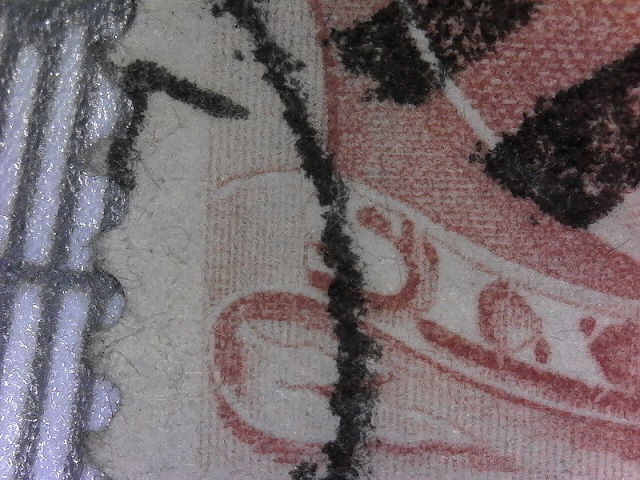
1. The grill appears to be too wide with more than 13 vertical rows. Is it a double grill?
2. The color in the scan as seen on my monitor looks more like a 159 than a 137 or 148.
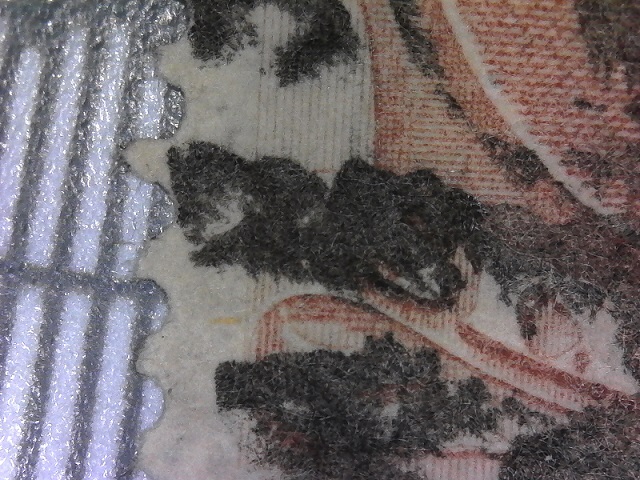
3. Is there a secret mark lurking under the cancel?
4. Read the paper mesh note in the US Scott Specialized catalog. It should be possible to separate a few bank note stamps into two piles. Stamps with horizontal paper mesh, including the grill should be slightly shorter. Comparing the relative size of stamp designs is much more effective than attempting to measure designs. |
Send note to Staff 
|
| Edited by cfrphoto - 05/17/2019 11:30 pm |
|
|
Pillar Of The Community
United States
901 Posts |
|
|
cfrphoto
Thank you. I'll soak the stamp and re-post images. Counted 16 vertical rows and 13 horizontal. Should I have read this as 16 x 13? |
|
Send note to Staff
|
|
|
Rest in Peace
United States
920 Posts |
|
|
Probably just my eyes buy the grill looks funky...and appears to be 16x16??? |
|
Send note to Staff
|
|
|
Pillar Of The Community
United States
901 Posts |
|
|
Pillar Of The Community
6363 Posts |
|
|
Which came first, the grill or the cancel? For a grill so strong with a cancel over a considerable portion of it, one usually sees the cancel only on the high points of the grill and not as much in the deep depressions of the grill embossing. The cancel above has a very even impression over the grill area. |
|
Send note to Staff
|
| Edited by John Becker - 05/17/2019 11:39 pm |
|
|
Pillar Of The Community
United States
2555 Posts |
|
|
Pillar Of The Community
United States
901 Posts |
|
|
sinclair2010
You have a great deal more experience than I do. I was looking for lines along the left side of the ribbon. I was looking in the wrong place?
John
Do you think this grill is a fake? Hate to think so. I had this stamp in a Vario page and saw the grill from the front of the stamp. |
|
Send note to Staff
|
|
|
Pillar Of The Community
United States
2555 Posts |
|
|
Pillar Of The Community
United States
2555 Posts |
|
|
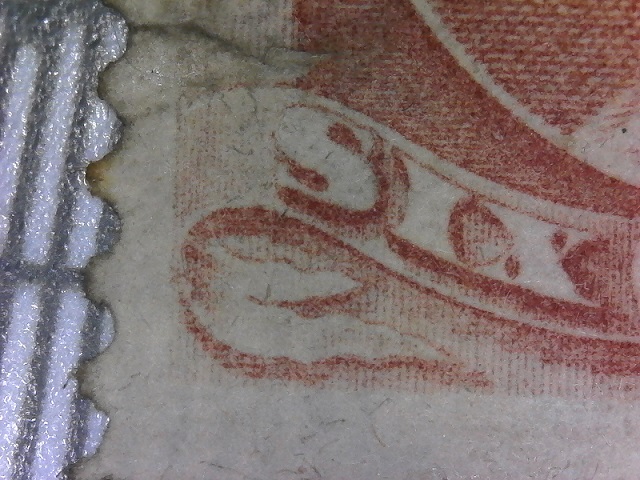
The presence of the secret mark means the stamp is a Continental printing and the grill is fake. The cancel is a bit unclear but appears to probably be a style used well outside of the period where grills were used. Also, as Clark pointed out, the color is not right for a #137 in the first place. |
|
Send note to Staff
|
| Edited by sinclair2010 - 05/18/2019 06:19 am |
|
|
Pillar Of The Community
United States
2555 Posts |
|
|
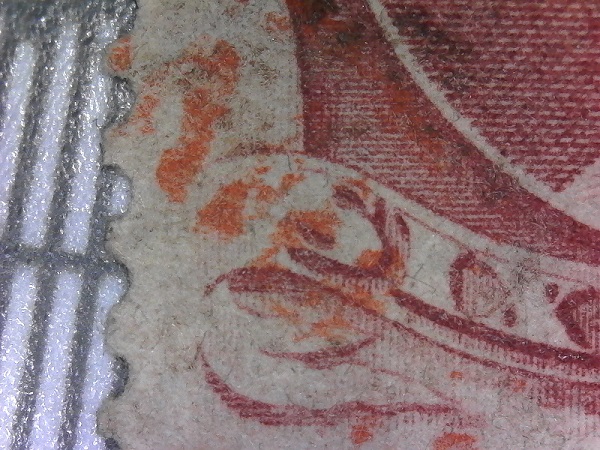
Here is a #148 showing the area of the Continental secret mark. Also note the color. 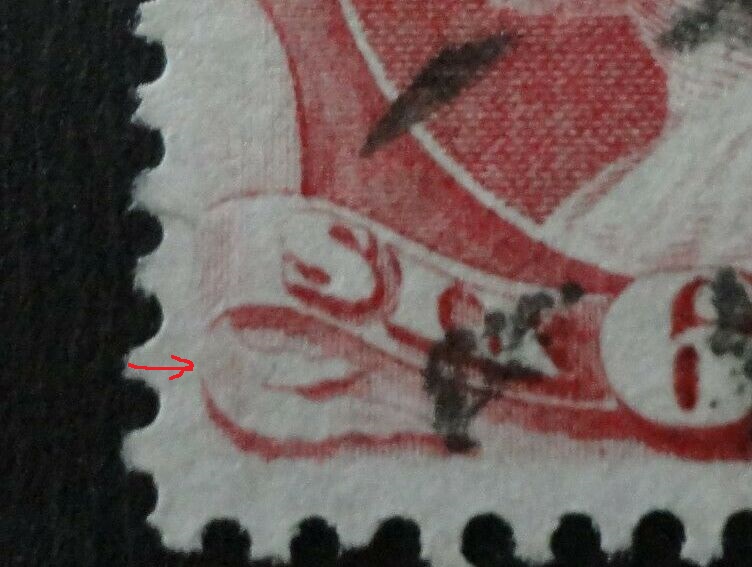 |
|
Send note to Staff
|
|
|
Pillar Of The Community
1375 Posts |
|
|
Yes, there is a secret mark. The grill impression let me think of an I grill, but the size is wrong, and of course the secret mark. But first of all: is this a grill with points up on the face? Looks like it on my screen. All of those grills that are possible including J should be points down. |
|
Send note to Staff
|
|
|
Pillar Of The Community
United States
901 Posts |
|
|
Pillar Of The Community
United States
1946 Posts |
|
|
Sorry to say, the grill is fake. The flat empty squares so strongly impressed are not characteristic of the H or I grills, nor do they resemble the grill points of the Continental "J" grill. Moreover, I count 16 columns across this "grill" which are not characteristic of any of the late grills H, I, or J.
As others have said, the stamp color is that of the Continental 6c, so one should expect to see a secret mark. That it is obscured by the heavy cancel in that area, merely means that the line comparisons are less obvious; but I think Winston has called that well.
If it were to pass muster on these points, you would need to perform the tests Clark has mentioned to nail it down. But it does not. |
|
Send note to Staff
|
| Edited by essayk - 05/18/2019 11:03 am |
|
|
Pillar Of The Community
1375 Posts |
|
|
As Clark did mention the paper mesh: I never really understood how the paper mesh could be any help in identification of a grill. I know the mentioned text, and after all Burns indeed gives some paper mesh information, but in his text there is no direct and complete connection between the mesh and the grill (whether it's an early or late state, a H or an I grill) in terms of identification, more in terms of historical or statistical data. So for example if a stamp has a horizontal mesh (as here was supposed), it can be either a H or I grill, late or early state. If has a vertical mesh, it's a bit fewer options, but it can still be either an H oder I grill (both late states).
So how can help the paper mesh in grill identification, in which case?
Does it help perhaps only to distinguish stamps of early and late state grills?
|
|
Send note to Staff
|
|
|
Pillar Of The Community
United States
1946 Posts |
|
|
Quote:
So how can help the paper mesh in grill identification, in which case?
Does it help perhaps only to distinguish stamps of early and late state grills? Grill state. But when certain issues/denominations are only attested for either an early or late state grill, then the mesh measurement will help to pin down what you may have. The critical piece of information in the note in Scott (written originally by Ron Burns) says: Early-state "H" grills tend to be on vertical-mesh wove paper, while later printings and all late-state grills were printed on horizontal-mesh wove paper, resulting in stamp designs being approximately 1/4 mm shorter than the designs printed on vertical-mesh wove paper. In conjunction with this observation he also notes: "The late-stage 'H' grills virtually all seem to have been used only after Jan 1873." When all these factors are taken together they can help nail down not only questions about authenticity (against what is attested or perhaps possible) but also problems with identity in some cases. Of course the door is always open for verifiable new discoveries. The field is large, but I hope you can see the point. On reading this I think I missed your question. You want to know how mesh contributes to the identification of a grill. It does it by limiting the options with a few more diagnostic checkpoints. If a stamp is on vertical mesh paper but has a late-state grill, eyebrows need to go up. Can it be what it seems, or has someone tried to make us think it is so? On the other hand, if we find a late-state grill on a cover year dated to 1872, then we must ask if the stamp is original to the cover. |
|
Send note to Staff
|
| Edited by essayk - 05/18/2019 4:10 pm |
|
|
Replies: 28 / Views: 3,462 |
|




 Posted 05/17/2019 7:23 pm