@51studebaker said:
Quote:
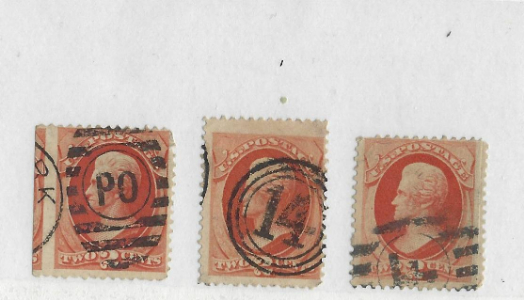
The original poster was thinking that they had an imperf rarity and was lead in that direction by seeing one posted on Swedish Tiger site; I was trying to lead them away from IDing stamps in this way.
I saw that and agree with most of the corrective. However I wanted to correct the impression that the stamp was essentially worth less than a normal used example. It is not worth what a 98J would bring, but is worth more than a VF70 or 80. I would hate to see it torn up by someone who was p.o.'d that it isn't a howling rarity.
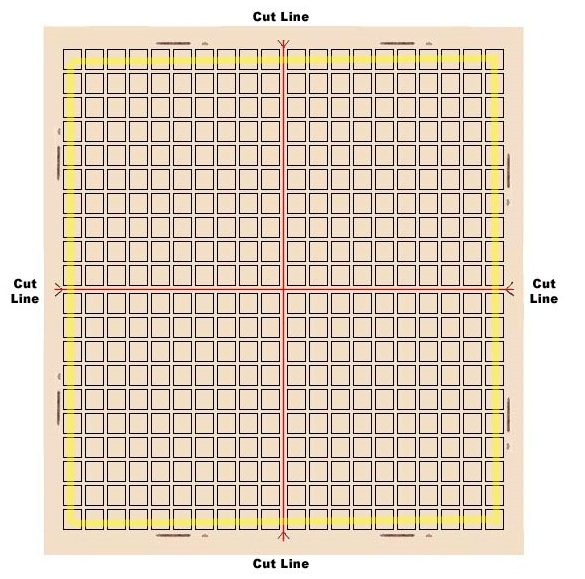
In a separate post I wish to address a common misconception about "perforation tolerances" on the BankNotes.
But first let me put out a word of warning about the treatment Swedish Tiger gave to the stamps of the CBNCO. In discussing 161d he wrote:
Quote:
161d US postage stamp
10¢ - Brown
White wove paper, thin to thick
IMPERFORATE INBETWEEN
Scott #161d - 1873
Only two examples
WHY IS THIS STAMP CALLED A LARGE BANKNOTE?
This stamp is part of what is known as the 1870-1888 'Large Banknote' issues. Large because a smaller size issue followed
these in 1890. Banknote because the stamps during this period were printed by companies whose primary business was
printing banknotes, a function now taken over by the Federal Government.
WHO WERE THE BANKNOTE COMPANIES?
There were three banknote companies who consecutively printed the large banknote series. The first was the National Bank Note company and this stamp was printed by them. The second was the Continental Bank Note Company, and third was the American Bank Note Company. This last company was acquired by the Federal Government and using their machines took over the job of printing US postage stamps.
There are a couple of problems with the last paragraph in my quote. That paragraph appears as I quoted it directly under the 161d which is correctly attributed to the CBNCo above the pic, but in this paragraph is attributed to National "The first was the National Bank Note company
and this stamp was printed by them." [emphasis mine] National designed and introduced the 10c design, alright, but the imperf between pair is not theirs.
The more serious problem is the final sentence in my quote. At no time did the Federal gov't ever acquire the ABNCo; it remained an independent contractor well into the 20th century, (reorganized in 1990s) and even now exists as an altered image of it's former self. When the Bureau took over stamp production in 1894 they used their own machinery. They did not license the machines ABNCo used inasmuch as those were proprietary to ABNCo who held patent rights as well as property rights.
STiger does okay with attributions, but his understanding of the historical narratives is filled with landmines. I would tread lightly.





 Posted 08/09/2019 10:37 am