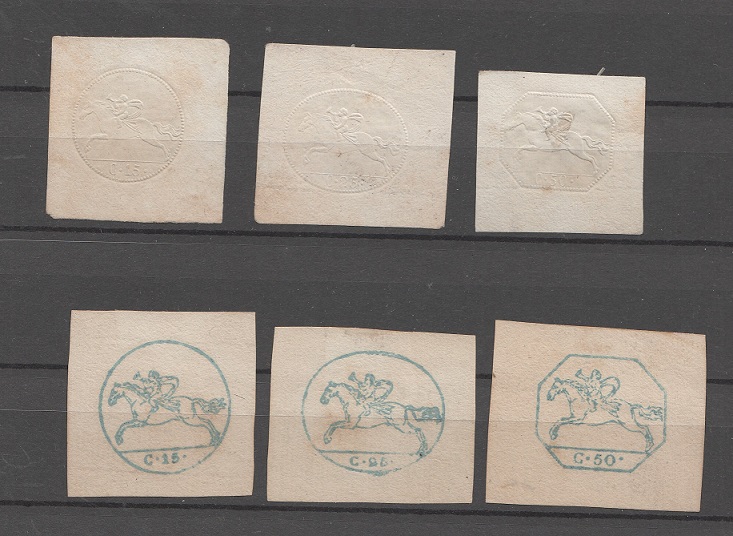
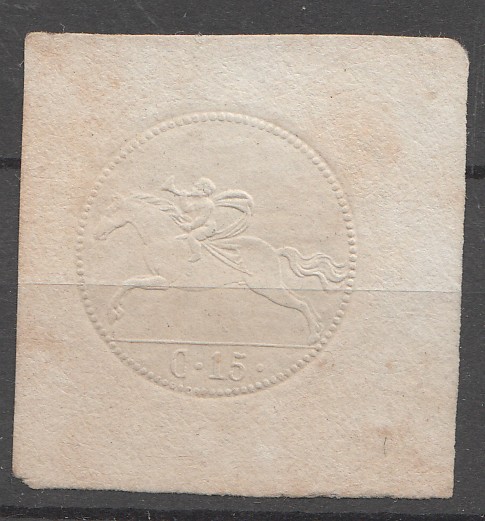
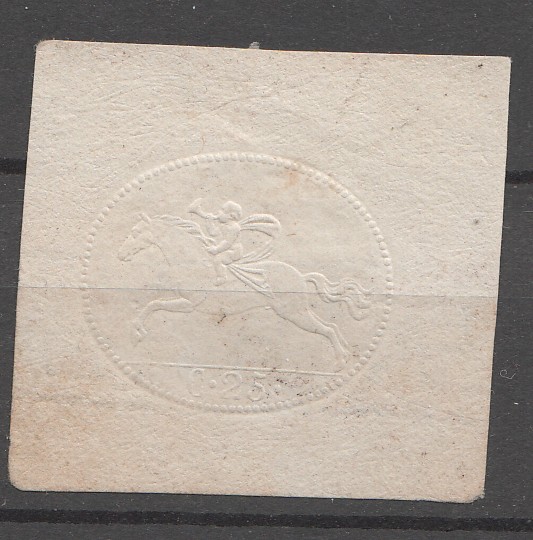
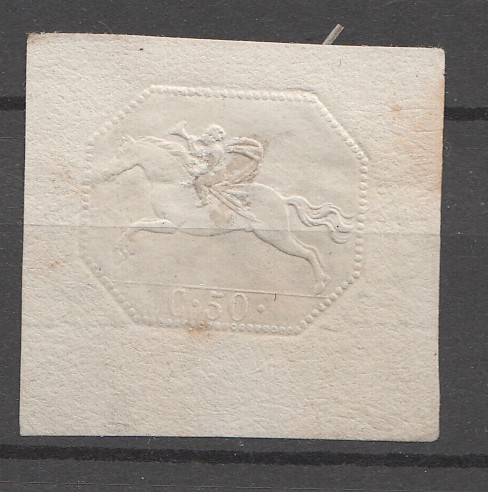
Interesting post.Not seen often.
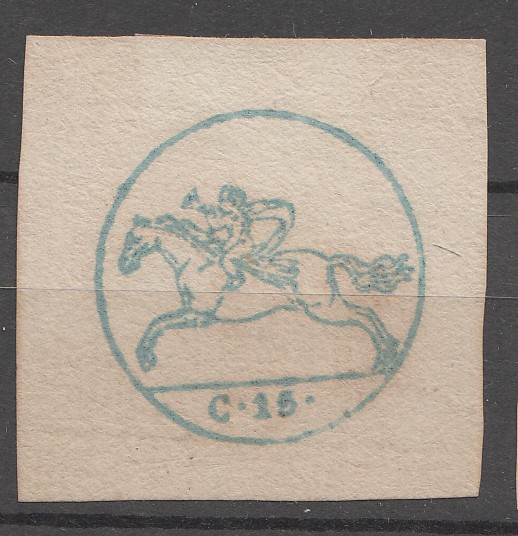
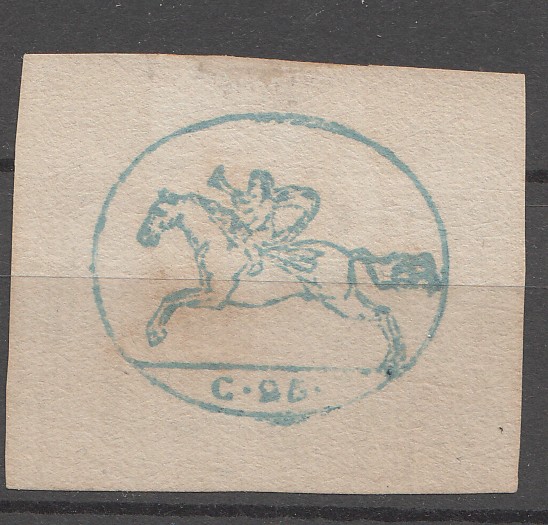
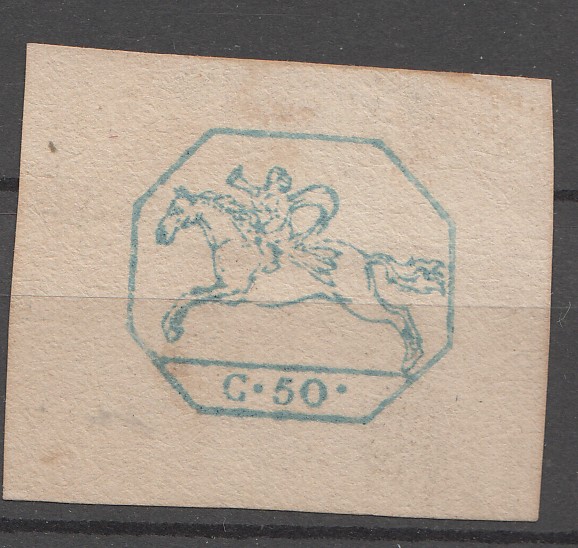
I agree with hy-brasil the blue prints are forgeries.the horses head,neck in relation to the
body is not conform.Although over inked types exist they still have the same proportions.
The "C" is not thin and does not have the correct shape.
Below an example from Laser Invest auction.Diena & Raybaudi certificates.
Look closely too the proportions.Each stamp was printed on a sheet 25cm x 38cm.There were
3 values & 3 printings. 1)90,000 2)20,000 3)1,000.There were over 20 different papers used
and different watermarks.

________________________________________________________________________________________
Extract from "Sardegna La Carta Postale Bollata" by di Marino Enrietto.
Falsification and reimpressions of the brass dies for the Cavallini in turquoise and the steel dies for the dry ones unfortunately passed into private hands. With real or imitated stamps; stamps were affixed in various shades of blue on letters passed to the post taxed after 1819 and even on private letters whose date was prior to that of the Royal Patents which established the Postal-Bollata Letter, and on sheets with definitive watermark of the Capuccino brothers without stamp. Example of how it was possible to ruin a beautiful letter of October 16, 1818 (sic) from Lübeck to Vigevano, adding a false and impossible blue horse from 15c. These stamps are mostly from 25c. and, instead of falling on the center of the front of the folded half sheet, they are generally moved towards the side edge of the cover following the address. Sometimes they fall in the middle of the address writing trying to hide the forgery. Similarly, the cold pressed horses were imprinted on old unused sheets from various private sources. As said these stamps are recognized for the strong shift of the stamp towards the edge of the paper and under the stamp, moreover the paper appears more smooth and thinned where the stamp fell, while under authentic ones, the paper did not undergo alterations. In other cases, half sheets in white were used with the Capuccino watermark, cutting them from business letters, they received the Cavallini dry press types of the 25c. or 50c., sometimes impressed very well with imitated or authentic embossed types. Since the Cavallini dry press collecting request was mainly for whole sheets, someone thought well of performing reprints imitating the original watermark. There are two types with slight differences from the original.Il Sella also mentions: There is therefore an undoubted relation in the origin's between the two reimpressions, but we do not know if and too what degree the personal & technical implications there was by Carlo Usigli of Florence to whom the General Directorate of Posts, by letter dated February 23, 1875, had given the authorization to publish the reprints of the sheets in question, adding: as these are objects that have been out of use for a long time, their reproduction cannot give rise to any inconvenience. Poor collectors. -------------- Bibliography: Cesare Rattone - Manual and catalog of the Sardinia stamps 1951 Silvio Sella The Postal Card Bollata 1914.
_______________________________________________________________________________________
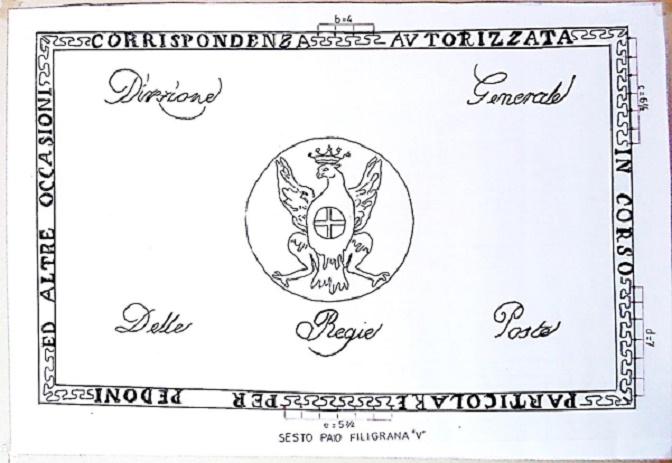
Now the embossed type was another story.Cold pressed into a sheet 26cm x 40cm.It had only
one paper type.A watermark can be found in the sheet.
The examples you have look like re-embossed types privately done from the original die.
Your examples you show have the same quality of design as in the originals.
In sum they are un-official "reprints"(If we were talking about stamps).
Examples on cover used in the period of
validity are the most sought after.The original in the entire sheet is very rare.
_____________________________________________________________________________________
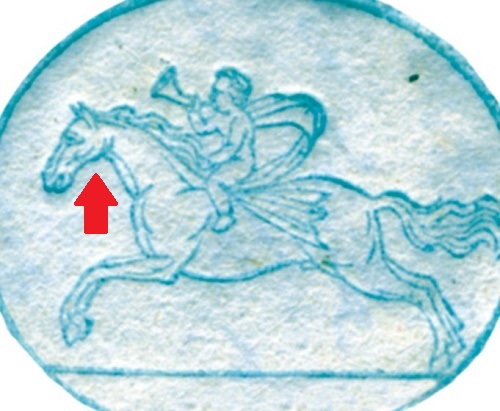 https://www.ilcollezionista.bolaffi...stini-piedi/
__________________________________________________________________________________________
An example from e bay.Genuine or not but the placement of the imprint in the sheet.
Gives you an idea of how it works.





 Posted 08/20/2019 5:51 pm