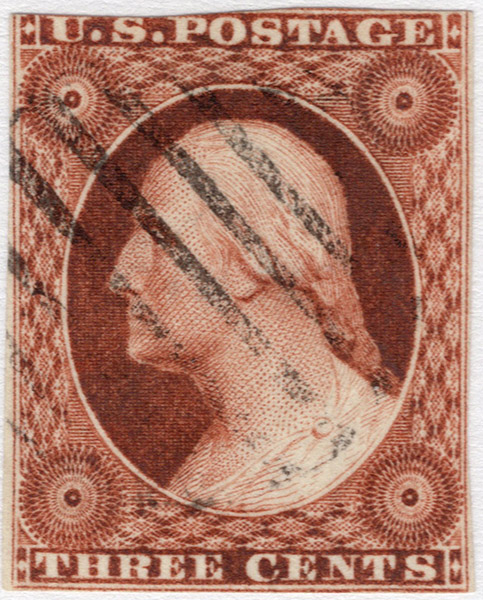
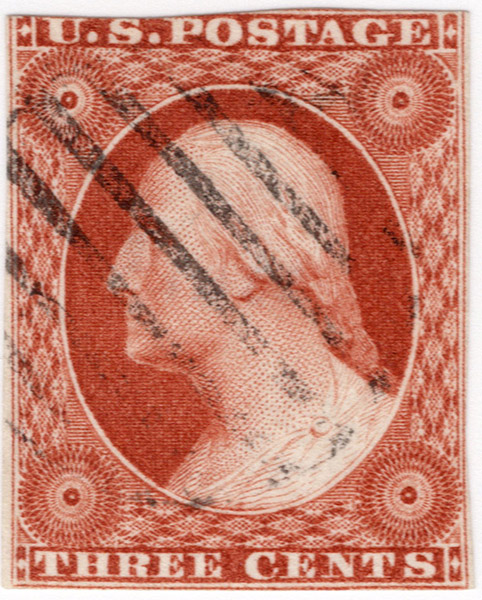
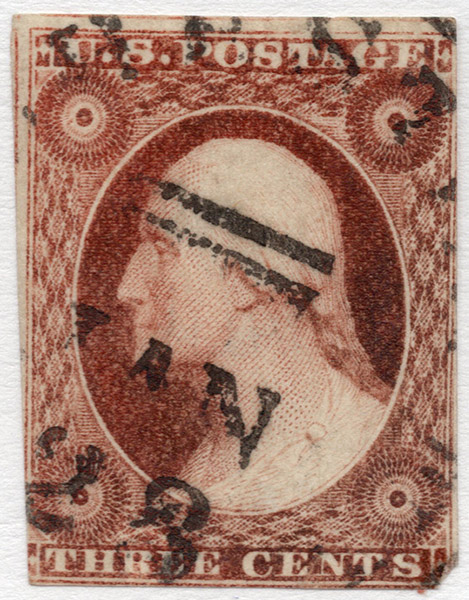
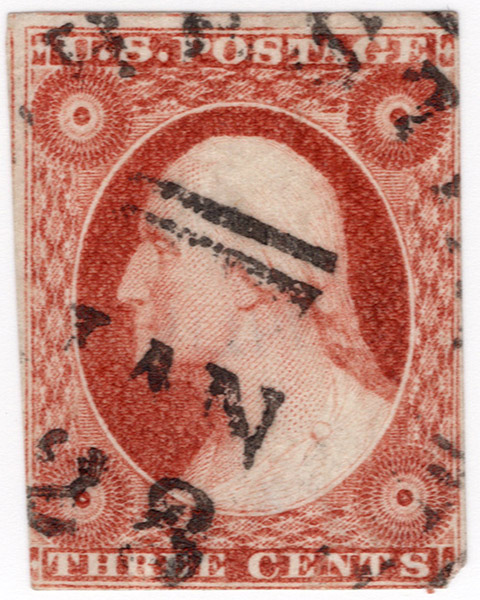
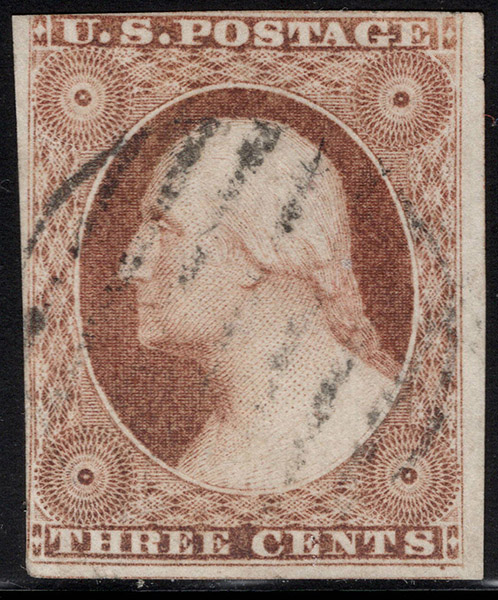
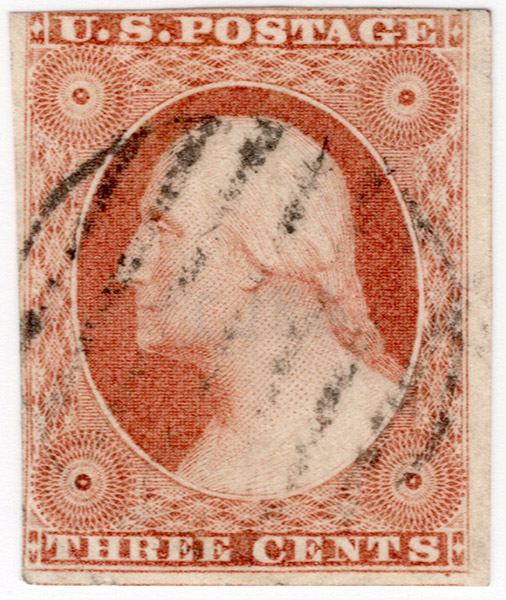
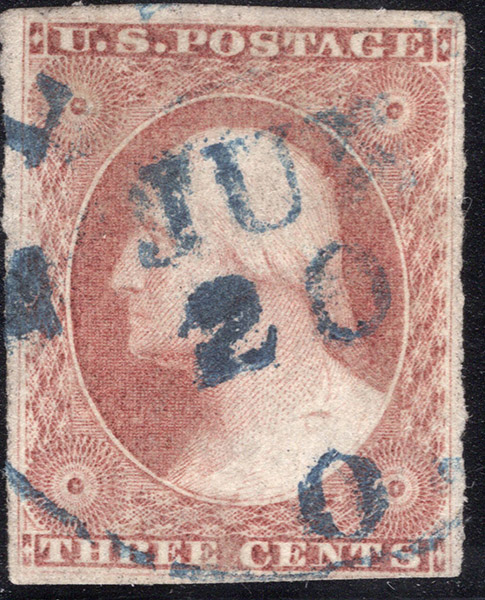
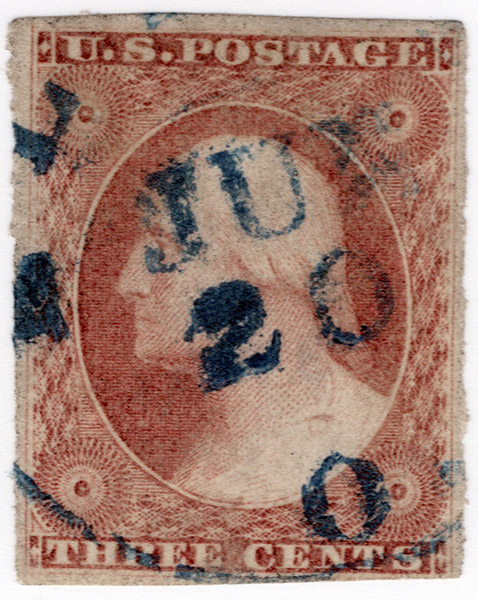
Quote:
What does this mean? How many times can a stamp be exposed to peroxide over its lifetime? How do you determine how many times a stamp has previously been exposed to peroxide?
I mean that a collector should first develop a repeatable methodology for performing H2O2 treatment, prior to using it on a nice stamp. Learn how to do it with lousy copies. Water (H2O) is your friend, and make sure to apply it to stop the reaction. Don't over-expose the stamp to H2O2 (see below).
The long term question(s) you raise are certainly valid concerns.
One of the nice things about applying H2O2 is that it fairly quickly reacts with the sulphuretted areas on the stamp, removing that, typically, well before it "visibly" chemically affects the ink of the stamp. That affords a decent window of opportunity to stop the reaction by applying water, well before obvious visible damage is done to the ink/color of the stamp itself.
I am not going to pretend that there isn't some chemical alteration to the ink taking place that is not obvious. It seems likely that there probably is some small breakdown of the ink that would start, but is then stopped by applying water. The quicker the better to stop this.
I will state that simply by empirical evidence of the many times I've done this, and many friends of mine have done it, that this is a viable process (using H2O2). I never ruined a stamp doing this, at least not to my knowledge. They always came out appearing the same or better than before, and they were restored to what I'll deem a "proper" color - one that the 3c stamp is known in - not some artificial bleached-appearing color.
So, assuming that there is some small chemical breakdown of the ink each time this is done --- how small is it, and how many times before the ink becomes visibly altered? I don't know. Its a very valid and good question, and something, as time goes by, that would benefit us to monitor however possible.
I suppose someone could experiment, by taking a lousy copy of a 3c stamp, and just repeat the procedure over and over again, and observe carefully when the stamp ink appears to breakdown. That would be one, inexact method, but might provide a useful datapoint.
Bill and others recanted numerous experiences to me of treating and re-treating certain stamps, usually Plums, or near-Plums that they expected to change with H2O2, but didn't. This, because they were in their correct color which just kind of looked sulphuretted (read: Plum). So for these stamps, they were already treated multiple times just to verify the color.
I'll close by saying that H2O2 treatment involves applying chemicals to a stamp to achieve a goal. We can make an apples to oranges comparison with Watermark fluid - aka Ronsonol/Clarity. Totally different chemicals, and reasons for using, but doing anything to a stamp probably has some modest long term effect. We've had discussions on those, with feedback which has driven some people to use Clarity, to minimize long term damage. I don't think we have a substitute for H2O2 here. The 3c stamps have always struck me as being pretty colorfast with reasonably short treatments as I discussed previously.
Any new and better information or observations on this of course are very welcome.





 Posted 09/19/2019 10:34 pm