| Author |
 Replies: 15 / Views: 1,443 Replies: 15 / Views: 1,443 |
|
|
Valued Member
United States
13 Posts |
|
|
Hi All! A few years ago I got a box of stamps at a yard sale for very cheap. I know nothing about stamps but thought it would be fun to look through. I'm just now getting to it. Most of the stamps are 1960's and up but there are many older ones. Four stamps I believe are 1890's. I've researched as much as I know how. Was hoping for a little help. The one cent I'm wondering how do I know if it is blue or ultramarine? The two cent stamps I'm wondering color also but I believe the top two are type 3 as the lines do not cross the triangle. The bottom one is type 1 as the lines do cross at an even thickness. How do I figure out exact dates? Does anybody know the Scott numbers? I do not know how to measure perforations and I'm not equipped to look for watermarks. Any info would be great. Thanks! 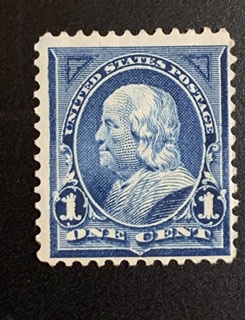 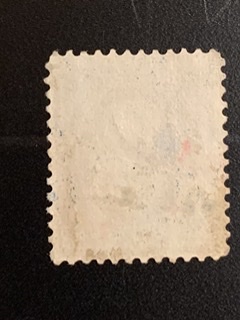 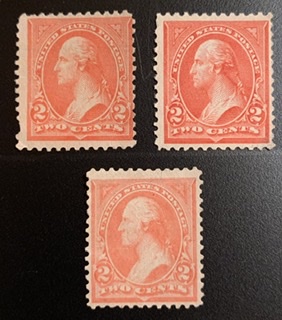 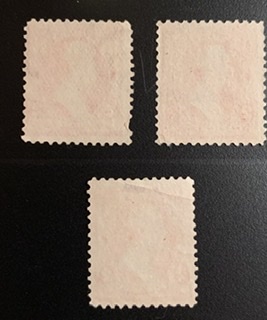 |
|
Send note to Staff
|
|
|
|
|
Moderator

United States
12330 Posts |
|
|
Welcome. One place to start with IDing your stamps are the 'visual finders' here http://stampsmarter.com/1847usa/1847Home.htmlThere is also an 'Illustrated Glossary', a 'How To' section, and downloadable perf gauges to use while you come up to speed. And of course, there are plenty of helpful folks in this community. Don |
Send note to Staff 
|
|
|
Pillar Of The Community

United States
1012 Posts |
|
|
Valued Member
United States
13 Posts |
|
|
Thanks you Don. While researching I did come across the stampsmarter website. It's a bit confusing. Maybe it just takes time to learn. There are so many variations of so many stamps it is quite overwhelming. Looking on ebay is even more confusing. It's so hard to tell the difference between valuable and common stamps. I know I won't be getting rich but knowing exactly what I have would be great. |
|
Send note to Staff
|
|
|
Valued Member
United States
13 Posts |
|
|
One more question...the stamps I posted pictures of appear to be unused, in great condition but they don't look to have any gum. I would think if they were used they would have cancelation marks. Did these old stamps not have gum? |
|
Send note to Staff
|
|
|
Moderator
United States
12330 Posts |
|
|
Definitive stamps often had long production runs which could support many subtle manufacturing differences (perforation changes, watermarks, etc.) so it can be a bit overwhelming when first starting. Read and absorb as much as you can (some single malt Scotch may help) and post any questions you might have.
Consider working on a single stamp, post image(s) and what you have learned so far, and folks will help you navigate how to ID your stamps.
Don |
|
Send note to Staff
|
|
|
Moderator
United States
12330 Posts |
|
|
Quote:
Did these old stamps not have gum? Gum was sometimes removed in years past to 'prevent damage' but today's marketplace rewards mint, gummed stamps without any hinge marks. But some collectors 'do not collect gum' and are perfectly fine with buying and collecting stamps with no gum. Don |
|
Send note to Staff
|
|
|
Pillar Of The Community
United States
624 Posts |
|
|
cre84u, you might also consider buying a Scott catalog. For identification purposes, a used copy even several years old should give you lots of information and help as well, as well as relative values; as most of these stamps have not really changed radically in value. Stampsmarter is also a great resource.
In regards to gum, some stamps also survived mailing without being cancelled, and were soaked in water to get them off the paper. Remember that being a big source of "unused" stamps as a kid as most stamps are generally less expensive once the gum is removed.
You can get a perforation gauge from many places. I prefer the gauge that comes on one side of a Showgard mount gauge, but only because I use the mount gauge more than the perf guage. Think I paid 99 cents for it.
Keep asking questions, appreciate your enthusiasm!
|
|
Send note to Staff
|
|
|
Pillar Of The Community
United States
901 Posts |
|
|
cre84u If you can find one of these Tasco Booklets you'll have a much easier time identifying colors. These booklets haven't been around for years but show up in collections every so often.  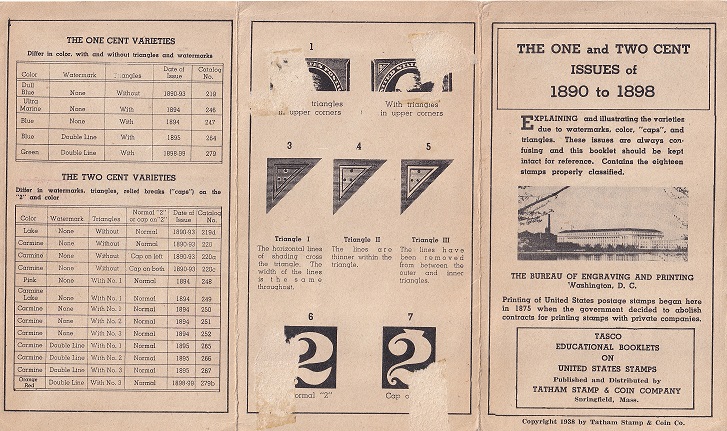 |
|
Send note to Staff
|
|
|
Pillar Of The Community
United States
1012 Posts |
|
|
Valued Member
United States
13 Posts |
|
|
Thank you for the info guys. I guess there is no easy way out, I'm gonna have to buy a perforation gauge and whatever I need to find watermarks. That Tasco Booklet sure would be helpful. |
|
Send note to Staff
|
|
|
Pillar Of The Community
United States
3306 Posts |
|
|
Moderator
United States
12330 Posts |
|
|
I think there are 19-20 of the Tasco booklets. I have a bunch of them to update the page, will try to get to that in next few days.
Don |
|
Send note to Staff
|
|
|
Valued Member
United Kingdom
439 Posts |
|
|
Watermark detection is relatively simple. Some stamps you can see the watermark from the back with the naked eye, Some can be seen under Bright light if the stamp is on a black surface. More usually you need a little black tray called a watermark detector and either some watermark detector fluid, Cigarette lighter fluid, or Anhydrous alcohol as found in some science laborotories. Be careful about the fumes and the extreme flamability issues. Put the stamp face down in the dish wet it with a small amount of fluid then the watermark usually becomes clear for a few seconds until the fluid evaporates. Personally I find the detector fluid evaporates too fast. CIgarette lighter fluid works well but according to the contents has 1 part per thousand aliphatic which is some kind of grease. I have never been aware of it damaging the stamp, or found a residue in the dish. I have recently tried the Anhydrous alcohol (ie absolutely no water in it) and found it works well and takes longer to evaporate. Be careful with the fluids because they do evaporate quickly into fumes and the latter two are always very inflamable, no smoking. or ignition sources nearby. Also make sure you have pictures of possible watermarks on show while doing the tests for instant comparison, because even when wet the watermarks are sometimes difficult to detect. |
|
Send note to Staff
|
|
|
Valued Member
United States
13 Posts |
|
|
Thanks for the tips Noocassel. I ordered a gauge, watermark fluid, and tray. Can I use any black dish or does it have to be a watermark tray? The one I bought online is out of stock and will not arrive with the other stuff. I don't want to wait if I don't have to. |
|
Send note to Staff
|
|
|
Valued Member
United Kingdom
439 Posts |
|
|
Any smooth black dish if you have any black plates in your china cupboard they will do. As long as it won't react with the alcohol or whatever, which is unlikely. I have a bottle of Prinz watermark fluid but chose to use lighter fluidbecause of its slower evaporation. Now someone can get me lab grade alcohol I use that.
Good advIce I got from the owner of one of the bigger brick and mortar stamp shops in the UK was don't buy any fancy detection equipment until you are sure it is needed and will meet your needs. I find a colour chart useless and was told by the vendor I would probably find it useless. my Tweezers (Tongs) were bought from a tool store they sell the same sort as Stamp dealers but are usually cheaper the jaws need to be smooth so they don't mark. |
|
Send note to Staff
|
|
| |
Replies: 15 / Views: 1,443 |
|



 Posted 02/03/2020 4:13 pm


 lots of those, Don has a page on them on Stamp Smarter.
