| Author |
 Replies: 11 / Views: 1,225 Replies: 11 / Views: 1,225 |
|
|
Valued Member
United States
21 Posts |
|
|
|
|
Pillar Of The Community
Canada
1648 Posts |
|
|
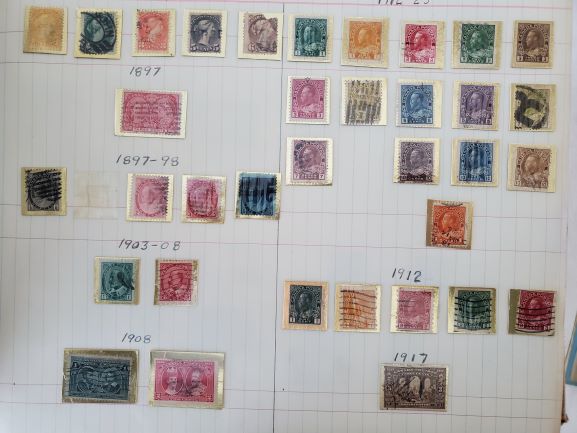
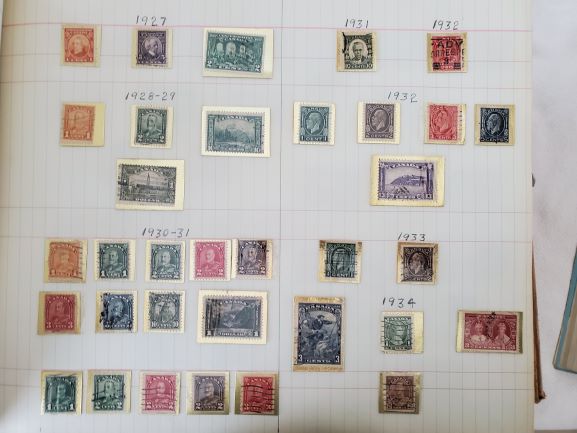
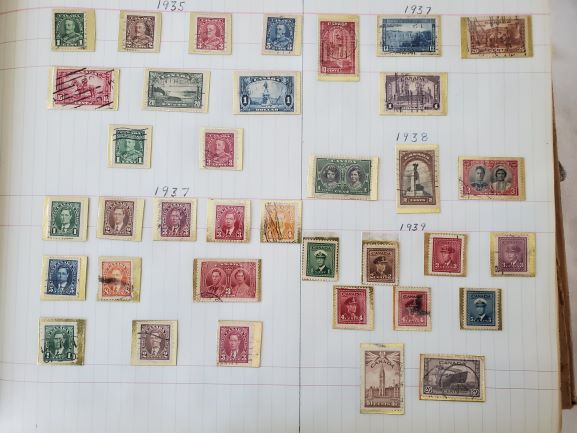
Since the pictures are grainy it is hard to really tell much. And do not value the collection based soley on catalogue value. It will only be a much smaller percentage of that. Probably a couple worth checking closely for varieties. Get into a Scott specialised catalogue to ascertain what you have. Two I would look at are the 1908 Champlain 1c issue. See if it has any thin green hairlines in the margins. As well check out the 1935 red, mountie mounted on the horse. Does he have a broken leg? |
Send note to Staff 
|
|
|
Pillar Of The Community
Canada
1401 Posts |
|
|
Many major libraries have Scott Catalogues and some Canadian libraries may also have the Unitrade Specialized Catalogue of Canadian Stamps, which is better than Scott. Many of the stamps shown could have varieties, which are more valuable than normal stamps. |
|
Send note to Staff
|
|
|
Pillar Of The Community
Canada
1648 Posts |
|
|
Blackjag, thanks for mentioning that. It is the best choice. I did mean to say a Unitrade specialised catalogue using the licensed Scott numbering system.  |
|
Send note to Staff
|
|
|
Valued Member
United States
21 Posts |
|
|
Thank you for your replies. I can obtain a used copy of Unitrade Specialized Catalogue of Canadian Stamps (year 2000) for about $17.00. I would be using the book for stamps older than the year 2000, so I believe the book would be good enough for looking for varieties. Is that correct?
|
|
Send note to Staff
|
|
|
Valued Member
United States
21 Posts |
|
|
By the way No1philatelist
I did look for the broken leg and the green hairlines. As expected, no luck.
Thanks for those suggestions.
Geod |
|
Send note to Staff
|
|
|
Rest in Peace
7742 Posts |
|
|
Pillar Of The Community
Canada
5821 Posts |
|
|
Hi Geod
I would suggest that any edition from 2006 on when Robin Harris
was made editor is the one you should buy.
Previous versions are not as detailed. |
|
Send note to Staff
|
|
|
Valued Member
United States
21 Posts |
|
|
Moderator

United States
12330 Posts |
|
|
Pillar Of The Community
Canada
1401 Posts |
|
|
Many varieties do appear in older catalogues, but a few more were added as time went by. |
|
Send note to Staff
|
|
|
Pillar Of The Community
New Zealand
731 Posts |
|
|
Geod,
Here is my take--and purely subjective, as if were in your shoes.
I think you have two paths to take :
1. To get the most amount of money from the stamps. In which case, all the above suggestions are helpful. I'd also suggest that as a general rule--anything older, pre WWII--is in general more valuable. I'd second the comments above about haircutting any Unitrade or online value--probably only 25% of that value, at best. Also, one other idea not mentioned above would be to find a local or regional stamp show, and take it in there and see if someone makes you an offer for entire thing.
2 Alternatively, you could use this to carry on your Father's passion. Many of us got into the hobby this way. So you could for example, re-organize the stamps into a proper album with say better mountings, create an excel spreadsheet of varieties and counts and values etc etc. As you research and learn more, this might be a path that unfolds for you.
Good luck either way--and please feel free to post any high resolution images of any high value or questionable stamps--this community is free and filled with experts and idiots (like me)
|
|
Send note to Staff
|
|
| |
Replies: 11 / Views: 1,225 |
|



 Posted 03/24/2020 3:01 pm